
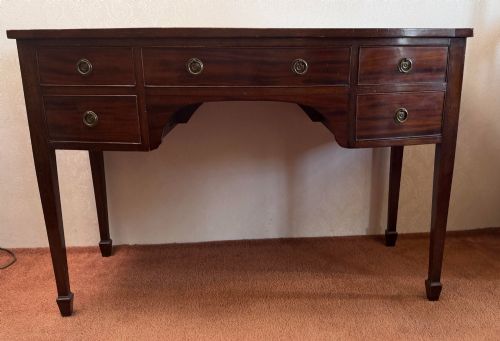
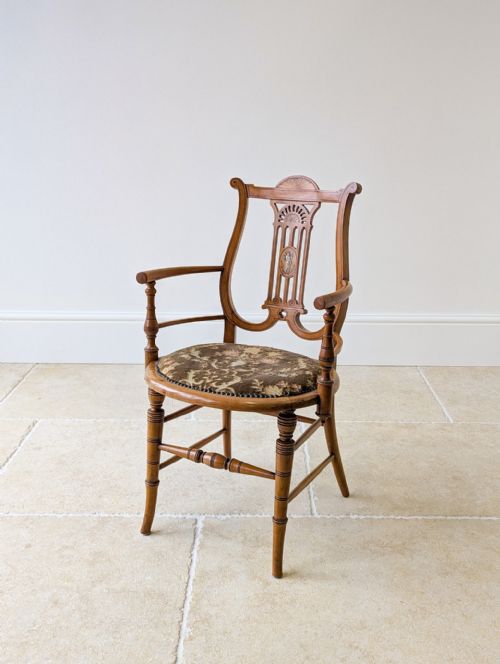
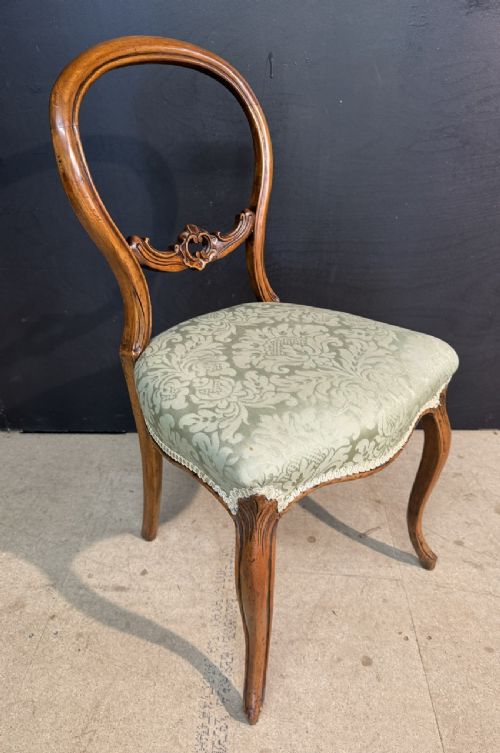
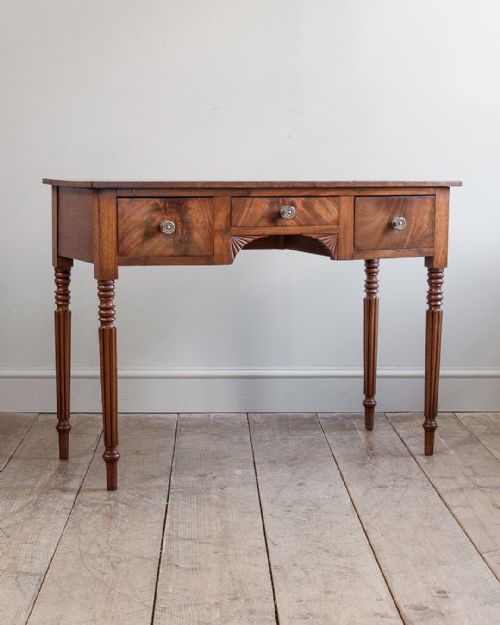
Victorian Vanity Desk
A Victorian vanity desk brings refined dressing-room elegance to the bedroom, offering rich timber surfaces and adjustable mirrors for everyday grooming rituals.
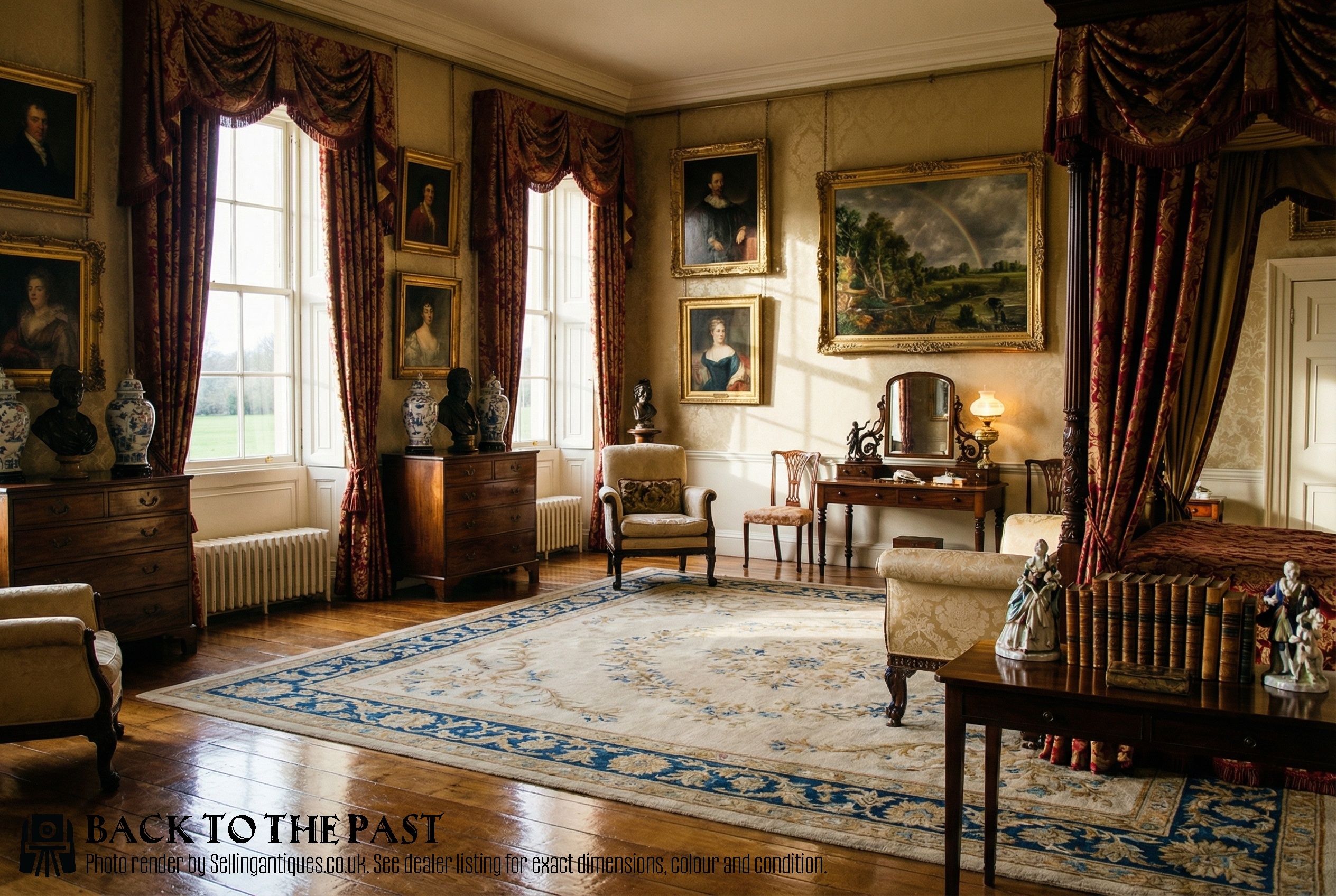
Victorian Vanity Desk Types
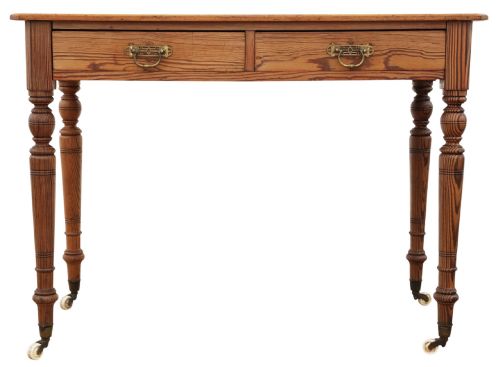
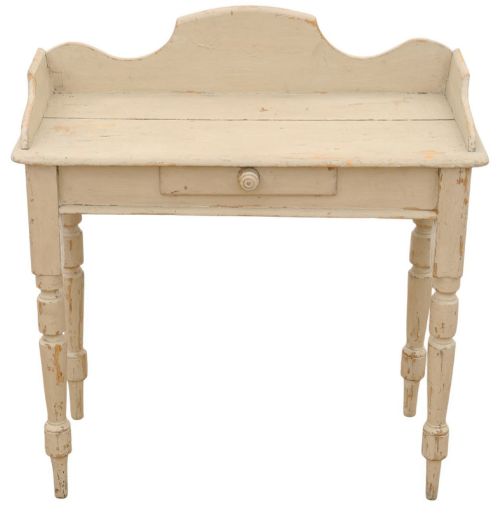
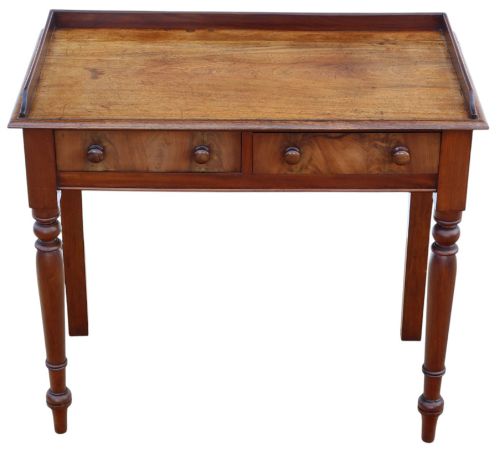
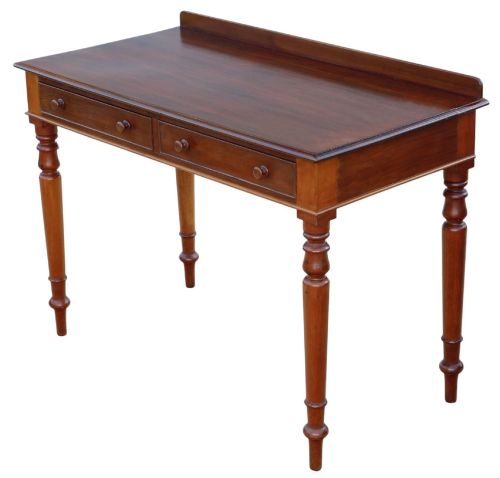
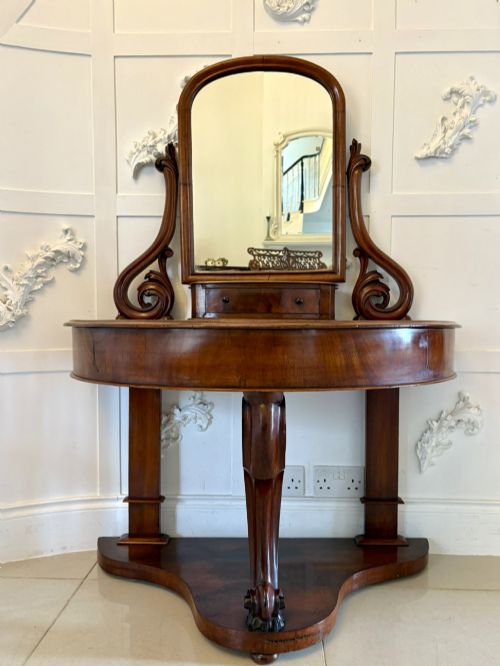
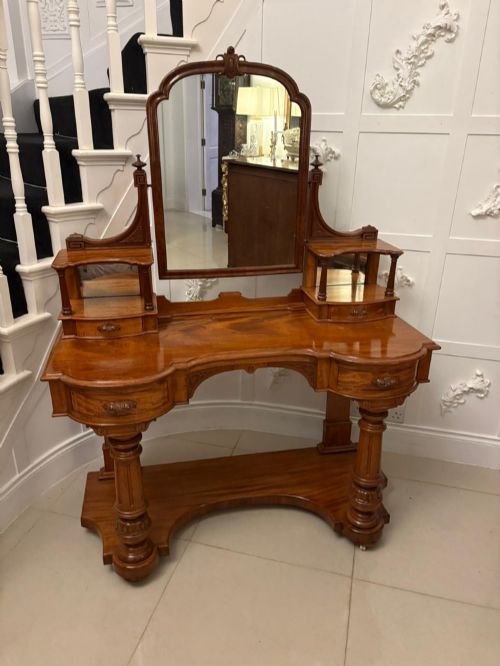
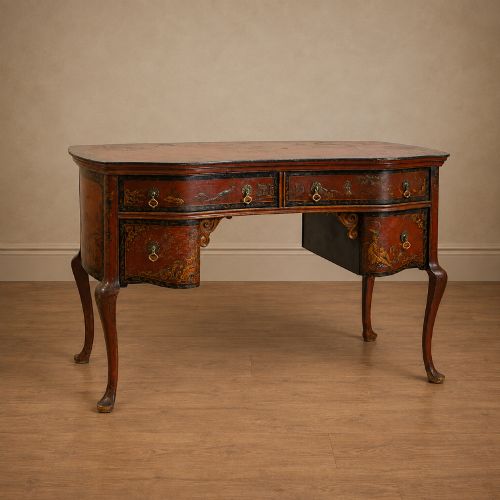
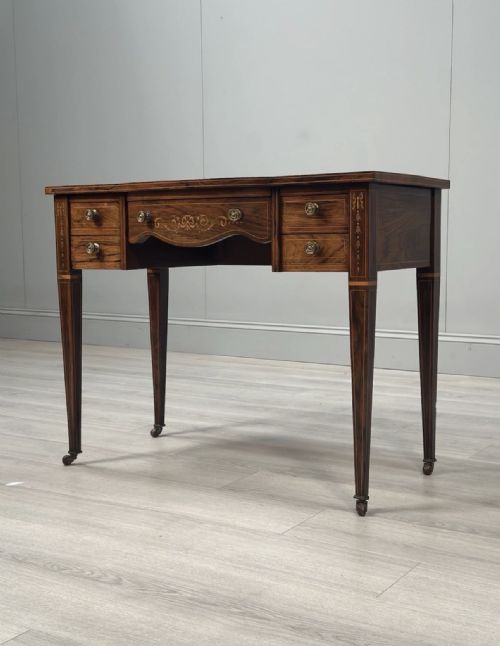
A Victorian vanity desk primarily takes the form of a dressing table, dressing chest, or Duchess dressing table designed for personal grooming. These pieces emerge across the Victorian period, including specific dates from eighteen-eighty to nineteen-hundred.
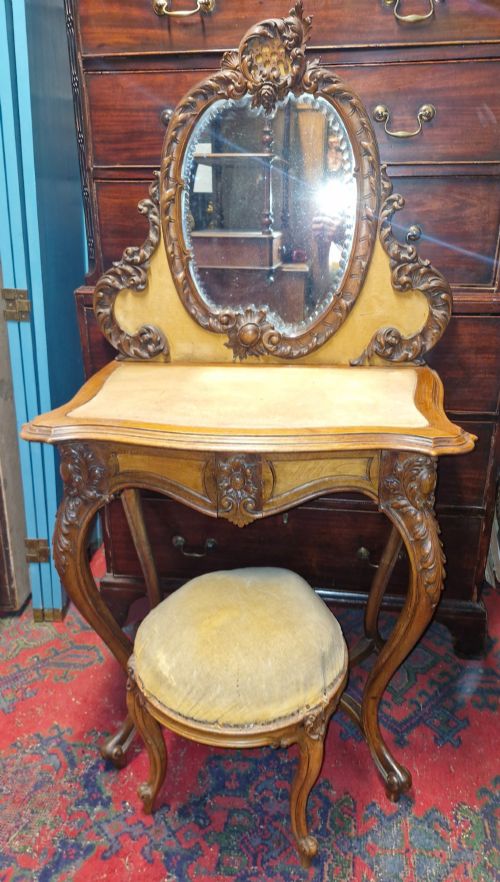
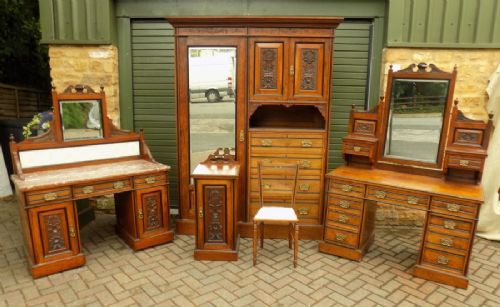
Buyers encounter diverse stylistic interpretations on this page, ranging from Rococo Revival curves to clean lines of the Aesthetic movement. Timber choices shape the character of each piece, appearing in mahogany, walnut, burr walnut, and satinwood.
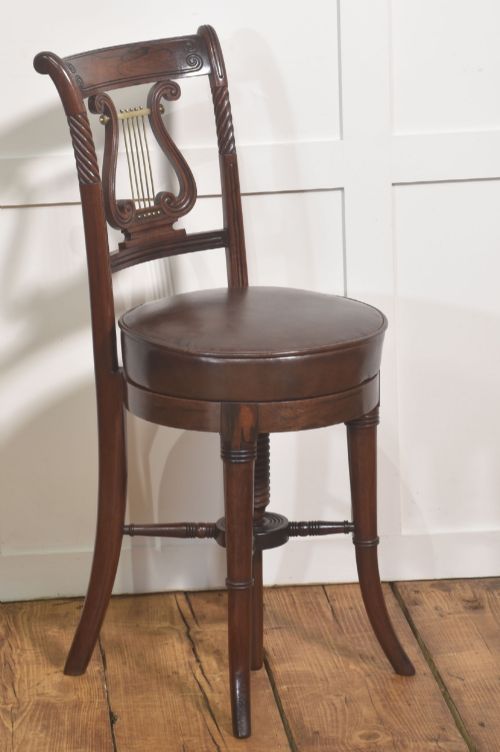
Formats vary significantly from grand pedestal designs and kneehole configurations to matching sets paired with a stool. Many incorporate built-in mirror glass supported by carved wooden frames or brass fittings.
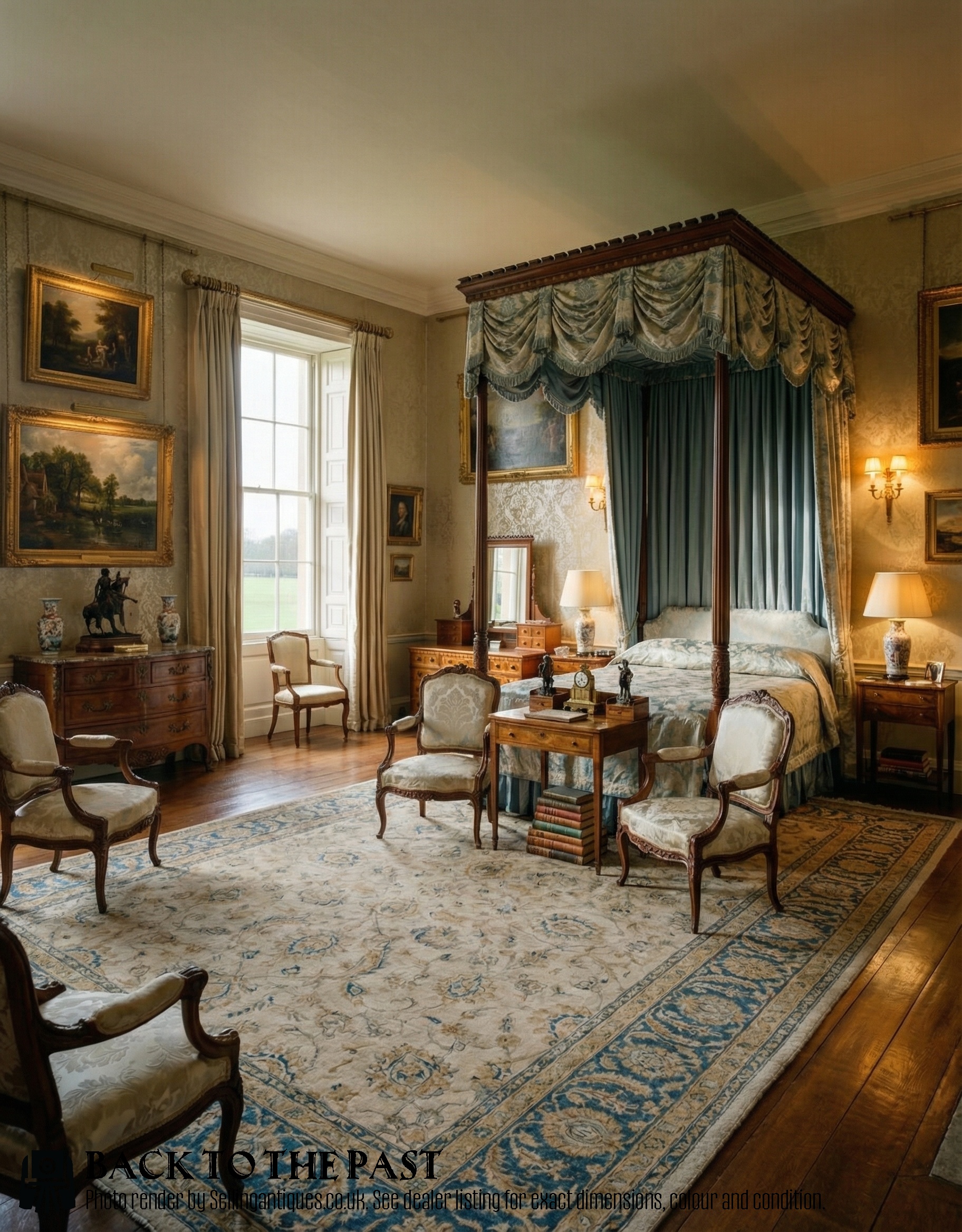
Materials and Construction
Cabinet makers built these pieces using solid timbers and decorative veneers, notably burr walnut, satinwood, and mahogany, often enhanced with fine inlay work. Structural elements integrate brass hardware and mirror glass to form functional dressing furniture.
Retail Price Guide 2026
Typical UK retail prices for victorian vanity desk, calculated from the Sellingantiques database of over a million retail prices indexed since 2003. This retail price guide relies exclusively on Sellingantiques data; no external sources or auction records are used, so the figures do not describe the wider market.
Every Victorian vanity desk secretly judges your morning hair while holding your spare buttons.
Judging Quality
Quality rests on the selection of timber figures, where richly grained burr walnut or figured satinwood elevates the visual impact above plain mahogany surfaces. The depth and precision of hand-carved details separate standard production from superior cabinet work.
Proportion and integrity of the original mirrors, brass fixtures, and matching stools define the overall desirability of the piece. Cohesive styling across Aesthetic movement inlays or Rococo Revival curves demonstrates superior craftsmanship.
The Victorian Vanity Desk Glossary
- Duchess dressing table
- A large Victorian dressing table featuring a large central mirror flanked by smaller drawers or trinket boxes.
- Aesthetic movement
- A late nineteenth-century design style emphasising artistic visual value, often seen in inlaid decoration and simpler geometric lines.
- Pedestal dressing table
- A form where twin stacks of drawers support the main writing or grooming surface, creating a central kneehole space.
- Burr walnut
- A highly prized wood veneer taken from the burl growth of a walnut tree, creating swirling, irregular patterns.
Frequently Asked Questions
What is a Duchess dressing table?
A Duchess dressing table is a grand Victorian vanity form distinguished by a large central pivoting mirror set above small accessory drawers.
This style became a bedroom centrepiece during the nineteenth century, combining storage for cosmetics with a substantial writing surface.
How do I identify an Aesthetic movement desk?
Aesthetic movement pieces display simpler geometric forms and contrasting wood inlays, moving away from heavy revivalist ornamentation.
These desks often feature lighter satinwood or polished walnut combined with refined linear detailing.
Were mirrors original to these tables?
Most surviving Victorian dressing tables retain their original glass and supporting wooden frames, though pivots and brackets may show replacement.
The mirror assembly is integral to the proportions of pedestal and Duchess styles.
How should I care for walnut veneer?
Protect antique walnut surfaces from direct sunlight and excessive humidity to prevent the fine veneer from lifting or fading.
Regular dusting with a dry cloth maintains the polished finish without risking moisture damage.