
Carved Walnut Dressing Table
A carved walnut dressing table brings warmth and rich grain to a bedroom, combining practical surface space with traditional craftsmanship.
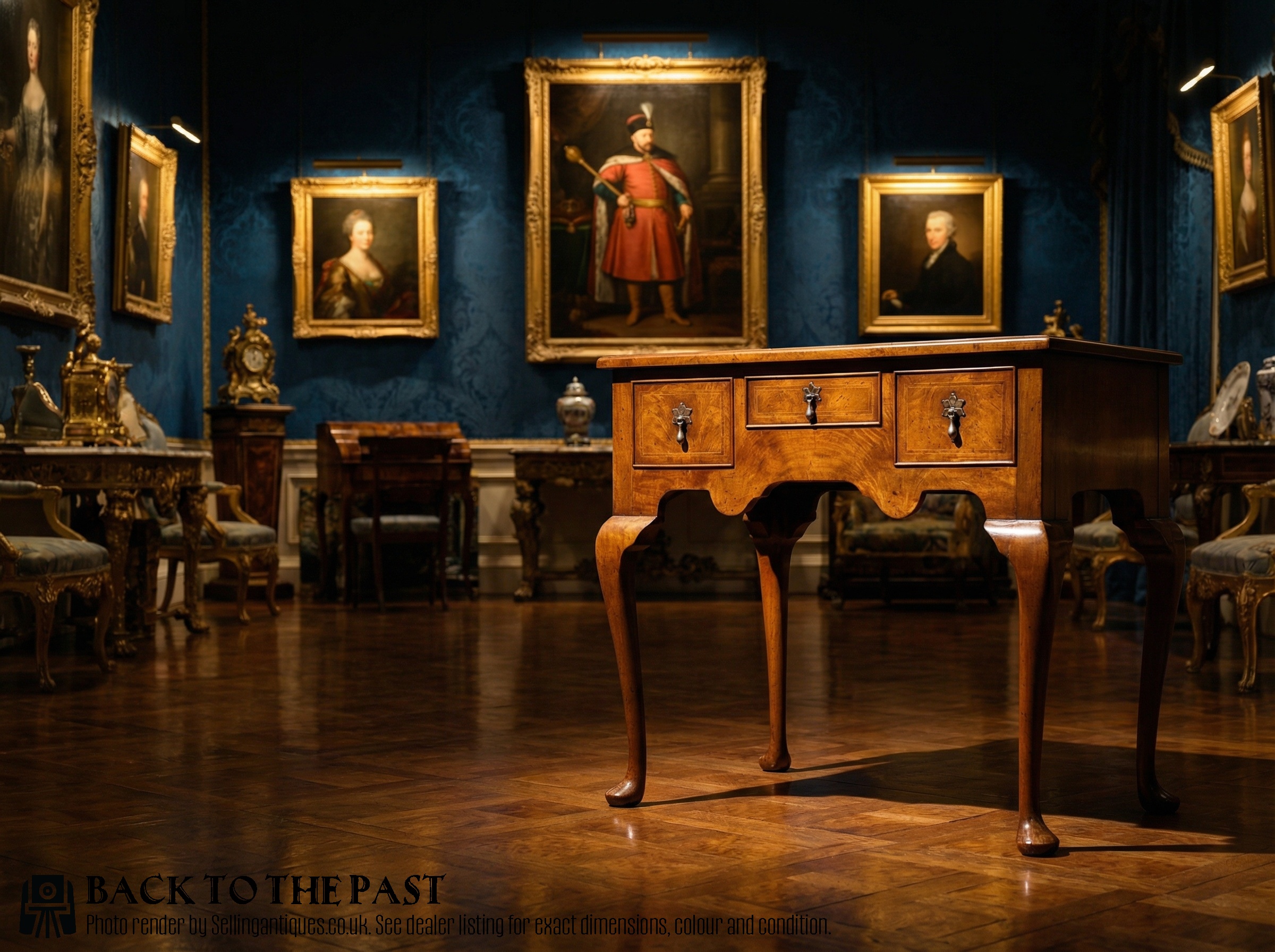
Carved Walnut Dressing Table
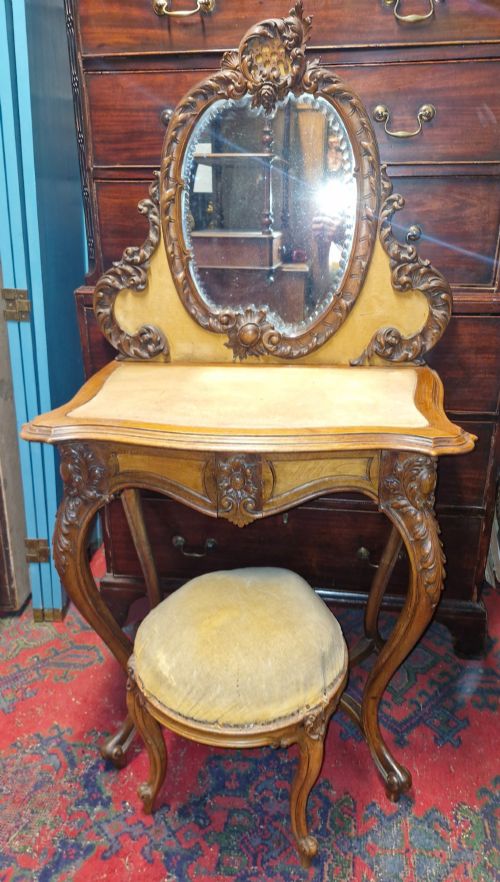
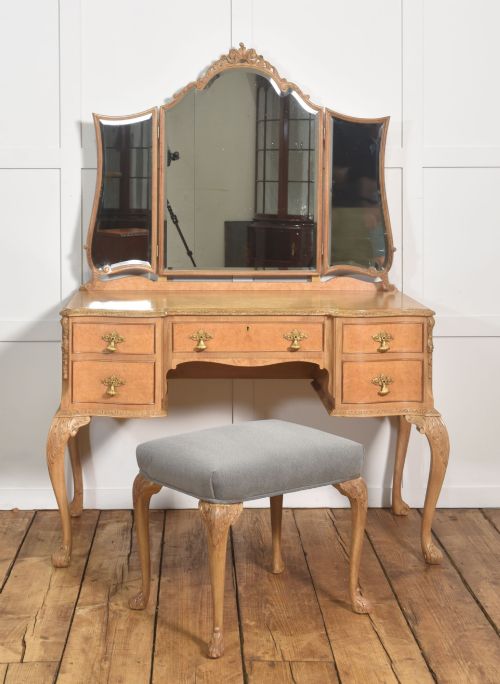
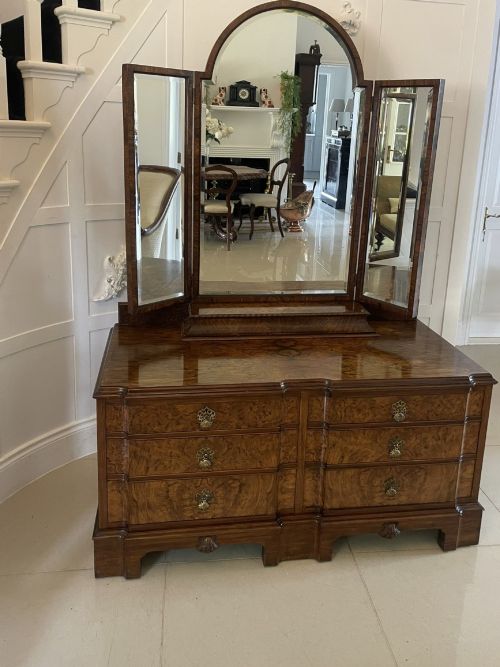
A carved walnut dressing table combines a timber surface with fitted mirrors and storage drawers, designed for personal grooming. These pieces range from substantial Victorian Duchess forms with pivot mirrors to lighter early twentieth-century interpretations.
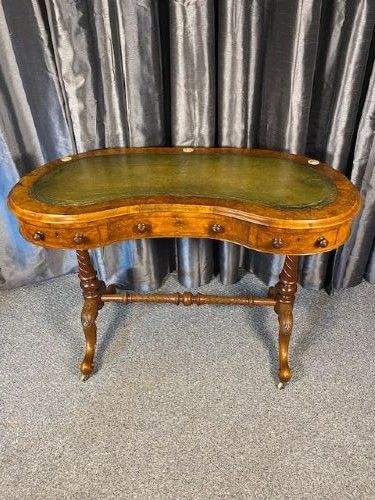
The versions most commonly met on this page span the Victorian period through the Edwardian era and into the 1920s and 1930s. They often appear alongside matching stools, lowboys, and writing desks sharing similar timber characteristics.
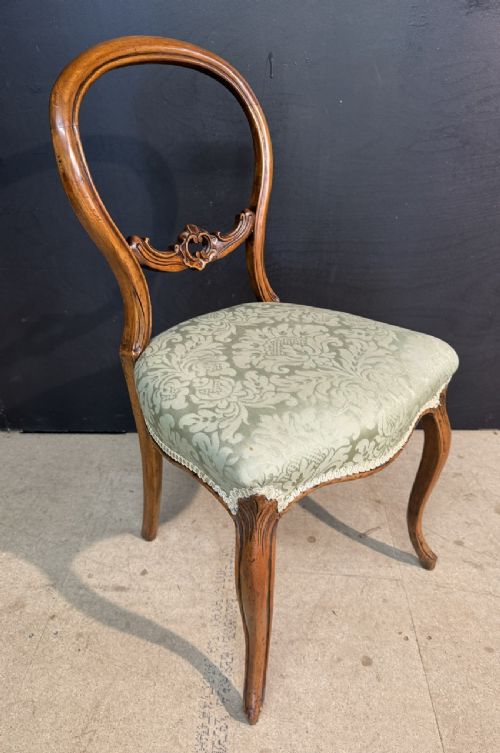
Makers drew on historic design idioms, producing pieces shaped by Queen Anne revival curves, Rococo motifs, and Georgian proportions. Buyers find examples displaying elaborate carved details alongside plainer surfaces suited to various interiors.
How they were made
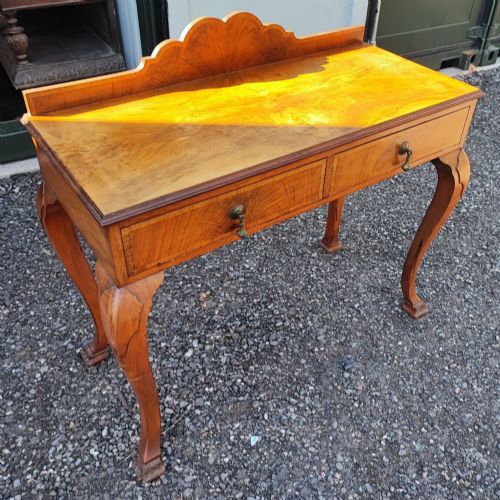
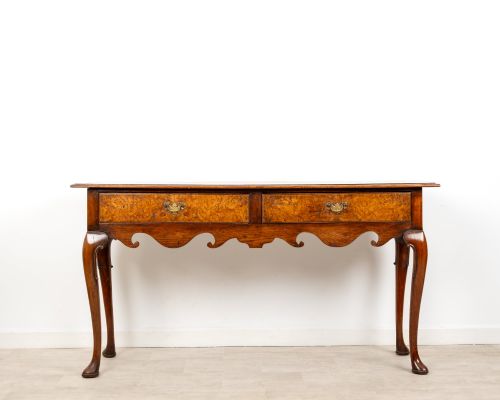
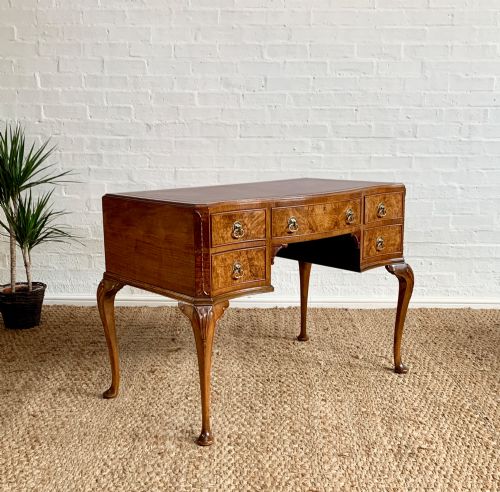
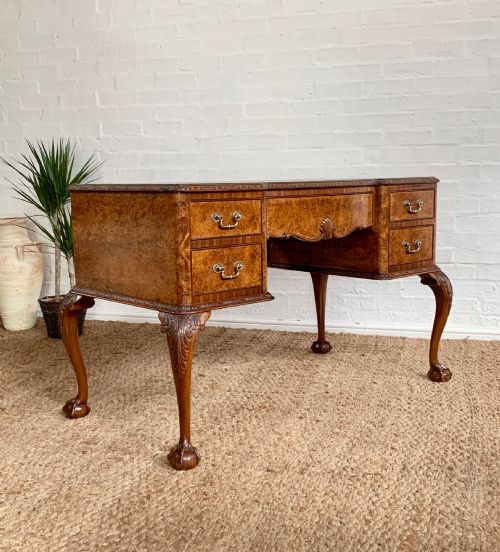
Cabinet makers utilised solid walnut and decorative burr or figured walnut veneers applied to stable secondary timbers. This selection highlighted intricate natural grain patterns across large flat surfaces such as table tops and drawer fronts.
Structural elements incorporated shaped cabriole legs, turned supports, and serpentine fronts shaped by hand or with early mechanical saws. Carvers added ornamentation by hand around mirror frames, aprons, and drawer edges.
Fittings included brass drawer pulls, glass mirror plates, and inset writing surfaces of leather or textile. Joints were typically pegged mortise and tenon or robust dovetails connecting drawer boxes.
Carved Walnut Dressing Table Retail Price Guide 2026
Typical asking prices for carved walnut dressing table among the pieces listed under this phrase on Sellingantiques today, from the lower quarter to the upper quarter. They describe what is for sale here now, not the wider market.
Listings feature walnut, burr walnut, and figured walnut paired with brass hardware, leather writing surfaces, and mirror glass.
What varies in quality
Quality rests in the selection of the walnut timber and the depth of the carved ornamentation. Pieces displaying symmetrical burr figure across the entire front and crisp, undercut carving demand greater skill from the maker.
Construction methods determine long-term durability, seen in thick timber drawer linings with hand-cut dovetails and sturdy leg joints. Superior examples maintain smooth drawer movement and secure mirror mountings without wobble.
Wylie & Lochhead Glasgow·Waring & Gillows
The Carved Walnut Dressing Table Glossary
- Burr Walnut
- A figured wood grain obtained from tree growths, producing swirling patterns highly prized for decorative veneer panels. Cabinet makers laid these veneers across prominent surfaces.
- Cabriole Leg
- A furniture leg that curves out and then in, mimicking animal limbs with a knee and foot. This shape appears frequently on revival and period dressing tables.
- Duchess Dressing Table
- A large Victorian form featuring a central pivoting mirror flanked by smaller drawers or trinket boxes. They often include a lower tier or shelf between the legs.
- Lowboy
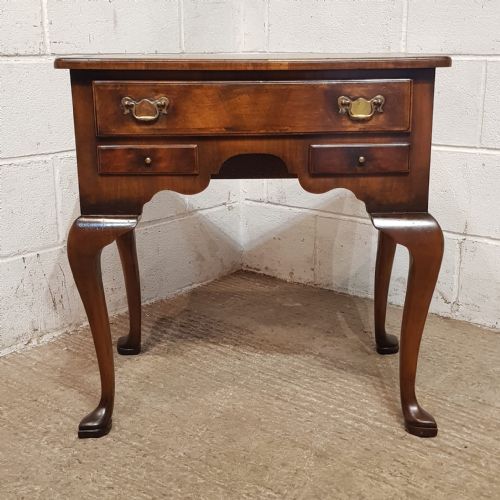
- A small table with drawers, resembling the lower section of a tallboy chest, used as a dressing or writing surface. Eighteenth-century versions inspired later revival models.
- Serpentine Front
- A furniture front curving outward in the centre and inward at the sides. This contour requires precise woodworking to fit drawers accurately.
Carved Walnut Dressing Table: Frequently Asked Questions
What periods do these dressing tables come from?
The pieces span the nineteenth and early twentieth centuries, with Victorian, Edwardian, and 1920s examples appearing regularly alongside earlier Georgian styles.
Revival movements also influence the dating, as makers frequently reproduced eighteenth-century forms during later decades.
Do dressing tables usually include matching stools?
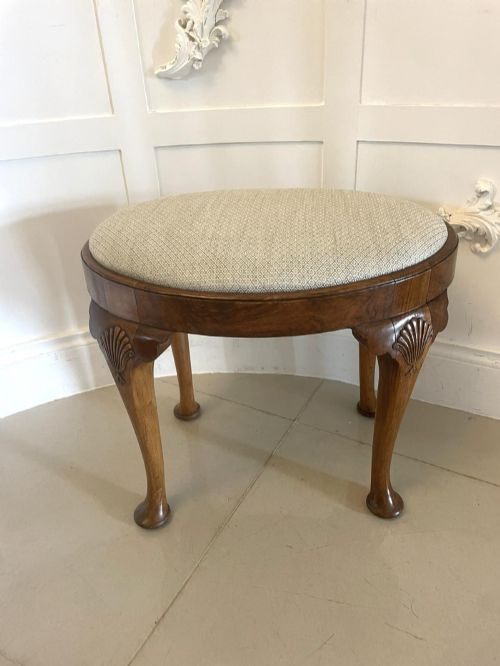
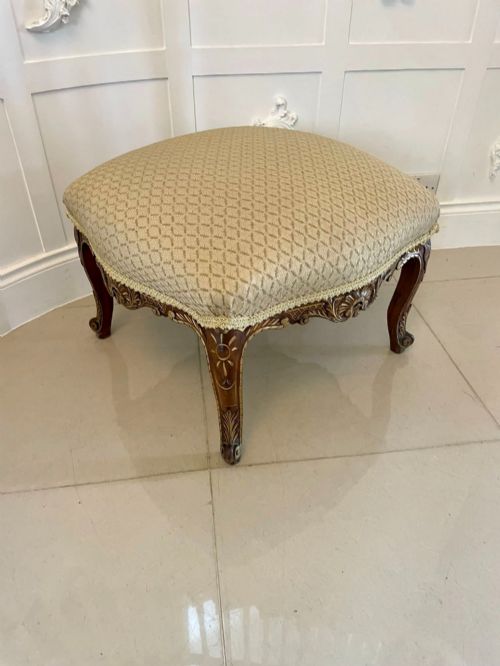
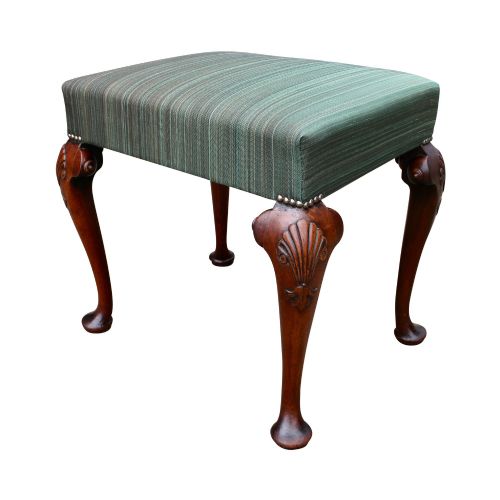
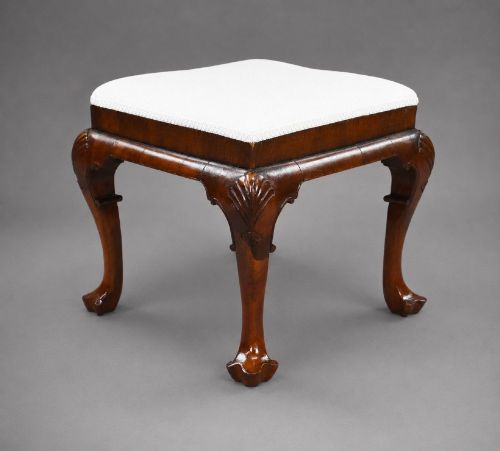
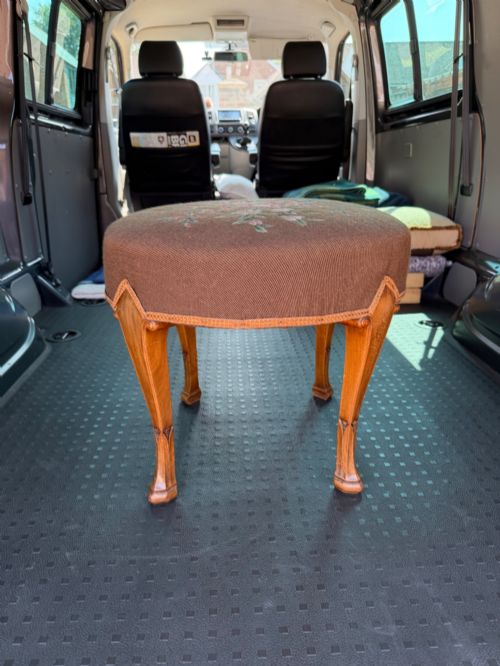
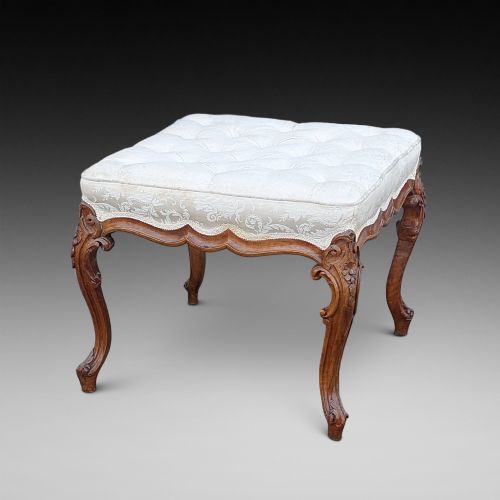
Many examples are paired with matching stools featuring upholstered seats, needlepoint covers, or carved cabriole legs.
Some stools share the exact timber and carving style of the main table, while others are collected together later.
How do I identify burr walnut?
Burr walnut exhibits distinctive swirling, knotty grain patterns created by irregular tree growths. Craftsmen sliced these formations into thin veneers to cover large flat areas.
This decorative technique highlights the natural variation of the wood across drawer fronts and table tops.
Are the mirrors original?
Mirrors on these tables are often original, though silvering degradation can occur over long periods. Triple mirror configurations and pivoting glass plates appear across Victorian and Edwardian pieces.
Replacement glass is sometimes fitted where the original plate has suffered damage.