

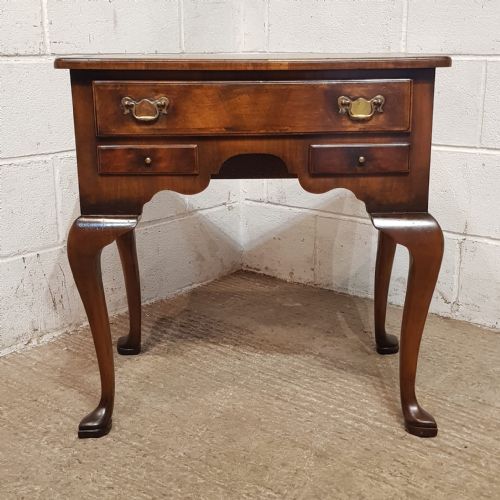
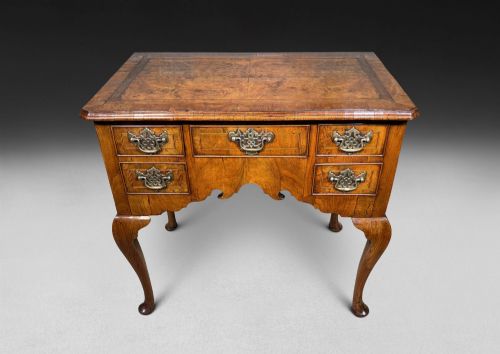
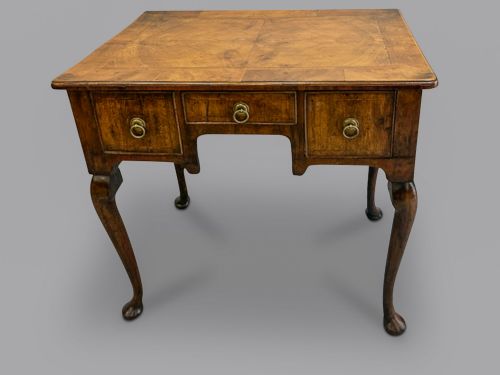
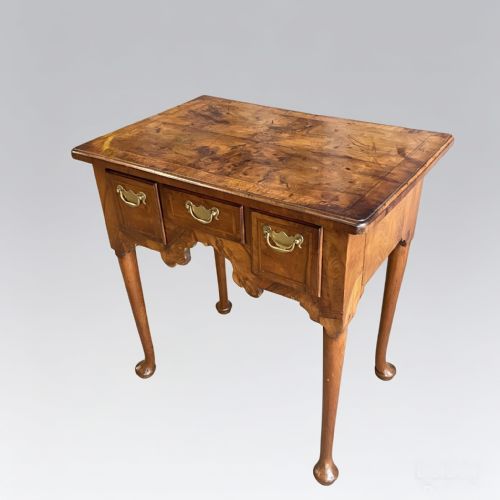
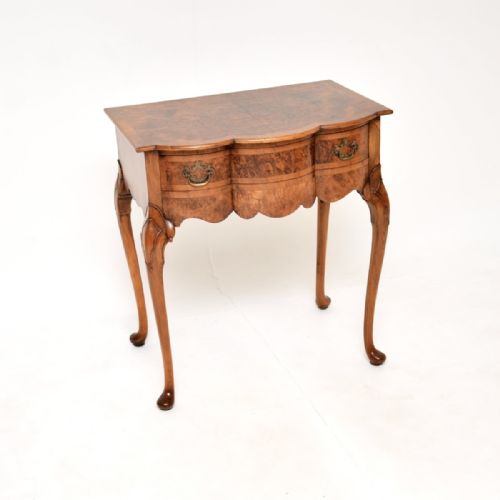
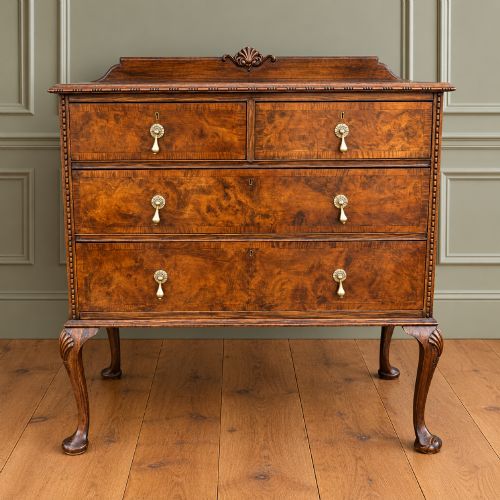

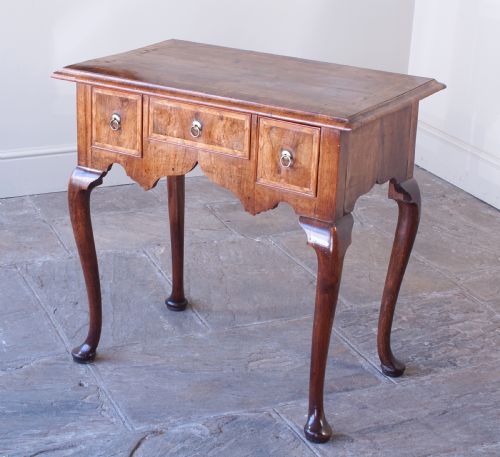


Burr Walnut Lowboy
A burr walnut lowboy offers compact table storage with a richly figured timber top, spanning early eighteenth-century origins to later revival pieces.
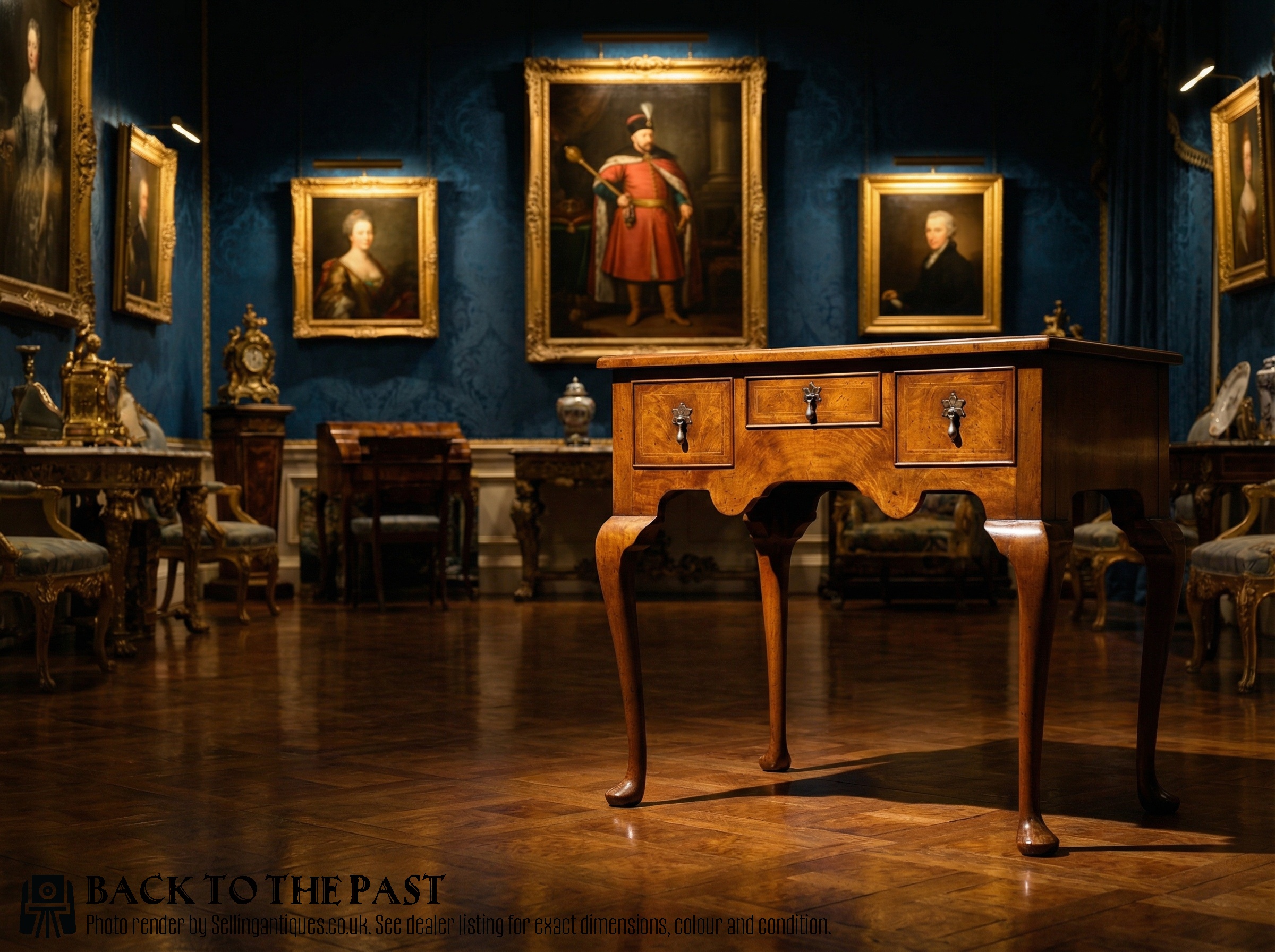
Burr Walnut Lowboy
A burr walnut lowboy serves primarily as a small table with drawers, originating in the eighteenth century and reappearing through the Victorian, Edwardian, and later periods.
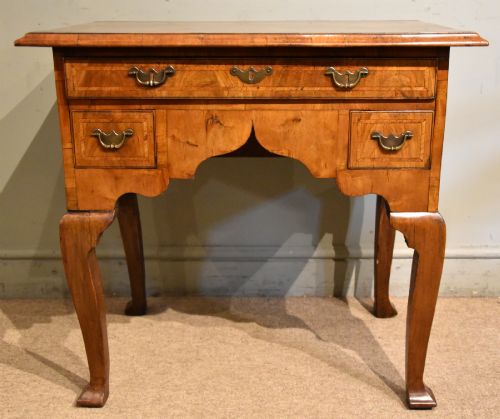
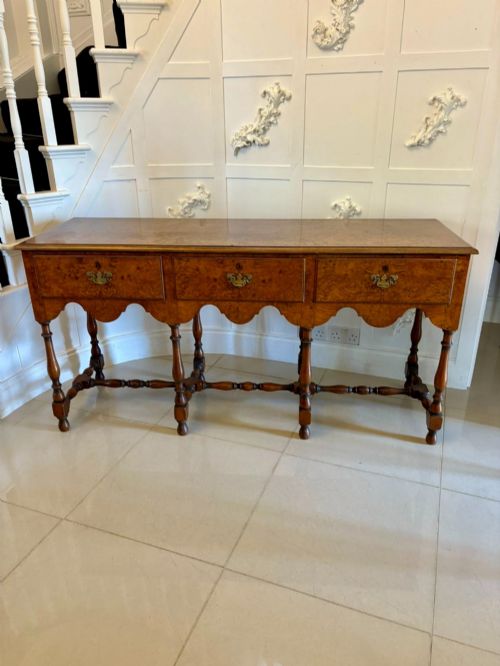
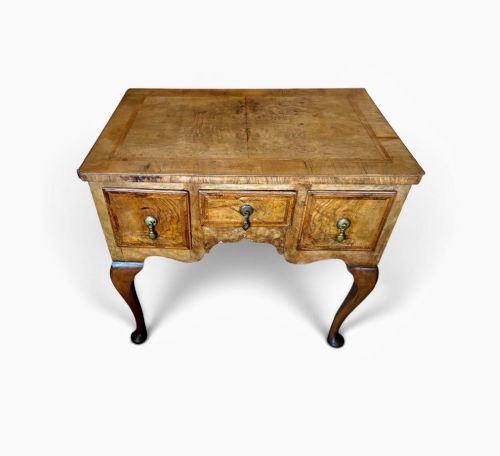
The form typically combines a working drawer arrangement set beneath a kneehole or flat top, standing on slender cabriole or straight legs.
Buyers meet both genuine eighteenth-century examples from the Georgian eras and subsequent revival pieces produced during the early twentieth century.
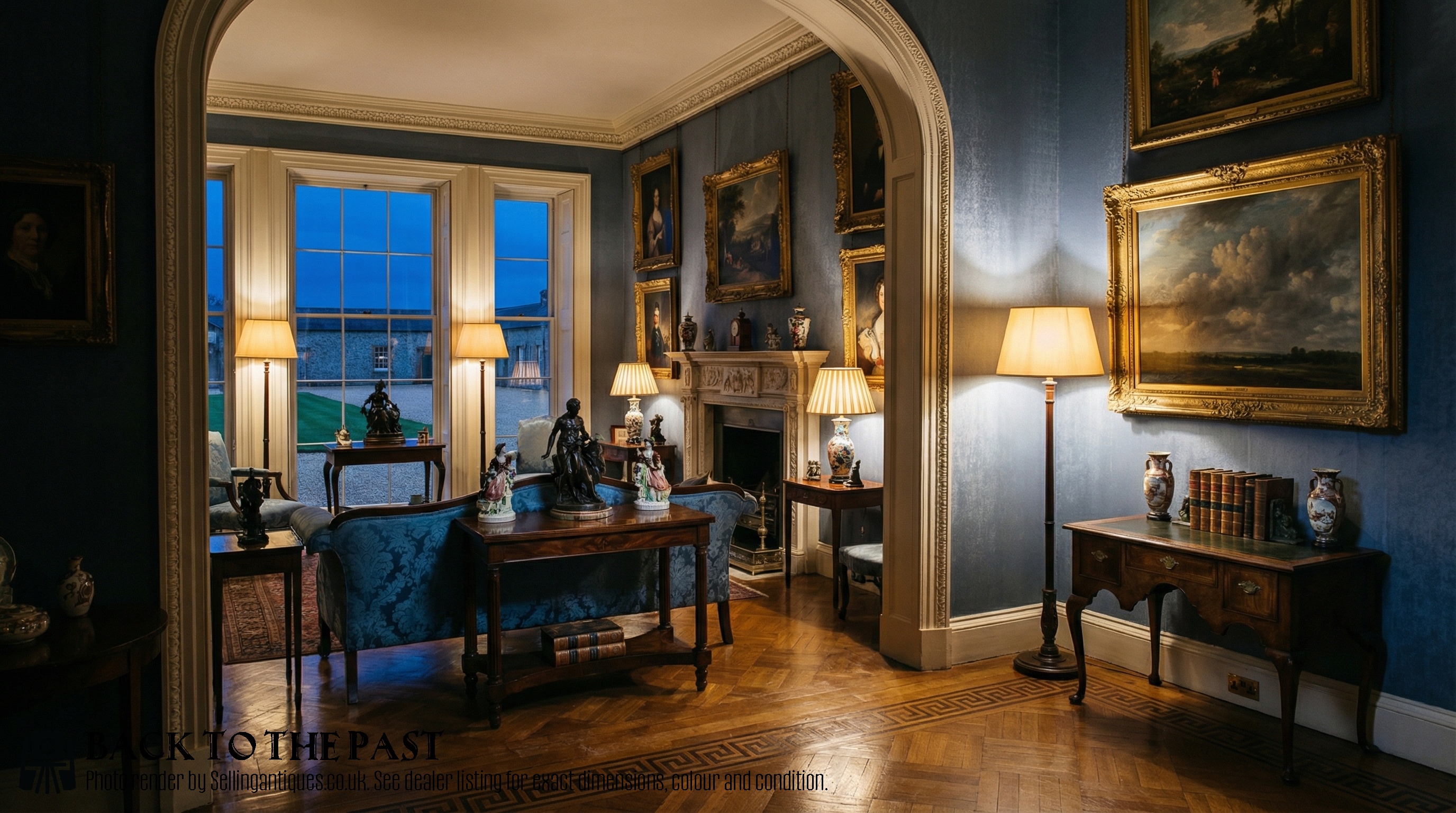
How they were made
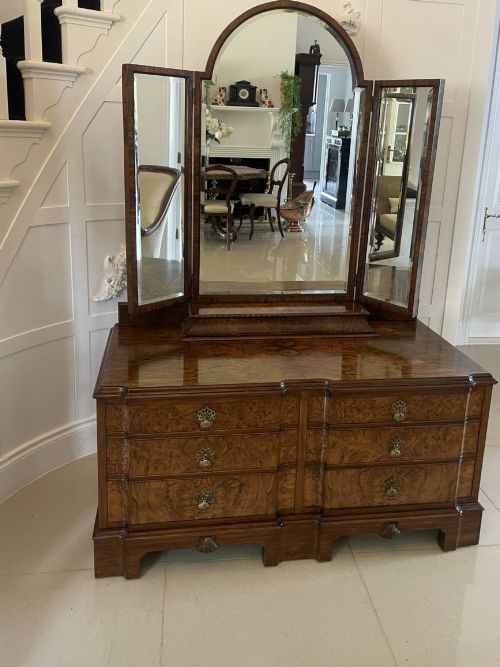
Cabinet makers applied burr walnut veneer over solid secondary timbers such as oak and pine to create highly patterned, swirling grain surfaces on the top and drawer fronts.
Brass handles and escutcheons punctuate the polished timber facades, secured alongside traditional drawer linings and structural joinery.
Burr Walnut Lowboy Retail Price Guide 2026
Typical asking prices for burr walnut lowboy among the pieces listed under this phrase on Sellingantiques today, from the lower quarter to the upper quarter. They describe what is for sale here now, not the wider market.
Listings span from the 17th century through the Georgian period, Victorian era, and 1920s revivals, constructed in walnut, oak, and brass.
What varies in quality
The depth and symmetry of the burr walnut figuring dictate visual appeal, with tightly clustered burls commanding greater appreciation than sparse grain patterns.
Proportion and leg definition separate refined examples from heavier interpretations, particularly when comparing eighteenth-century originals with twentieth-century revival furniture.
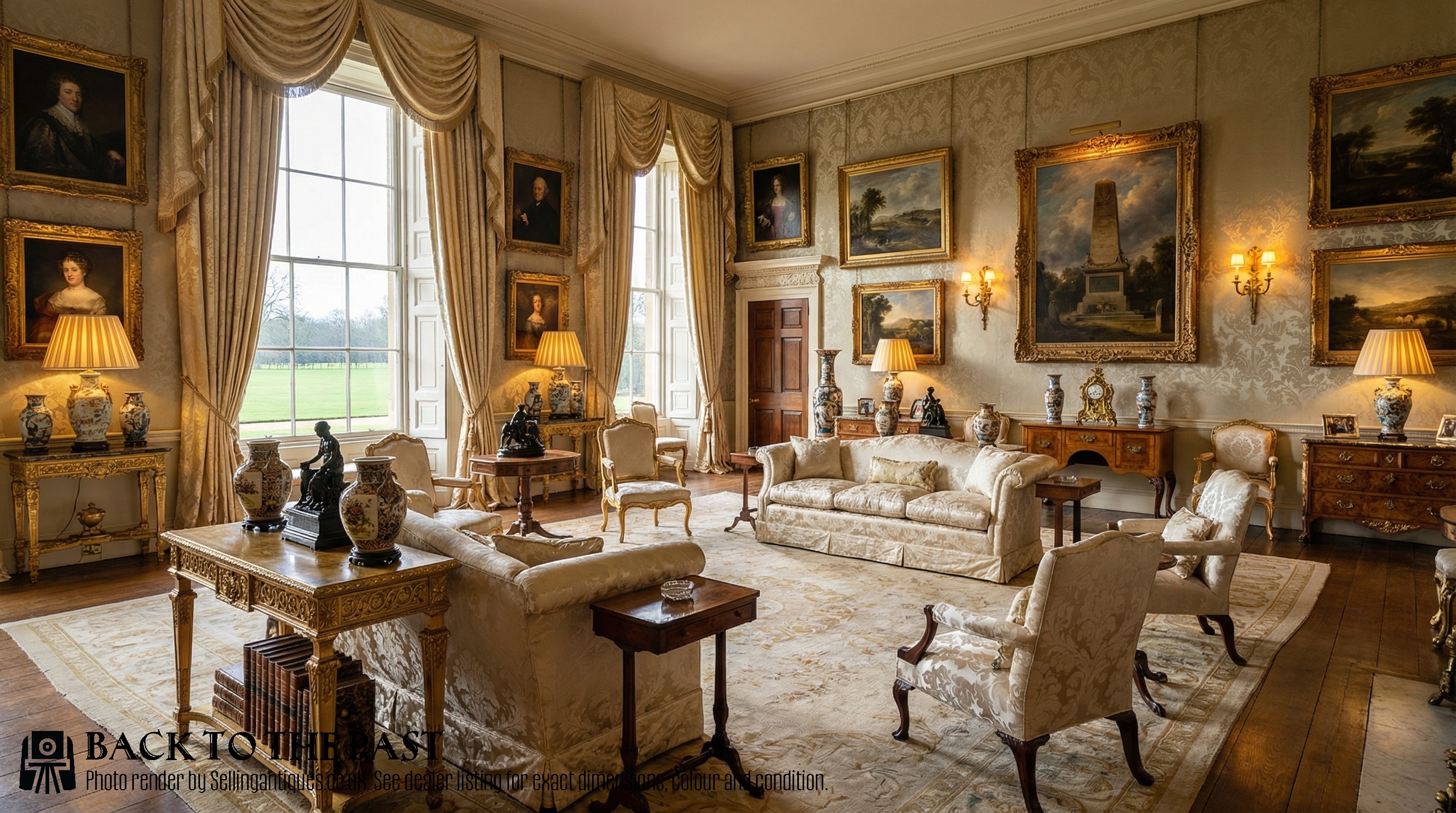
Shoolbred and Co·Maples of London·Waring and Gillows
The Burr Walnut Lowboy Glossary
- Lowboy
- A small side table fitted with one or more drawers, historically used for grooming or writing.
- Burr walnut
- A specialised timber veneer harvested from the warted growths of walnut trees, displaying intricate, swirling grain patterns.
- Cabriole leg
- A furniture leg that curves outward at the knee and tapers inward toward the foot, typical of Queen Anne and Georgian design.
- Quarter veneered
- A method of arranging four matching slices of wood veneer so the grain patterns mirror each other symmetrically.
- Escutcheon
- A protective brass plate surrounding a keyhole on a drawer front or cupboard door.
Burr Walnut Lowboy: Frequently Asked Questions
What is a lowboy used for?
Originally utilised as a dressing or small writing table in domestic chambers, a lowboy provides surface space combined with accessible drawer storage.
Today, buyers frequently place these compact tables in hallways, living rooms, or bedrooms as decorative side tables.
How do I date a walnut lowboy?
Dating relies on examining construction methods, timber choice, and leg styling alongside historical periods like the Georgian era or the 1920s revival.
Evolving hardware designs and secondary woods like oak or pine further help determine whether a piece is an eighteenth-century original or a later reproduction.
Are all lowboys made of solid walnut?
Most examples feature burr walnut veneer applied over a secondary carcass wood such as oak or pine to showcase decorative grain patterns.
Solid walnut was generally reserved for structural elements like legs and drawer frames while the patterned surfaces utilised veneer.