
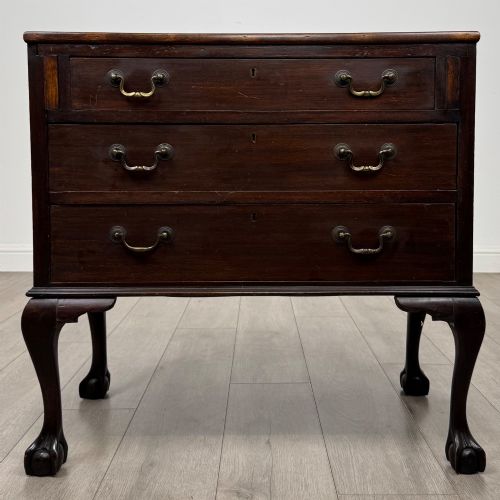


Ball and Claw Lowboy
These ball and claw lowboy pieces offer compact table storage with traditional claw feet, combining useful surface space with classic period design.
Ball and Claw Lowboy
When you search for a ball and claw lowboy, you are looking at small tables designed for domestic storage and display. The lowboy form typically stands on four legs, often with drawers fitted into the apron below the main surface.
The versions you are most likely to meet on this page span several centuries and revival movements. The evidence shows examples from the 18th century alongside Edwardian and later Georgian revival pieces.
Makers and craftsmen built these items from various timbers, including mahogany, walnut, burr walnut, and cherrywood. Alongside standard lowboys, the listings include related forms such as side tables, chests of drawers, and console tables.
How They Were Made
Makers constructed these pieces primarily using solid timbers like mahogany, walnut, and cherrywood, sometimes selecting burr walnut veneers for figured surfaces. Cabinetmakers shaped structural elements by hand to achieve the characteristic cabriole legs and curved aprons.
Details such as brass hardware appeared on drawer fronts to serve both functional and decorative purposes. Workshops employed traditional joinery techniques to secure the legs and frame, ensuring the tables could support daily use.
Ball and Claw Lowboy Retail Price Guide 2026
Typical asking prices for ball and claw lowboy among the pieces listed under this phrase on Sellingantiques today, from the lower quarter to the upper quarter. They describe what is for sale here now, not the wider market.
Listings span multiple periods including the 18th Century, Edwardian era, and the 1920s, featuring woods such as mahogany, walnut, and cherrywood.
What Varies in Quality
The choice of timber creates a clear distinction across the range, with figured burr walnut and dense 18th-century cherrywood or mahogany representing a higher standard of material selection. Original period construction shows greater harmony in proportion and finer hand-shaping on the cabriole legs compared to later revival pieces.
The crispness of the carving on the feet and knees dictates the aesthetic success of the piece. Subtle variations in the execution of the woodwork separate standard production items from those shaped with careful attention to historical detail.
Elkington & Co·Muirhead Moffat & Co
The Ball and Claw Lowboy Glossary
- Lowboy
- A small table with drawers, typically used as a dressing table or side table. These pieces usually stand on four legs and date from the 18th century onwards.
- Cabriole leg
- A furniture leg that curves out and then in, resembling the shape of an animal's leg. This form is common on pieces influenced by Queen Anne and Chippendale styles.
- Chippendale style
- A decorative style inspired by the 18th-century designer Thomas Chippendale. Pieces in this style often feature carved details and ball and claw feet.
- Burr walnut
- A veneer taken from the burl growth of a walnut tree, producing swirling patterns. Cabinetmakers utilised this timber for decorative surfaces on tables and cabinets.
- Georgian revival
- A design movement recreating the architectural and furniture styles of the 18th-century Georgian era. Items from this period imitate earlier proportions and decorative motifs.
Ball and Claw Lowboy: Frequently Asked Questions
What is a lowboy used for?
A lowboy functions primarily as a small side table or dressing table with built-in drawers. Historically, people placed them in bedchambers or parlours to hold personal items or linens.
Today, these tables serve as compact surface storage in hallways, living rooms, or bedrooms. Their modest footprint allows them to fit into spaces where larger chests of drawers will not go.
How do I tell an original piece from a revival?
Distinguishing original period items from later revivals involves examining the construction methods, timber ageing, and tool marks. 18th-century pieces show historical wear patterns and hand-cut joinery consistent with their age.
Revival pieces, such as those from the Edwardian era or 1920s, often display cleaner internal surfaces and machine-assisted construction techniques. Comparing the timber characteristics helps clarify the date of manufacture.
What woods were used for these tables?
Makers constructed these tables from a variety of hardwoods suited to fine cabinetmaking. Mahogany, walnut, and cherrywood appear frequently across the historical and revival examples.
Some pieces feature burr walnut veneers to create decorative patterns on the top surface. Brass fixtures and fittings often complement these timber choices.
How do I care for a wooden lowboy?
Maintaining wooden surfaces requires placing the table away from direct heat sources and strong sunlight. Consistent indoor temperatures prevent the timber from drying out or splitting.
Dusting the surface regularly with a soft cloth preserves the finish. Avoid using harsh chemical polishes that can damage older wood and polish layers.