



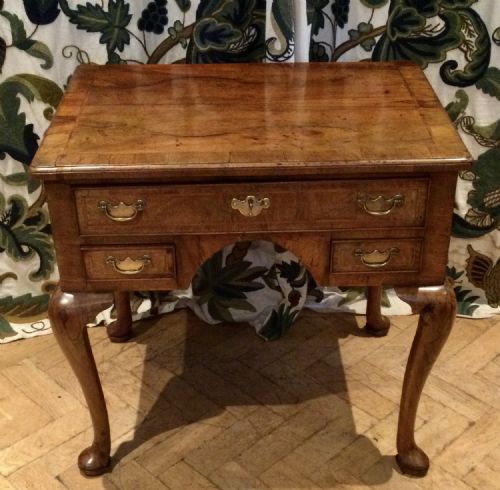


Feather Banded Table
A feather banded table brings fine 18th-century cabinetmaking into a room, offering warm walnut timber and precise crossbanding that draws the eye.
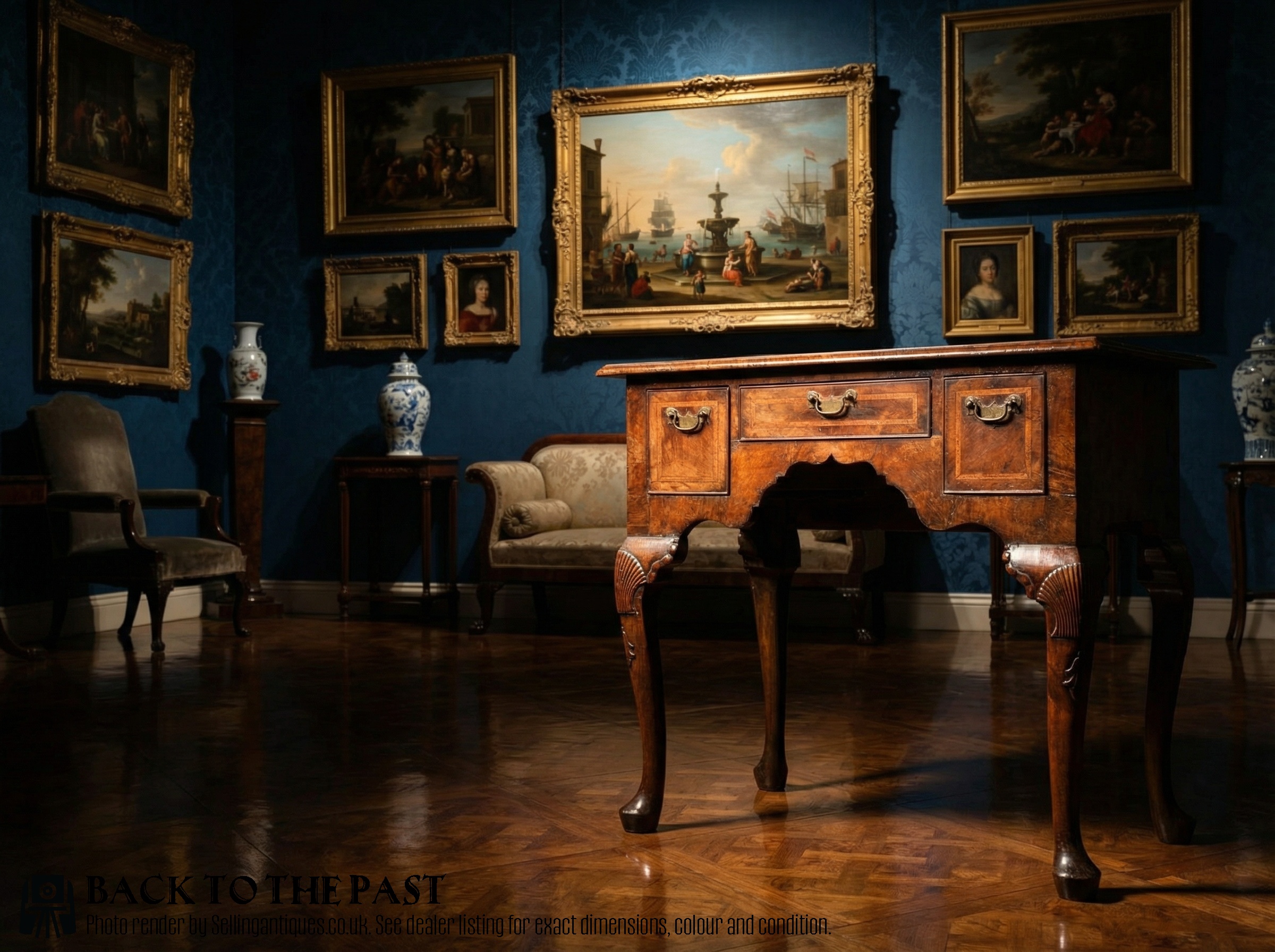
Feather Banded Table
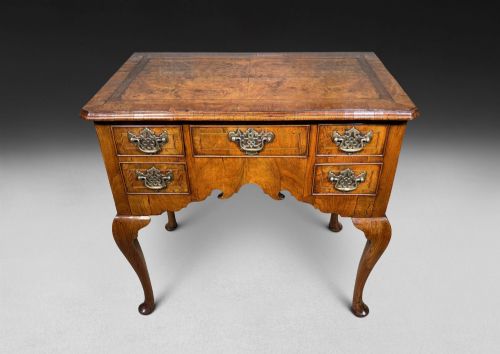
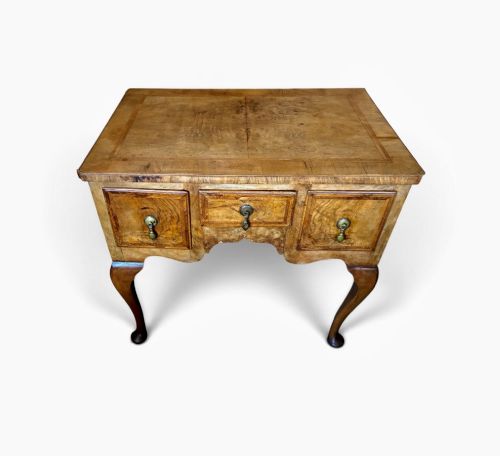
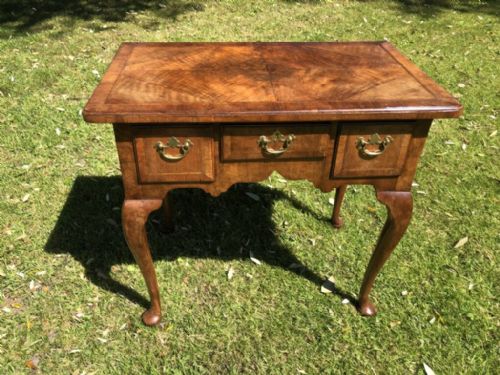
A feather banded table primarily takes the form of a lowboy, side table, or card table, predominantly originating from the 18th century and the Georgian period. These pieces serve as elegant writing surfaces or side pieces, featuring proportions suited to period interiors.
The version most commonly met on this page is the walnut lowboy or side table, often displaying figured or burr walnut veneers. Examples range from early 18th-century originals to later revival pieces from the Edwardian era.
How they were made
Cabinetmakers utilised walnut and burr walnut veneers applied to secondary timbers, creating rich surface patterns across the top and drawer fronts. The distinct feather banding involves cutting thin strips of veneer diagonally and arranging them in a herringbone pattern around the edge.
Many examples incorporate brass handles and escutcheons on the drawers, complementing the warm tones of the timber. Construction techniques from the Georgian period relied on traditional joinery to ensure the stability of these delicate side tables.
Feather Banded Table Retail Price Guide 2026
Typical asking prices for feather banded table among the pieces listed under this phrase on Sellingantiques today, from the lower quarter to the upper quarter. They describe what is for sale here now, not the wider market.
What varies in quality
Quality rests upon the choice of timber and the precision of the veneer work, particularly the symmetry and tightness of the feather banding around the edges. Figured and burr walnut surfaces with strong, natural grain patterns distinguish the finest examples from plainer pieces.
The handling of the original surfaces and the subtlety of the colour also dictate the standing of a table. Retaining an undisturbed timber patina elevates a piece above those with heavy modern interventions.
The Feather Banded Table Glossary
- Feather banding
- A decorative inlay technique using small strips of veneer cut at an angle and laid in opposing directions to form a herringbone design. This frames the top or drawer fronts of period furniture.
- Lowboy
- A small dressing table or side table with one or more rows of drawers, standing on relatively tall legs. They date mostly from the early 18th century.
- Burr walnut
- Timber taken from the abnormal growth of a walnut tree, yielding highly figured and swirling grain patterns. Cabinetmakers prized it for veneering prominent surfaces.
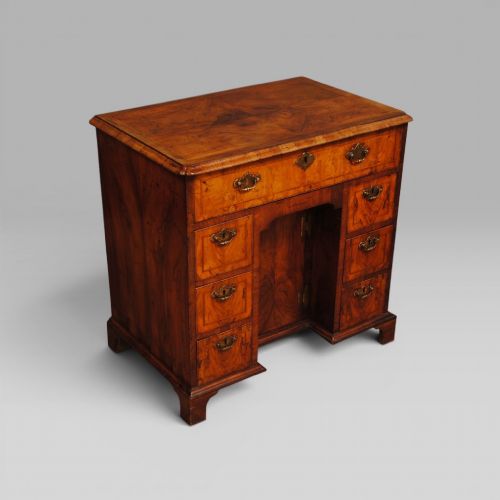
- Kneehole desk
- A writing desk featuring a recessed central space for the legs, flanked by pedestals of small drawers. They often incorporate feather banded drawer surrounds.
- Quarter veneered
- An arrangement where four matching slices of veneer from the same log section are placed together to mirror each other. This creates a balanced, symmetrical geometric pattern across a tabletop.
Feather Banded Table: Frequently Asked Questions
What is a feather banded table used for today?
These tables function well as hallway side tables, compact desks, or dressing surfaces in a bedroom. Their modest proportions allow them to fit into spaces where larger furniture would overwhelm the room.
They also provide a convenient surface for displaying small decorative objects or lamps while adding historic character to an interior.
How do I identify a Georgian feather banded table?
Look for construction details such as hand-cut dovetails on the drawer sides and the use of solid walnut or oak as secondary timbers. The presence of period brass hardware also helps indicate age.
Stylistic cues like cabriole legs and pad feet point directly to the George I and George II periods when these tables were standard.
How should I care for walnut veneer?
Keep walnut furniture away from direct sunlight and heat sources to prevent the timber from drying out and the veneer from lifting. Maintaining stable room humidity preserves both the wood and the old glue.
Dust gently with a soft dry cloth and avoid modern silicone polishes that can build up a greasy film over the antique finish.