

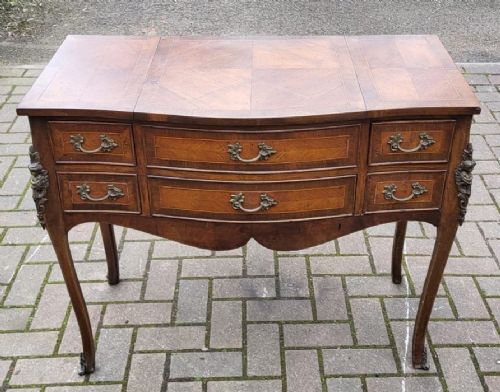


Antique Walnut Dressing Tables
A bedroom table fitted with a mirror and small drawers for dressing and grooming, made here in walnut and, more often than not, veneered in burr.
Antique Walnut Dressing Tables
The heading is dominated by one thing: burr walnut. Almost six in ten titles say burr, so the swirling figured veneer is the defining feature rather than an upgrade. Solid walnut is the minority; what you are usually looking at is veneer laid over a carcass, cut from a knotty growth on the tree.
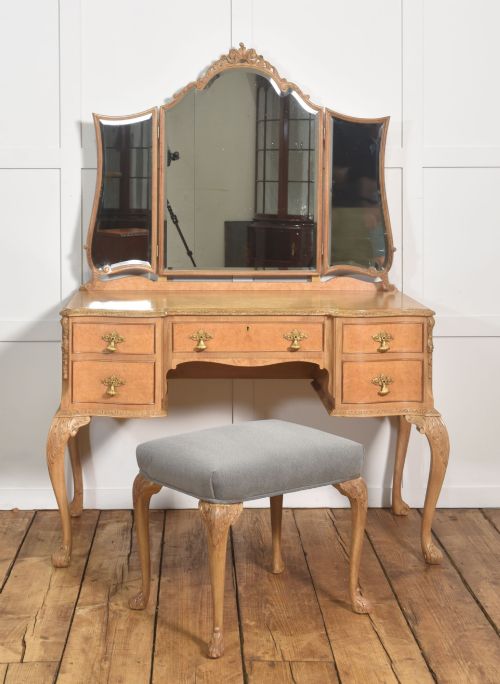
The dated field runs 1800 to 1930, and it leans hard into the twentieth century. The 1920s alone account for 193 dated listings, with the 1930s adding 63 more, which is more than every Victorian and nineteenth-century label put together. The typical piece is an inter-war English dressing table with a kidney-shaped, serpentine or bow front, short cabriole legs, a swing or triple mirror and a bank of small drawers. Many titles carry nothing beyond "Burr Walnut Dressing Table".
Watch the style words. "Queen Anne" appears in 48 titles and "Georgian" turns up too, but these describe an idiom rather than a date: the sample shows Queen Anne walnut tables dated 1850, 1910 and 1920 alike. Vague labels like "Victorian", "19th Century" and "Edwardian" are best read as approximations.
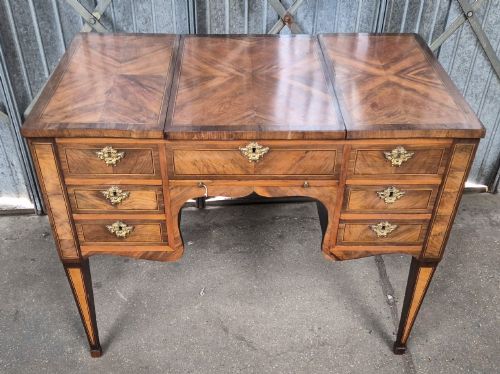
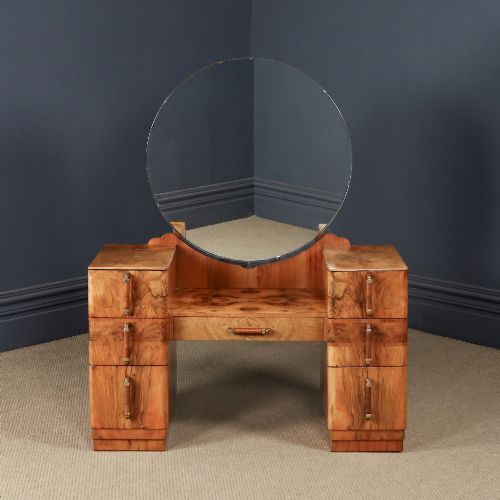
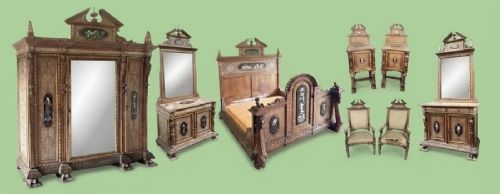
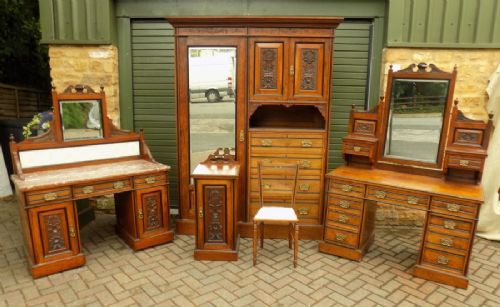
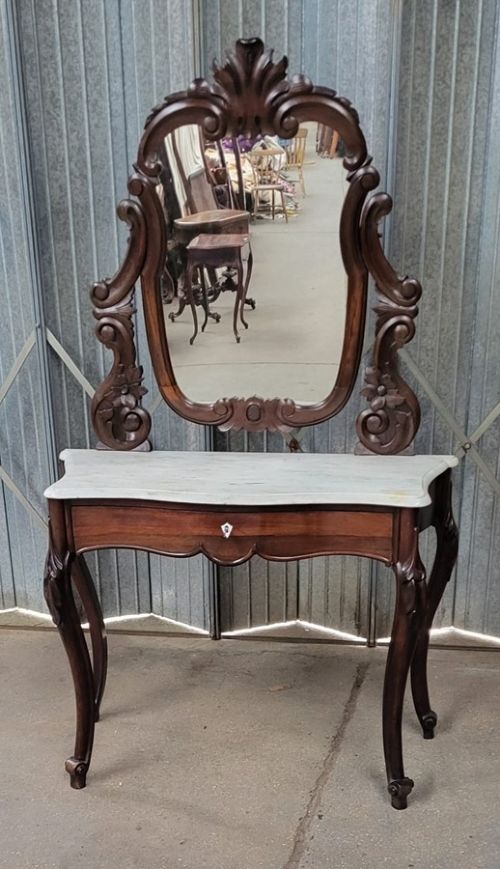
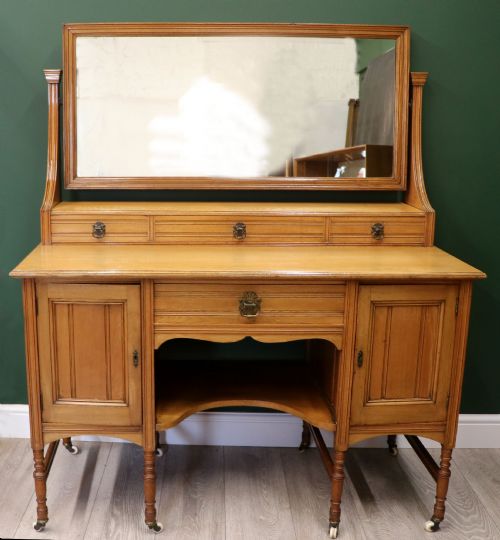
Four other groups run alongside. Art Deco walnut accounts for about one in ten, taking in blonde walnut, cloud-shaped, circular and cylinder models. Victorian burr walnut is roughly a sixth to a fifth, and includes the Duchess type. French pieces, another one in ten, bring marble tops, fold-out and lift-top lids and the occasional poudreuse. Then the adjacent forms filed under the same heading: dressing chests, shaving mirrors and telescopic stands, washstands and whole bedroom suites.
Where The Range Splits
Veneer does most of the work. The highest-priced dressing tables in the sample are almost all burr or figured walnut, while satin walnut, a plainer and distinct timber, clusters at the bottom. This is a category that sells on the pattern of the wood, and only eight titles in 480 mention carving at all, so decorated surfaces are the exception rather than the route to the top.
Shape is the next lever. Kidney-shaped tops turn up 23 times and serpentine fronts 13, and those, along with bow fronts and the one cloud-shaped top in the sample, sit above the undescribed rectangular forms. Where decoration does appear, it counts: floral marquetry, chinoiserie and parcel gilt titles all sit in the upper reaches.
A name in the title lifts a piece, and named examples recur through the upper half of the sample and gather at the very top. So does completeness. A matching stool accompanies 27 of the tables listed, and the top of the whole range is not a dressing table on its own but an eight-piece bedroom suite.
Antique Walnut Dressing Tables Retail Price Guide 2026
Typical UK retail prices for walnut dressing tables, calculated from the Sellingantiques database of over a million retail prices indexed since 2003. This retail price guide relies exclusively on Sellingantiques data; no external sources or auction records are used, so the figures do not describe the wider market.
Maple & Co is the name that turns up from the most dealers on Sellingantiques in this category.
Maple & Co
The Antique Walnut Dressing Tables Glossary
- Burr walnut
- Veneer cut from a knotty growth on the tree, giving dense swirling figure. Named in the majority of titles, which makes it the standard rather than the exception.
- Kidney shaped
- A top with a concave front bay set between two curved wings. It appears in 23 titles and sits toward the upper end of the range.
- Serpentine
- A front that curves out at the centre and back in at the ends, usually written as serpentine fronted. Thirteen titles use it.
- Triple mirror
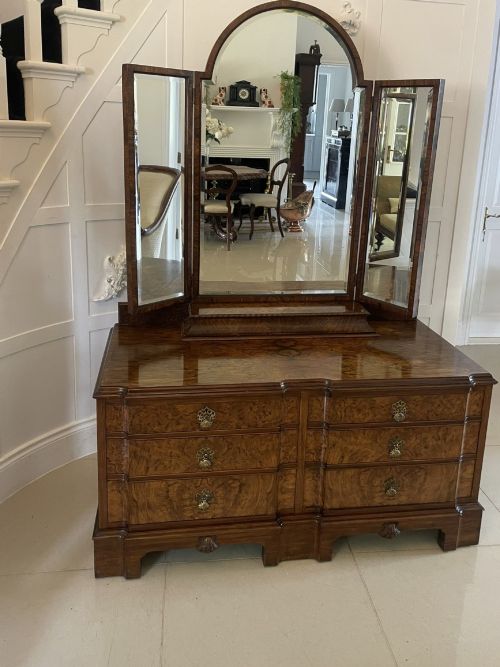
- A central plate with two hinged wings that fold in toward it. Fifteen titles name one, and it goes with the inter-war form.
- Duchess
- A Victorian dressing table type with a wide central mirror flanked by drawer banks. Named in 20 titles and found nowhere outside the Victorian group.
- Poudreuse
- A French dressing table with lifting or folding lidded compartments. It surfaces just twice in the sample, within the French group of 49.
Antique Walnut Dressing Tables: Frequently Asked Questions
Why is burr walnut so common in this category?
Walnut was prized for the figure of its burr veneers, and it was a favoured show wood for dressing tables in the early Georgian period and again in the early twentieth-century revival.
On Sellingantiques, 287 of 480 titles say burr. The figure of the veneer is what these pieces were built to display.
Are Queen Anne walnut dressing tables actually eighteenth century?
Usually not. Queen Anne appears in 48 titles as a style description, meaning cabriole legs and a revival idiom rather than a date.
The sample carries Queen Anne walnut dressing tables dated 1850, 1910 and 1920. Georgian is used the same way on twentieth-century pieces.
What does a Duchess dressing table mean?
It's a Victorian type, named in 20 titles, with a large central mirror flanked by drawers.
The label appears nowhere outside the Victorian group, so it's a useful pointer to period as well as form.
How old are most walnut dressing tables listed?
The dated field runs from 1800 to 1930, with 383 of the 480 listings carrying a clean year. The weight sits firmly in the twentieth century.
The 1920s account for 193 dated listings and the 1930s a further 63, with 39 in the 1910s and 20 in the 1900s. Victorian and nineteenth-century material together comes to less than the 1920s alone.
Do French walnut dressing tables turn up?
They do. French is the largest non-English origin at 49 titles, roughly one in ten of the category.
They bring marble tops, fold-out and lift-top lids, marquetry and painted finishes. The poudreuse, a lidded lady's dressing table, surfaces twice. A single Dutch and a single Italian example are the rarest origins present.
What else gets filed under this heading?
Dressing chests, which are chests of drawers with a mirror above rather than a kneehole table, appear in 28 titles.
Mirrors run to 34 titles, taking in shaving mirrors, telescopic shaving stands and dressing mirrors. Stools appear 27 times, washstands and full bedroom suites less often.