


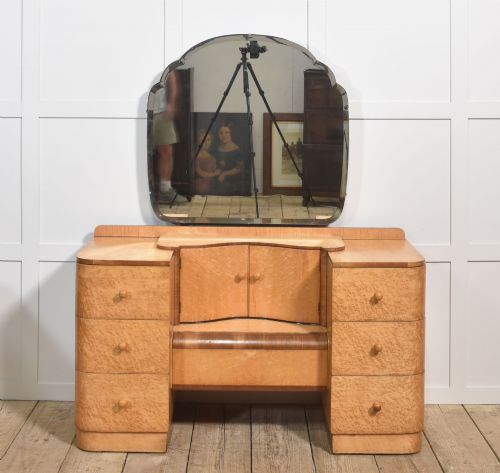
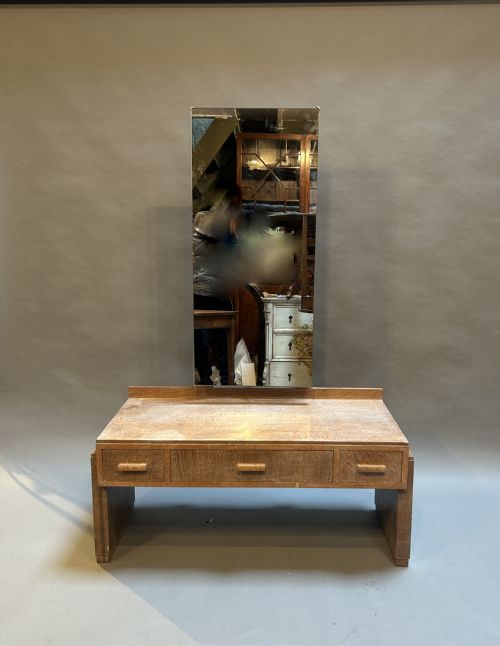


Art Deco Dressing Tables
A bedroom dressing table from the 1920s and 1930s, veneered rather than solid, fitted with a mirror or three and made to stand beside a matching chest, wardrobe and stool.
Art Deco Dressing Tables
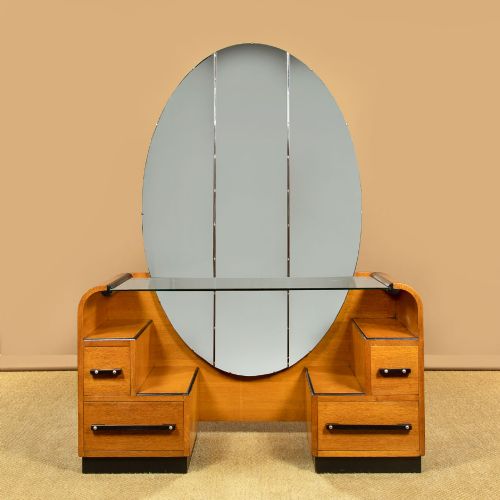
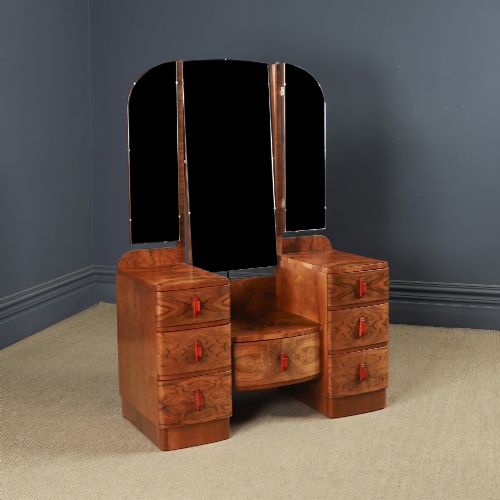
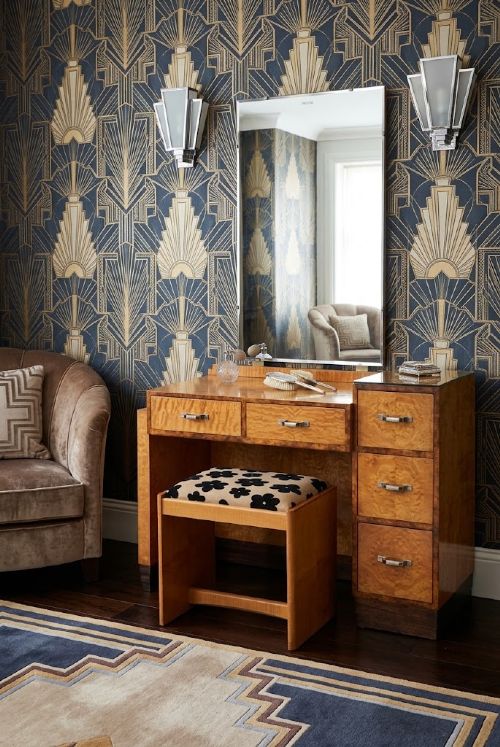
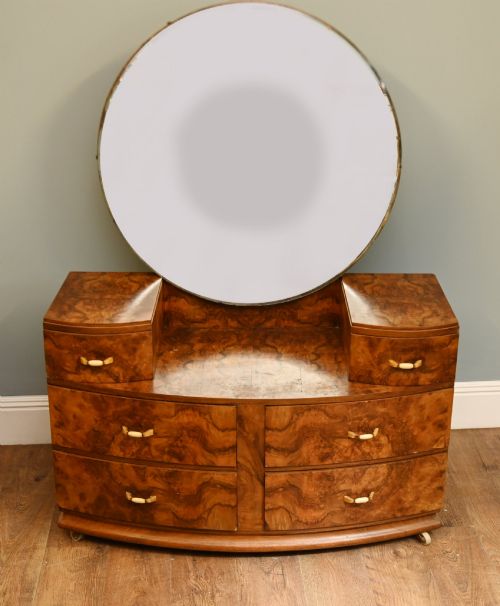
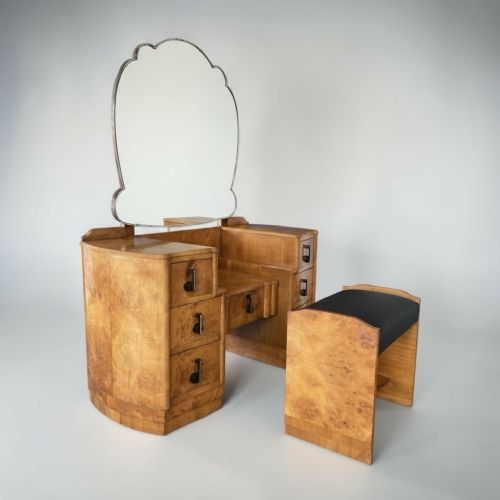
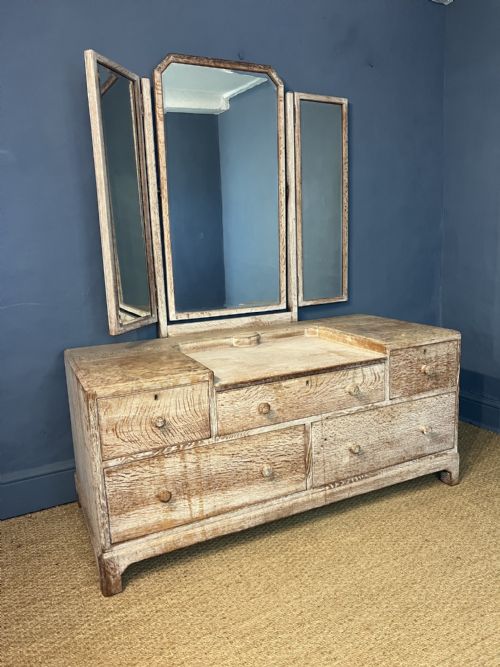
Two shapes account for the bulk of what's listed. One is the low table, often twin pedestal with a kneehole between the drawer banks, carrying a large central mirror or a hinged triptych. The other is the dressing chest: a chest of drawers with a mirror mounted above it, taller and narrower in footprint.
Walnut veneer dominates. It is named in 53 of 161 titles, and in 22 of those it's specified as burr walnut, with others reading figured or blonde walnut. No other timber gets into double figures. Pale woods turn up as a scattered minority: sycamore, white maple, birds eye maple, limed oak, with rosewood and mahogany appearing too.
The dating is unusually tight. Of 158 listings with a year, every one falls between 1920 and 1940, and the 1930s outnumber the 1920s by better than three to one. Dealers write c1930 or 1920's as often as a precise year, so read a 1930 in the dated field as that decade rather than that twelvemonth.
Purpose-made dressing tables with fitted mirrors had been standard bedroom furniture since the 19th century, and by the 1920s they were made as part of a suite. The Deco versions belong to that tradition, built up in figured veneers over a carcass. Around one in eight comes to market with its stool, and a single title offers a chair instead.
Where The Range Splits
A name is what separates the top from everything else. The highest-priced titles on Sellingantiques carry a maker's or designer's name without exception, while the plainest at the bottom name nobody, no wood and no mirror. Names appear in titles only, so they read as the dealer's attribution rather than anything shown on the piece.
Below that, the veneer does the work. Burr walnut and figured walnut cluster above the unqualified walnut, and the cheapest sampled entries are the plain oak ones with nothing named at all. Mirror ambition follows the same line: triple and triptych arrangements sit mid-range and upward, against the many titles that mention no mirror.
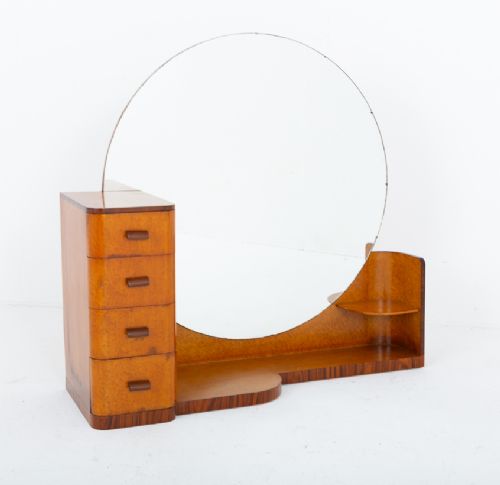
Completeness and oddity both count. A table that still has its matching stool recurs among the dearer entries, and so do the one-off forms that surface then disappear: an illuminated table, a skyscraper profile in white maple, a large circular one, a drum-shaped pair, a revolving dressing mirror with drawers.
Art Deco Dressing Tables Retail Price Guide 2026
Typical UK retail prices for art deco dressing tables, calculated from the Sellingantiques database of over a million retail prices indexed since 2003. This retail price guide relies exclusively on Sellingantiques data; no external sources or auction records are used, so the figures do not describe the wider market.
1930s is the period label used most on Sellingantiques for these, with the 1920s next. The 1930s outnumber the 1920s by better than three to one.
The Art Deco Dressing Tables Glossary
- Dressing chest
- A chest of drawers with a mirror mounted above, as opposed to the low kneehole table. About one title in fifteen.
- Twin pedestal
- Two banks of drawers flanking a central kneehole, the commonest layout for the low form.
- Triptych mirror
- A three-panel mirror with hinged side wings, also written as triple mirror in titles.
- Burr walnut
- Veneer cut from a wart-like growth on the tree, giving dense swirling figure. Named in 22 of 161 titles.
- Drop centre
- A lowered central section between the two drawer pedestals.
- Skyscraper
- Stepped, setback profile echoing 1930s tower blocks. Used once across these titles.
Art Deco Dressing Tables: Frequently Asked Questions
What wood are they usually made from?
Walnut veneer, more than anything else. It's named in almost a third of all titles, and no other timber comes close to double figures.
Within the walnut group, burr walnut is specified in 22 titles, with figured and blonde walnut appearing as well. Pale woods, sycamore, white maple, birds eye maple and limed oak, each turn up only a handful of times across the whole archive.
How are these dated by dealers?
By decade rather than year. Of 158 dated listings, every one sits between 1920 and 1940, and titles commonly read c1930, circa 1930 or 1920's.
The 1930s dominate, 121 against 36 for the 1920s, with one stray entry pushed into the 1940s. It makes this one of the tightest-dated furniture categories on Sellingantiques.
Do they come with a matching stool?
Roughly one in eight does. Stool appears in 21 of 161 titles, phrased as "and matching Stool", and one title extends that to a chair instead.
Those paired entries recur among the dearer ones. Beyond the table-and-stool pairing, the listings don't show suites still together.
What's the difference between a dressing table and dressing chest?
Height and drawer arrangement. The dressing table is low, often twin pedestal with a kneehole for your legs and a mirror rising behind.
The dressing chest is a chest of drawers with a mirror mounted above, so there's no kneehole. Chest turns up in 10 of 161 titles, small but consistent.
Which forms turn up least often?
The one-offs. An illuminated table, a skyscraper-profile one in white maple, a large circular example, a drum-shaped pair and a revolving dressing mirror with drawers.
On origin, titles read mostly English by implication, with French cited several times and exactly one Swedish piece in the entire archive.
How many appear on the market each year?
About eighteen come to market in a year on Sellingantiques.
Forty-two different dealers have listed one, so no single dealer's stock shapes what the category looks like.