



Antique Poudreuses
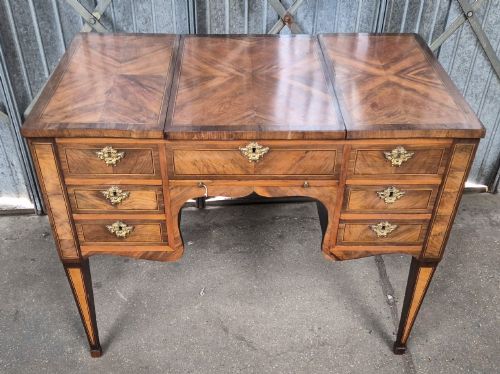
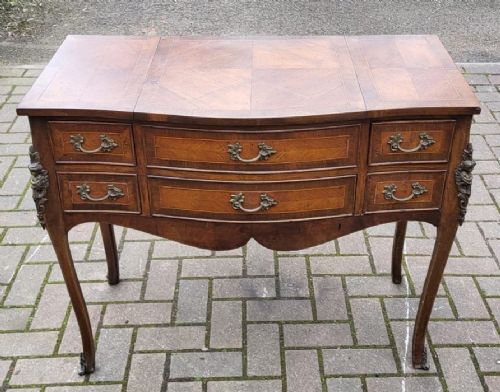
A poudreuse is a small lady's dressing table with a hinged or lifting top over a fitted, compartmented interior, made for powdering and toilette.

Antique Poudreuses
The form began in mid-18th-century France as a small powdering and dressing table for a lady, with a lifting or hinged top over compartments for cosmetics and a mirror. It was reproduced and reinterpreted through the 19th century, and that later work is what reaches the market on Sellingantiques.
The version you are most likely to meet is French and 19th-century, veneered in figured exotic timber. Five of the six listings on record are titled French, and kingwood is named on three of them, once written as "king wood". Walnut appears on two, tulipwood on one, with marquetry inlay or ormolu mounts named on two.
Dates are thin. Four listings sit in the 19th century, but only two give a clean year and both say 1860; the others offer "19th Century" or "C19th", which is a dealer's bracket rather than a date. One English Edwardian mahogany piece is the only entry outside that century, and the 18th-century original period is not represented at all.
Titles routinely pair the French word with "dressing table". Four dealers use "poudreuse" unexplained; two add the plain-English term alongside it, which is how buyers are most often walked into the form.
Where The Range Sits
Timber and surface decoration do most of the separating. At the top of the range the description drops the French word altogether and sells on "quality marquetry inlaid kingwood"; at the bottom sits Edwardian mahogany with no decoration named at all. Figured veneer and inlay carry the piece.
French origin pushes upward. Five of the six listings are titled French, and the single English piece is also the lowest in the range. Applied metal mounts work the same way: the ormolu-mounted walnut example is priced above the undecorated ones.
The interior can stand on its own. One dealer sells the piece on an "impressive interior" and names no date and no timber, which tells you a well fitted, compartmented well under the lid is worth flagging in a title.
Antique Poudreuses Retail Price Guide 2026
Typical UK retail prices for poudreuses, calculated from the Sellingantiques database of over a million retail prices indexed since 2003. This retail price guide relies exclusively on Sellingantiques data; no external sources or auction records are used, so the figures do not describe the wider market.
Poudreuses have been listed on Sellingantiques since 2016, and six dealers have handled them - none of them more than one.
The Antique Poudreuses Glossary
- Poudreuse
- Small French lady's dressing table with a fitted top enclosing compartments for powder and toilette items.
- Dressing table
- The plain-English equivalent dealers add to titles; two of the six listings use both words together.
- Kingwood
- Dense purplish-brown Brazilian timber, the commonest wood named in these titles, sometimes written "king wood".
- Tulipwood
- Pale striped timber of the rosewood family, used for veneers and crossbanding. Named on one listing.
- Ormolu
- Gilded metal mounts applied to corners, edges and feet. One dealer spells it "Ormalou".
- C19th
- Dealer shorthand for nineteenth century, used in place of a year.
Antique Poudreuses: Frequently Asked Questions
What was a poudreuse used for?
It was made for powdering and toilette. The top lifts or swings open on hinges to reveal a compartmented interior fitted for cosmetics, with a mirror.
That interior is the defining feature. One dealer sells on it alone, promising an "impressive interior" without naming a wood or a date.
Are poudreuses French?
The form is French in origin, from the middle of the 18th century, and the listings follow that. Five of the six on record are titled French.
The exception is an English Edwardian mahogany piece. It is the only non-French entry and the only one outside the 19th century.
Which timbers turn up most?
Kingwood is the signature wood, named on three of the six pieces. One dealer writes it as two words, "king wood".
Walnut appears on two listings and tulipwood on one. Mahogany covers the single English example.
Why do titles say poudreuse and dressing table?
Because the French word is not universally familiar. Two dealers add "dressing table" alongside it so a buyer knows what they are looking at.
The other four use "poudreuse" unexplained. At the top of the range the description swaps the French word out and leads on decoration instead: "ladies quality marquetry inlaid kingwood dressing table".
How old are the ones that come up for sale?
Four of the six listings sit in the 19th century. Only two carry a clean year, and both of those give 1860, so the dated field runs from 1860 to 1860 and says little about spread.
Two more are given only as "19th Century" or "C19th". The 18th-century original period of the form does not appear in the archive.
Are these pieces signed by a maker?
No maker's name appears anywhere in the six listings, neither stamped nor labelled nor offered as an attribution.
Dealers sell them on timber, origin, mounts and interior instead.