


Antique Edwardian Dressing Tables
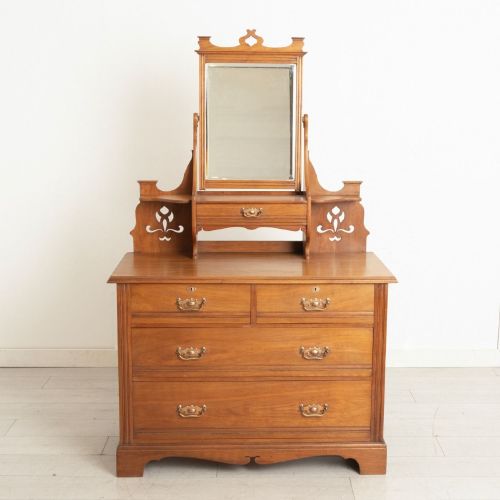
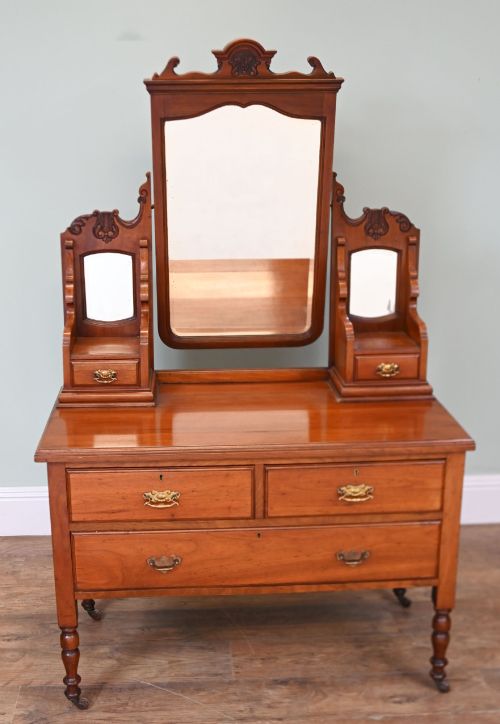
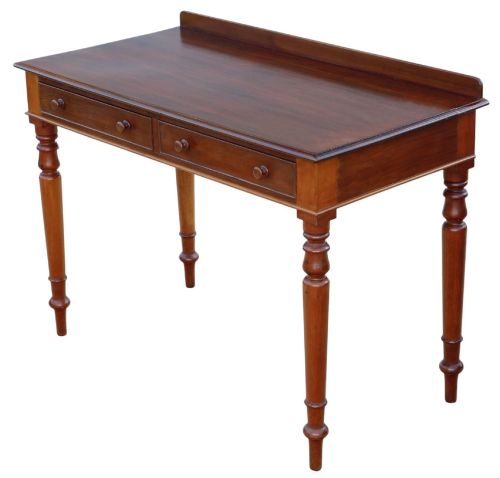
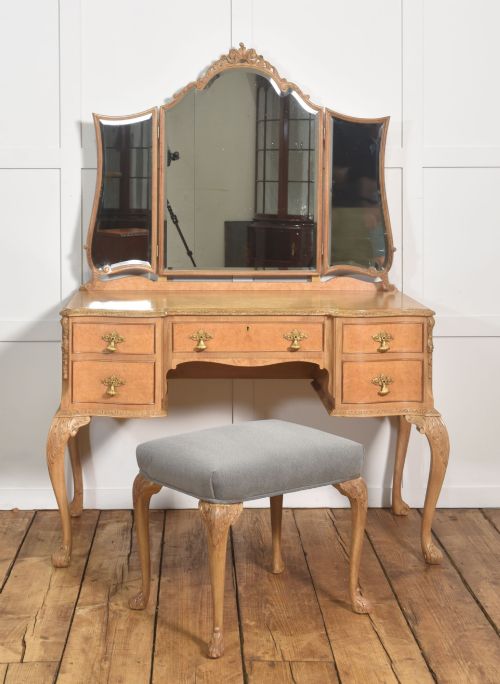
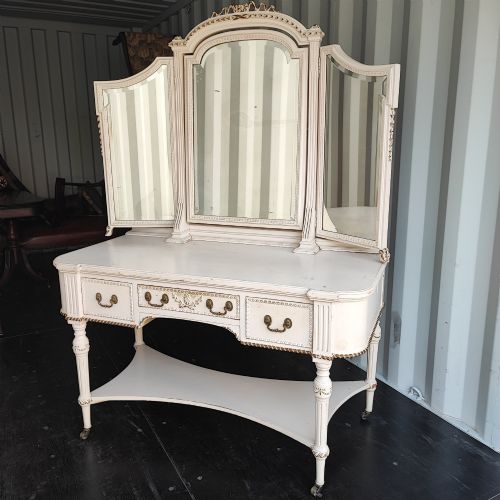
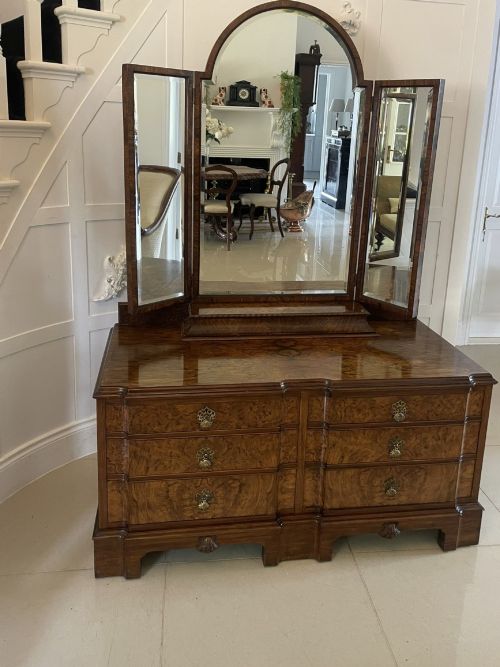
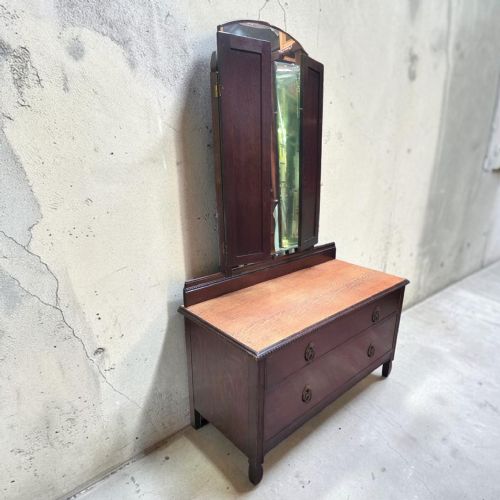
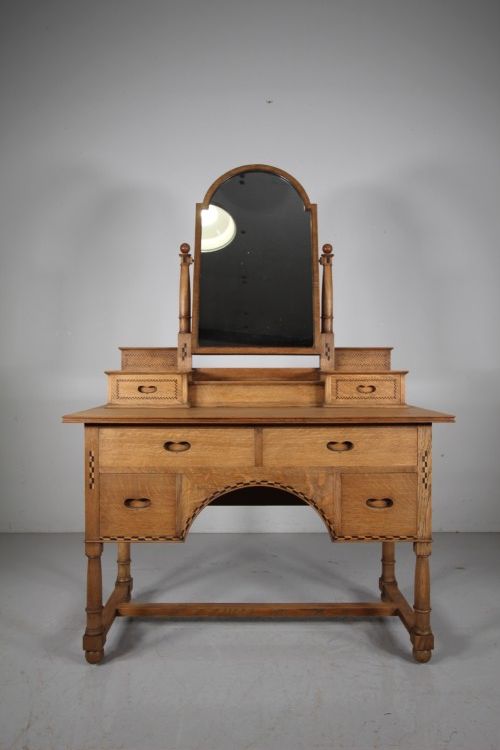
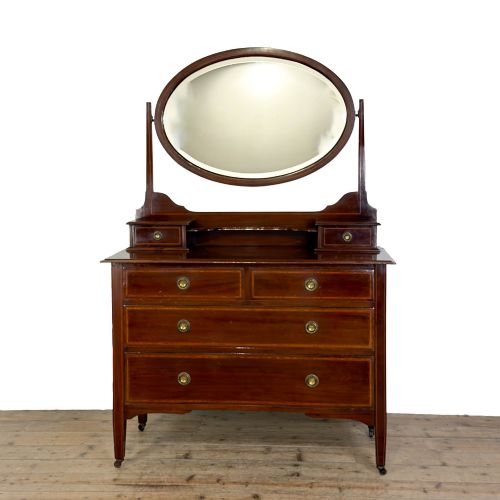
Bedroom furniture of the 1900s and 1910s made for dressing and grooming: a mahogany or oak table or low chest of drawers with a mirror mounted above it.
Antique Edwardian Dressing Tables
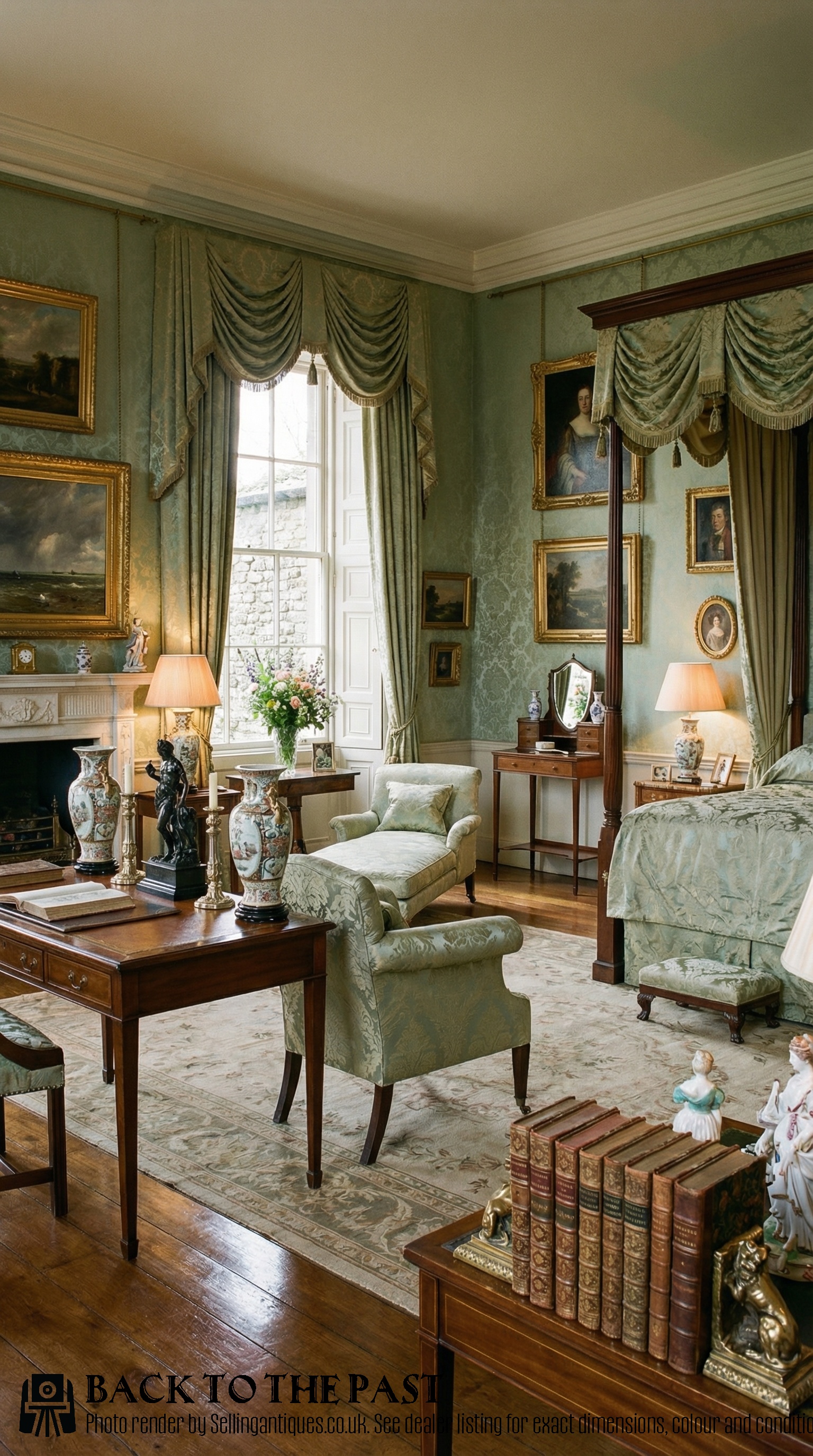
The dressing table grew up as a bedroom form for grooming and toilet articles, and by the later 19th century it commonly paired a low chest or table of drawers with a mirror above, fixed or tilting. Dealers sell the Edwardian version under three names: dressing table, dressing chest and vanity chest.
Mahogany dominates. It is named in 88 of 188 titles, with "chest" in 42 and "inlaid" in 39, and the phrase "Edwardian Inlaid Mahogany Dressing Table" recurs almost word for word across several dealers. Oak accounts for around 24 titles and carries the bulk of the Arts and Crafts seam, where "arts" and "crafts" each show up 14 times.
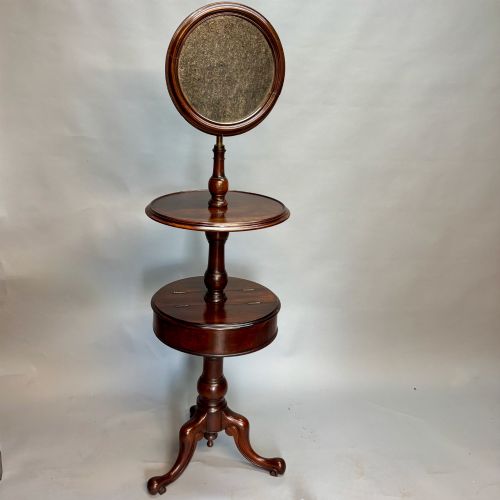
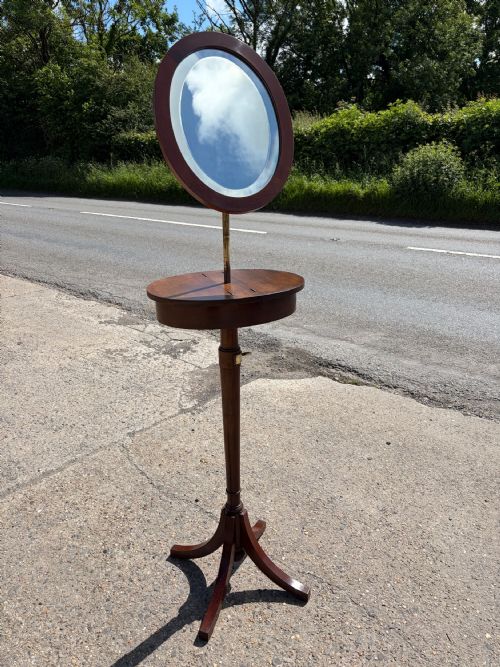
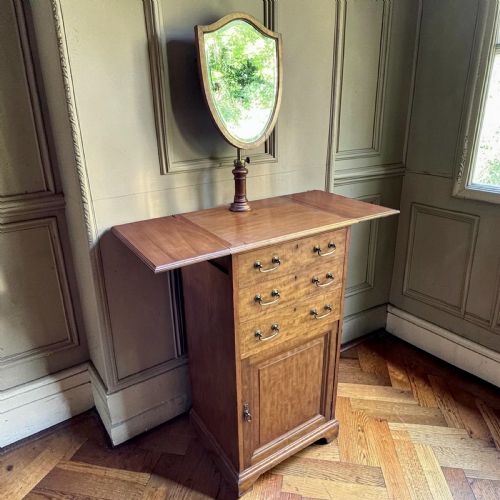
A tenth of the category is not a table at all. Eleven titles are shaving stands, the men's equivalent, an adjustable mirror on a column and base, and 22 titles mention a mirror, including tripod and telescopic stands. Satinwood, walnut, rosewood and burr timbers make up another seam, and pine turns up in just eight titles.
The date is usually a period word rather than a year: 108 titles say only "Edwardian", and just 51 of 188 carry a clean year. The dated field runs from 1850 to 1930, so a tail of pieces sits outside the Edwardian decade, labelled Victorian, 19th Century or 1920s. Around 21 come to market a year on Sellingantiques, listed by 78 different dealers.
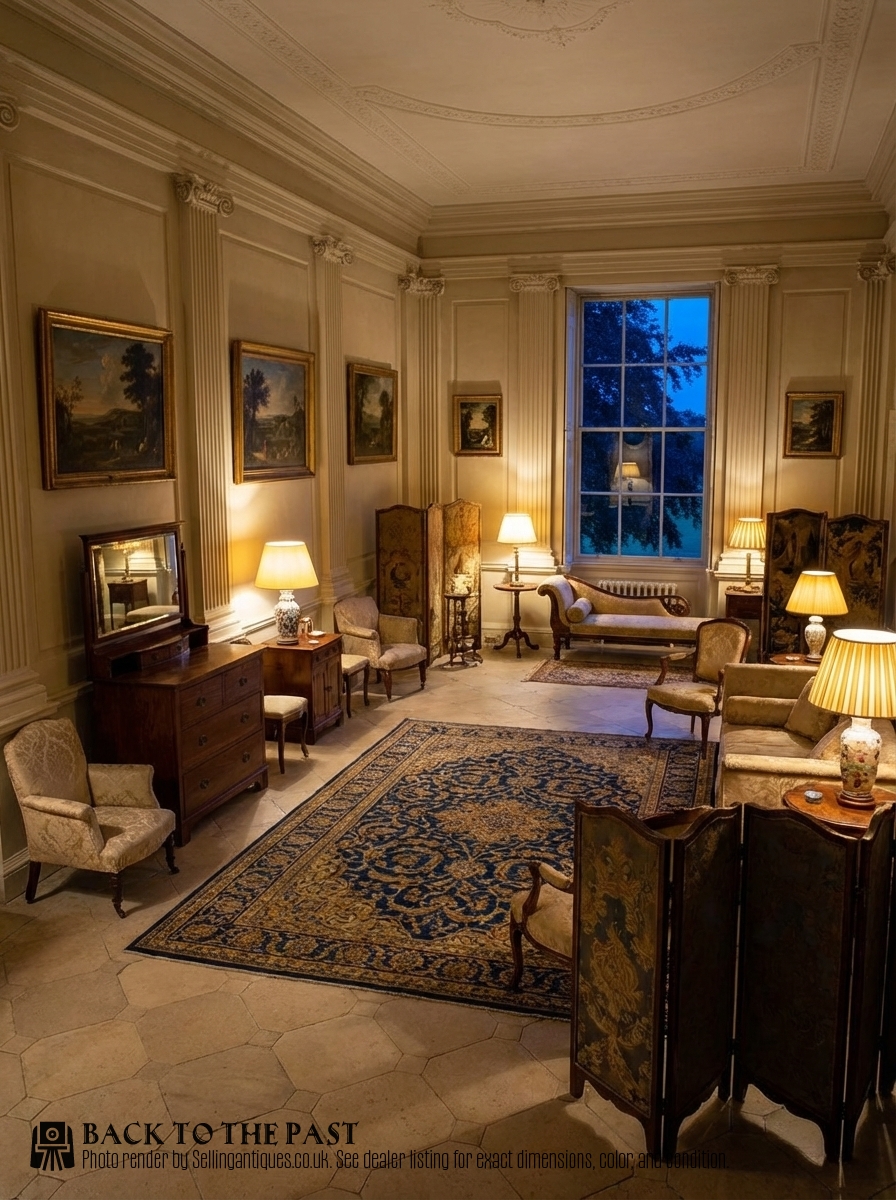
Top And Bottom
Timber sets the range more than anything else. Satinwood, rosewood and figured burr walnut cluster in the upper band, and satinwood alone accounts for 19 titles. Pine and satin walnut sit at the other end, in titles that name no decoration at all.
Decoration then separates within a timber. Line and banded inlay appears right across the range, but marquetry and satinwood banding on a darker ground show up only near the top. Shape works the same way: serpentine, bow-front, kidney and Sheraton-revival outlines recur above the median, plain rectangular below it.
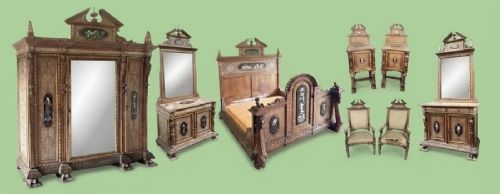
Two further things push a piece up. A named firm or retailer's label in the title lands disproportionately in the dearer half, and mirror arrangement matters - triple mirrors and a fitted vanity box sit high, single tilting or oval mirrors lower. At the very top of the archive is an eight-piece bedroom suite, an order of magnitude above any single piece.
Antique Edwardian Dressing Tables Retail Price Guide 2026
Typical UK retail prices for edwardian dressing tables, calculated from the Sellingantiques database of over a million retail prices indexed since 2003. This retail price guide relies exclusively on Sellingantiques data; no external sources or auction records are used, so the figures do not describe the wider market.
The most expensive Edwardian dressing table ever sold on Sellingantiques was a satinwood one, in March 2018.
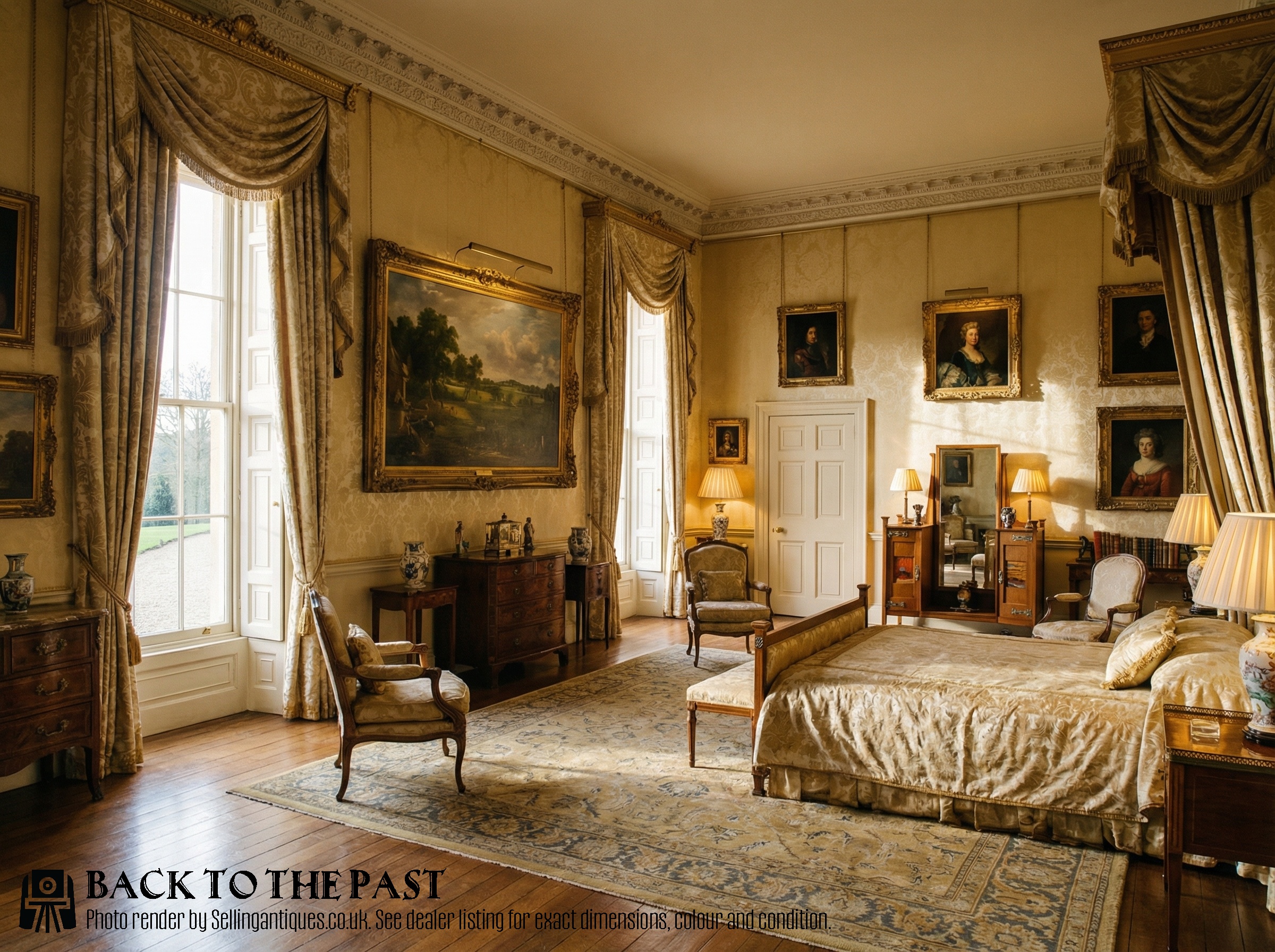
The Antique Edwardian Dressing Tables Glossary
- Dressing chest
- A low chest of drawers with a mirror above, rather than an open-legged table. The wording appears in 42 titles, and vanity chest means the same thing.
- Shaving stand
- A free-standing adjustable mirror on a column and base, named in 11 titles. The men's counterpart to the dressing table.
- Tilting mirror
- A mirror pivoted so the angle can be set. Dealers also write swivel or adjustable, and all three words turn up in titles.
- Line inlay
- Fine stringing let into the surface as a border, usually described as line inlaid. Crossbanded means a contrasting veneer band laid across the grain at an edge.
- Marquetry
- Pictorial or patterned veneer inlay, named on the pieces at the upper end of the range rather than throughout.
- Duchesse
- A Victorian dressing table form with a large centre mirror flanked by side glasses. Two titles use the wording, sometimes spelled duchess.
Antique Edwardian Dressing Tables: Frequently Asked Questions
What timber are these usually made from?
Mahogany is named in nearly half of all titles, 88 of 188, which makes it the default expectation for the category.
Oak comes next with 24 titles, then satinwood with 19, walnut with 16 and pine with just eight. Rosewood, burr walnut, burr maple, satin birch and green stained ash appear as one-offs.
Are all of them actually Edwardian?
No. The word Edwardian is used in 108 titles, but the dated field across the archive runs from 1850 to 1930.
Twelve listings are labelled Victorian, seven only 19th Century, four to the 1920s, four to the 1880s, three to the 1890s and two to the 1850s. The shelf in practice covers eighty years of bedroom furniture.
Only 51 of 188 carry a clean year, so both the field and the title date read as approximations.
Why are shaving stands listed under dressing tables?
They are the men's grooming equivalent, an adjustable mirror on a column and base, so dealers file them with the dressing forms.
Eleven titles are shaving stands and 22 mention a mirror, including tripod and telescopic mirror stands. That makes roughly a tenth of the category something other than a table.
What does inlaid mean in these titles?
Inlay is called out in 39 of 188 titles, and "inlaid mahogany" runs as a single phrase in 14 of them.
It covers line stringing as a border, crossbanded edges, satinwood banding on a darker ground and, on the pieces at the top of the range, marquetry.
Is there an Arts and Crafts version?
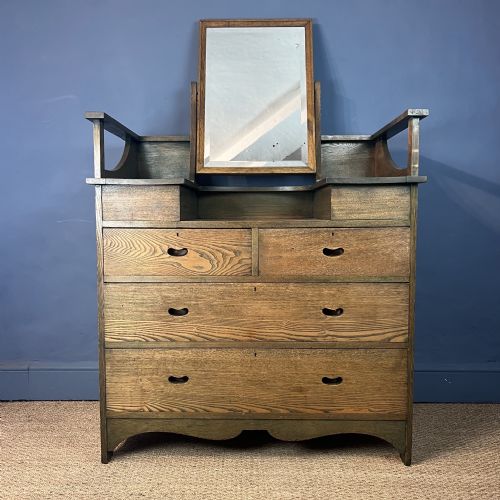
Yes, and it is a real seam rather than a stray label. "Arts" and "crafts" each appear in 14 titles, with the phrase together in ten.
Almost all of those are oak, which links the Arts and Crafts group to the 24 oak titles in the category.
How often do these come up for sale?
Around 21 come to market a year on Sellingantiques, and 78 different dealers have listed one.
That spread means no single dealer's stock defines the category, and the odd one-offs keep appearing: a poudreuse, two kidney-shaped tables, a marble-topped satinwood example and three bonheur du jour desks filed here as dressing furniture.