



Antique Painted Dressing Tables
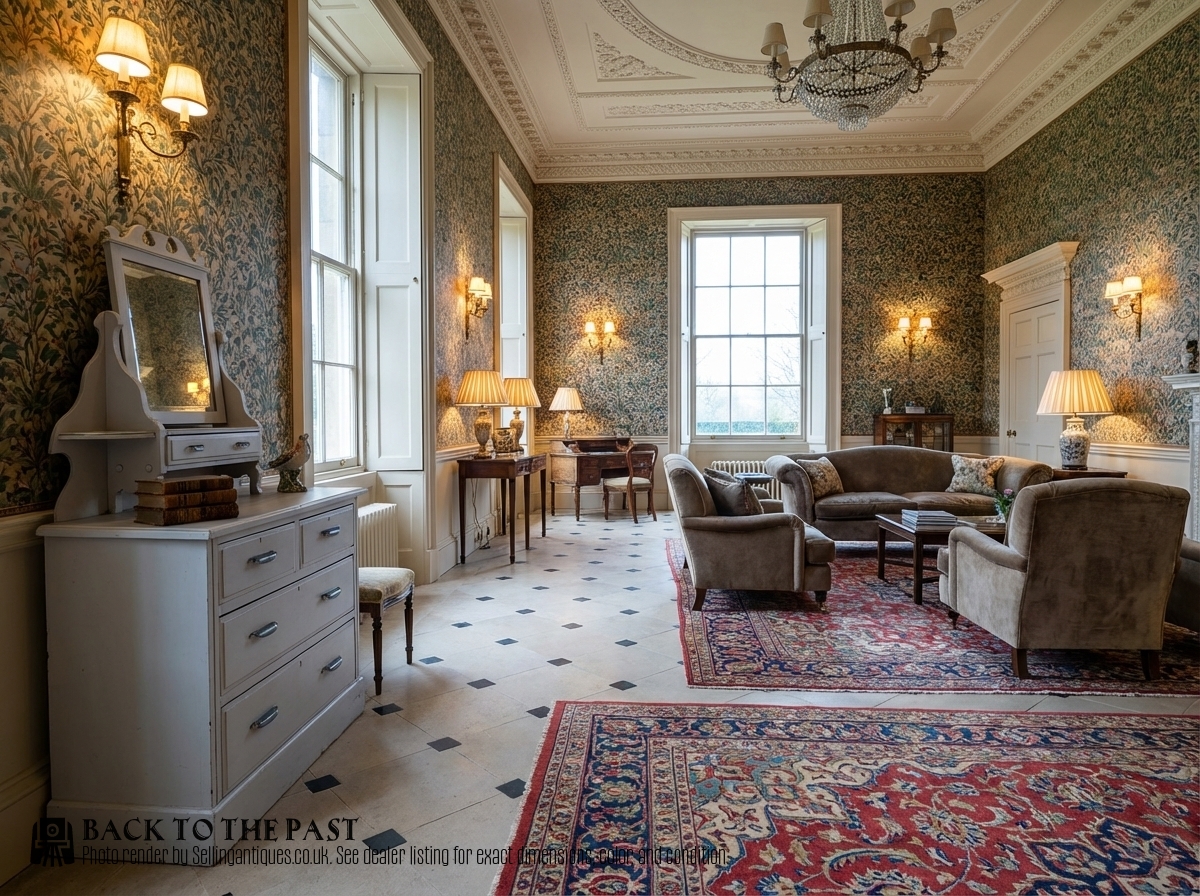
A bedroom piece built for washing, grooming and dressing, gathering drawers, a mirror and a working top into one frame, with paint rather than polished veneer carrying the surface.
Antique Painted Dressing Tables
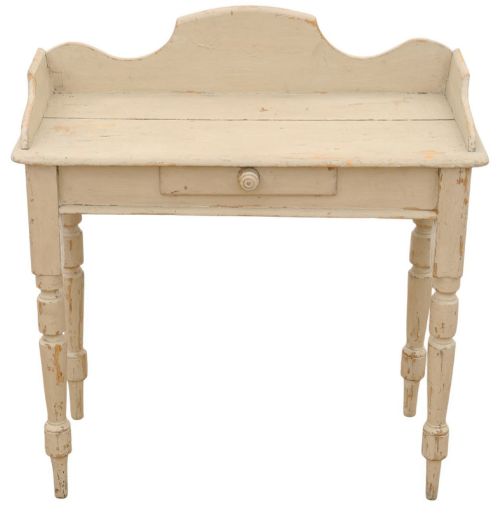
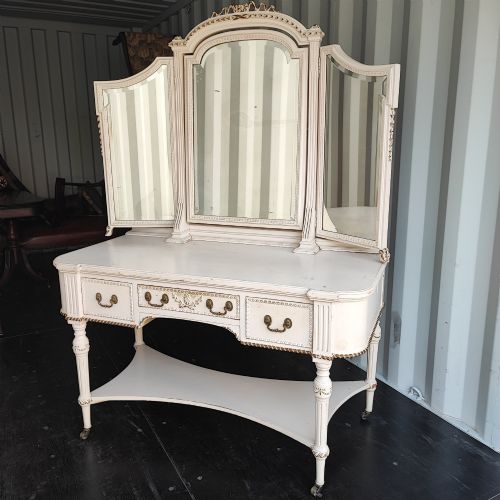
Two groups make up the bulk of them. Just under half the titles name France: painted French dressing tables of roughly 1890 to 1930, some parcel-gilt, some in soft greys. Behind that sits an English group in painted pine, Victorian in date, often called a dressing chest rather than a table.
The French run is strikingly uniform. A line of listings share almost identical wording, which points to a steady import trade in painted bedroom furniture rather than one-off pieces. Sub-variants get named as French oak, French walnut, French carved, Directoire style or bergere.
Dates cluster late. Of seventy listings, forty carry a clean year, running 1850 to 1930, with the 1900s, 1910s and 1920s dominating. The rest sit under dealer shorthand such as Victorian, 19th Century, Regency or Edwardian, and some titles add a circa date in the text that the date field itself doesn't hold.
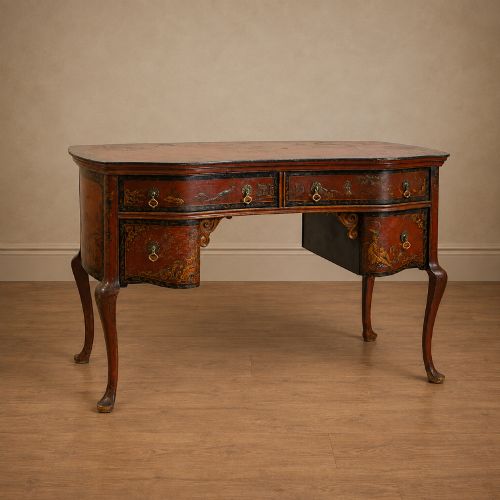
Smaller strands run through it. Painted or stencilled decoration turns up on figured woods, satinwood, satin birch, ash and mahogany among them. Chinoiserie lacquer appears twice in seventy. Odd forms surface once each: a folding table, an adjustable shaving stand with vanity mirror, an Italian painted and cane example.
Where The Range Splits
Substrate does most of the sorting. Satinwood reaches highest in this archive, whether painted or decorated, with satin birch, mahogany and the French oak and walnut pieces in the upper half. Plain painted pine defines the bottom, where paint was doing the work of unifying a cheap softwood carcass.
Then it's what has been added on top. Parcel-gilt titles and one with brass embellishments sit in the upper part of the range, and no gilding is mentioned at the bottom. A named decorative idiom lifts a piece too: Chinoiserie lacquered, Directoire style, bergere and Aesthetic Movement all appear above the middle.
Mirrors separate the two ends more quietly. Simple swing mirrors and country-house mirrors sit low, while triple plate and hinged, adjustable arrangements sit higher. The other distinction titles bother to make is whether the paint is presented as original, and one Georgian piece is described outright as later hand painted.
Antique Painted Dressing Tables Retail Price Guide 2026
Typical UK retail prices for painted dressing tables, calculated from the Sellingantiques database of over a million retail prices indexed since 2003. This retail price guide relies exclusively on Sellingantiques data; no external sources or auction records are used, so the figures do not describe the wider market.
About six painted dressing tables are listed on Sellingantiques each year, and 38 different dealers have listed one.
The Antique Painted Dressing Tables Glossary
- Dressing chest
- A chest of drawers fitted for dressing use, usually with a mirror above. Thirteen titles here use it interchangeably with dressing table.
- Original paint
- The piece's first painted surface rather than a later scheme, flagged in titles as original painted or original decorative paintwork.
- Hand painted
- Decoration applied by brush. It may have been added long after the piece was made.
- Swing mirror
- A mirror pivoting between uprights on the top, also described as a hinged top mirror or an adjustable dressing mirror. Triple plate means a three-panel mirror with the outer wings hinged to angle inward.
- Parcel-gilt
- Partly gilded, with gilding on mouldings or carving alongside the paint.
- Plummet grey
- A soft lead grey, named in two French listings and the only colour specified by name in the archive apart from white.
Antique Painted Dressing Tables: Frequently Asked Questions
How many come up for sale each year?
Around six painted dressing tables come to market on Sellingantiques in a year, and thirty-eight different dealers have listed one.
That works out close to one dealer per two listings. It's stock that turns up singly rather than something dealers specialise in.
Why do so many of them come from France?
Roughly one title in two names France, and a run of them share almost the same wording. That points to a steady import trade in painted French bedroom furniture of about 1890 to 1930.
Sub-variants get named as French oak, French walnut, French carved, Directoire style and bergere. Parcel-gilt and grey-painted schemes appear within the same group.
Is the paint always original?
No. Titles divide between those presenting original paint, described as original painted decoration or original decorative paintwork, and those describing a later hand-painted scheme.
One Georgian piece is labelled later hand painted outright, so an early carcass can carry much later decoration. The distinction is the one dealers most often bother to spell out.
What period do most of them date from?
The dated field spans 1850 to 1930, with the 1900s, 1910s and 1920s dominating. So the bulk of the archive is late Victorian to interwar.
Georgian and Regency pieces are present but few. Labels like Victorian, 19th Century and Edwardian are dealer shorthand rather than precise years.
Which woods turn up under the paint?
Painted pine accounts for the English Victorian group, with fourteen titles naming pine. French pieces name oak and walnut.
A smaller strand carries painted or stencilled decoration on figured woods: satinwood, satin birch, ash and mahogany. Satinwood reaches the highest prices in the archive.
What unusual forms appear in this category?
Chinoiserie lacquer appears twice in seventy listings, one of them kidney-shaped, and both sit near the top of the range.
Single oddities surface and never repeat: a folding dressing table, an adjustable shaving stand with vanity mirror, a Georgian desk doubling as a dressing table, and an Italian painted and cane example. Two Regency pieces share a concave front, a shape found only in that period here.