



Antique Oak Dressing Tables
An oak table or chest with a mirror above it, made for dressing in the bedroom, and on Sellingantiques most often dating from the years either side of 1900.
Antique Oak Dressing Tables
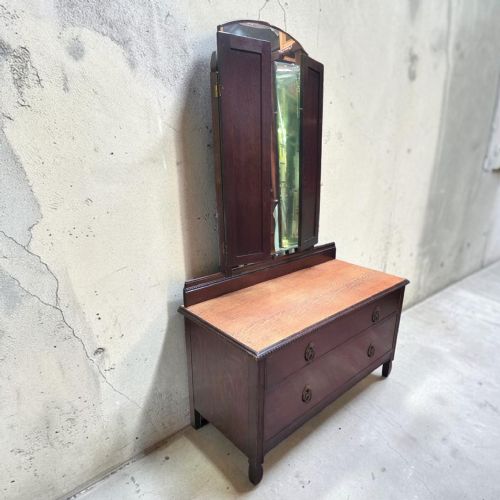
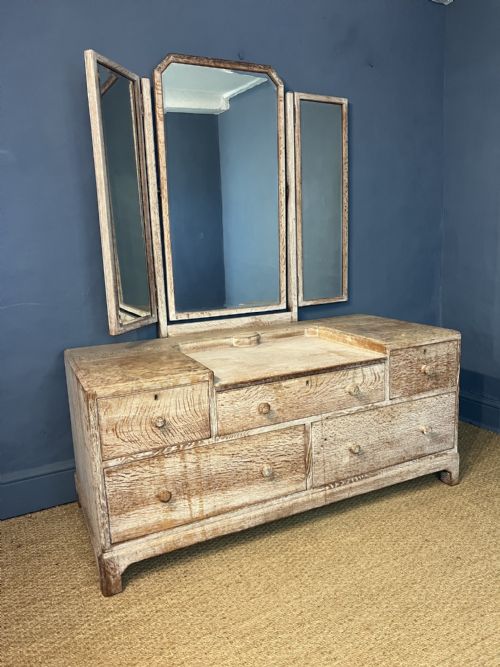
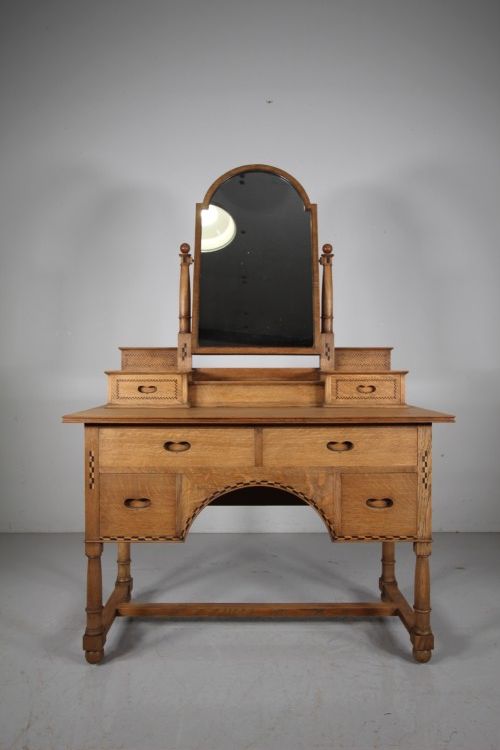
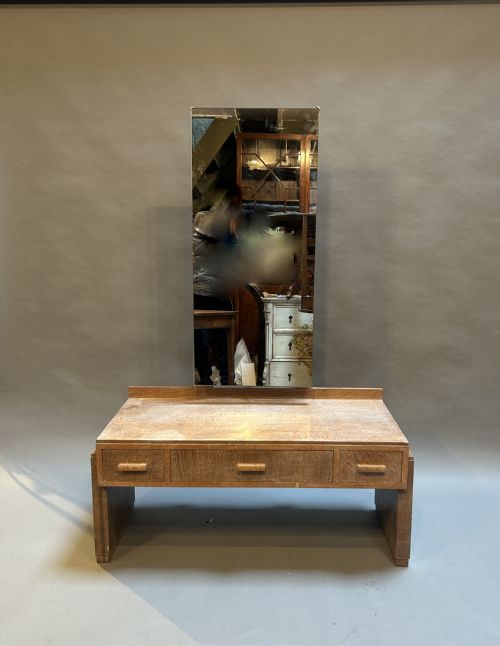
Two forms dominate. One is a table on legs with a swing or triple mirror standing on top. The other is the dressing chest, a chest of drawers with the mirror fixed or hinged above it, which accounts for a quarter of the titles in the archive.
The form grew out of the 17th- and 18th-century side table and lowboy fitted with small drawers and a looking glass. Once mirror plate became affordable, the dressing table settled into the bedroom as a standard piece, often made to match the rest of a suite.
The dating is tight. Of the listings carrying a clean year, the 1920s alone account for more than the 1900s, 1910s or 1930s taken singly, and with the Edwardian pieces added, roughly four in five dated examples fall in a thirty-five year window around 1900. Georgian lowboys and dresser bases turn up, but only a handful, and anything pre-1800 is exceptional.
Arts and Crafts is the loudest style label, appearing in around a fifth of titles, with Cotswold-school plain oak and named model ranges among them. French carved oak makes up about one in seven, frequently marble-topped and often catalogued as washstand and dressing table in the same breath. Art Deco, limed and bleached oak form a smaller steady strand, and shaving stands and vanity mirrors sit alongside.
The Range
A name does the most work. Ten titles say "labelled", and that is the only maker evidence a title ever carries in this category. Named model ranges such as Tilden, St Ives, Newlyn and Letchworth cluster in the upper part of the range, well clear of the anonymous 1920s suite piece.
After that it's decoration and material. Carving, inlay, marquetry, chinoiserie and painted or stencilled work all push a piece up, and the carved French examples sit above the plain ones. Solid oak reads better than oak paired with pine, ash or a walnut veneer, and titles say "solid" when there's a point to be made.
Size counts too. Titles reaching for large proportions, huge, wide and deep sit at the top; small proportions appears at the bottom. At the country-oak end age overtakes everything, and the Georgian lowboys, dresser bases and dressing table desks sit well above the interwar norm.
Antique Oak Dressing Tables Retail Price Guide 2026
Typical UK retail prices for oak dressing tables, calculated from the Sellingantiques database of over a million retail prices indexed since 2003. This retail price guide relies exclusively on Sellingantiques data; no external sources or auction records are used, so the figures do not describe the wider market.
The 1920s is the period label used most on Sellingantiques for oak dressing tables, with the 1900s next and Edwardian third.
The Antique Oak Dressing Tables Glossary
- Dressing chest
- A chest of drawers with a mirror fixed or hinged above it, rather than a table standing on legs. Thirty-eight titles use the term.
- Swing mirror
- A mirror pivoting between two uprights so the angle can be set. Oval swing mirrors recur through the archive.
- Triple mirror
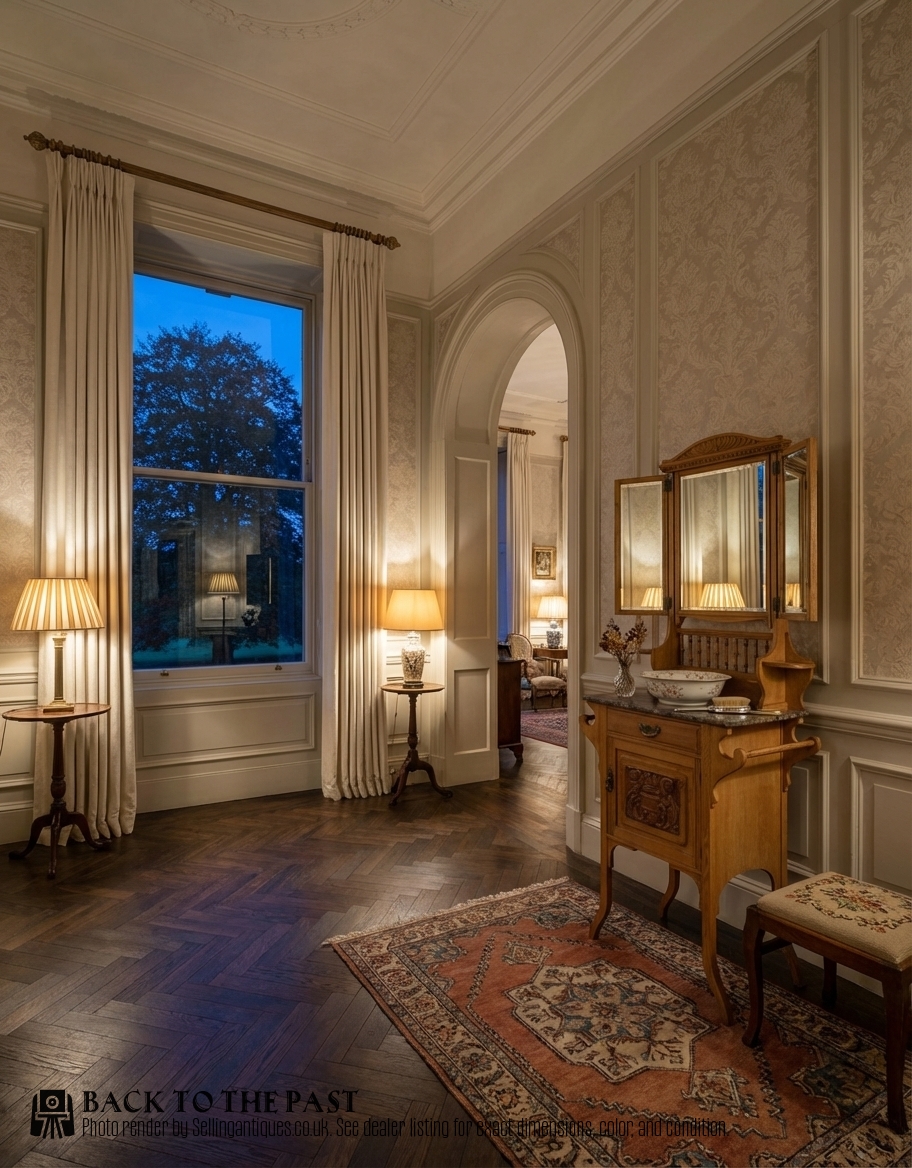
- A central plate with two hinged wings, giving the sitter a side view.
- Kneehole
- A recess between two banks of drawers so the knees go under the top, also described as twin pedestal.
- Limed oak
- Oak with a white filler worked into the grain, common on the 1920s and 1930s pieces listed here. Bleached oak, lightened chemically or by scrubbing, appears on several of the largest.
- Lowboy
- A low side table on legs with a bank of small drawers, the early form the dressing table grew out of.
Antique Oak Dressing Tables: Frequently Asked Questions
What period are most oak dressing tables?
The bulk sit between the late Victorian years and the interwar period. The 1920s are the single busiest decade in the archive, followed by the 1900s, then the 1930s and 1910s, with a further group catalogued simply as Edwardian.
The dated field runs from 1750 to 1940, so older pieces exist. They are few.
How is a dressing chest different from a dressing table?
A dressing table is a table form on legs, with the mirror standing on the top. A dressing chest is a chest of drawers with the mirror fixed or hinged above it.
Both turn up throughout the category. Dressing table is the more common wording in titles, dressing chest the next.
Why are French oak examples often called washstands?
French oak turns up in twenty-three titles, frequently carved and marble-topped. Several are catalogued as washstand and dressing table together, because the same marble-topped stand served both jobs.
A washstand was a marble or tiled stand for a jug and basin. Once plumbing arrived, the form carried on in the bedroom as dressing furniture.
Are makers usually named on these?
Rarely. Ten titles say "labelled", and a paper or stamped label is the only maker evidence a title carries in this category.
Named model ranges surface more often than maker names do, with Tilden, St Ives, Newlyn and Letchworth all appearing. One early chest is described only by a squashed heart device.
What does Arts and Crafts mean in these listings?
It is the most common style label in the archive, on roughly a fifth of titles. The pieces are plain oak with the joinery left showing, rather than veneered and polished.
Cotswold school is named in several titles. It describes the same approach: solid timber, visible construction, little applied ornament.
How often do oak dressing tables come up for sale?
About fourteen a year reach the market on Sellingantiques, and fifty-four different dealers have listed one.
So it is a category spread thinly across many shops rather than held by a few specialists. Unusual forms appear as one-offs: a kidney-shaped table, a corner washstand-cum-dressing table, a lift-lid fitted chest, and a single pair of matching inlaid dressing chests.