

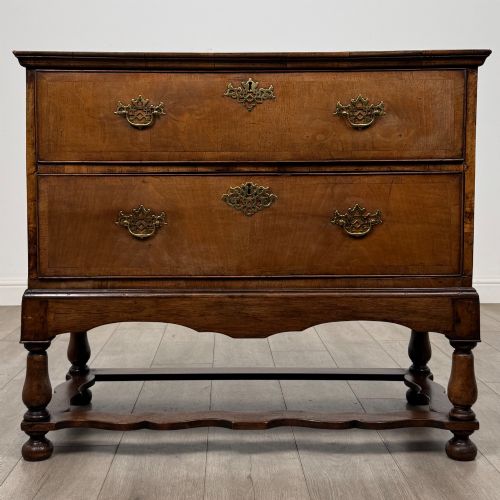
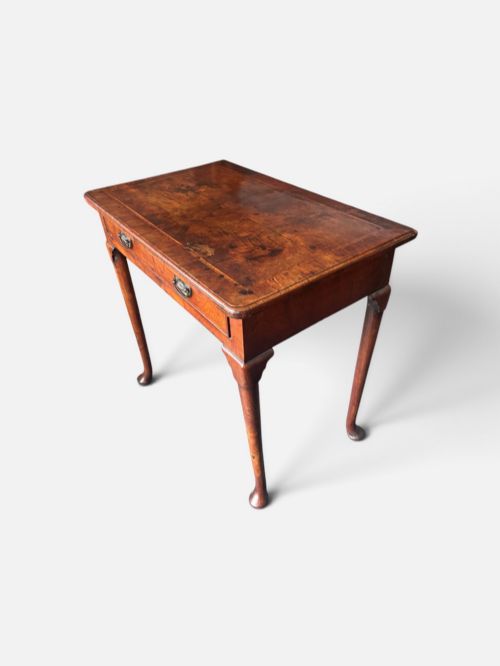
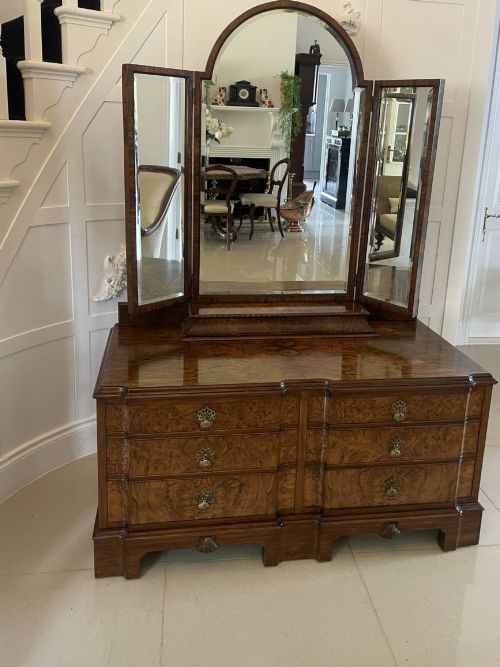
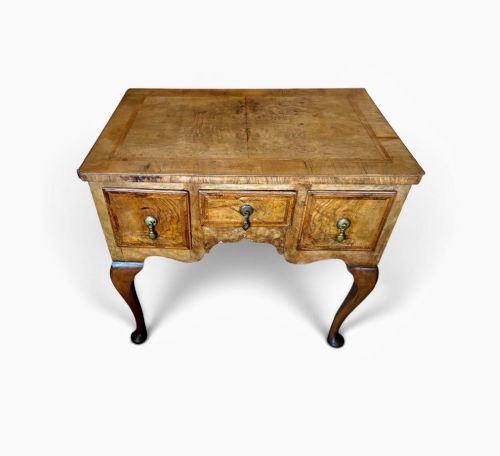
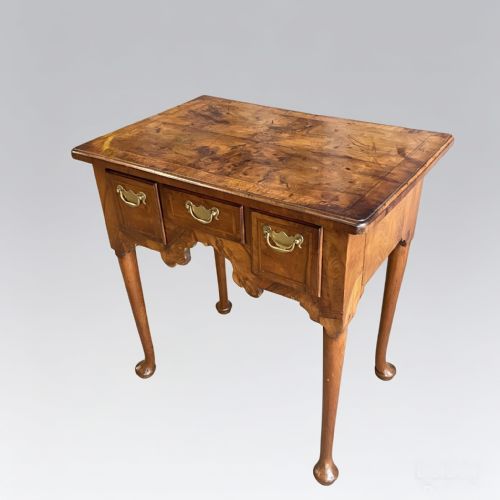
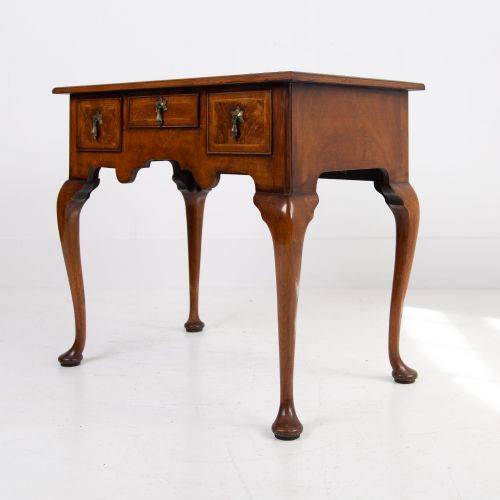
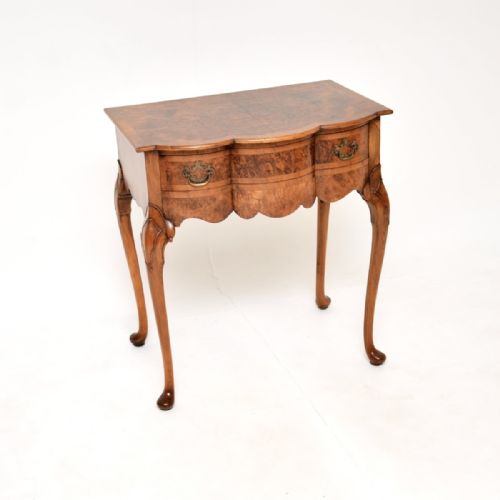
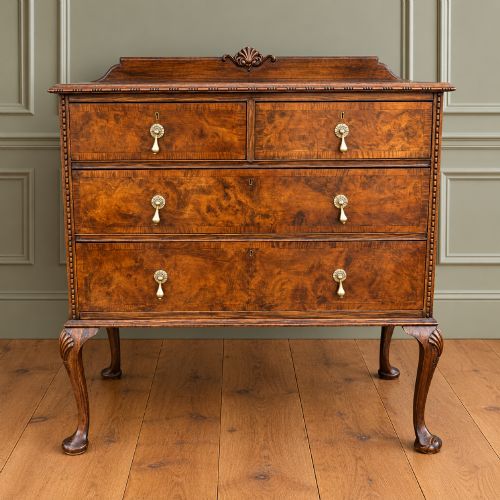
Brown Walnut Lowboy
These brown walnut lowboy pieces combine compact proportions with rich timber, offering practical elegance for period and revival interiors alike.
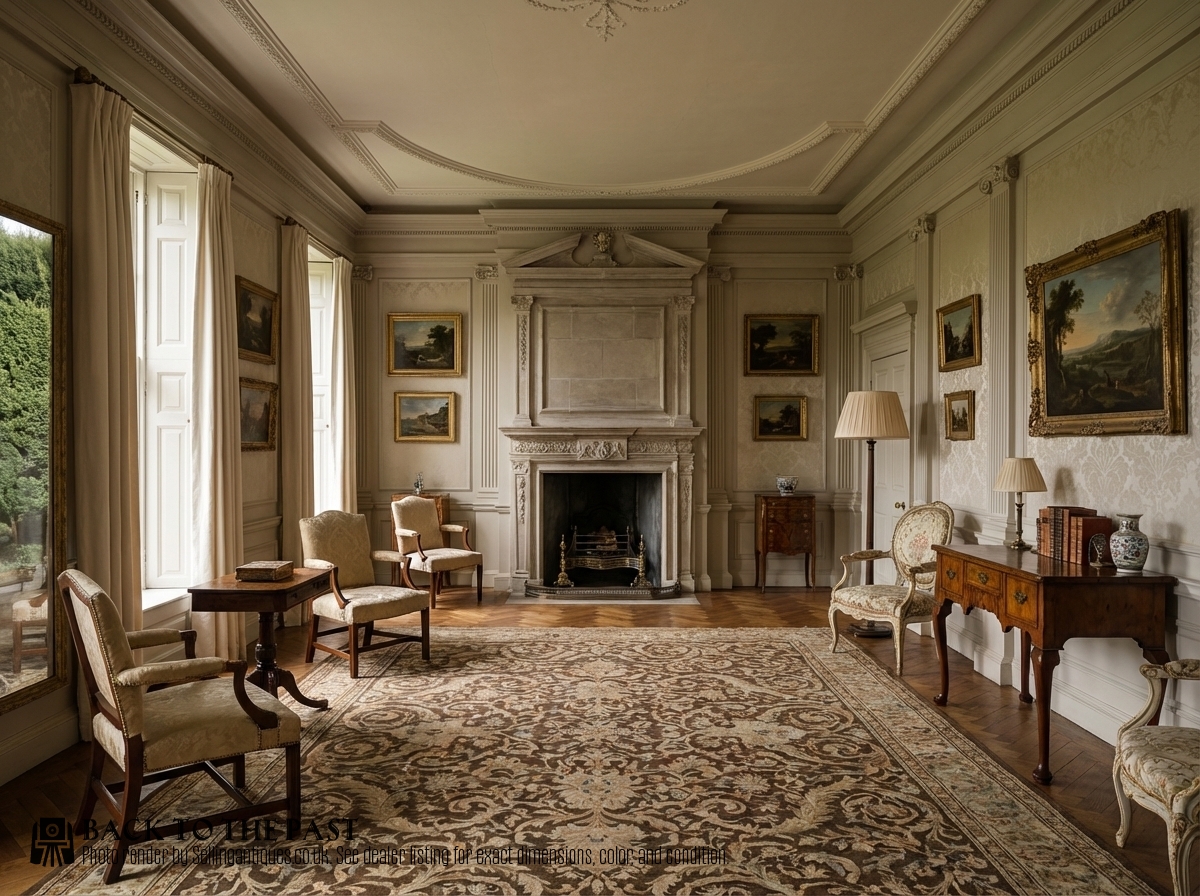
Brown Walnut Lowboy
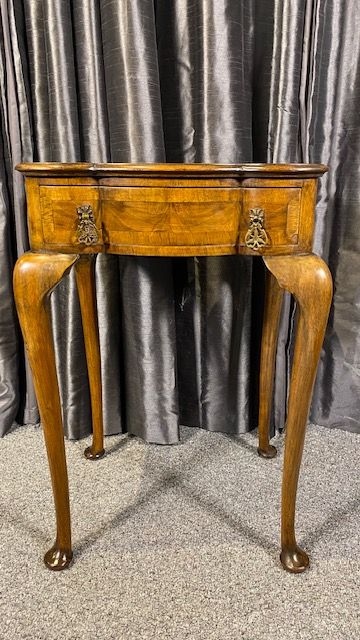
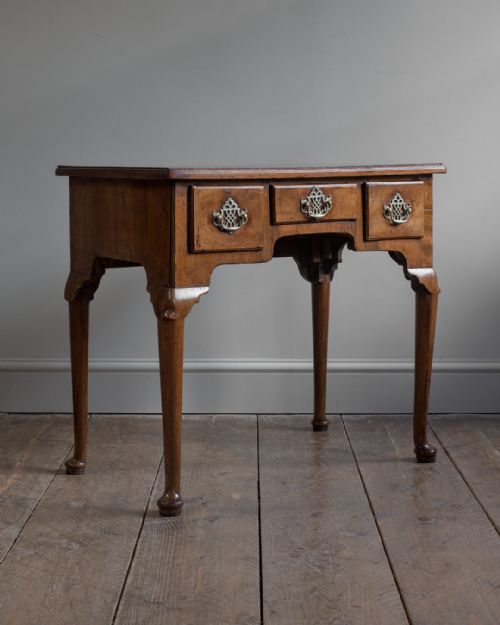
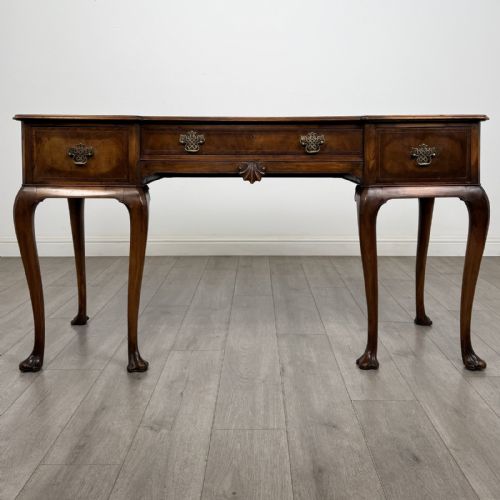
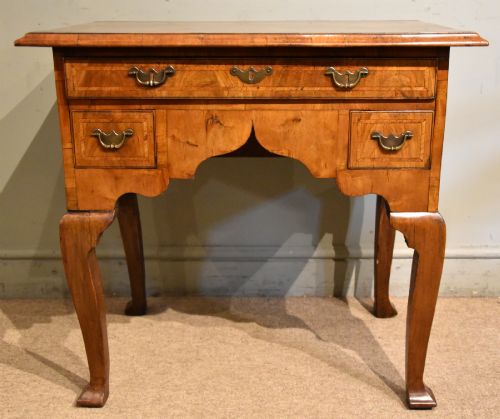
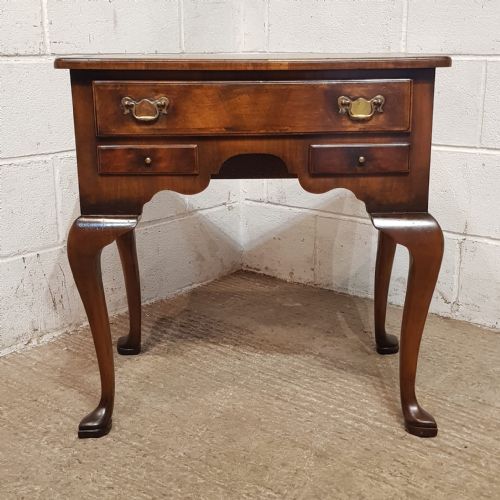
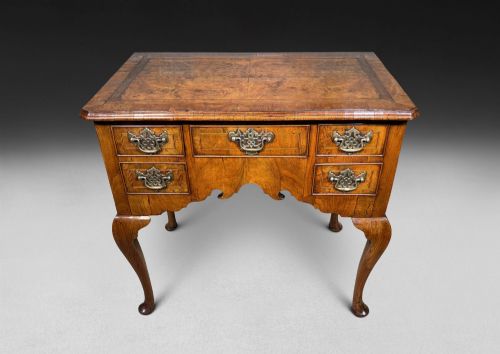
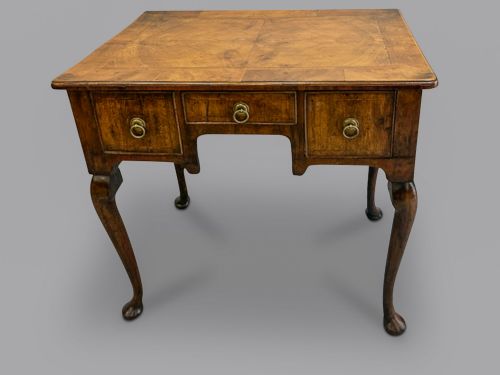
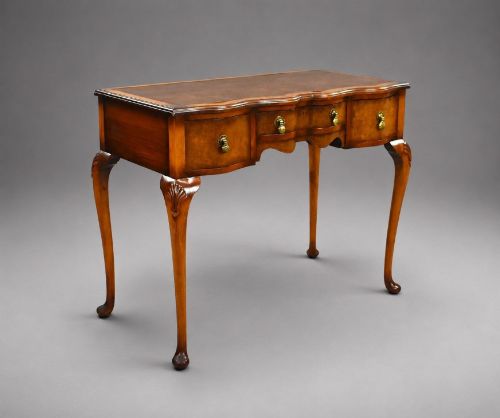
A brown walnut lowboy serves as a compact side table, dressing table, or writing desk, typically featuring a low bank of drawers supported by slender legs. These tables appear frequently in Georgian designs alongside later Edwardian and twentieth-century revivals.
The pieces on this page span genuine eighteenth-century examples from the George I and George II periods through to later interpretations built in the 1920s and 1930s. Buyers often encounter Queen Anne styles featuring cabriole legs alongside simpler rectilinear side tables.
Originating primarily as English domestic furniture, these tables bridge the gap between functional storage and refined display. Their versatile height and drawer configurations make them suitable for halls, bedrooms, and reception rooms.
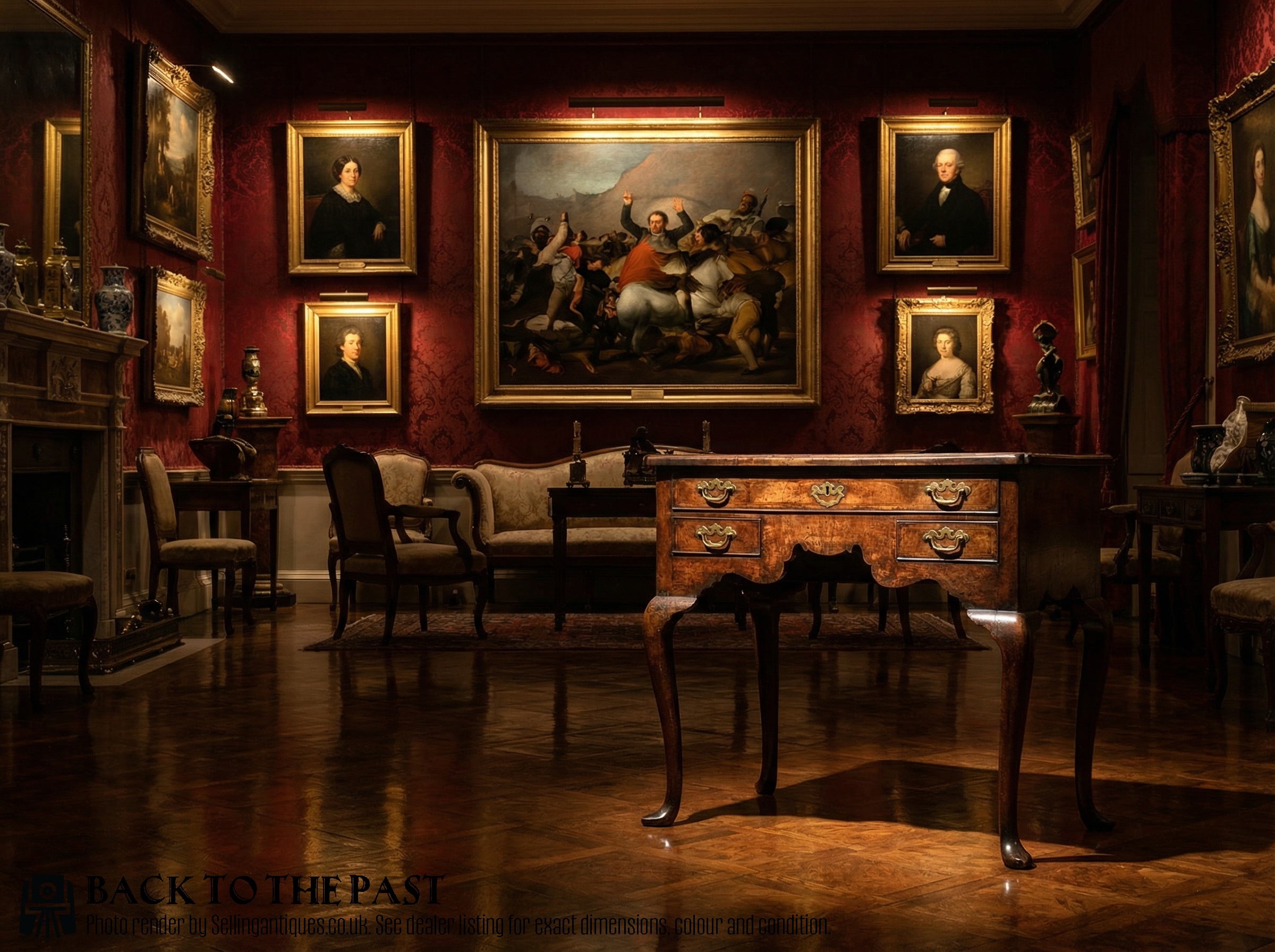
What varies in quality
The depth of figuring in the walnut timber and the crispness of the carving on cabriole legs distinguish finer examples from standard production pieces. Superior items display harmonious grain matching across the top and drawer fronts.
Construction methods also separate periods, as eighteenth-century joinery relies on traditional hand-cut dovetails, whereas twentieth-century revivals often utilise machine assistance while retaining period styling cues.
Brown Walnut Lowboy Retail Price Guide 2026
Typical asking prices for brown walnut lowboy among the pieces listed under this phrase on Sellingantiques today, from the lower quarter to the upper quarter. They describe what is for sale here now, not the wider market.
Some scholars suggest early lowboys doubled as portable gaming tables where nobility played cards by candlelight.
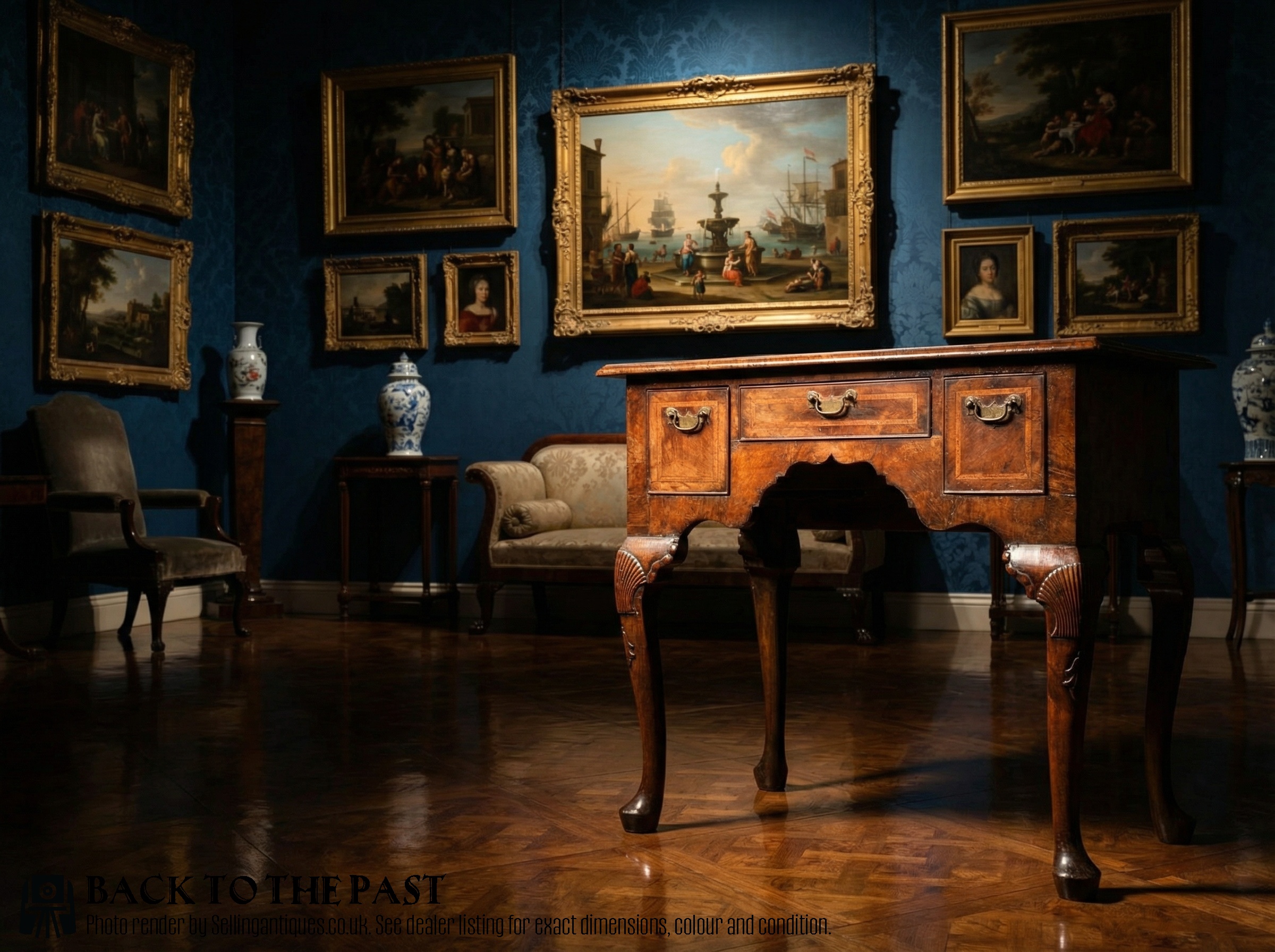
The Brown Walnut Lowboy Glossary
- Lowboy
- A small dressing or side table with one or more tiers of drawers, standing on relatively tall legs. They gained popularity during the late seventeenth and eighteenth centuries.
- Cabriole leg
- A furniture leg that curves out in a convex arc and tapers inward in a concave arc, often ending in a pad or claw foot. This form derives from classical Chinese furniture and dominated Queen Anne and Georgian design.
- Burr walnut
- A veneer sliced from the deformed growth or burl of a walnut tree, prized for its swirling, highly figured grain patterns. Cabinet makers applied it to prominent surfaces for decorative impact.
- Feather banding
- A type of inlay consisting of small strips of veneer arranged diagonally to resemble the spine of a feather. Makers used this technique to frame drawer perimeters on Georgian furniture.
- George II
- The period of British history from 1727 to 1760, characterised by furniture with robust cabriole legs, pad feet, and understated walnut or early mahogany veneers.
Brown Walnut Lowboy: Frequently Asked Questions
What is a brown walnut lowboy used for?
These pieces function primarily as compact side tables, writing desks, or dressing tables. Their modest footprint allows them to fit easily into smaller residential spaces.
Historically, they held grooming items or writing materials in private chambers. Today, they serve equally well as hallway console tables or decorative focal points in living areas.
How do I tell an 18th century lowboy from a revival piece?
Eighteenth-century examples display hand-cut dovetail joints, period timber shrinkage, and wear patterns consistent with centuries of use. Secondary woods like oak or pine inside the drawers match the period of origin.
Revival pieces built around 1920 or 1930 often use modern adhesives, uniform machine-cut joints, and cleaner interior timbers despite mimicking Queen Anne or George II styles.
Where should I place a lowboy in my home?
A lowboy suits narrow hallways, entryways, or reception rooms where floor space is limited. Its shallow depth prevents it from obstructing walkways.
In bedrooms, it functions as a dressing table or a bedside surface beneath a mirror. Pairing it with a small stool completes the traditional arrangement.
What maintenance does walnut furniture require?
Walnut benefits from occasional polishing with traditional beeswax to nourish the timber and maintain a soft sheen. Avoid placing the table in direct sunlight or near heat sources to prevent veneer cracking.
Keep the surface dry and use coasters beneath any objects to protect the polish from moisture damage.