

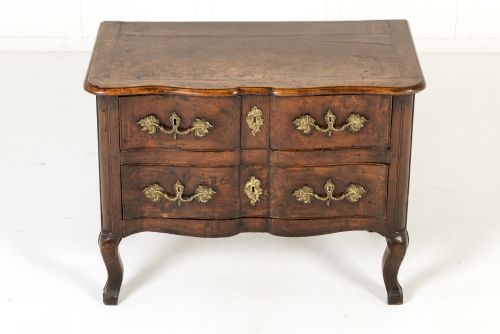
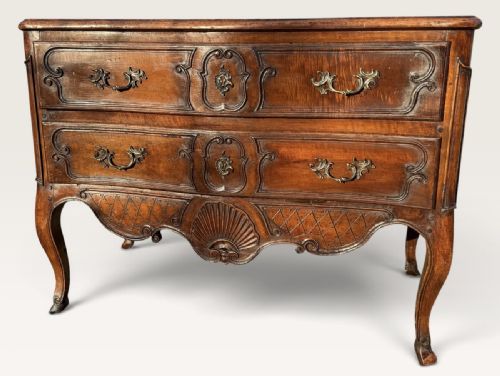
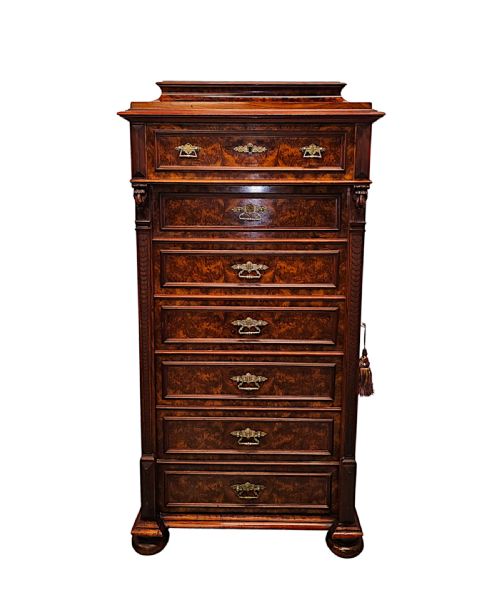

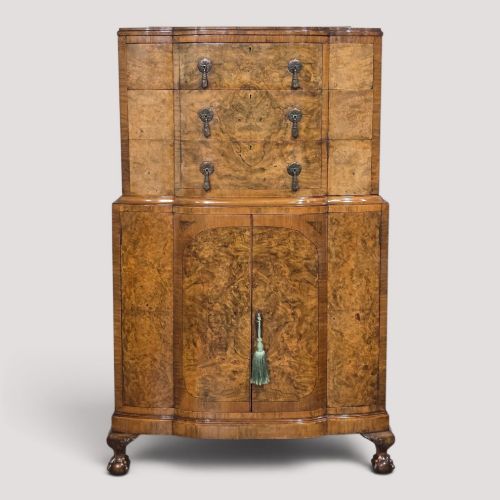
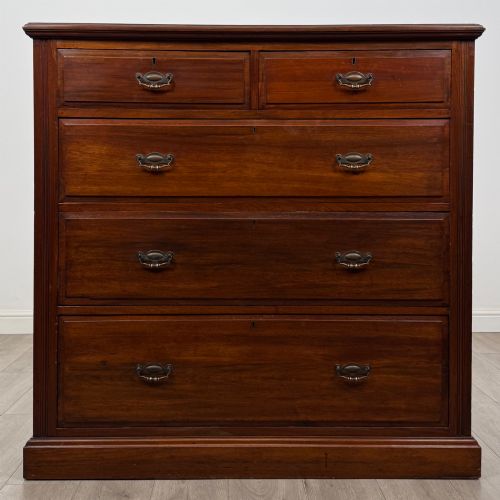
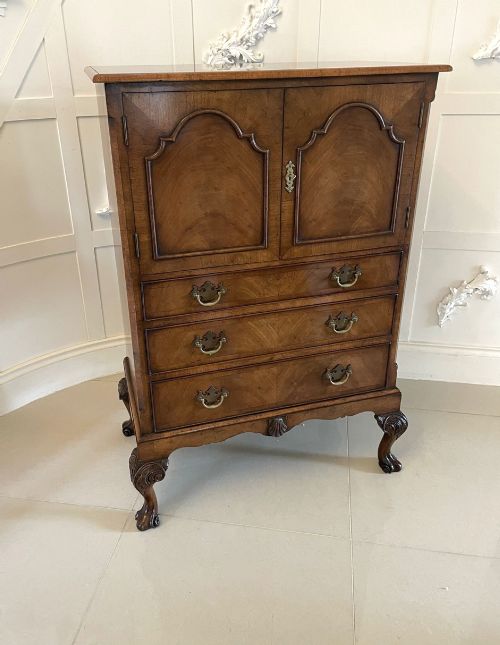
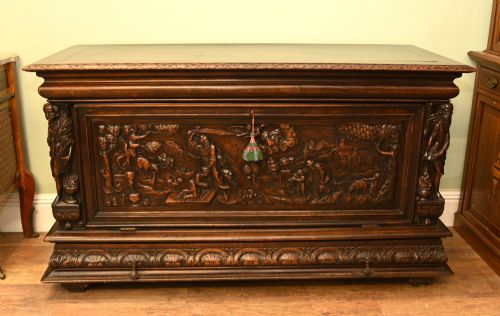
Carved Walnut Chest
When you search for a carved walnut chest, you look at centuries of timber work ranging from heavy marriage coffers to serpentine commodes.
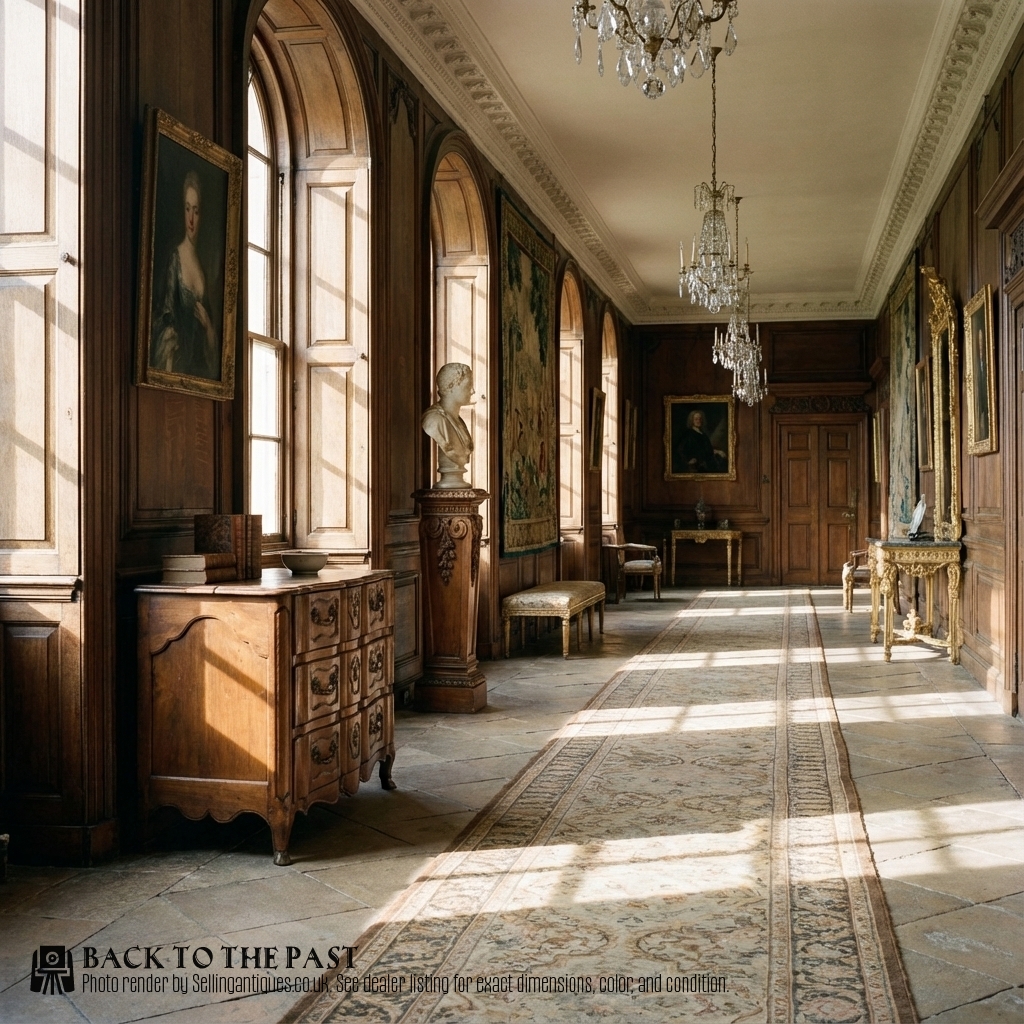
Carved Walnut Chest
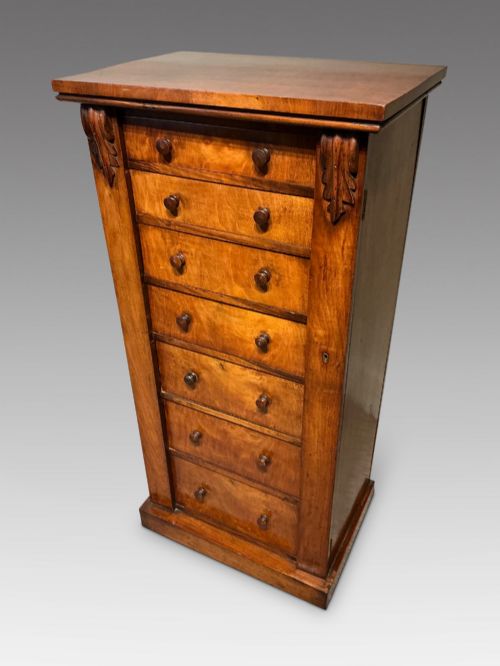
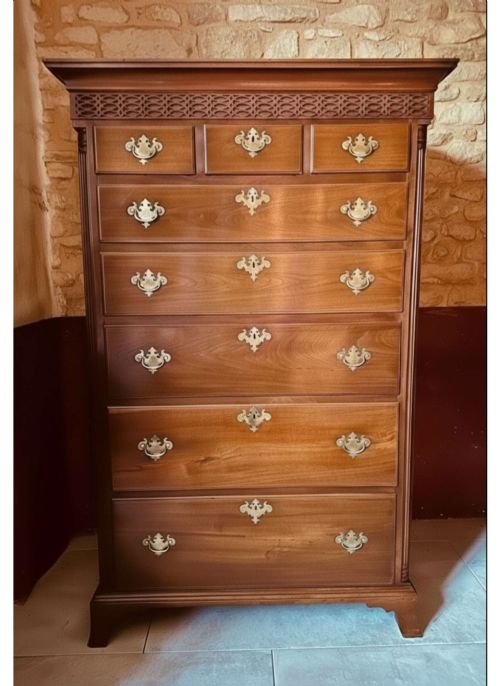
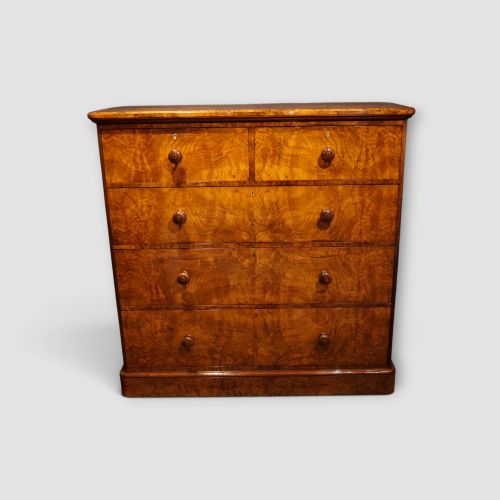
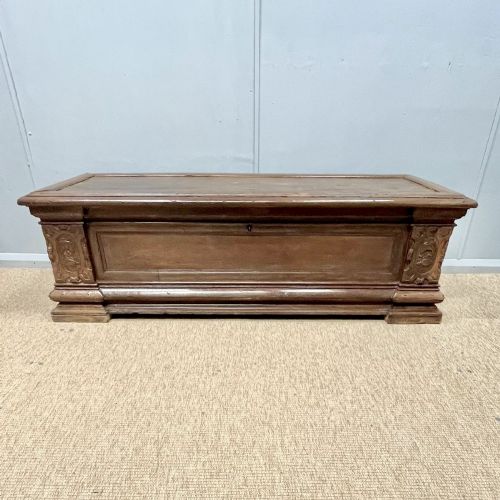
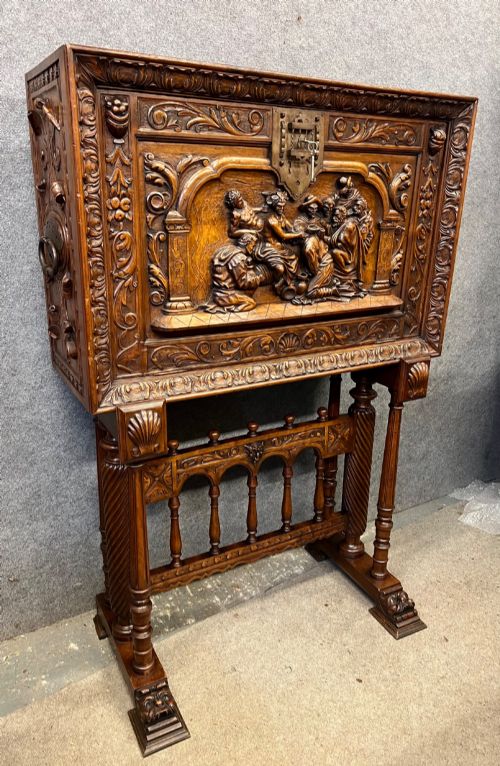
A carved walnut chest encompasses a broad span of storage furniture, covering early plank coffers, marriage chests, and later commodes or chests of drawers. These pieces served domestic storage needs across centuries, evolving from heavy Italian and French cassones into refined English and continental drawer units.
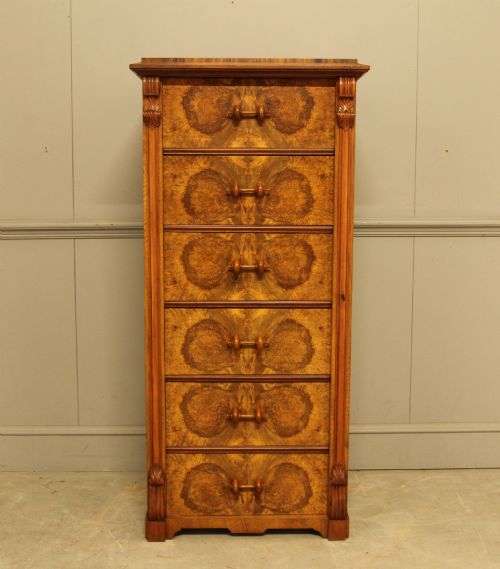
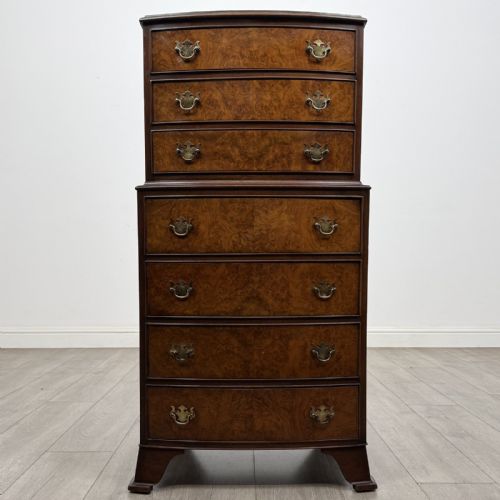
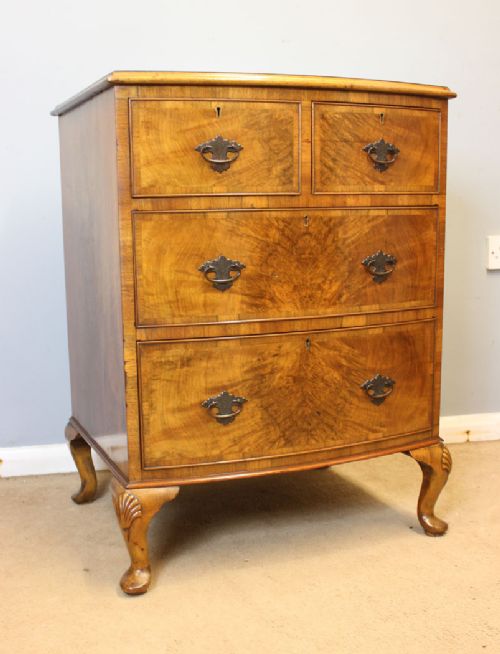
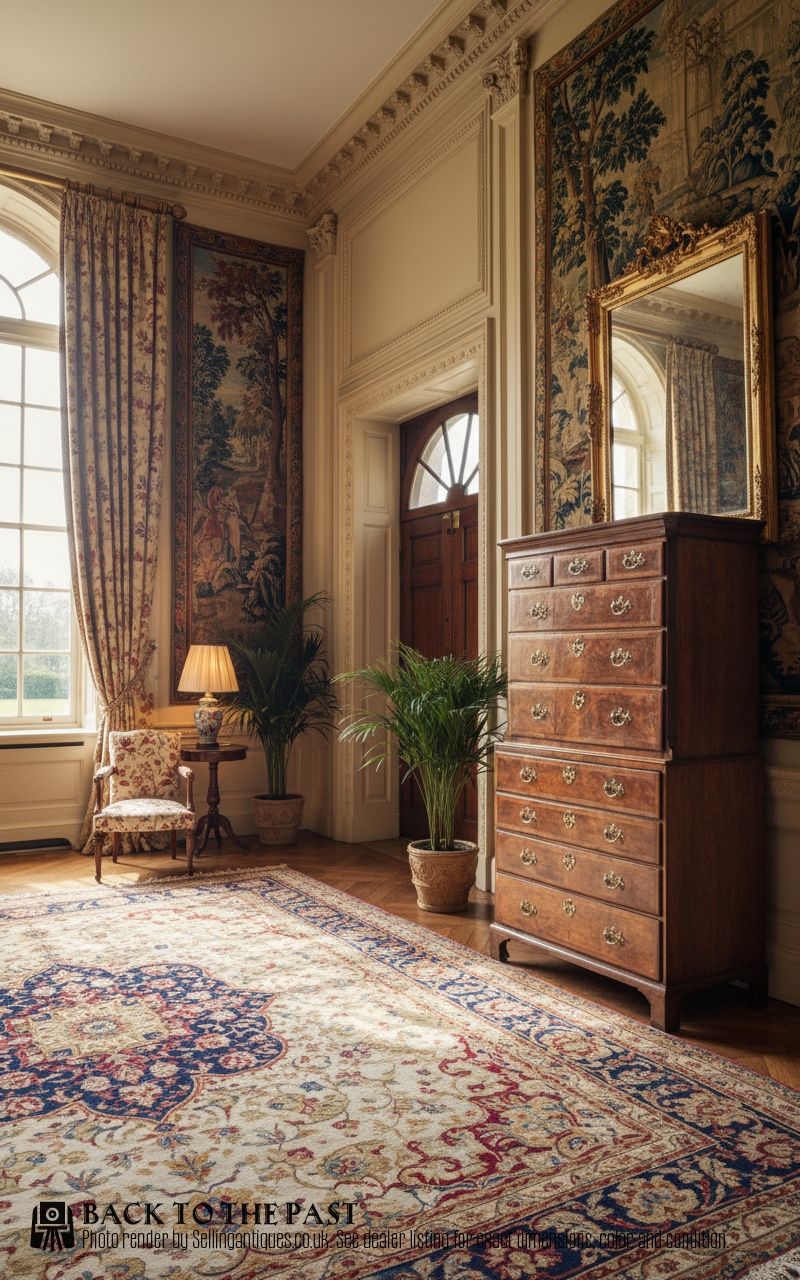
The version most likely to meet you on this page is a drawer-based format, whether a tallboy, a serpentine commode, or a chest on stand. Walnut and burr walnut dominate these forms, often displaying figured grain patterns rather than heavy relief carving alone.
Origin periods stretch from the late seventeenth century through the eighteenth and nineteenth centuries into early twentieth-century revivals. Regional variations include French provincial commodes, Dutch marquetry pieces, and English bureau desks or drawer chests.
How they were made
Makers utilised solid walnut and decorative veneers of burr walnut applied to secondary pine or oak carcases. Figured veneers required careful sawing to create symmetrical butterfly patterns across drawer fronts and top panels.
Surface ornament relied heavily on floral marquetry inlay utilising contrasting timbers, alongside brass handles, escutcheons, and occasional mirror glass elements. Structural joinery involved dovetailed drawer construction and pegged framing on earlier examples.
Carved Walnut Chest Retail Price Guide 2026
Typical asking prices for carved walnut chest among the pieces listed under this phrase on Sellingantiques today, from the lower quarter to the upper quarter. They describe what is for sale here now, not the wider market.
Some nineteenth-century chests conceal secret compartments for poker dice and playing cards behind disguised walnut panels.
What varies in quality
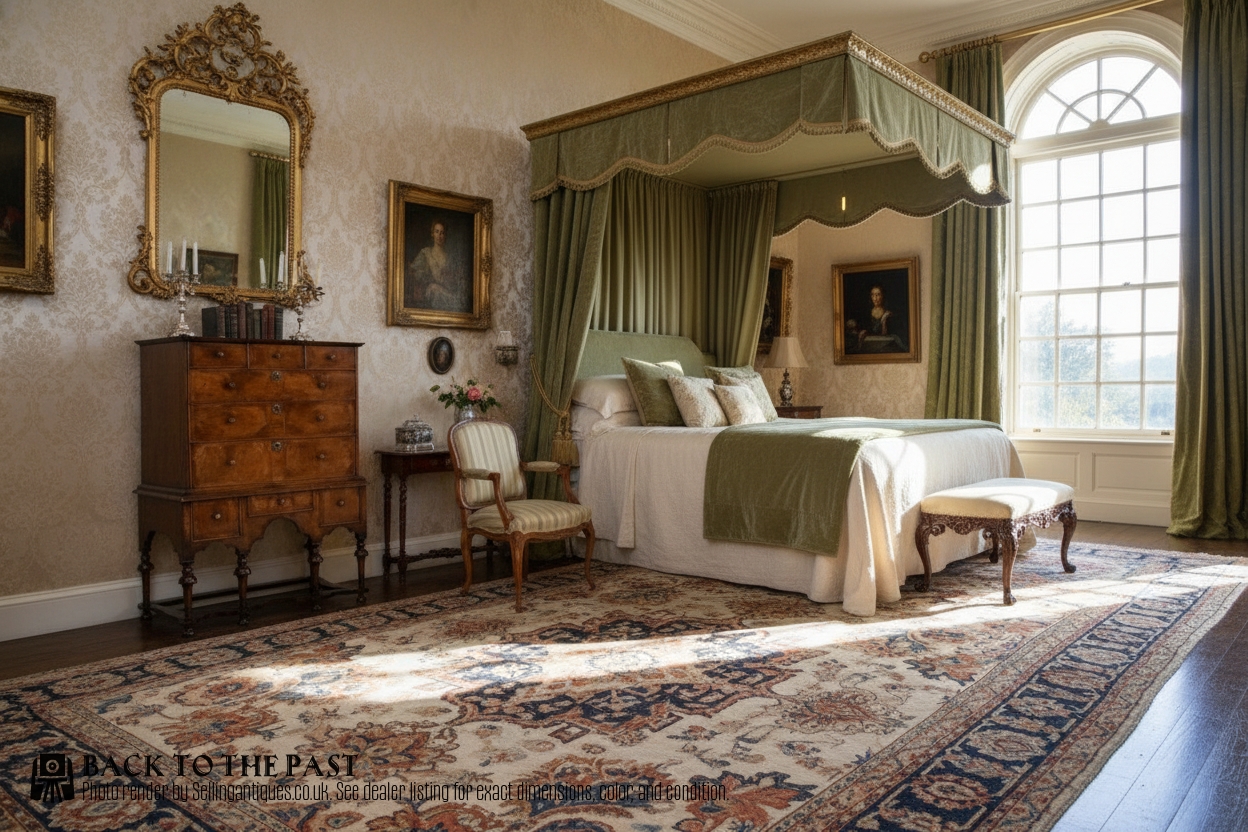
The distinction between tiers rests upon the selection of timber and the precision of the veneer work. Highly figured burr walnut matched symmetrically across a serpentine front demands superior cabinet-making compared to plain timber boards.
Execution of carved details and inlay work separates ordinary production from exceptional items. Crisp floral marquetry and well-cast brass hardware elevate a commode or chest above standard domestic pieces.
The Carved Walnut Chest Glossary
- Burr walnut
- A prized veneer derived from the growth excrescences of the walnut tree, yielding swirling, knotty grain patterns. Cabinet-makers used these sections on primary display surfaces like drawer fronts.
- Bombe
- A swelling, outward-curved contour found on continental commodes and cabinets, particularly associated with Dutch and French pieces. This profile requires advanced carpentry to shape timber or veneer to the curved carcase.
- Cassone
- An Italian marriage chest or coffer, often heavily carved with Renaissance motifs, putti, or heraldry. These large storage trunks represent the early ancestral form of the modern chest.
- Marquetry
- The art of forming decorative patterns by fitting together thin slices of various woods and other materials onto a structural base. Floral and arabesque designs frequently adorn eighteenth-century walnut panels.
- Serpentine
- A furniture front or top shaped with a concave centre flanked by two convex ends, creating a flowing wave line. This contour appears frequently on commodes and chests of drawers.
Carved Walnut Chest: Frequently Asked Questions
How do I date a walnut chest?
Dating relies upon construction methods, hardware types, and prevailing decorative styles like marquetry or bombe shaping. Examining dovetails, drawer linings, and secondary timbers helps determine whether a piece belongs to the seventeenth century or a later revival period.
Hardware placement and lock mechanisms also provide chronological clues. Original brass handles and escutcheons match the fastening styles specific to periods such as William and Mary or Queen Anne.
What is the difference between a commode and a chest of drawers?
A commode typically refers to a low, decorative chest of drawers of continental origin, often featuring serpentine or bombe fronts. English cabinet-makers adopted similar forms but maintained distinct regional naming conventions.
French and Italian commodes frequently incorporate marble tops or elaborate marquetry. English chests from the same eras often rely on plain or figured walnut veneers without stone surfaces.
Where should I place a walnut chest at home?
Walnut furniture suits principal reception rooms, hallways, or bedrooms where natural light enhances the figured grain and warm tones of the timber. Positioning pieces away from direct heat sources and strong sunlight preserves the veneer and finish.
Lower commodes and chests on stands function well beneath mirrors or artwork. Larger tallboys and tall chests require stable wall placement and adequate floor clearance.
How do I care for antique walnut wood?
Maintenance involves dusting with a soft, dry cloth and applying appropriate beeswax sparingly to nourish the timber surface. Avoiding synthetic polishes and silicone sprays prevents residue buildup that dulls the antique patina.
Maintaining stable indoor humidity prevents timber shrinkage and veneer lifting. Sudden temperature shifts risk cracking the delicate burr walnut surfaces.