
Louis XV Style Chest
A louis xv style chest brings curved elegance and refined French character to a room.
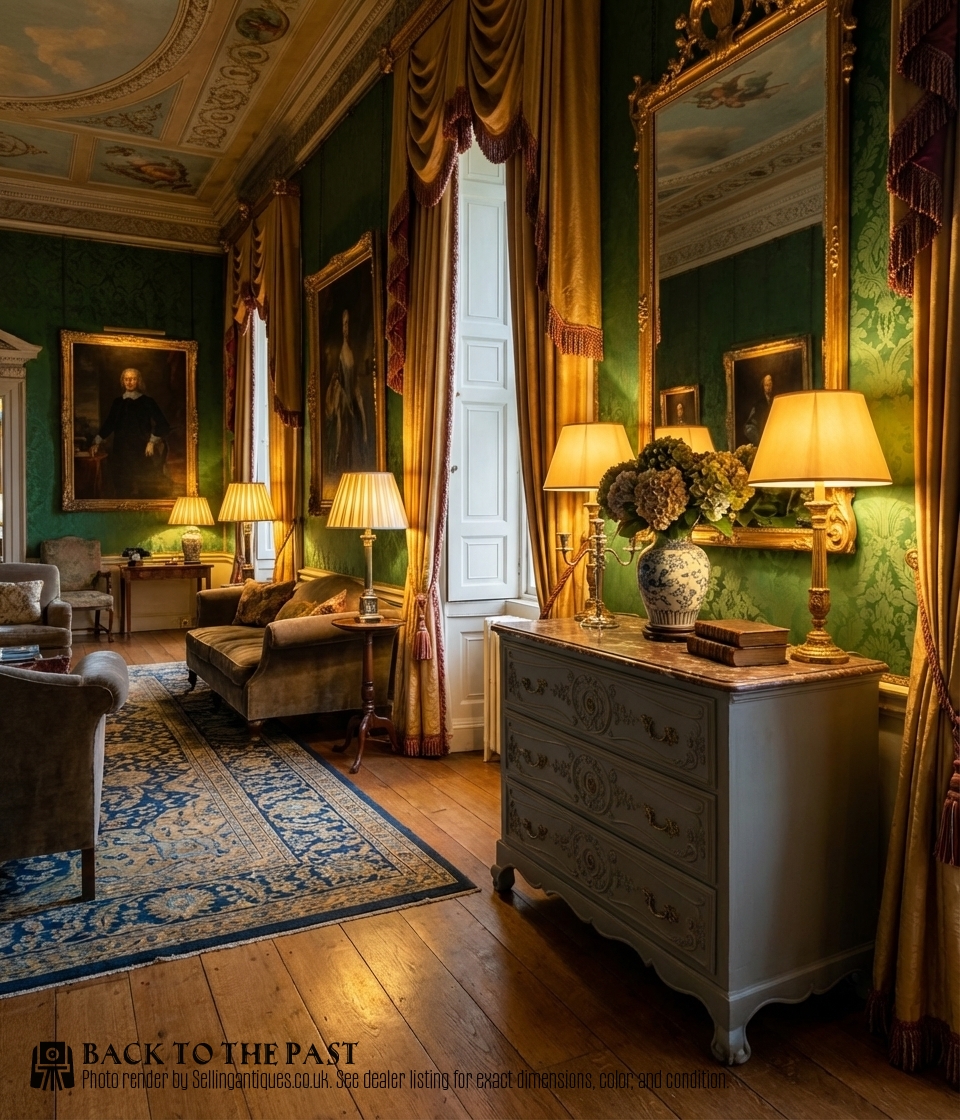
The louis xv style chest
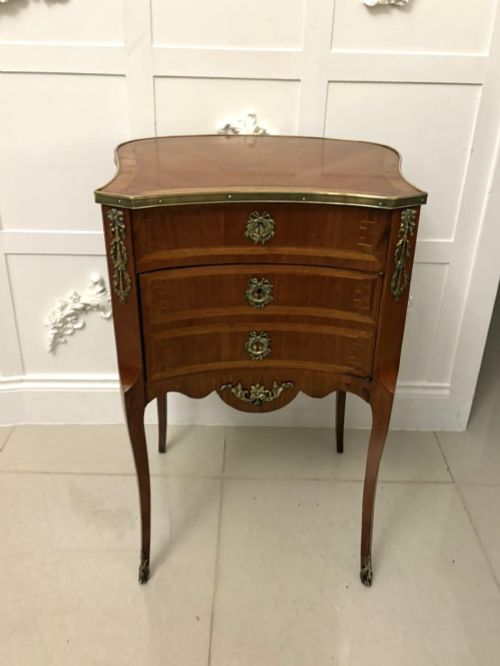
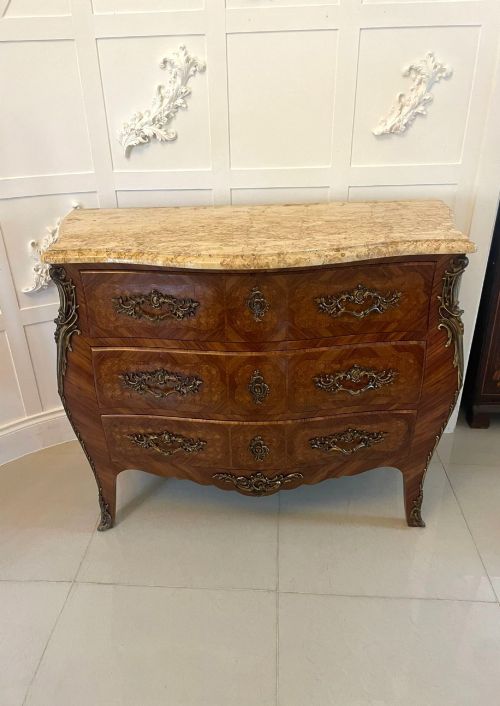
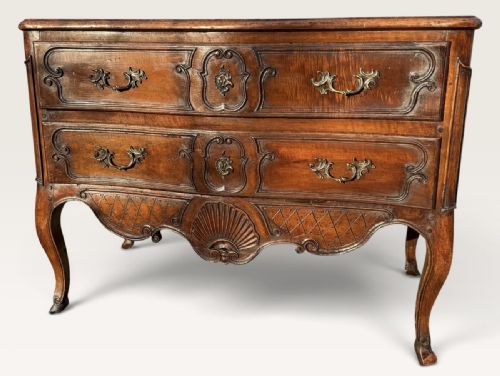
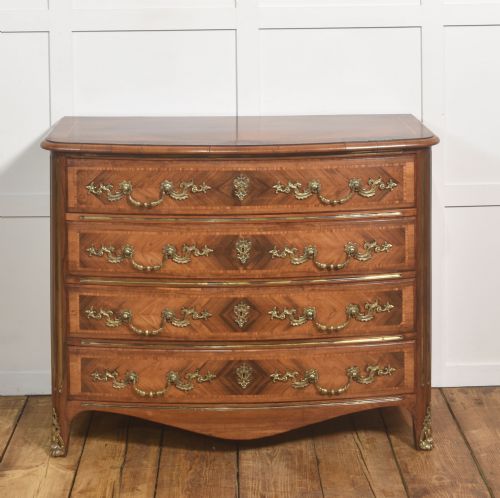
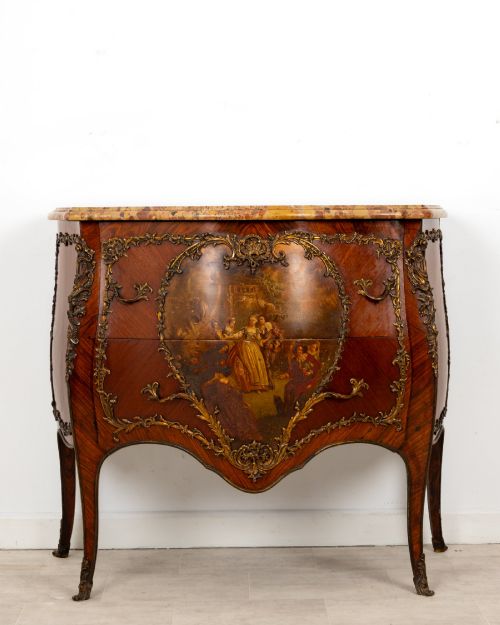
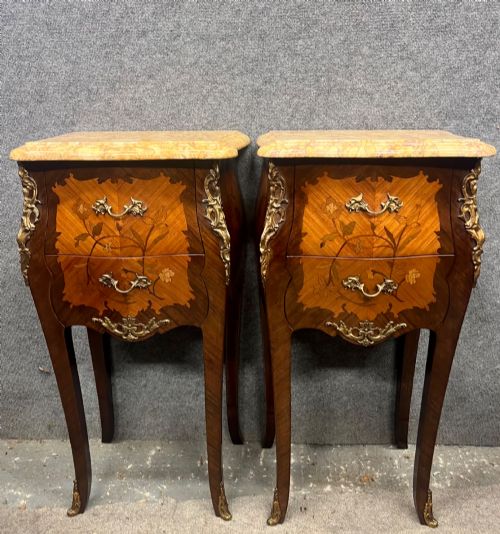
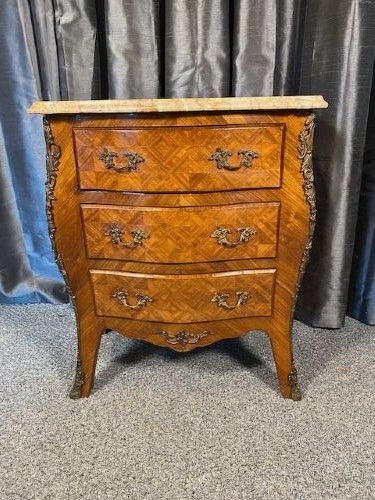
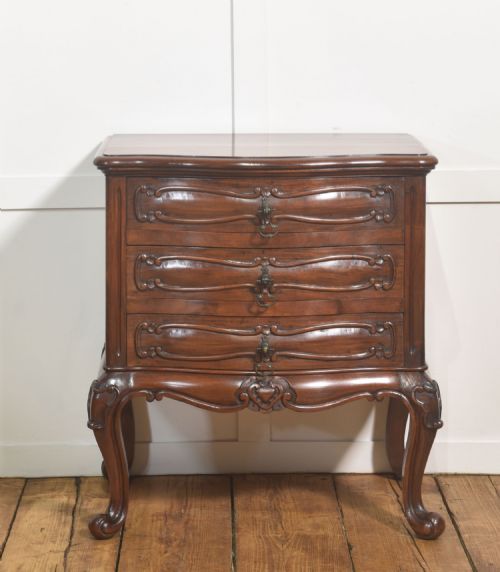
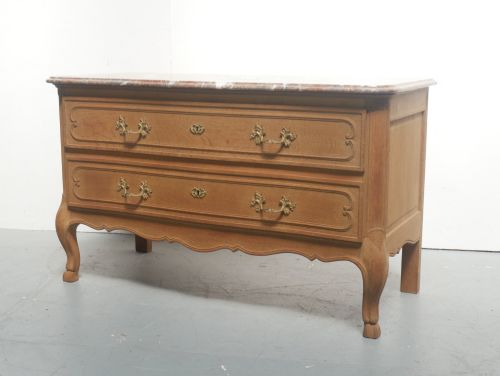
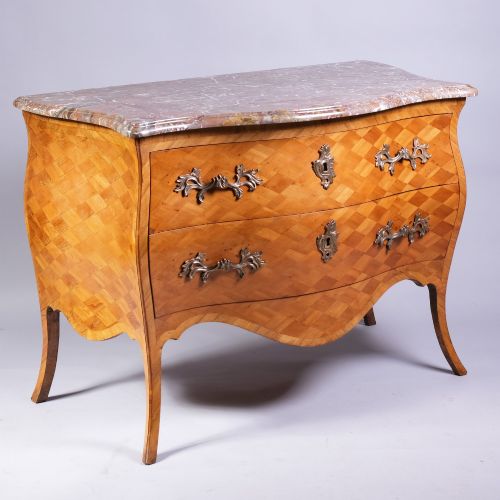
A louis xv style chest takes the form of a commode or chest of drawers, shaped with characteristic serpentine lines and curved fronts. These pieces draw on 19th-century revival interest and early 20th-century production, echoing the ornate French aesthetic.
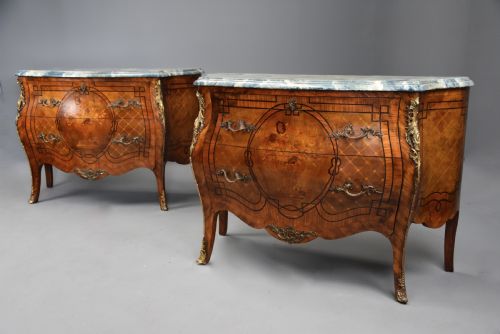
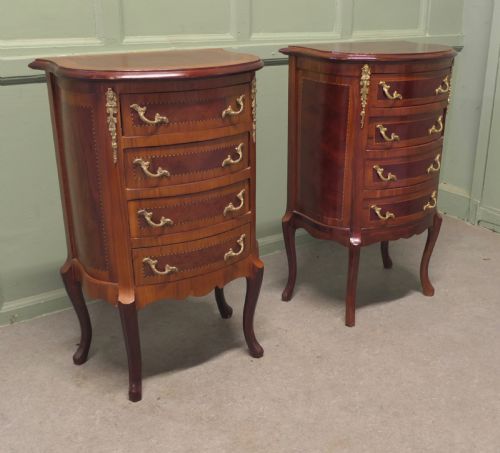
Commodes and drawer chests appear frequently, often featuring bombe profiles and marble tops. Walnut, oak, and exotic timbers form the foundation of these decorative storage items.
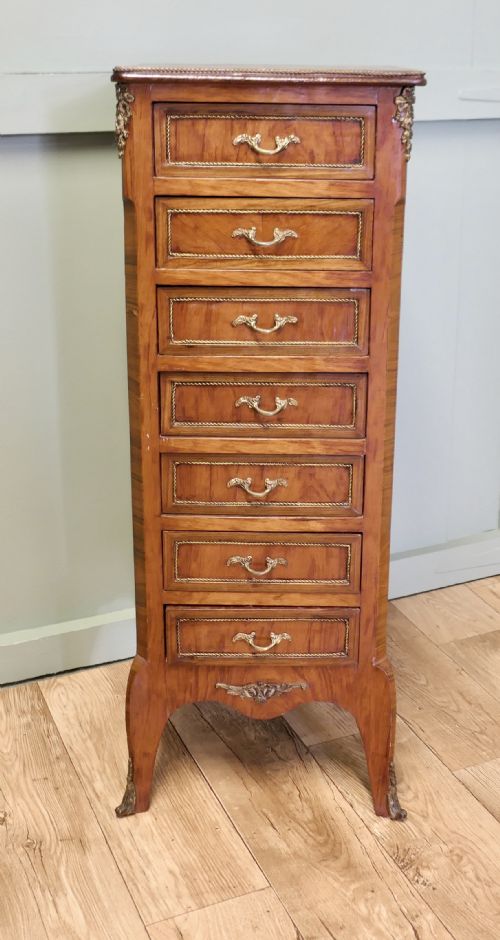
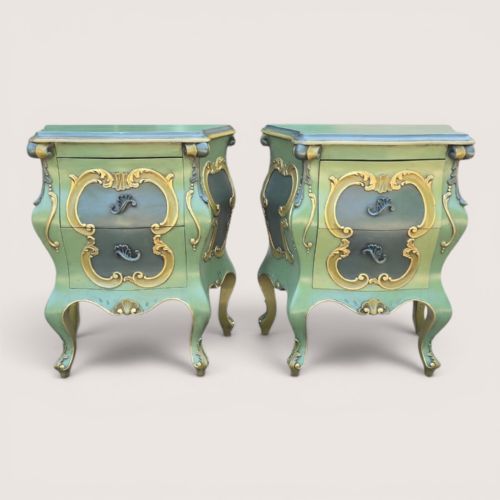
Originating largely from French workshops and continental cabinet makers, these items combine practical storage with decorative presence. The selection ranges from compact bedside cabinets to large multi-drawer chests.
Materials and construction
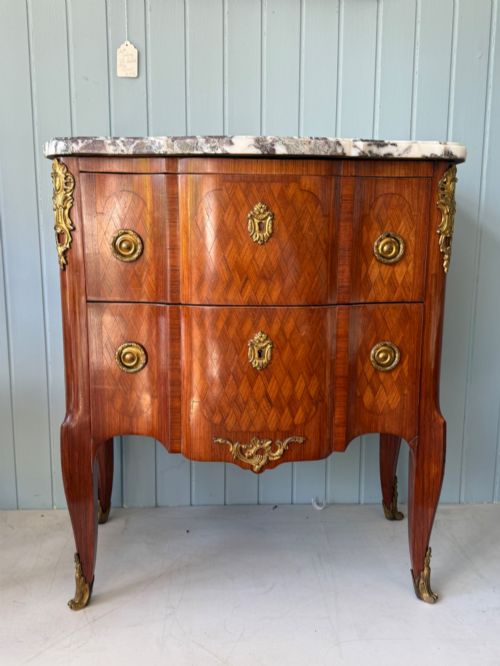
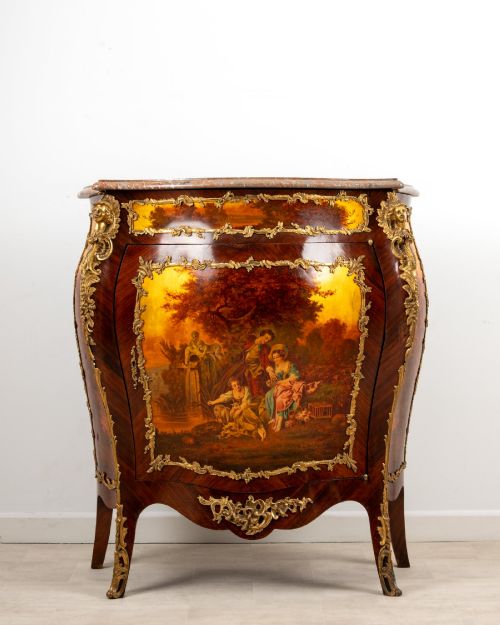
Cabinet makers utilised a rich palette of timbers, including walnut, oak, kingwood, mahogany, and chestnut, often laid as delicate veneer or parquetry across the frame. Lacquer and paint finishes introduce colour and pattern, particularly in chinoiserie interpretations.
Metalwork plays a defining structural and decorative role, with brass, ormolu, and gilt bronze mounts fitted to corners, handles, and apron rails. Heavy marble slabs, including sienna varieties, finish the upper surface of many commodes.
Retail Price Guide 2026
Typical UK retail prices for louis xv style chest, calculated from the Sellingantiques database of over a million retail prices indexed since 2003. This retail price guide relies exclusively on Sellingantiques data; no external sources or auction records are used, so the figures do not describe the wider market.
Some chests arrive with secret drawers tucked behind decorative friezes, offering a hidden spot for small valuables.
Distinguishing quality
The sophistication of the timber work dictates the standing of a piece, from simple painted oak to intricate marquetry and figured kingwood veneers. Finer examples display seamless matching of grain across drawer fronts and curved surfaces.
The weight and detail of the brass or ormolu mounts separate standard production from superior craftsmanship. Cast mounts with sharp chisel work and secure integration into the wooden frame elevate the overall execution.
TORREZ·Edwards & Roberts
The Louis XV Style Chest Glossary
- Commode
- A low chest of drawers, typically decorative and standing on relatively tall legs. This form is central to French interior styling.
- Bombe
- A swelling, outward-curving contour found on the sides and front of advanced cabinet work. This shape demands high skill in veneer application.
- Ormolu
- Gilt bronze mounted ornamentation applied to furniture for decorative enrichment. The technique involves applying a gold amalgam to bronze.
- Marquetry
- Decorative patterns formed by the precise insertion of small pieces of veneer into a fitted ground. Different coloured woods create pictorial or geometric designs.
- Parquetry
- Geometric wood mosaic work used for flooring or surface decoration on furniture panels. Squares, triangles, and lozenges form repeating patterns.
Frequently Asked Questions
How do I identify the period?
Identifying the period involves examining the secondary timbers, construction methods, and wear patterns on the drawer linings. Revival pieces from the nineteenth and twentieth centuries often use machine-cut elements alongside hand finishing.
Stylistic cues also help, as nineteenth-century interpretations frequently blend louis xv curves with broader revival motifs. Examining the mounts and finish provides further context for dating.
Where should I place a commode?
A commode works well in a hallway, drawing room, or bedroom where its decorative front and marble top remain visible. The curved profile requires a space that accommodates its depth and width without crowding.
Placing objects on the marble surface should be done with care to avoid scratching the stone. These pieces pair effectively with traditional and contemporary interiors alike.
What maintenance do these chests need?
Maintenance requires dusting with a soft cloth and avoiding moisture or harsh chemical cleaners on the wood and veneer. Wax can be applied sparingly to nourish timber surfaces and maintain the sheen.
Marble tops benefit from prompt wiping of spills to prevent staining. Checking the stability of brass mounts periodically ensures they remain secure.