

19th Century French Chest
When sourcing a 19th century french chest, collectors seek the practical storage and distinct regional character found in walnut, mahogany, and marble-topped commodes.
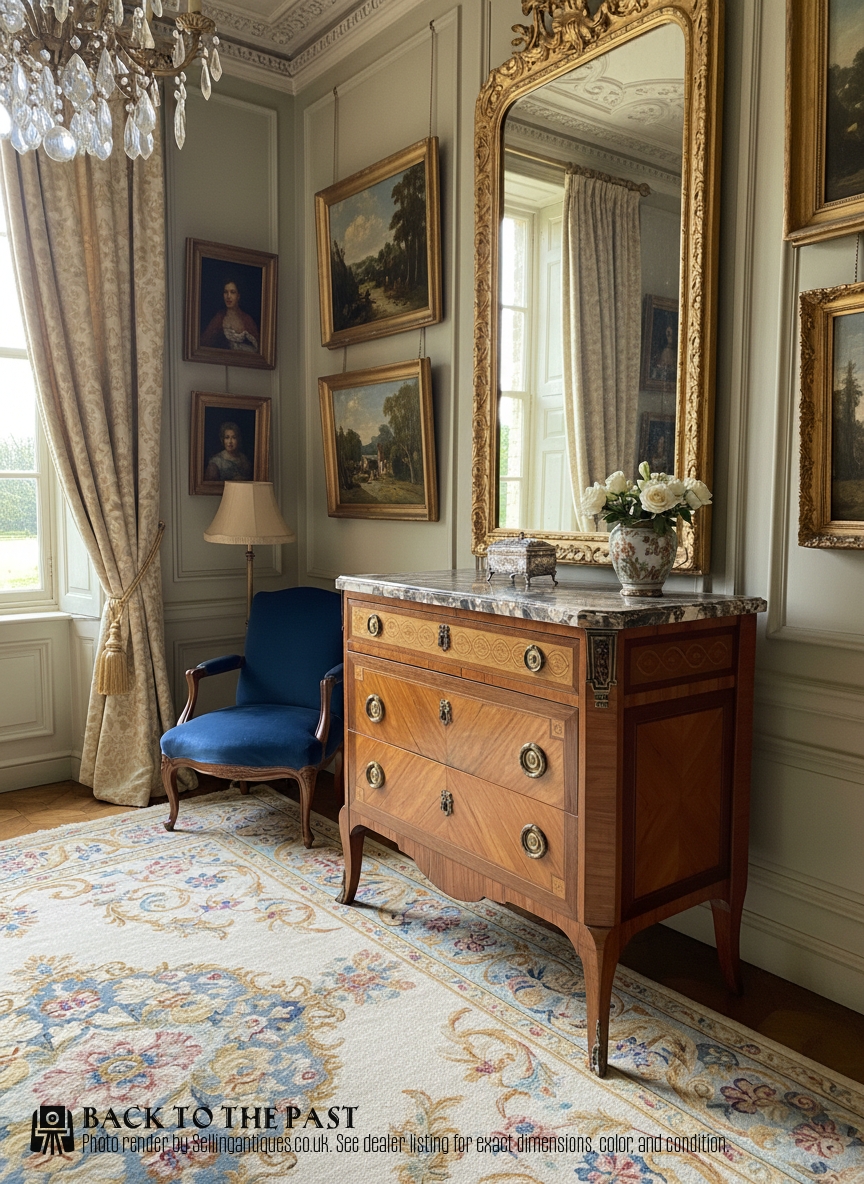
19th Century French Chest
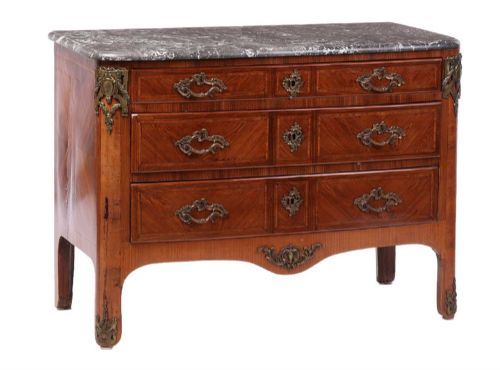
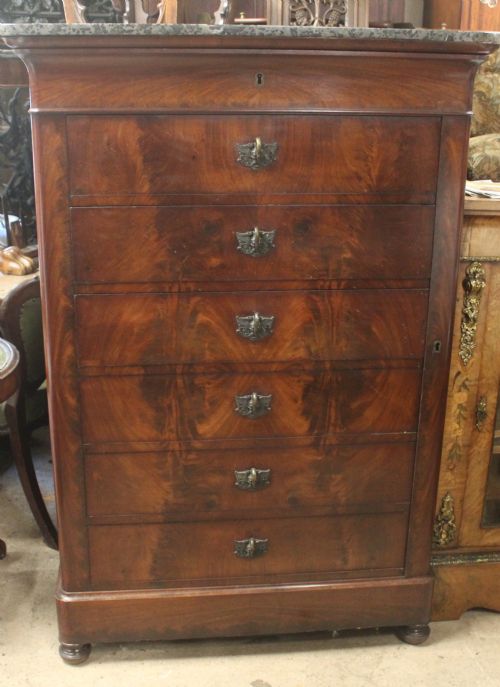
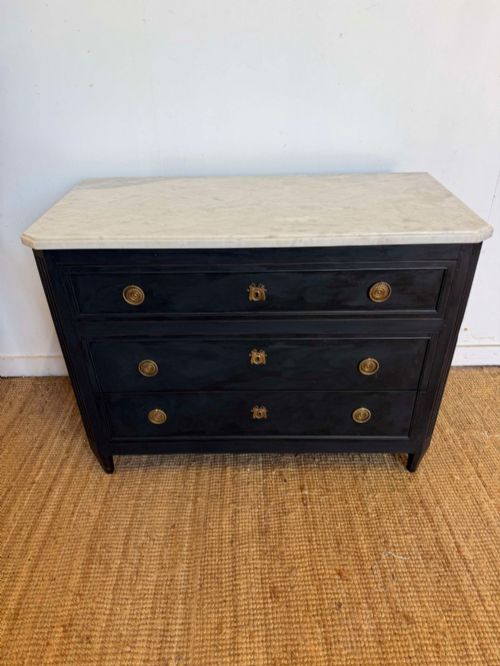
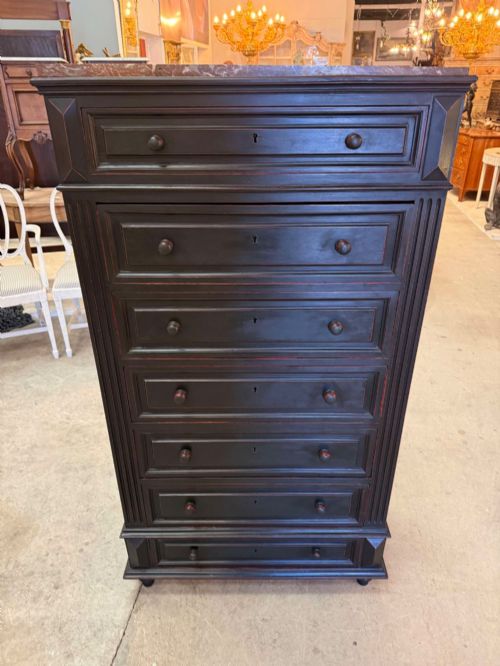
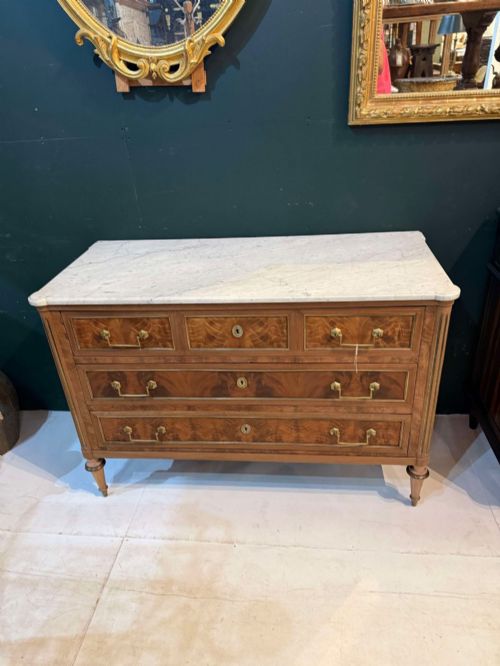
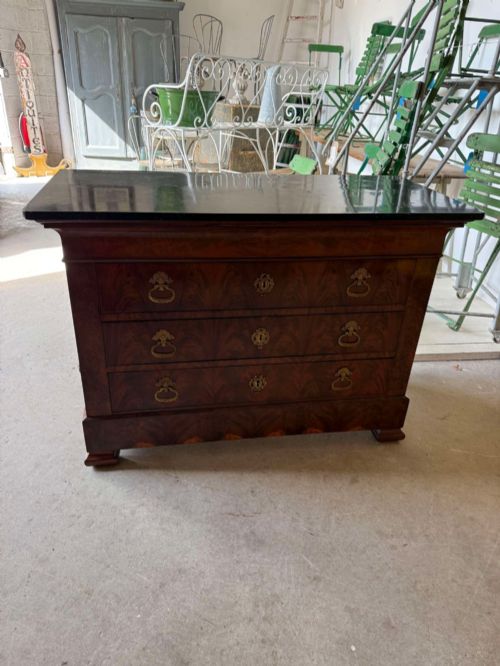
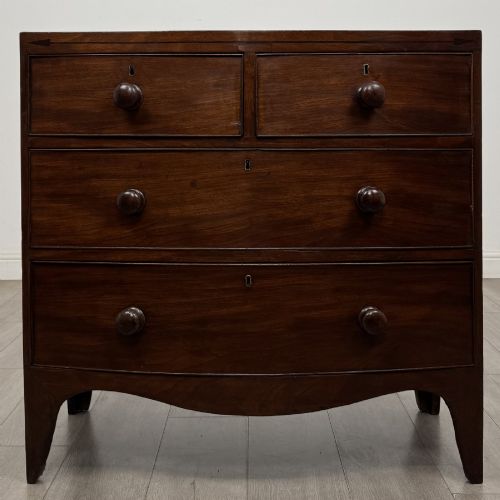
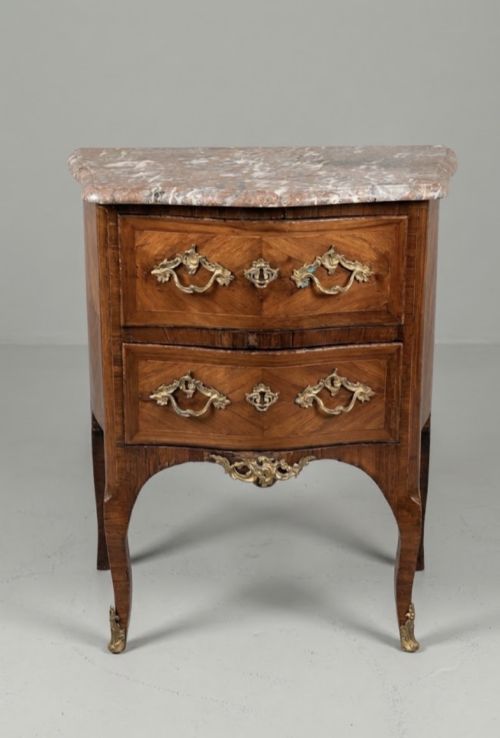
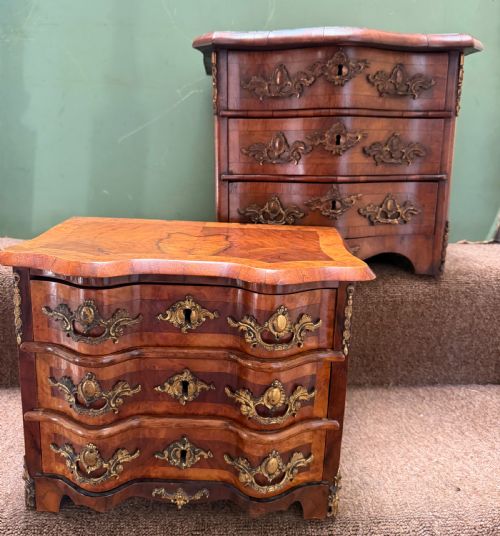
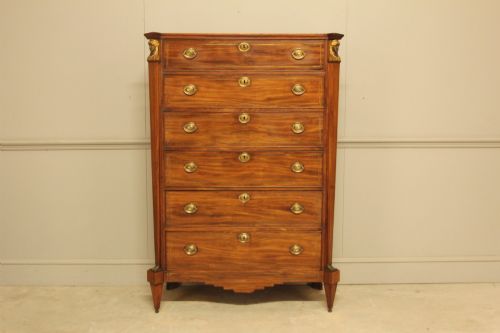
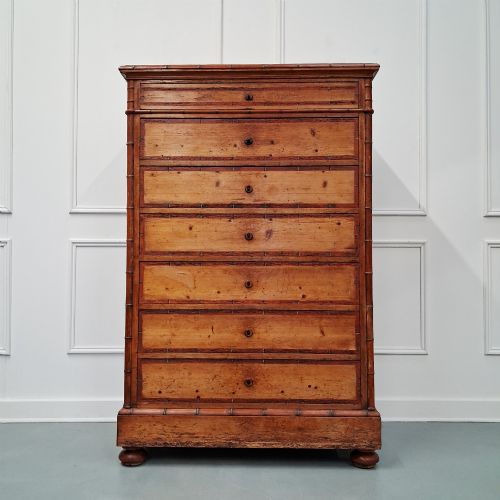
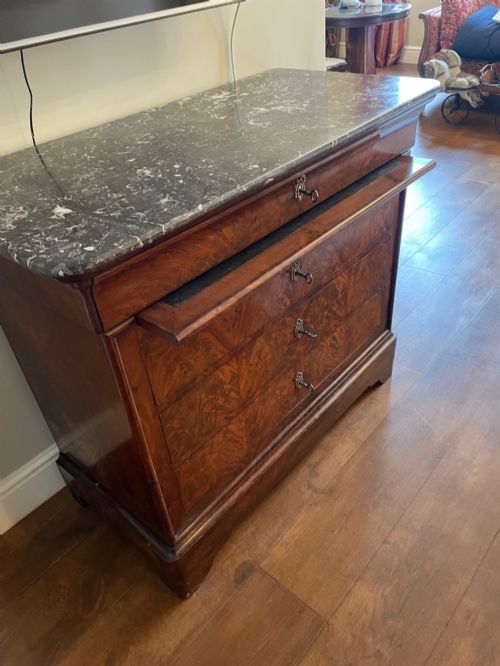
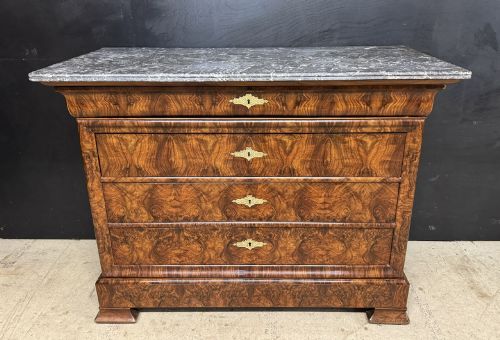
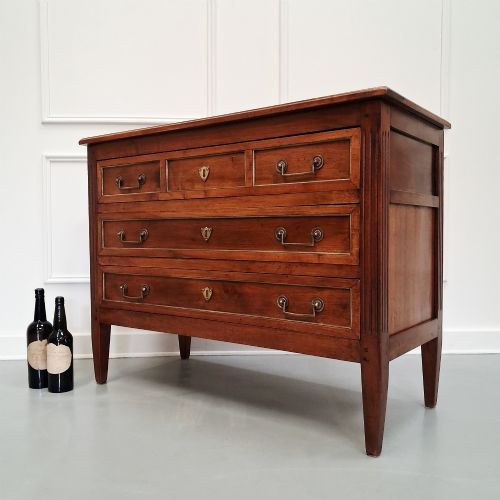
A 19th century french chest encompasses a variety of storage furniture, most commonly represented by commodes, bedside tables, and taller drawer units designed for domestic use. The pieces found here span foundational regional styles including Louis Philippe, Charles X, and French Empire designs, alongside revival movements like Louis XV and Louis XVI.
Buyers regularly encounter commodes fitted with contrasting marble tops, alongside smaller bedside cabinets and specialised trunks. Walnut and mahogany serve as the primary woods, often decorated with parquetry, marquetry, or painted finishes depending on the specific provincial or Parisian workshop origin.
How They Were Made
Carpenters constructed these pieces using dense hardwoods such as walnut, mahogany, oak, and chestnut, frequently applying exotic veneers like kingwood and burr walnut across the drawer fronts. Carcases relied on traditional joinery techniques, while surfaces received careful polishing or painted finishes.
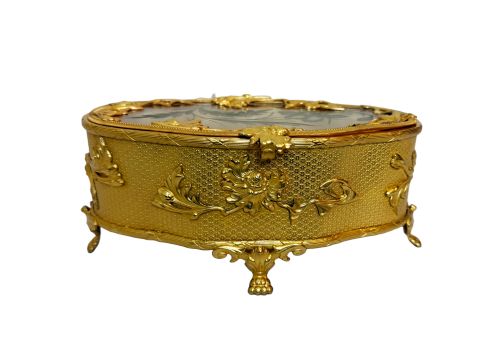
Metal ornamentation played a crucial role in finishing these items, utilising cast or chased ormolu, brass mounts, and gilt bronze details to accent corners, keyhole escutcheons, and handles. Heavy marble slabs, cut in grey or fossil varieties, were fitted directly to the tops of commodes and bedside cabinets.
19th Century French Chest Retail Price Guide 2026
Typical asking prices for 19th century french chest among the pieces listed under this phrase on Sellingantiques today, from the lower quarter to the upper quarter. They describe what is for sale here now, not the wider market.
Listings feature walnut, mahogany, and kingwood as the primary framing timbers across commodes and bedside cabinets.
What Varies in Quality
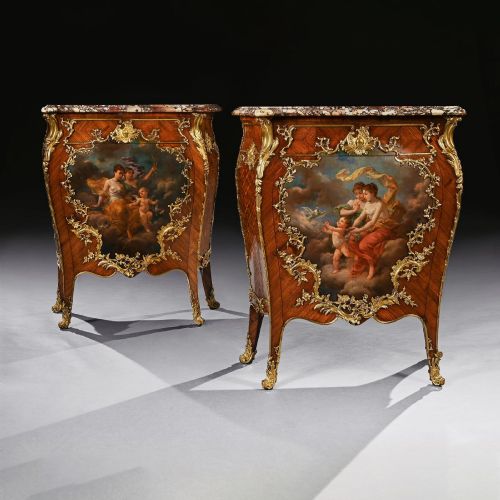
The standard of a 19th century french chest depends heavily on the precision of its timber selection and the complexity of its surface decoration. Pieces featuring intricate parquetry, hand-cut marquetry, or Vernis Martin panels demonstrate a higher level of workshop skill than plain painted or simple veneered examples.
Hardware integration and structural integrity further distinguish fine examples from standard utility items. Crisp, fire-gilded ormolu mounts fitted flush to the wood indicate superior craftsmanship, whereas cast elements with softer definition point to volume production.
Susse Freres·Louis Vuitton·Maison Krieger·Henry Dasson·E. Kahn·Edwards and Roberts
The 19th Century French Chest Glossary
- Commode
- A low chest of drawers, typically featuring multiple deep drawers and originating in France. These pieces frequently incorporate marble tops and elaborate veneering.
- Ormolu
- Gilt bronze mounts used extensively for decorative handles, feet, and corner guards on fine furniture. The technique involves applying a mercury and gold amalgam to cast bronze.
- Marquetry
- The art of applying decorative pieces of wood veneer to a structural structure to form intricate pictorial designs. Common motifs include floral patterns and geometric arrangements.
- Bombe
- A swollen or bulging contour shape characteristic of commodes and cabinets from specific revival periods. This curving silhouette requires advanced woodworking skill to execute properly.
- Parquetry
- Geometric mosaic woodwork used to cover floors or furniture surfaces. Unlike marquetry, it relies on angular repeating shapes like cubes or chevrons.
19th Century French Chest: Frequently Asked Questions
How do I identify a marble top?
French commodes from this era typically feature thick slabs of grey or fossilised marble resting directly on the wooden carcase. These tops are unattached by modern glues and rely entirely on their own substantial weight.
Inspect the edges for hand-bevelling and natural stone figuring to confirm period authenticity. Older marble often shows minor surface wear consistent with age.
What is a Louis Philippe chest?
A Louis Philippe chest dates from the mid nineteenth century and is defined by clean, restrained lines with minimal carved ornament. These pieces prioritise the natural grain of walnut or mahogany over extravagant decoration.
They often incorporate a subtle ogee-moulded top drawer above three or four deeper lower drawers. This style offers a simpler aesthetic compared to heavily ornate empire designs.
Where were bedside cabinets used?
Bedside cabinets and petit commodes served functional roles in upscale bedrooms for holding chamber pots, water jugs, or personal items. Their compact proportions matched the tighter spatial requirements beside period beds.
Many survive as matched pairs, incorporating single drawers and small cupboards enclosed by panelled doors. Cabinetmakers applied the same fine veneers to these small pieces as they did to large salon commodes.
What distinguishes parquetry from marquetry?
Parquetry creates repeating geometric patterns using angular wood tiles, such as cubes, chevrons, or triangles. It offers a structured, architectural look across drawer fronts and table tops.
Marquetry, by contrast, forms pictorial or curvilinear scenes using varied wood tints to render flowers, landscapes, or scrolls. Both techniques required specialist veneer cutters working in dedicated urban workshops.