
French Bombe Commode
When a search for a french bombe commode brings you here, you meet swelling, serpentine chests defined by pronounced curvature and substantial presence.
French Bombe Commode
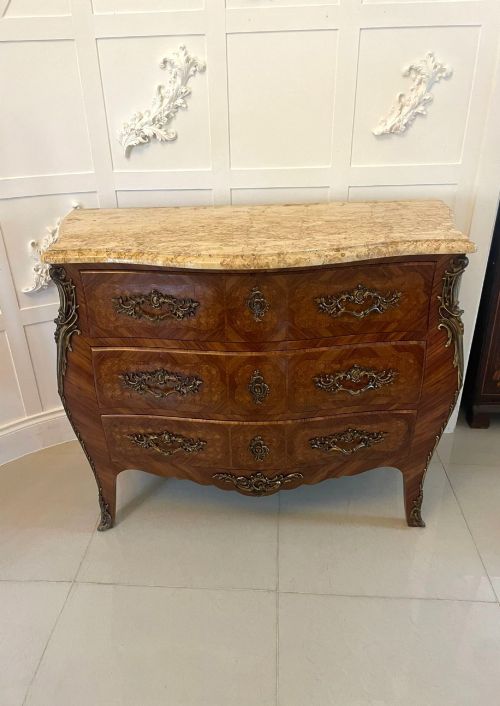
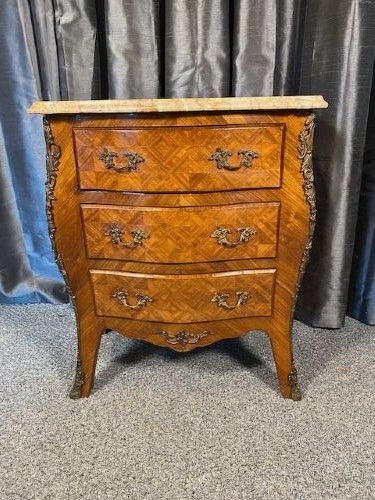
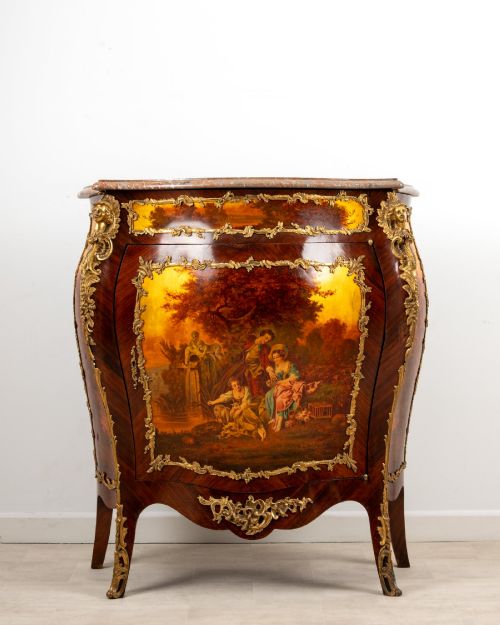
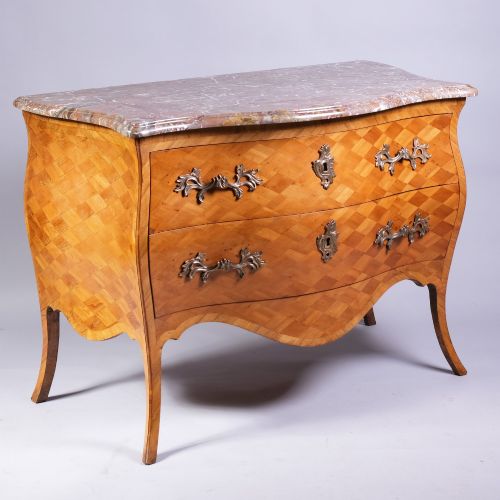
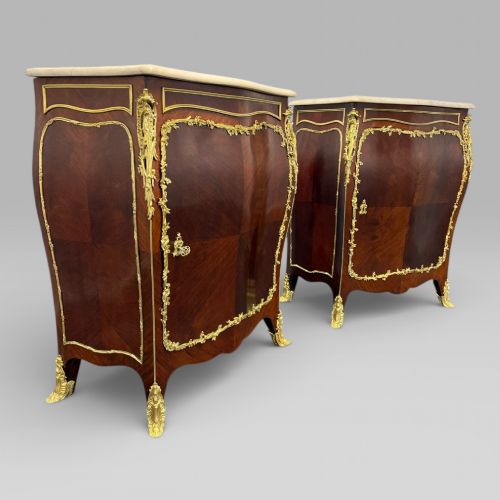
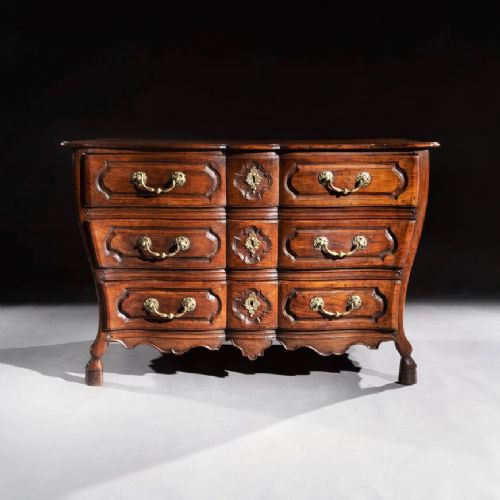
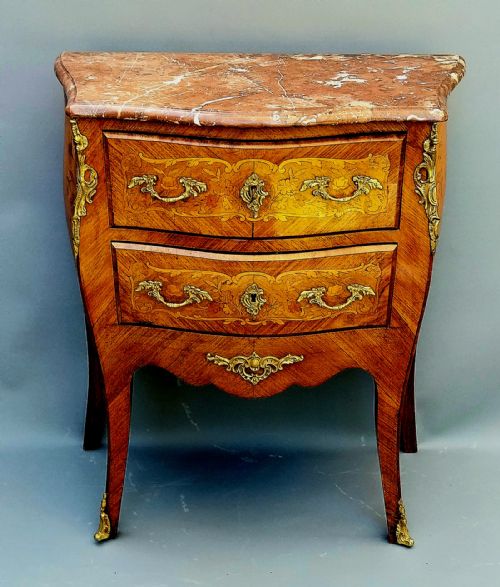
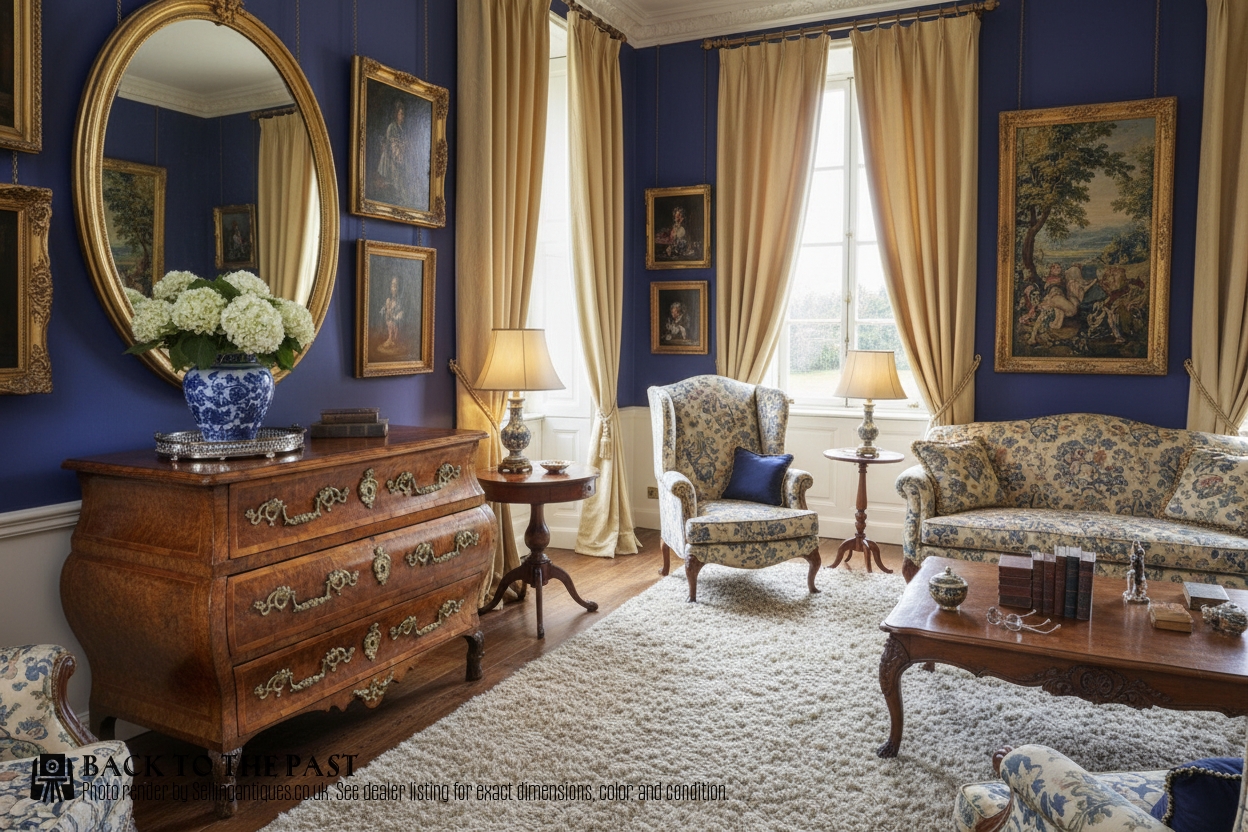
A french bombe commode presents a distinctive swelling front and outward-curving sides, originating in cabinetmaking traditions primarily associated with the Louis XV and Louis XVI periods. These storage pieces appear across eighteenth-century workshops and subsequent revival eras through the nineteenth and twentieth centuries, manifesting in various proportions from petite bedside cabinets to large bedroom chests.
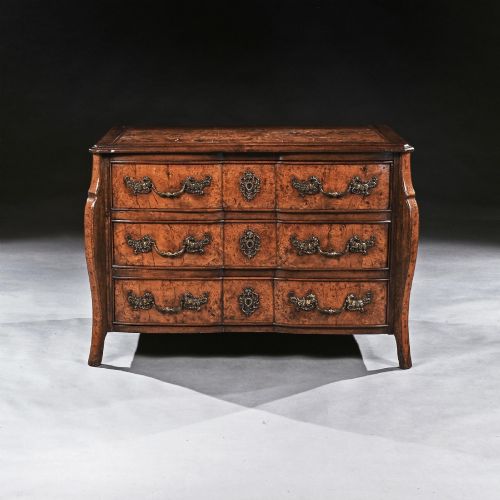
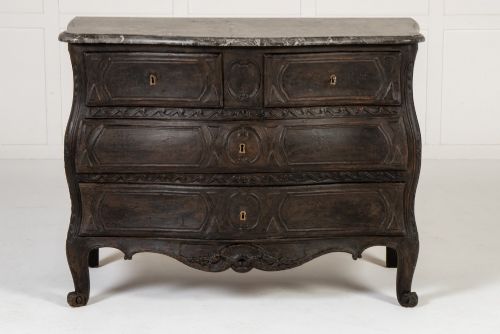
The regional variations extend from provincial chestnut and burr elm examples to highly polished metropolitan pieces featuring elaborate marquetry. Provincial interpretations often display simpler lines and native timbers, whereas revival iterations lean heavily into ornate neoclassical or rococo detailing.
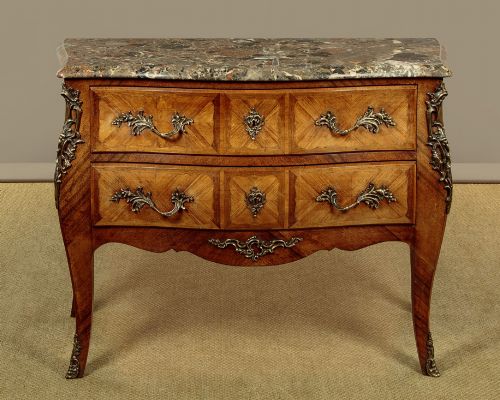
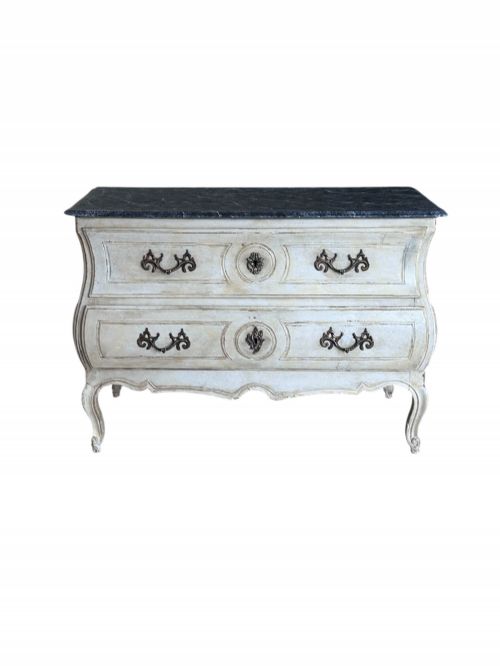
Buyers encounter forms that range from two-drawer storage units to larger chests of drawers, often topped with fitted marble slabs. These silhouettes define a room through sheer volume and expressive wooden contours.
Materials and Technique
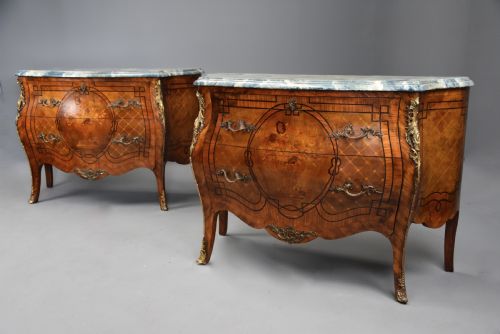
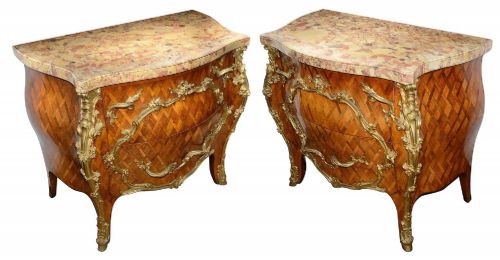
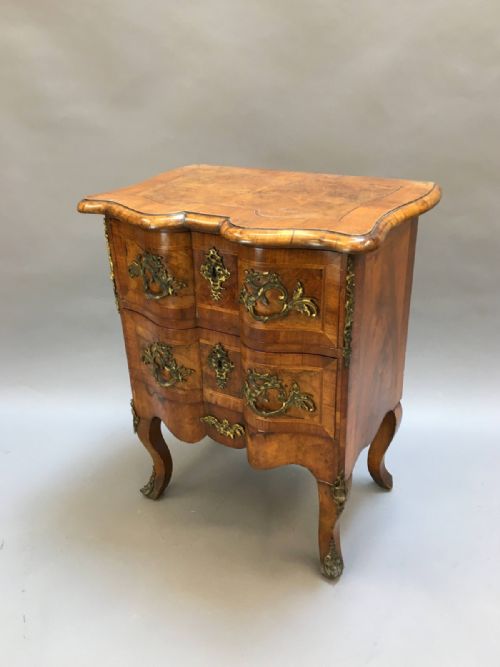
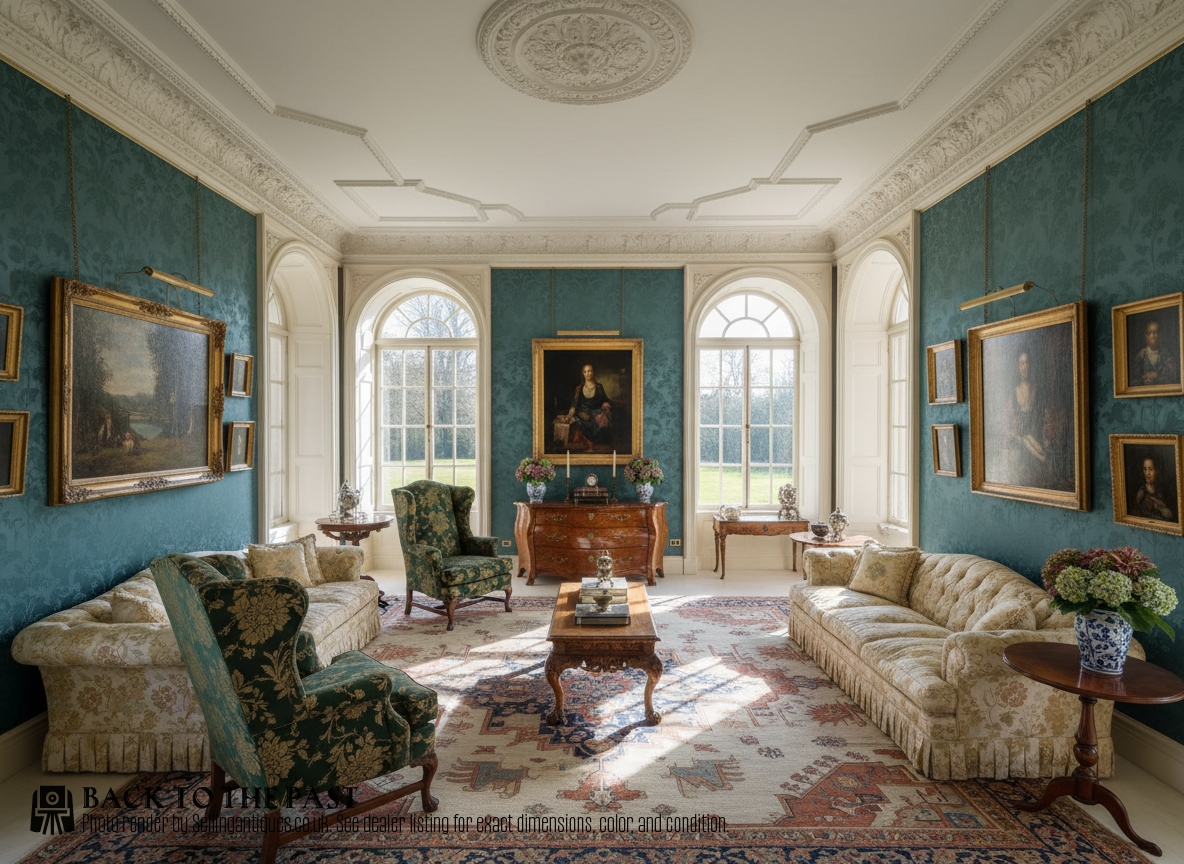
Construction relies upon applying fine veneers such as kingwood, walnut, and burr walnut over robust carcasing timbers like oak or pine. Marquetry and parquetry patterns utilise contrasting grains and dyed woods to form geometric or floral designs across the curved surfaces.
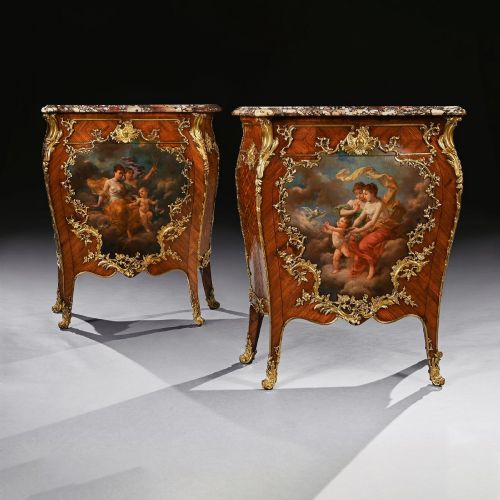
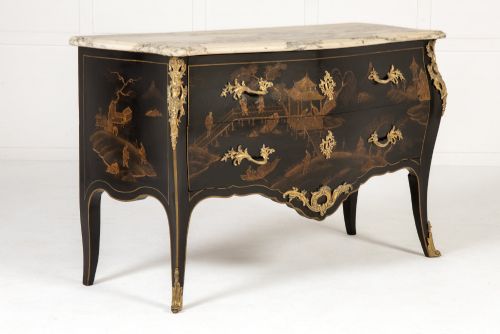
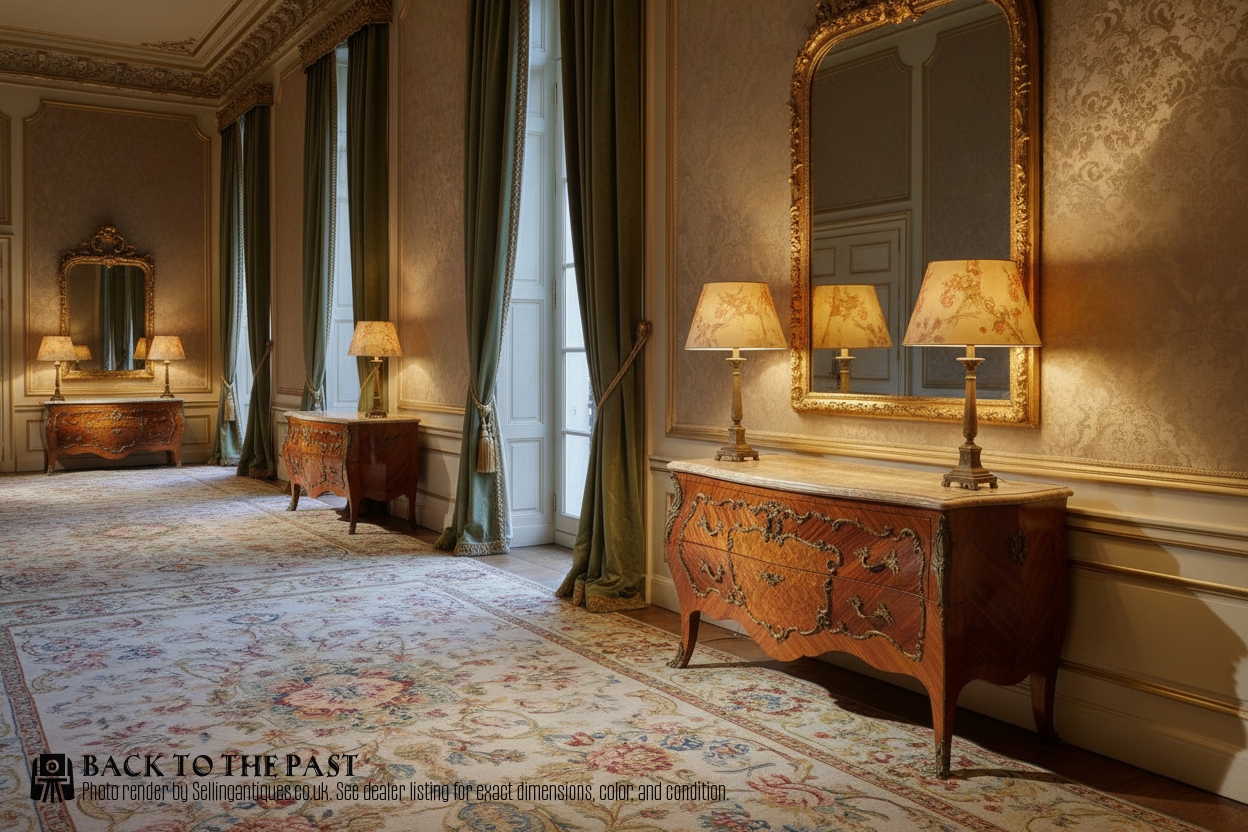
Gilt bronze and ormolu mounts are cast and chased to accentuate the prominent corners and apron lines, providing structural protection and decorative contrast. Marble tops, frequently in shades of red or white, are shaped to match the undulating profile of the underlying chest.
French Bombe Commode Retail Price Guide 2026
Typical asking prices for french bombe commode among the pieces listed under this phrase on Sellingantiques today, from the lower quarter to the upper quarter. They describe what is for sale here now, not the wider market.
One notable archived piece arrived with a documented history connecting it to the Victorian actress Lily Langtry.
Evaluating Execution
The calibre of a piece rests upon the fluidity of the serpentine sweep and the precision with which the veneers follow the compound curves. Superior execution is visible where marquetry patterns align seamlessly across moving drawer fronts and swelling sides without distortion.
Mount quality separates standard production from exceptional work, determined by the crispness of the chasing on the bronze hardware and the snugness of the marble fit. The integrity of the internal drawer construction and the depth of the timber finishing complete the assessment of execution.
E. Kahn
The French Bombe Commode Glossary
- Bombe
- A swelling, outward-curving shape characteristic of furniture from the mid-eighteenth century onwards. This contour requires specialised shaping of both the wooden frame and the applied veneers.
- Ormolu
- Gilded bronze used for decorative mounts and protective corner pieces on case furniture. The metal is cast and then finished with mercury gilding or modern electroplating.
- Marquetry
- The art of applying small pieces of veneer to a structure to form decorative patterns or pictorial scenes. Craftsmen utilise various coloured woods to achieve tonal gradation.
- Parquetry
- Geometric mosaic woodwork forming repeating patterns such as cubes or lozenges across a surface. This technique showcases the natural grain direction of timbers like kingwood and mahogany.
- Vernis Martin
- A simulated Japanese lacquer developed in France during the eighteenth century to imitate Asian export screens. It involves applying multiple layers of varnish to a painted surface.
French Bombe Commode: Frequently Asked Questions
How do I date a bombe commode?
Dating relies upon examining the secondary timbers inside the carcass, the construction methods of the drawer linings, and the style of the ormolu mounts. Eighteenth-century examples display hand-cut joinery and native woods appropriate to their region of origin, whereas nineteenth-century revival pieces often utilise machine-sawn elements.
The presence of specific revival markers, such as Louis XV or Louis XVI stylistic tropes executed with nineteenth-century brass techniques, helps separate period originals from later interpretations.
Are marble tops original to these chests?
Most formal commodes featured fitted marble tops from their initial creation, designed to provide a durable and luxurious surface. The marble was quarried, shaped, and channelled to follow the exact serpentine perimeter of the wooden frame below.
Replacements do occur due to accidental damage over centuries of use, making the thickness and edge profiling important indicators of period authenticity.
How should I care for polished veneer?
Maintaining these surfaces requires protecting the delicate timber veneers from direct sunlight and extreme humidity fluctuations. Regular dusting with a soft, dry cloth prevents particulate accumulation without introducing moisture.
Applied waxes should be minimal and buffed thoroughly to maintain the natural lustre of woods like kingwood and walnut without clouding the grain.
What is the difference between provincial and court styles?
Provincial pieces originate from regional workshops outside Paris, frequently utilising local timbers like chestnut, fruitwood, or elm with restrained decorative programs. They prioritise sturdy utility while retaining the characteristic swelling silhouette.
Court styles reflect metropolitan taste from major centres, employing exotic imported veneers, intricate marquetry, and heavily chased gilt bronze mounts intended for formal interiors.