
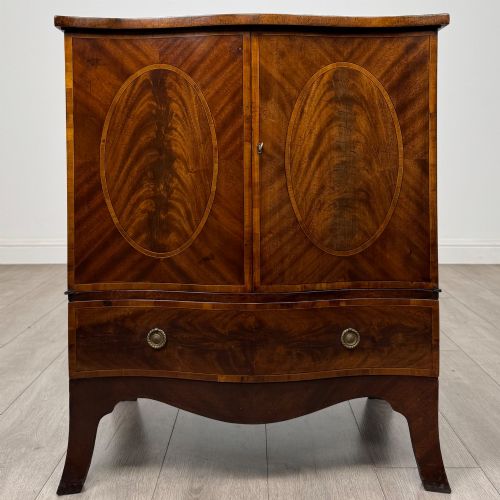
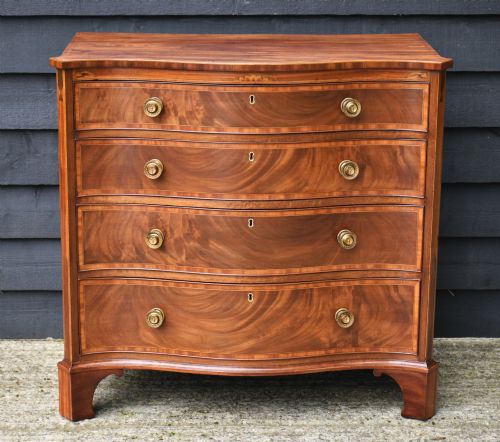
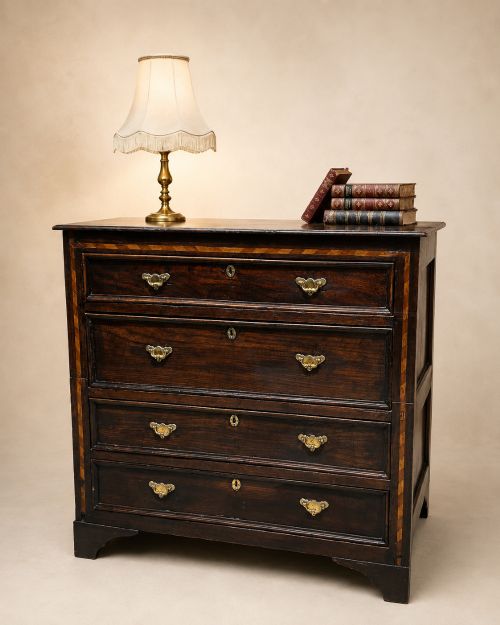
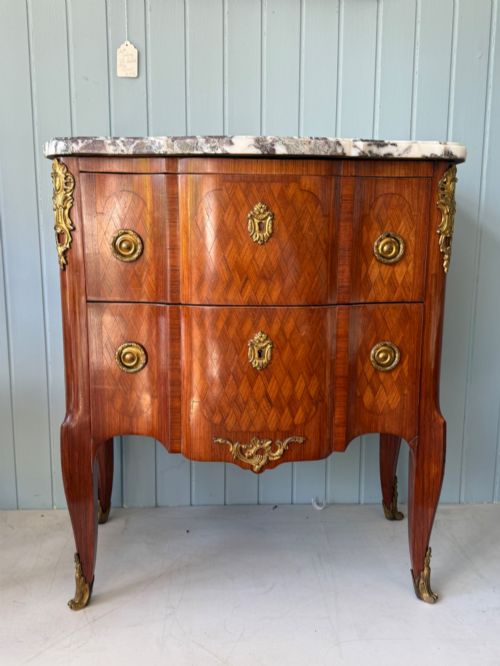
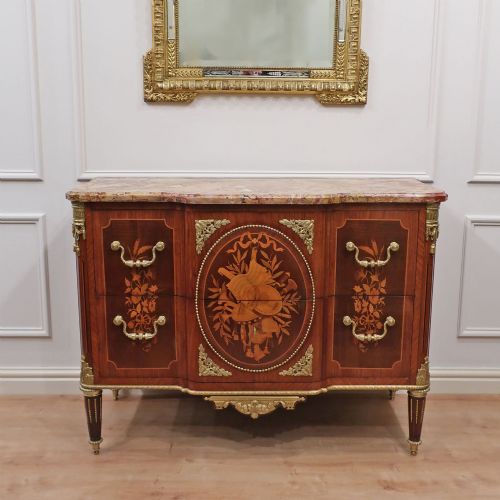
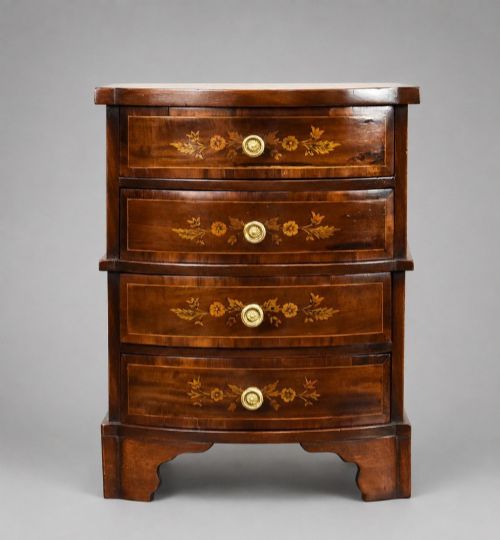
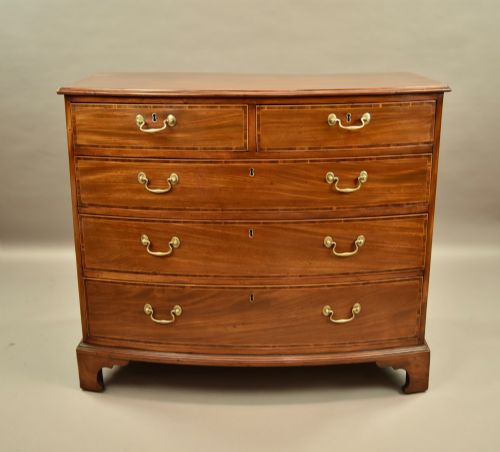
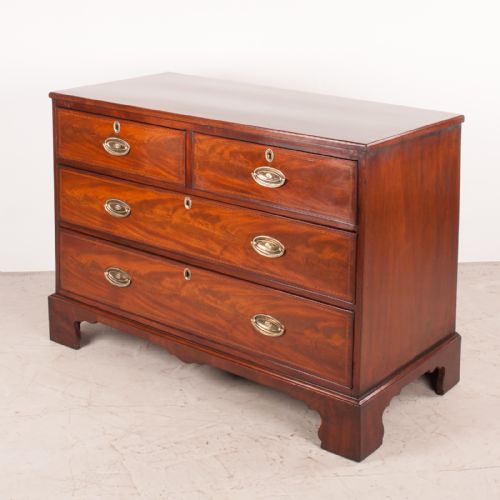
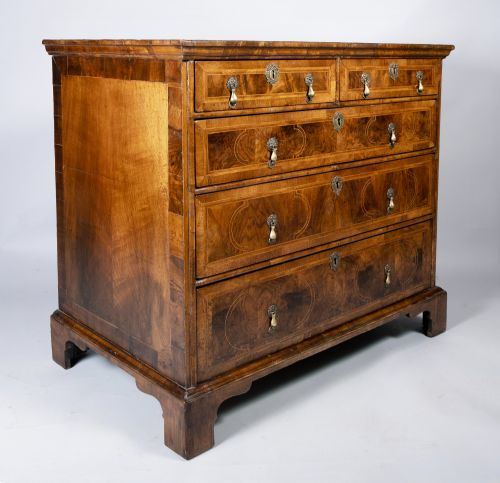
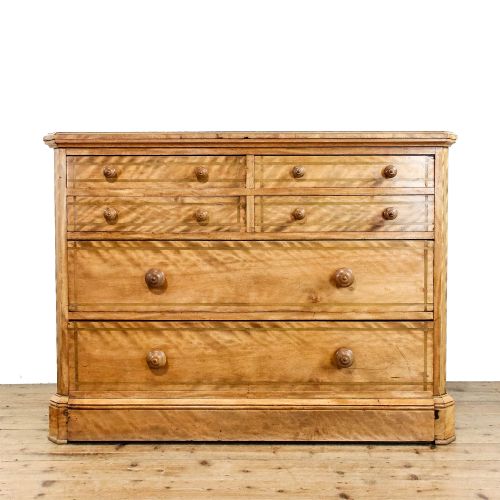
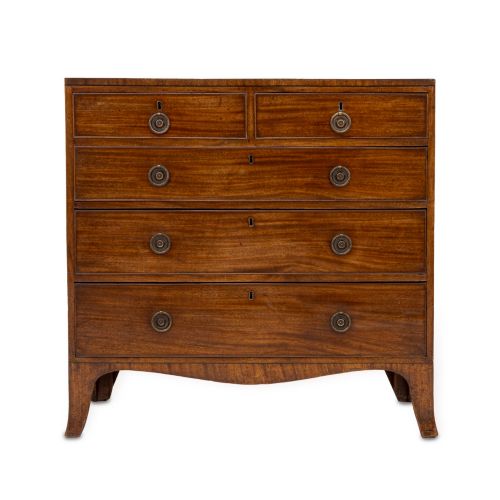
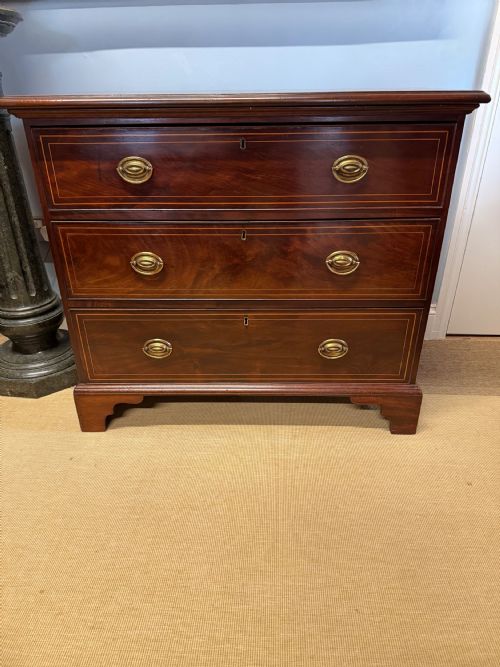
Inlaid Wooden Commode
An inlaid wooden commode brings surface pattern and practical storage into a room, spanning periods from the eighteenth century to the twentieth.
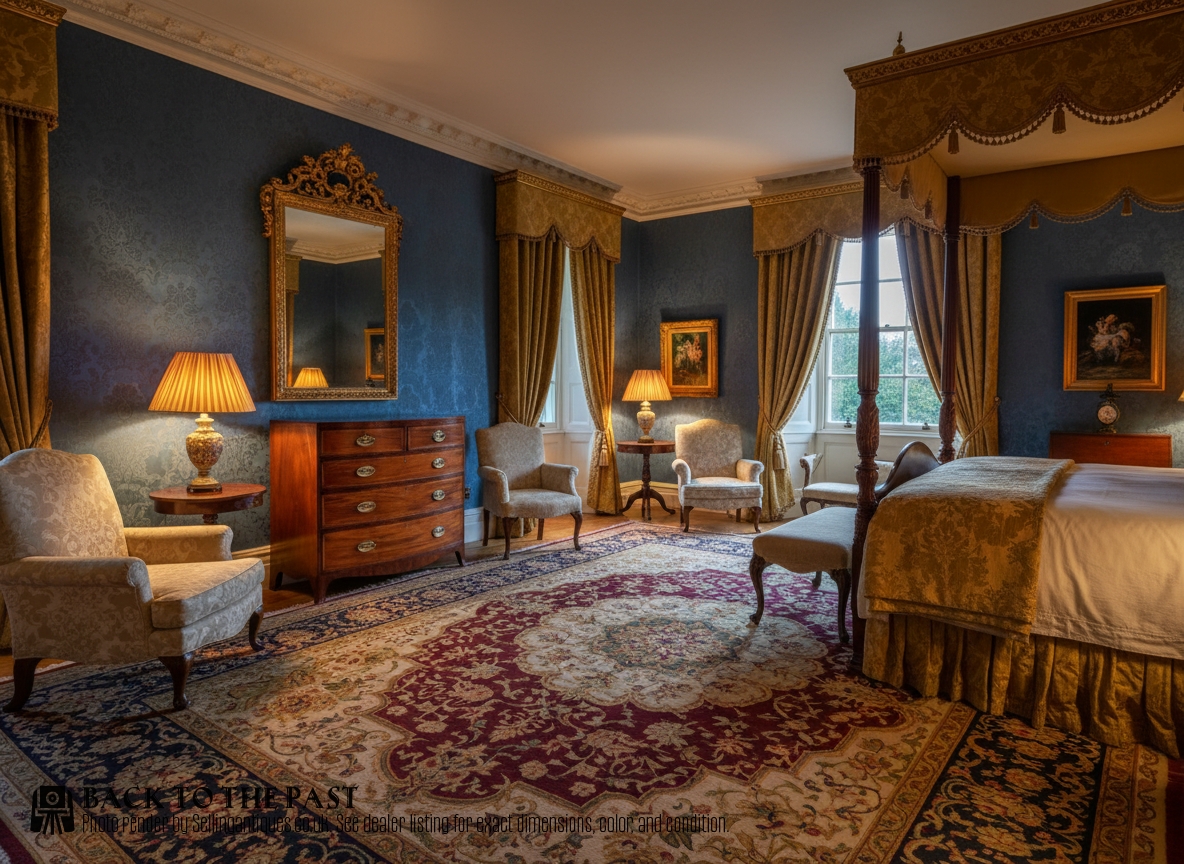
Inlaid Wooden Commode
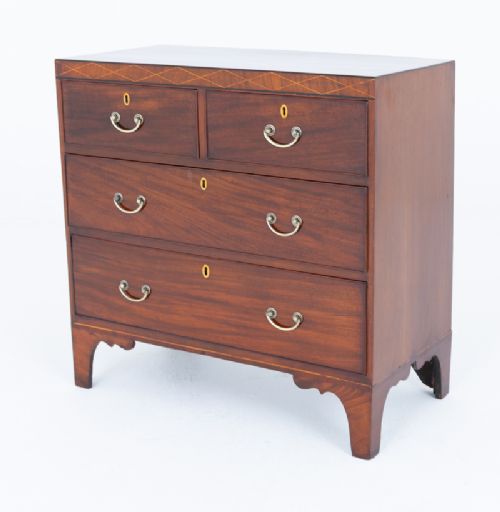
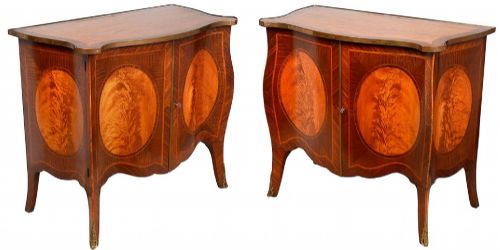
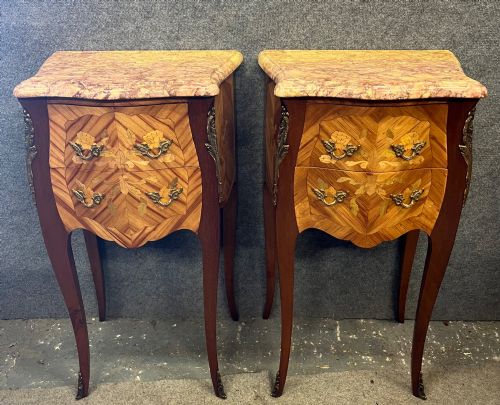
When searching for an inlaid wooden commode, buyers encounter a variety of forms including chests of drawers, bedside cabinets, and serpentine side cabinets. These pieces originate across Georgian, Victorian, Regency, and Edwardian periods, alongside continental examples.
The selection on this page relies heavily on mahogany, walnut, and satinwood foundations, often enriched with contrasting boxwood, brass, and marble tops. English cabinet makers and continental workshops produced both formal serpentine fronts and simpler bow-fronted designs.
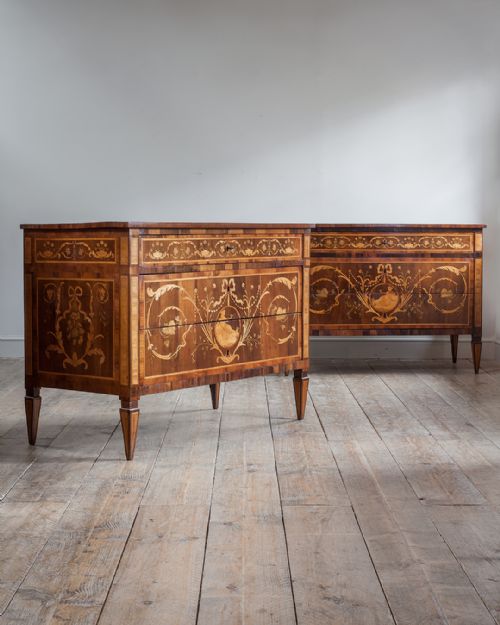
Most examples date from the eighteenth and nineteenth centuries, with later revival pieces also represented. Buyers find everything from miniature marquetry chests to large tallboys and commode chests with elaborate parquetry.
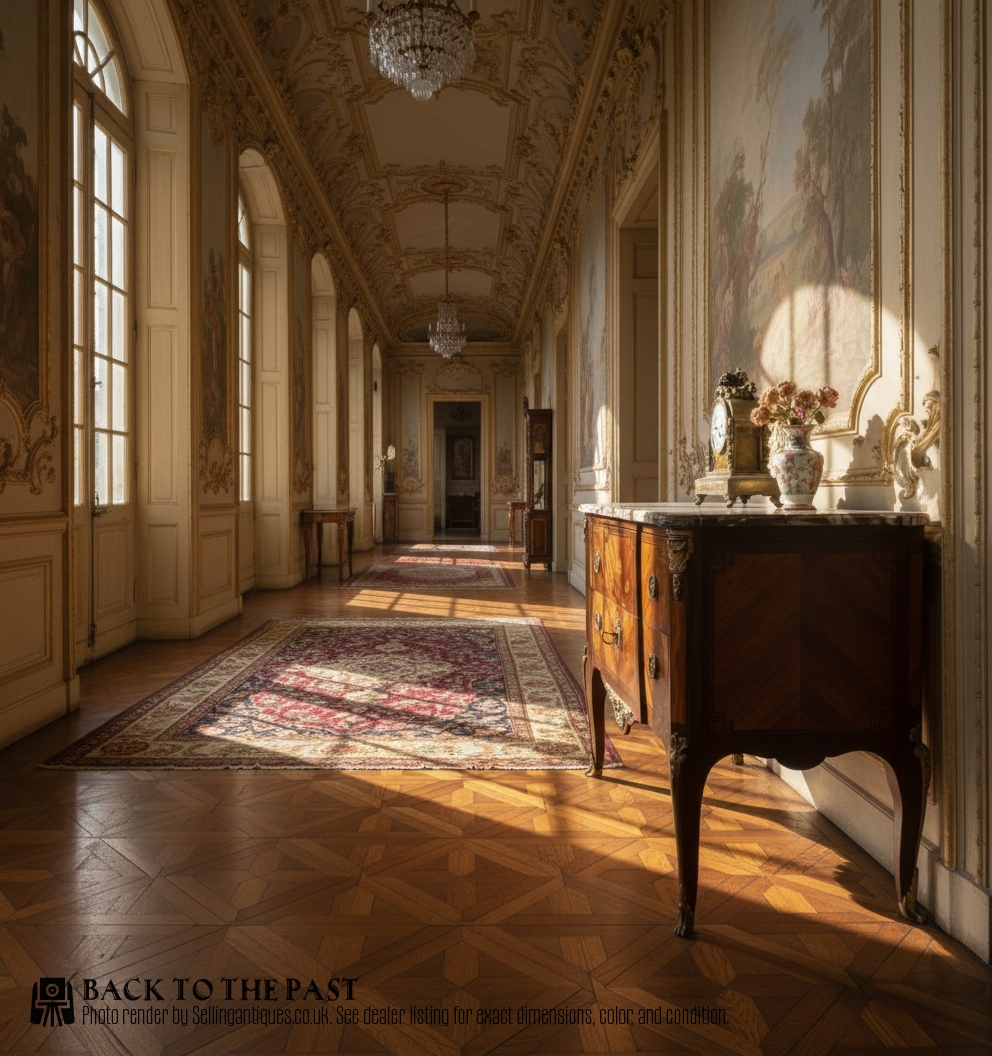
How they were made
Cabinet makers utilised solid woods like mahogany, oak, and walnut for structural integrity, applying fine veneers of satinwood, kingwood, and mahogany to external surfaces. Crossbanding and feather-banding created neat borders around drawer fronts and tops.
Marquetry and parquetry techniques involved cutting thin pieces of wood into pictorial or geometric patterns, inlaid directly into the carcase. Brass fittings, handles, and marble tops completed the construction of finer commodes.
Inlaid Wooden Commode Retail Price Guide 2026
Typical asking prices for inlaid wooden commode among the pieces listed under this phrase on Sellingantiques today, from the lower quarter to the upper quarter. They describe what is for sale here now, not the wider market.
Several compact pieces include hidden secret drawers tucked discreetly beneath the main top moulding.
What varies in quality
The distinction between standard pieces and the finest examples lies in the crispness of the inlay and the selection of figured timbers such as fiddleback mahogany or matched walnut. Superior commodes display precise marquetry work and harmonious grain alignment across every drawer front.
Construction methods also separate the ranges, observable in the thickness of drawer linings, dovetail joints, and the retention of original brass hardware or marble surfaces. Finer items maintain balanced proportions and clean serpentine or bow-fronted contours.
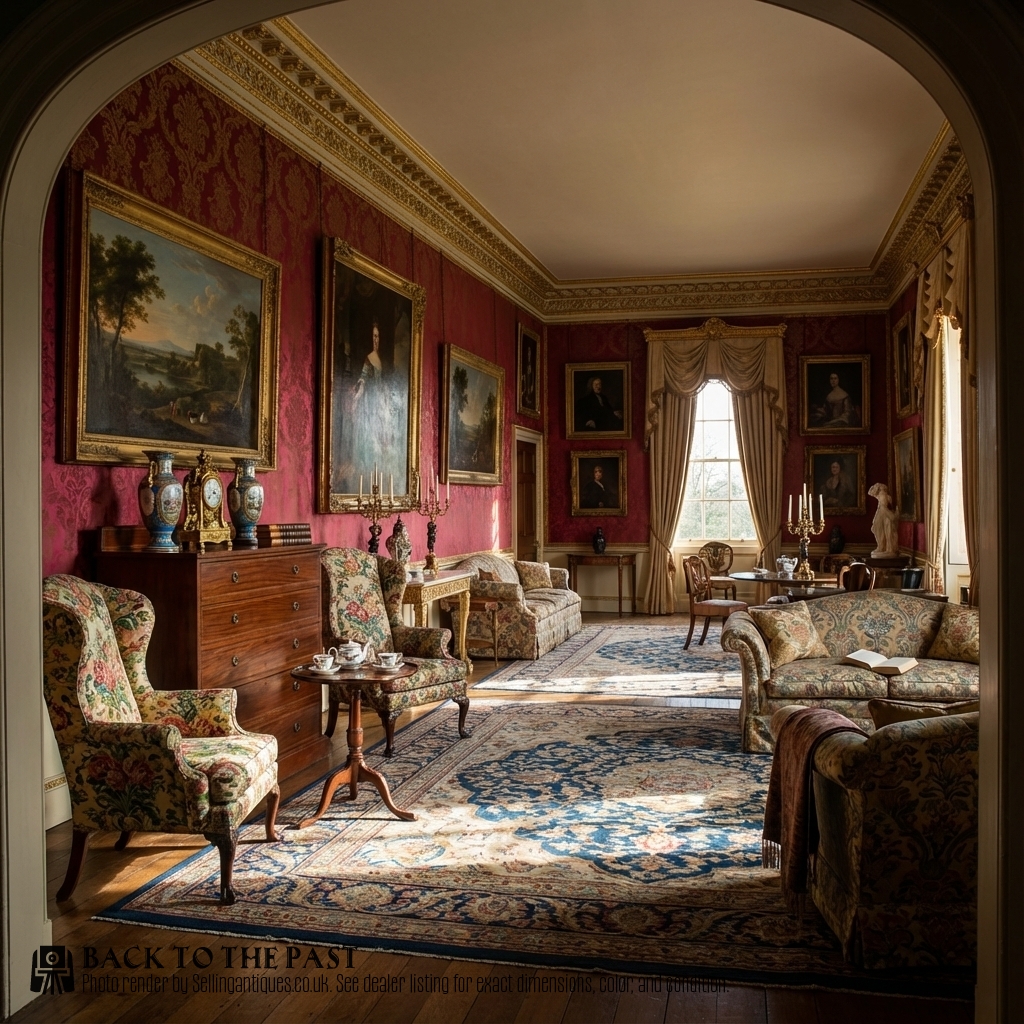
Mawer and Stephenson
The Inlaid Wooden Commode Glossary
- Serpentine
- A front shape curving inward centrally and outward at the sides. This contour requires precise woodworking and appears on many finer eighteenth-century commodes.
- Marquetry
- The art of applying fitted pieces of veneer to form decorative patterns. Craftsmen utilised various exotic woods to picture flowers, urns, or geometric designs.
- Parquetry
- A geometric mosaic of wood pieces used for covering floors or furniture surfaces. It creates repeating patterns across table tops and drawer fronts.
- Crossbanding
- A strip of veneer applied to the border of a panel or drawer front with the grain running perpendicular to the centre. This technique frames the primary wood.
- Feather-banding
- A decorative inlay of two strips of veneer laid side by side with the grain angled to resemble a feather or herringbone. It is common on walnut furniture.
Inlaid Wooden Commode: Frequently Asked Questions
How do I identify a Georgian commode?
Georgian pieces generally date from the eighteenth century into the early nineteenth century, displaying characteristic proportions and timbers such as mahogany and walnut. Look for hand-cut dovetails and traditional finishing methods typical of the period.
Makers of this era frequently incorporated subtle line inlay, satinwood crossbanding, or serpentine fronts. Comparing the secondary timbers inside the drawers helps confirm the period.
What is the difference between a commode and a chest of drawers?
While the terms often overlap in marketplace listings, a commode traditionally refers to a low, ornamental cabinet or chest with doors or drawers, often featuring a marble top. Chests of drawers strictly focus on stacked storage drawers.
Continental examples and French styles are usually called commodes, whereas British pieces from the same dates are more commonly termed chests of drawers or side cabinets.
How should I care for a marble-topped commode?
Marble tops require gentle cleaning with a damp cloth and mild, pH-neutral soap to avoid damaging the stone polish. Acidic liquids like lemon juice or wine should be wiped away immediately.
The wooden base benefits from occasional polishing with traditional beeswax to nourish the veneer and maintain the surface sheen without building up excessive residue.
Are these pieces suitable for modern bedrooms?
These commodes offer practical surface space and deep drawers that function well in contemporary homes. Their varied proportions allow them to serve as bedside tables, lamp tables, or main bedroom storage.
Mixing antique mahogany or satinwood pieces with modern interiors adds texture and historical contrast. The range of sizes includes compact bedside chests as well as larger statement cabinets.
How can I tell marquetry from printed decoration?
Marquetry is constructed from individual pieces of wood veneer physically inlaid into the background timber. Close inspection reveals distinct joins and natural grain variations within each separate section of the pattern.
Printed or painted surfaces lack this physical depth and individual wood movement. Running a finger across the surface often detects the subtle texture where different timbers meet.