



Five Drawer Chest
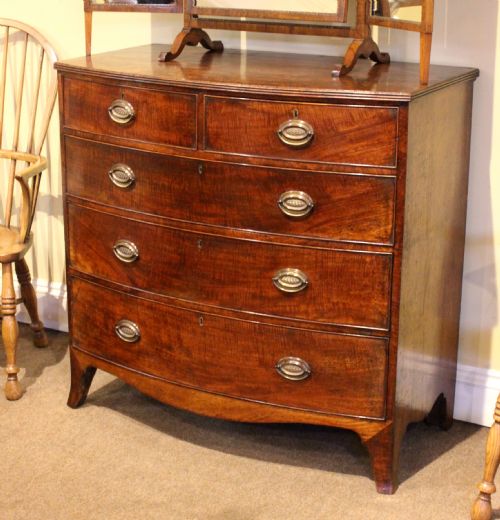
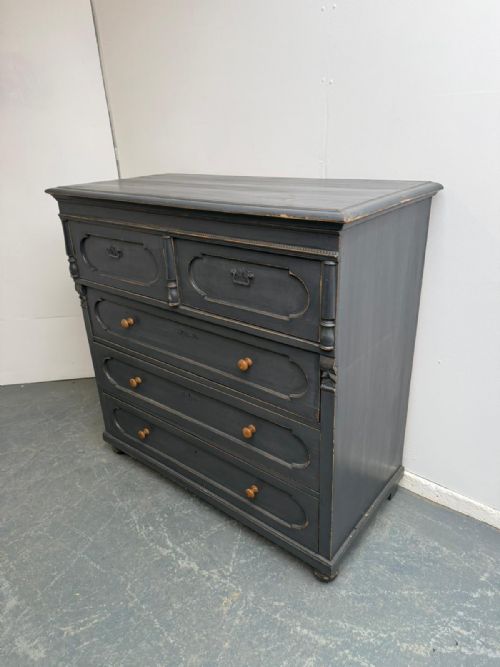
A five drawer chest provides essential storage while anchoring a room with period character.
Five Drawer Chest
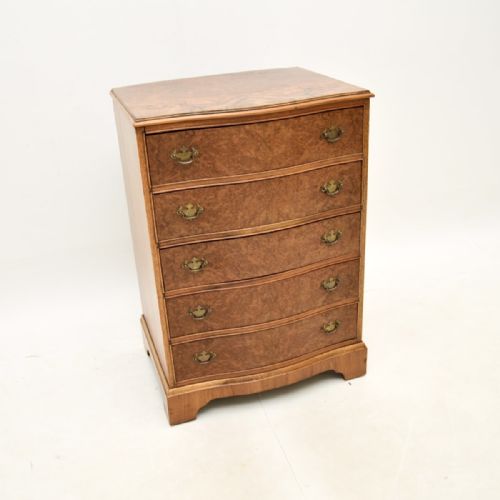
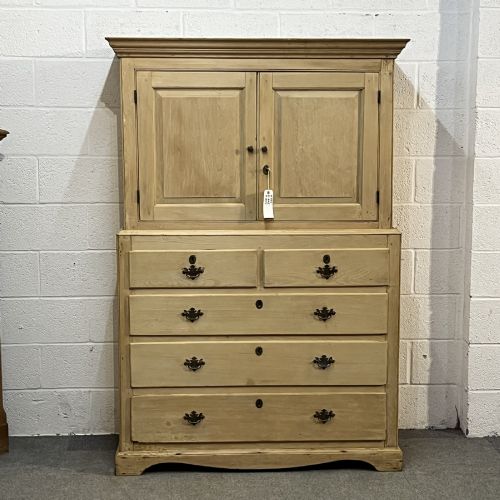
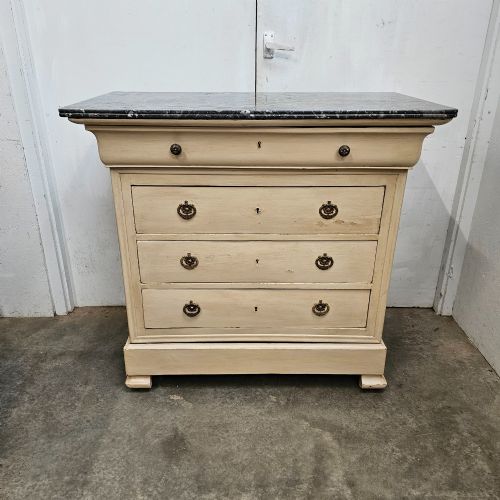
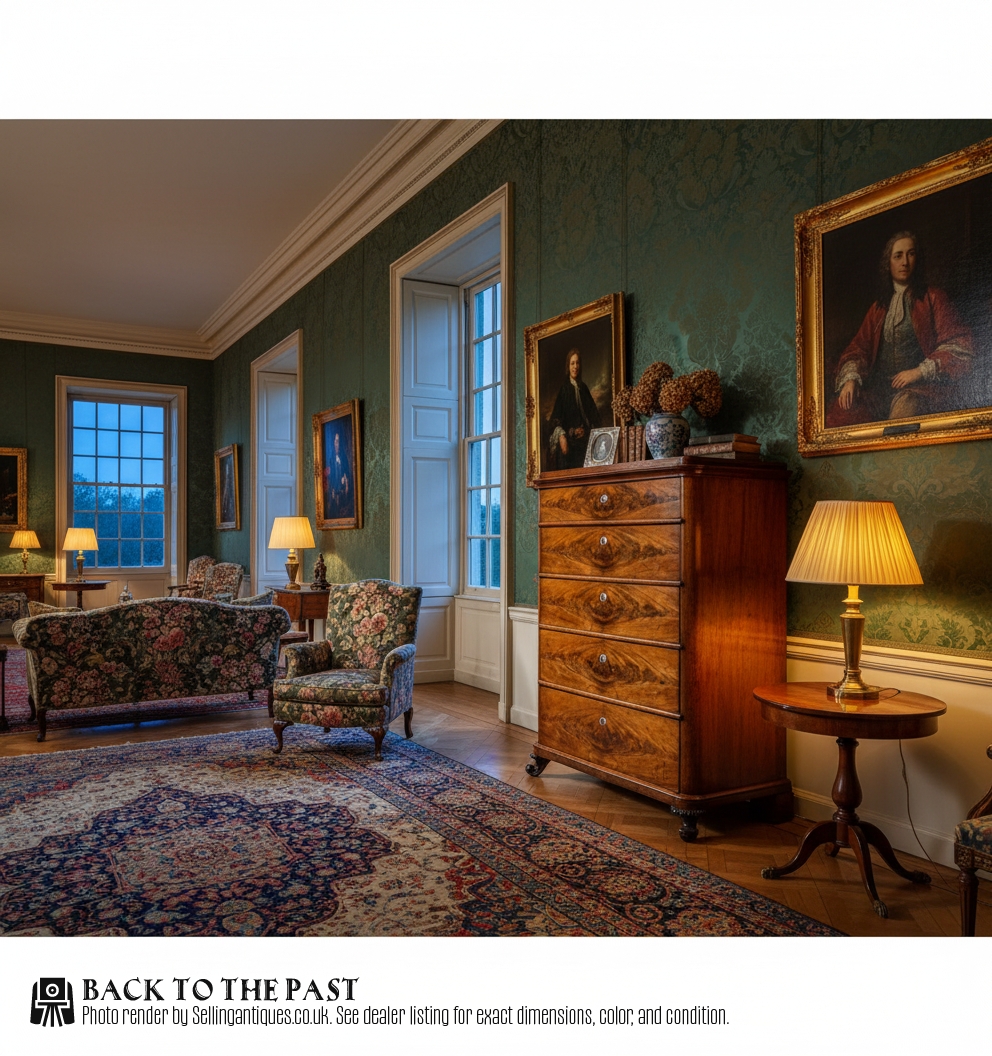
A five drawer chest offers vertical storage through graduated or uniform tiers of drawers housed within a case. The search phrase covers domestic storage furniture made across several centuries and stylistic movements.
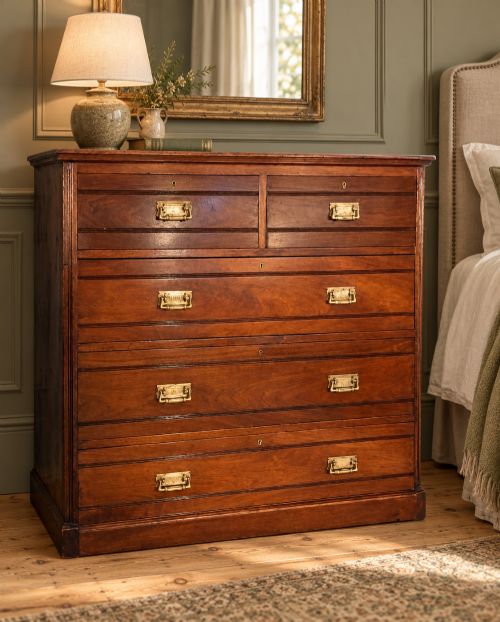
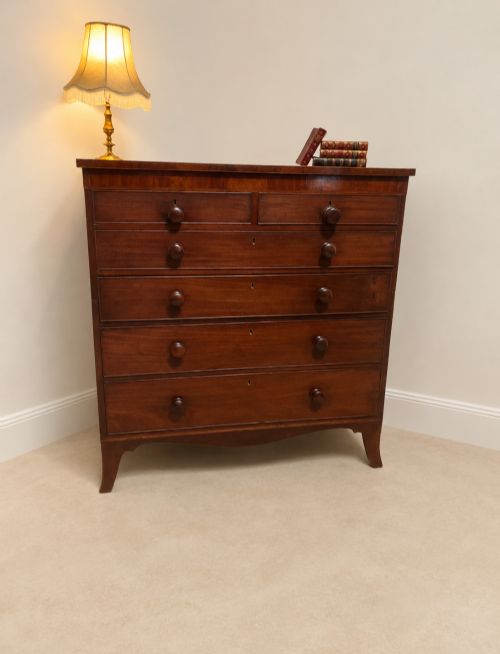
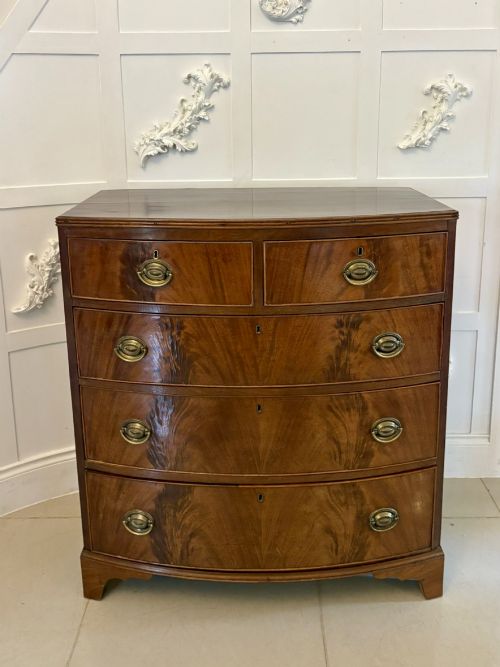
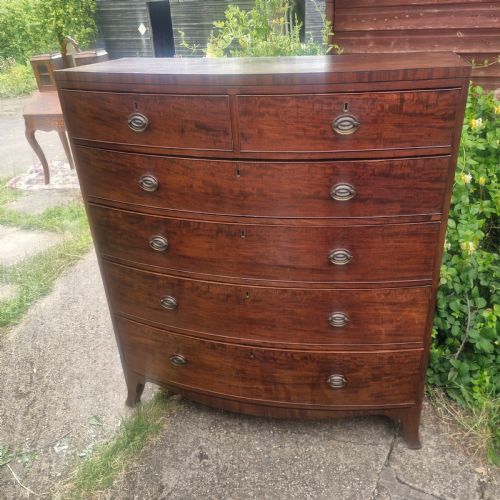
Mahogany examples from the Georgian, Regency and Victorian periods dominate the selection, often taking a bow front or tall rectilinear form. Pine, walnut, oak and birch alternatives also appear frequently in regional and continental designs.
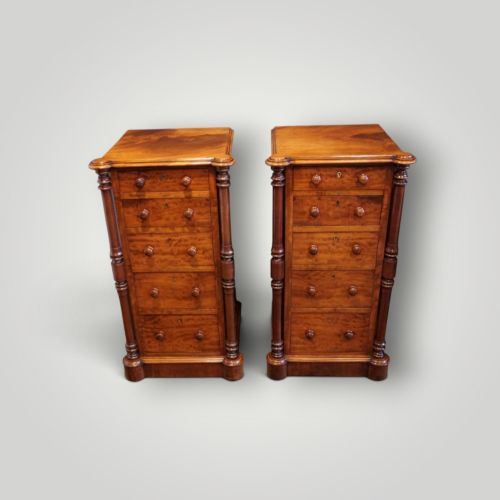
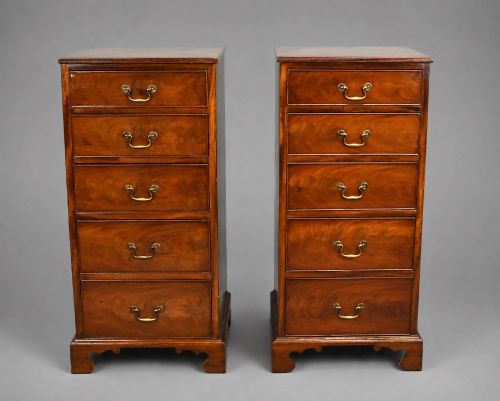
Beyond standard bedroom chests, variations include bedside pairs, tallboys, bureau desks, and collectors cabinets. These pieces range from restrained utilitarian pine to highly figured burr walnut and flame mahogany.
How They Were Made
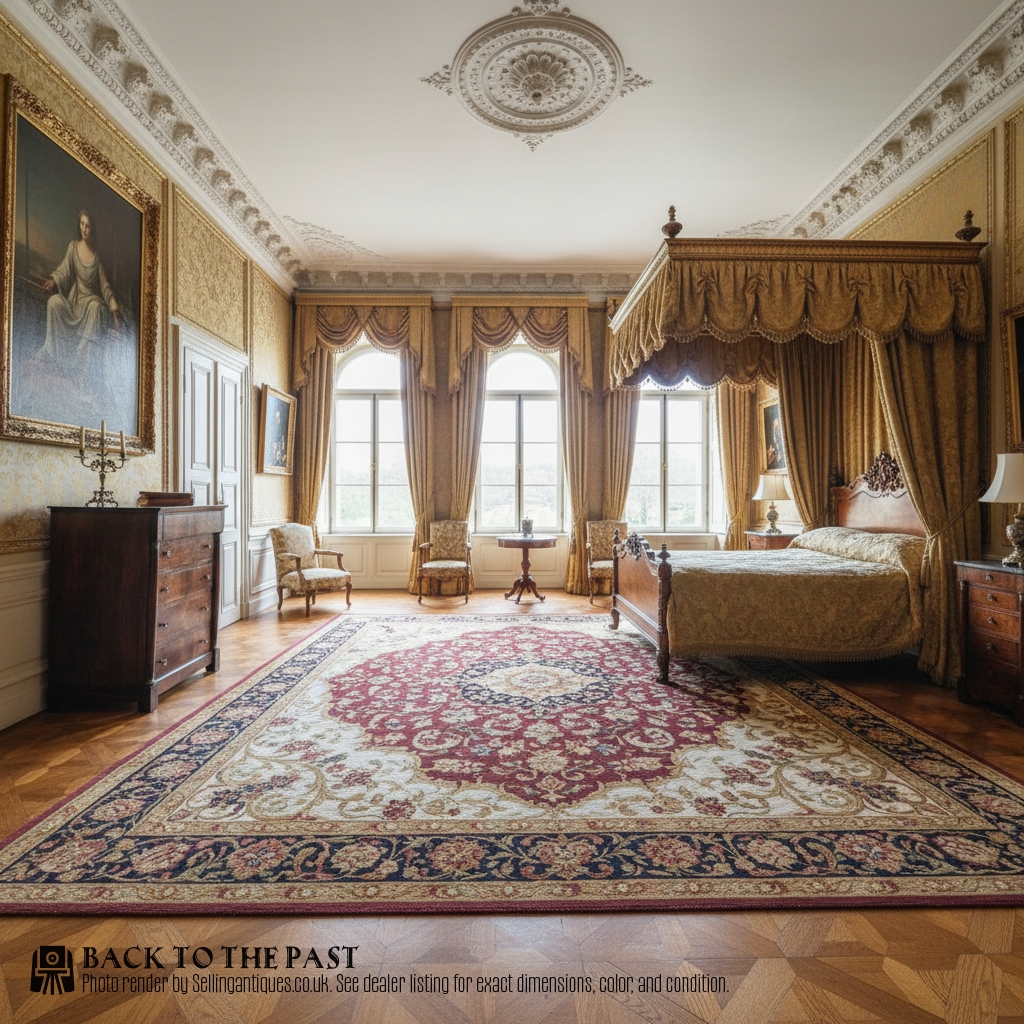
Cabinet makers utilised solid timbers alongside decorative veneers applied to secondary woods. Mahogany and oak provided structural stability, while walnut, flame birch and satinwood added patterned surfaces.
Drawer construction relied on hand-cut dovetail joints to withstand daily pulling forces. Brass drop handles, ring pulls and key escutcheons completed the facade alongside turned feet or bracket supports.
Five Drawer Chest Retail Price Guide 2026
Typical asking prices for five drawer chest among the pieces listed under this phrase on Sellingantiques today, from the lower quarter to the upper quarter. They describe what is for sale here now, not the wider market.
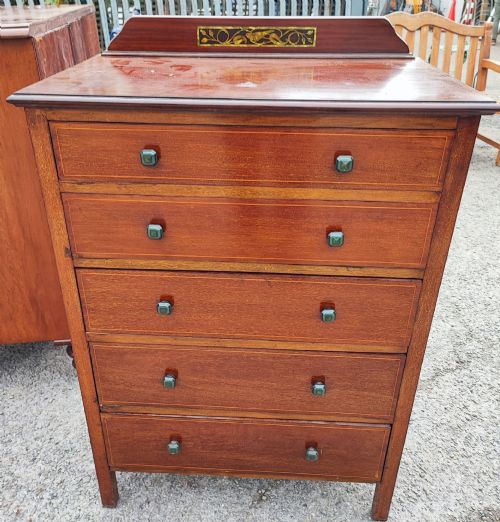
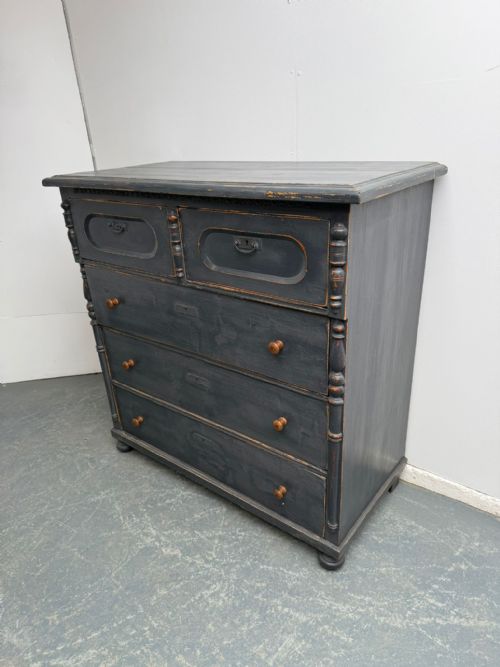
Listings feature timbers including mahogany, walnut, pine, oak, satin birch, ash and painted finishes across Georgian, Victorian and Art Deco periods.
What Varies in Quality
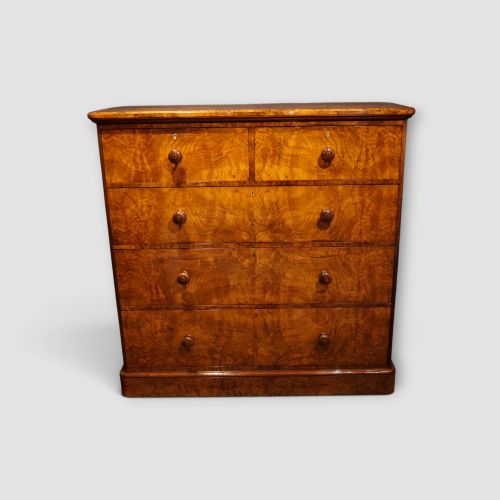
The choice of timber grain dictates the visual impact, with matched flame mahogany and figured burr walnut representing high-status workshops. Plain pine and utilitarian oak pieces prioritise robust domestic function over decorative veneers.
Internal construction reveals the standard of joinery, distinguishing mass-produced items from bespoke cabinet work. Subtle details such as thumbnail mouldings, secondary wood selection and original brass hardware separate ordinary examples from exceptional ones.
Warings Liverpool·Harris Lebus·Heal's·Maples
The Five Drawer Chest Glossary
- Bow front
- A convex curved cabinet front that projects outward at the centre. This shape gained popularity during the Georgian and Regency eras.
- Tallboy
- A tall chest of drawers made in one or two stacked sections, providing generous vertical storage. They frequently combine a smaller top drawer layout with deeper lower tiers.
- Flame mahogany
- A veneer cut from the fork of a mahogany tree where branches meet the trunk. It creates a distinctive rippled, flame-like grain pattern.
- Dovetail
- An interlocking joint formed by interlocking wedge-shaped fingers. It secures drawer corners against lateral pulling strain.
- Escutcheon
- A protective plate surrounding a keyhole. It is traditionally cast from brass to prevent wear on the surrounding wood.
Five Drawer Chest: Frequently Asked Questions
How do I date a chest?
Examine the construction methods, timber choices, and overall proportions of the piece. Hand-cut dovetails and specific wood selections often align with known stylistic periods.
Secondary woods and hardware styles provide further clues for narrowing down the decade of manufacture. Comparing these elements against documented examples helps establish an approximate age.
What is a two part chest?
A two part chest is built as two separate carcass sections stacked vertically. This design originated to facilitate transport for travellers and military officers.
The sections lock together using internal battens or side brackets. Walnut and mahogany examples from the eighteenth and nineteenth centuries frequently employ this construction.
Are bedside chests different?
Bedside chests are scaled-down versions designed to sit alongside a bed. They maintain the drawer configuration of larger storage units but occupy a smaller footprint.
These pieces often appear as matched pairs. They utilise the same timber and veneer traditions as full-size equivalents.
How do I care for wood?
Keep wooden furniture away from direct heat sources and dramatic humidity fluctuations. These environmental controls prevent timber from warping or splitting.
Apply traditional wax polishes sparingly to maintain the natural finish. Avoid silicone-based sprays that can penetrate porous historic surfaces.