

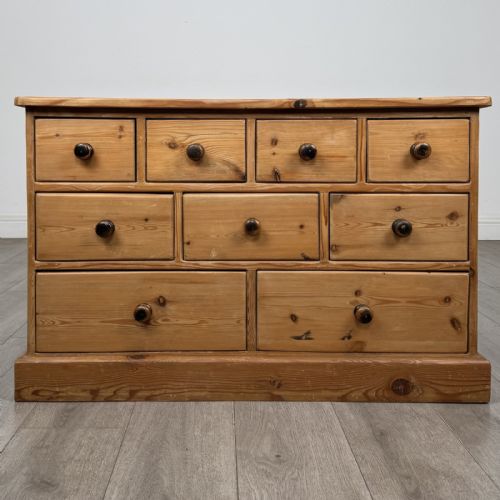
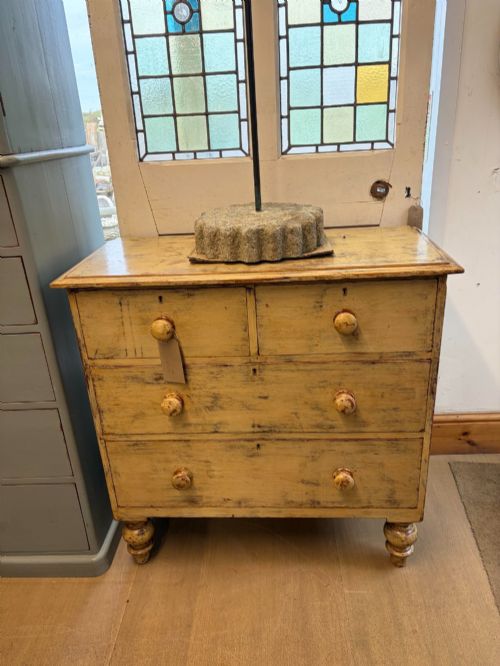
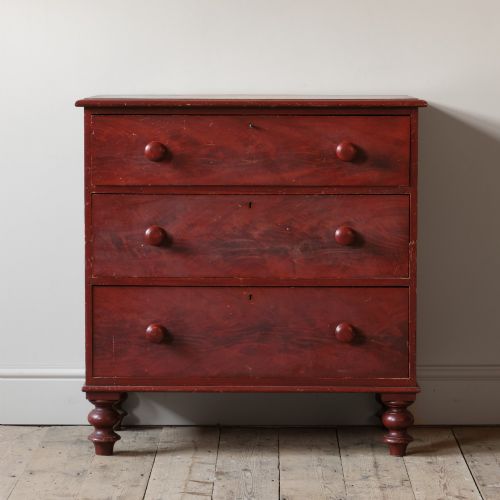
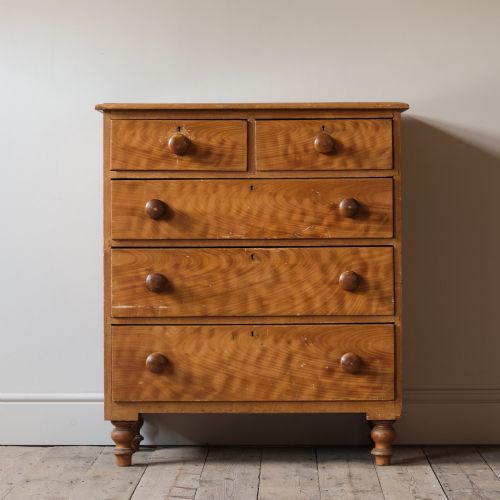

Country Pine Chest
A country pine chest brings honest utility and warm timber grain into a room, offering practical storage built for everyday domestic life.
Country Pine Chest
When searching for a country pine chest, buyers encounter functional storage pieces spanning the Georgian, Regency, and Victorian periods. These practical items range from blanket boxes and coffer forms to multi-drawer chests used across English, French, and Scandinavian homes.
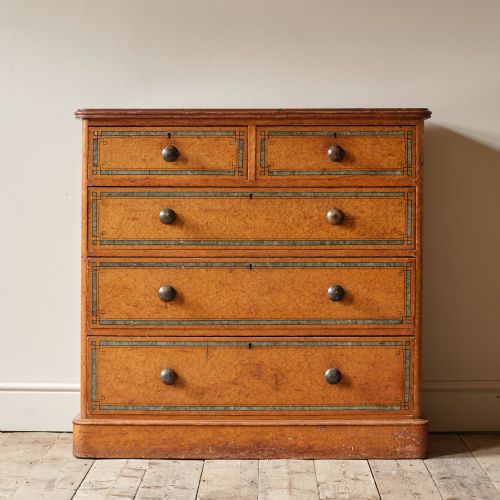
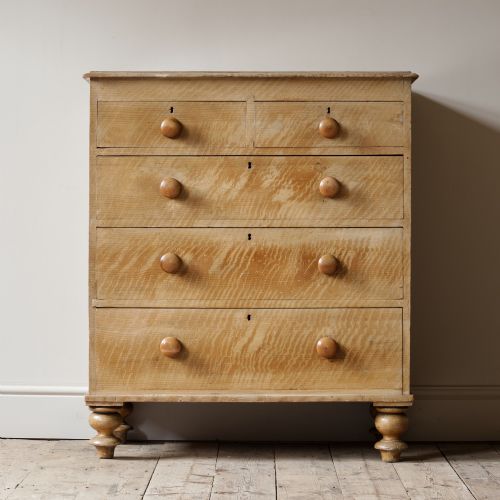
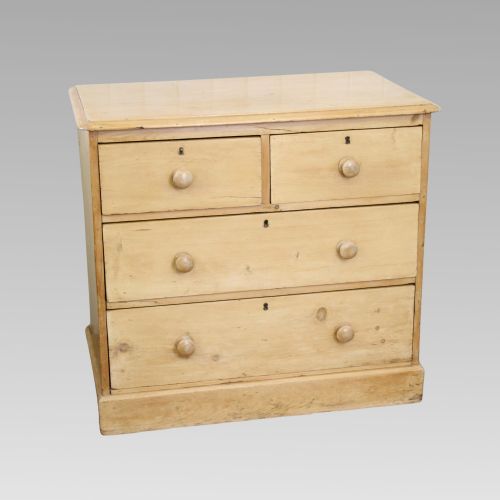
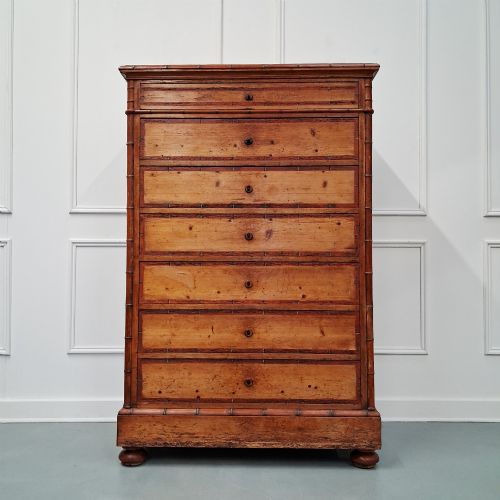
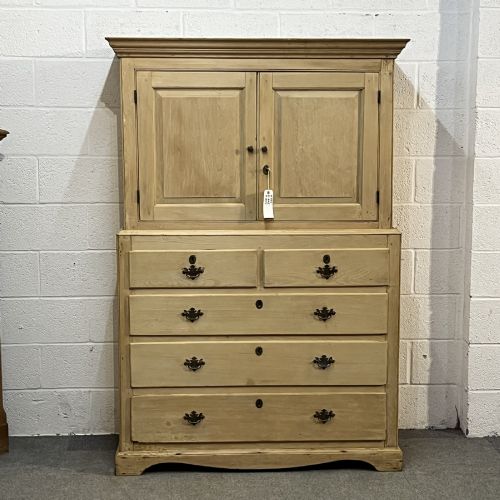
The version most commonly met on this page is the nineteenth-century Victorian chest of drawers, often configured with a combination of two small drawers over three or four larger ones. These pieces were constructed for regional domestic settings, reflecting local cabinet-making traditions from West Country workshops to Welsh and Irish country houses.
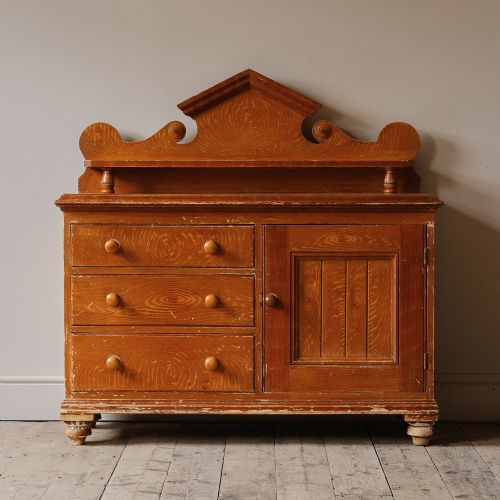
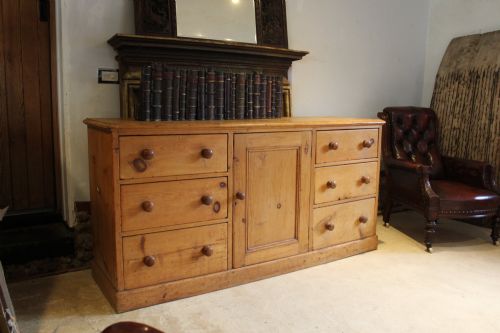
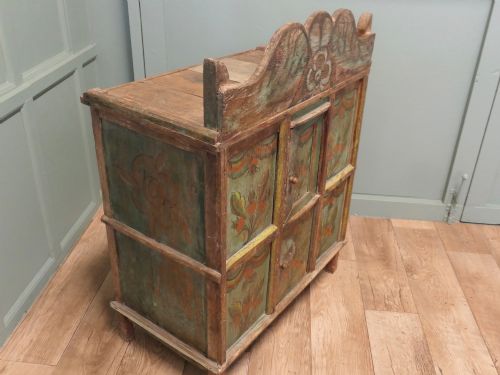
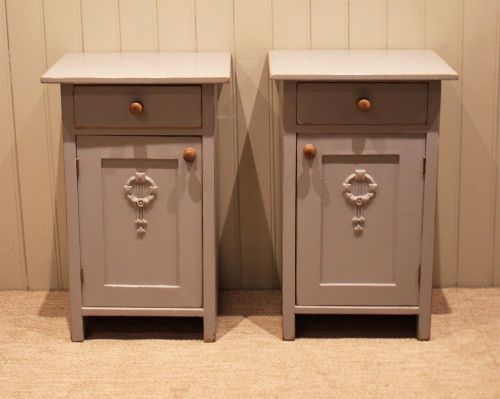
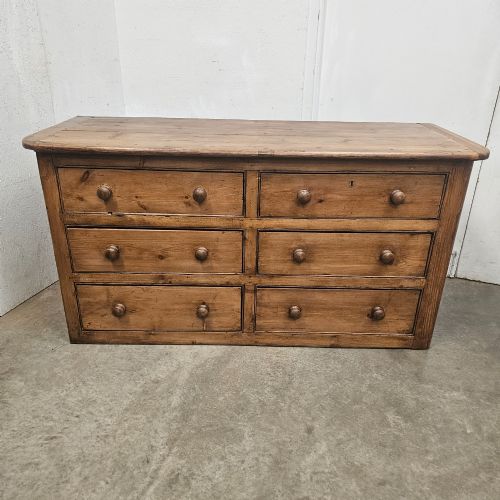
Beyond standard drawer units, the selection includes painted storage, low wide proportions resting on bun feet, and specialised forms like washstands, mule chests, and kitchen dressers. Each variation serves the fundamental purpose of holding household linens or clothing while displaying the honest character of softwood timber.
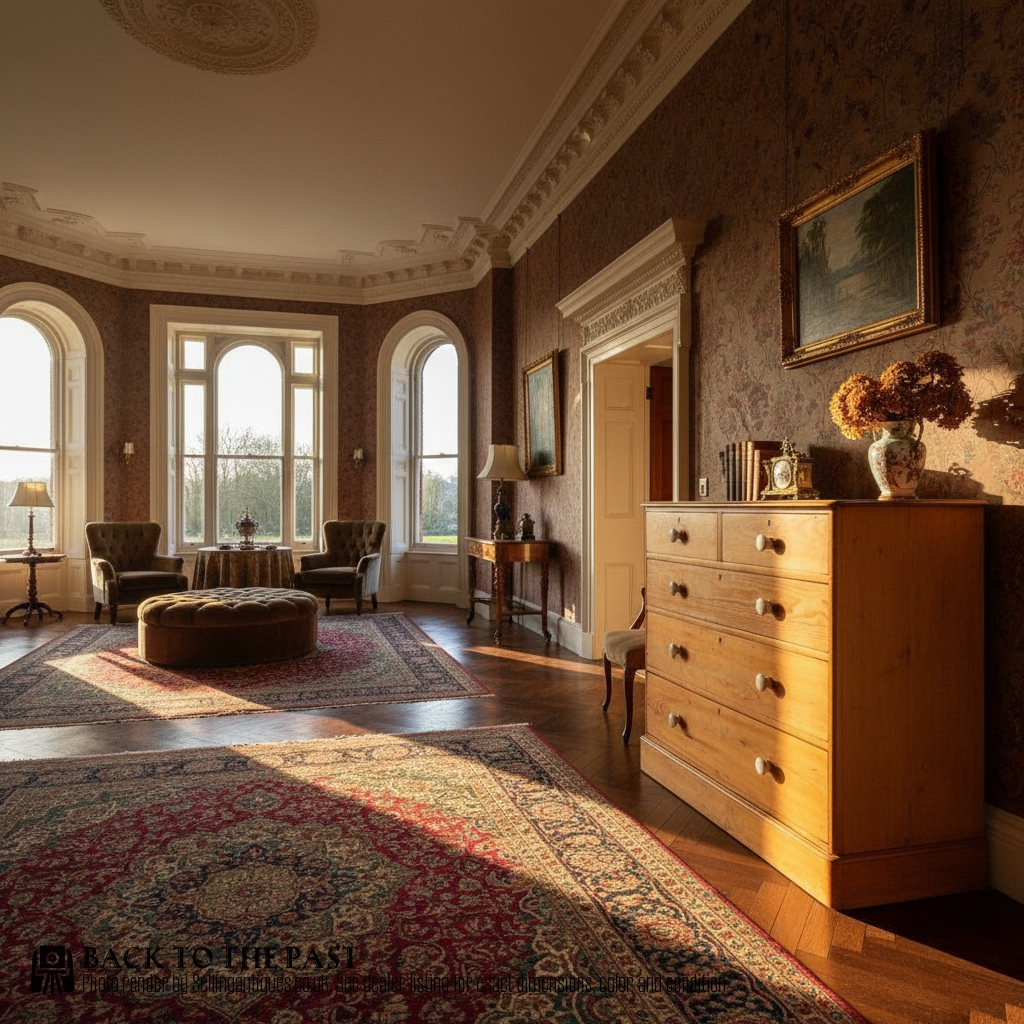
Materials and Construction
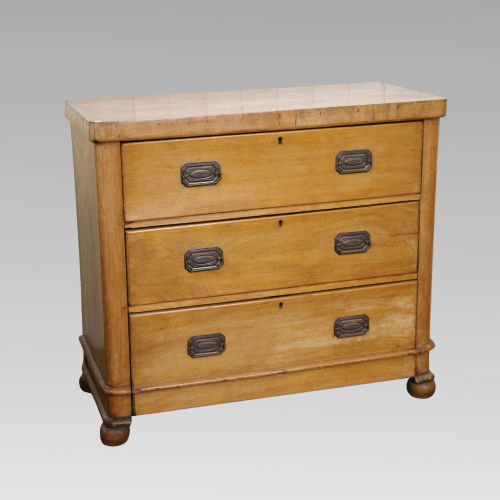
Makers constructed these storage pieces primarily from pine and pitch pine, selecting softwoods that were readily available and straightforward to work with using standard hand tools. Iron and brass hardware, including drop handles and key escutcheons, provided the necessary mechanical fixings and drawer pulls.
Surfaces received various treatments according to regional fashion and domestic use, ranging from simple wax finishes that highlighted the natural wood grain to layered applications of paint and scumble glaze. Many examples retain their original painted schemes, while others were later stripped to reveal the pale timber underneath.
Country Pine Chest Retail Price Guide 2026
Typical asking prices for country pine chest among the pieces listed under this phrase on Sellingantiques today, from the lower quarter to the upper quarter. They describe what is for sale here now, not the wider market.
Listings feature pine alongside pitch pine and painted wood, spanning Georgian, Regency, and Victorian periods.
Assessing Quality and Character
Quality in these utilitarian items rests on the integrity of the original construction and the preservation of surface finish. Pieces retaining untouched original paint or authentic early wax patination stand apart from those subjected to harsh modern stripping or unsympathetic alterations.
Structural honesty dictates the hierarchy, seen in well-fitted drawer dovetails, sound backboards, and retained original feet such as turned bun feet or bracket bases. The presence of regional markers, such as specific West Country or Irish vernacular proportions, elevates the interest of a piece beyond standard utilitarian output.
The Country Pine Chest Glossary
- Scumble
- A translucent layer of dark oil paint dragged or patterned over a lighter base coat to imitate the grain of more expensive hardwoods. This decorative technique is frequently found on nineteenth-century pieces.
- Mule chest
- A blanket box fitted with one or more functional drawers built into the base below the main compartment. This hybrid form bridges the evolution between the simple coffer and the chest of drawers.
- Pitch pine
- A durable North American pine species containing high resin content, yielding a harder timber with strong, pronounced grain patterns. It was frequently utilised for robust Victorian storage furniture.
- Coffer
- A heavy wooden storage chest with a hinged lid, traditionally used for securing valuables and textiles before dedicated drawer units became common. Provincial examples often display rustic peg construction.
- Bun feet
- Spherical or slightly flattened wooden feet turned on a lathe, commonly supporting the base of Victorian chests of drawers. They lift the main body of the furniture off damp stone floors.
Country Pine Chest: Frequently Asked Questions
What is a country pine chest?
A country pine chest is a utilitarian storage item made from softwood timber, typically featuring drawers or a hinged lid for domestic organisation.
These pieces were produced in regional workshops during the eighteenth and nineteenth centuries to serve everyday storage needs in bedrooms and kitchens.
How do I date a pine chest?
Dating relies on examining construction methods, drawer dovetailing, hardware types, and overall proportions relative to documented stylistic periods.
Earlier eighteenth-century and Regency examples tend to feature hand-cut joinery and specific regional characteristics, whereas Victorian pieces often follow standardised multi-drawer layouts.
Should I choose painted or waxed pine?
Choosing between painted and waxed surfaces depends on whether you prefer the tactile warmth of exposed timber grain or the historical character of original decorative paintwork.
Pieces retaining original paint or scumble finishes offer a direct link to their period aesthetic, while waxed surfaces highlight the natural knots and tones of the pine.
Where were these chests made?
These chests originated across various regional vernacular traditions in England, Wales, Ireland, France, and Scandinavia.
Local workshops adapted standard forms to suit local domestic requirements, utilising native pine and regional finishing techniques.