



Biedermeier Chest of Drawers
These nineteenth-century storage pieces combine architectural restraint with warm wood grains, offering refined utility for domestic spaces.
Biedermeier Chest of Drawers
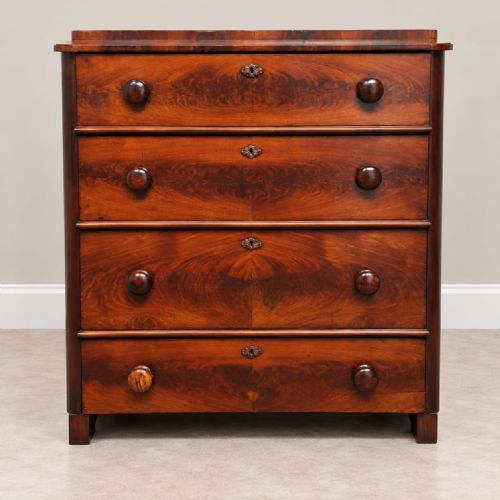
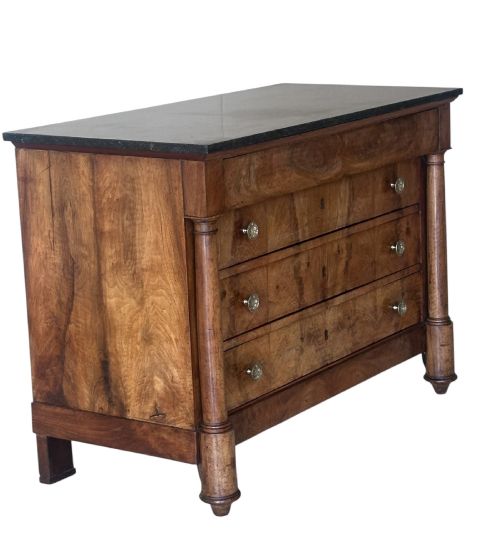
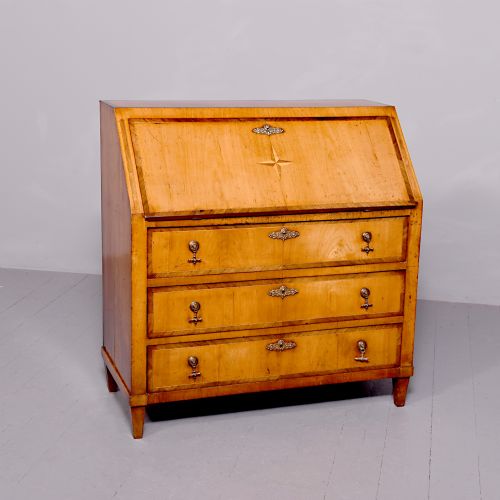
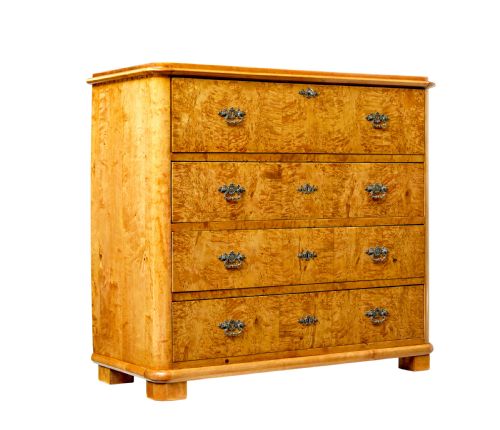
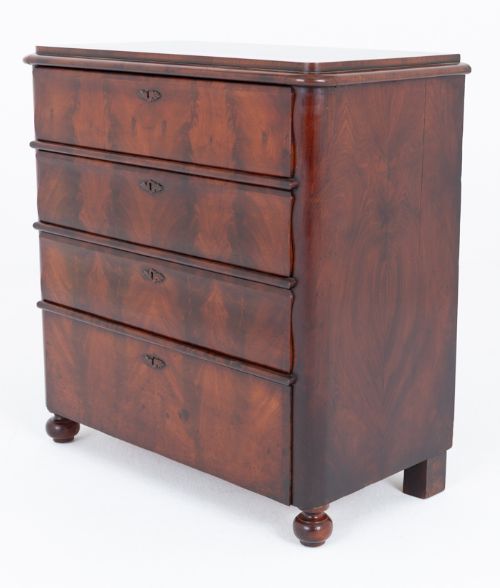
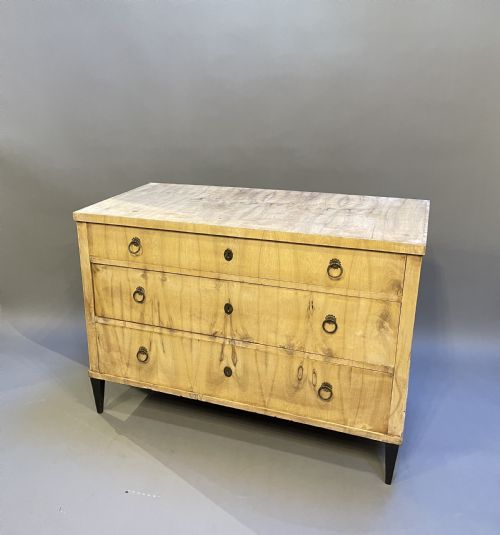
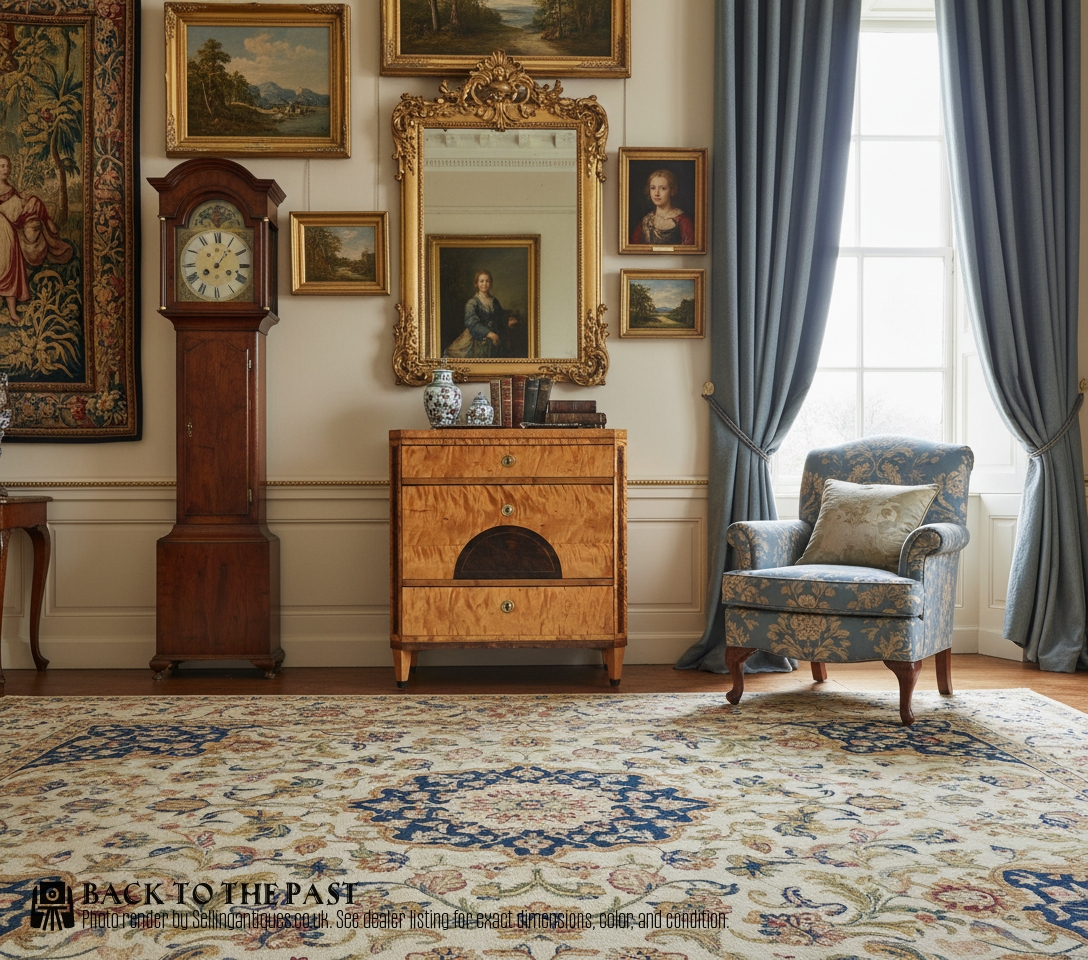
A biedermeier chest of drawers is primarily encountered in nineteenth-century forms originating from Scandinavian and Continental workshops. Examples range from straightforward drawer units to taller secretaire chests fitted with drop-down writing desks.
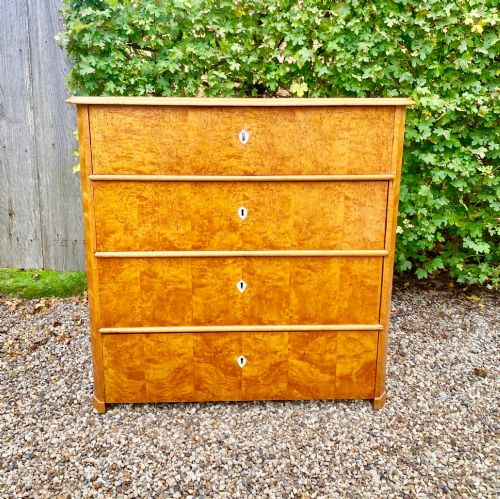
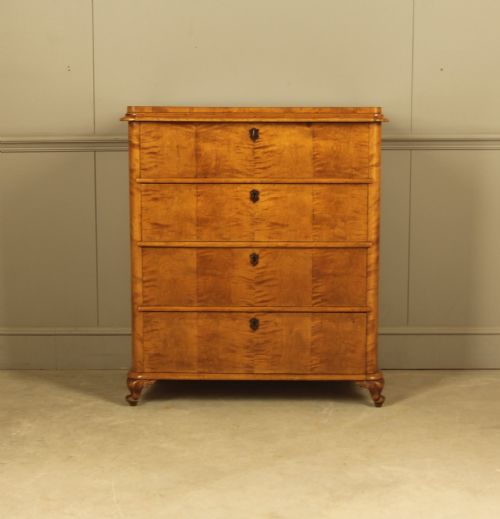
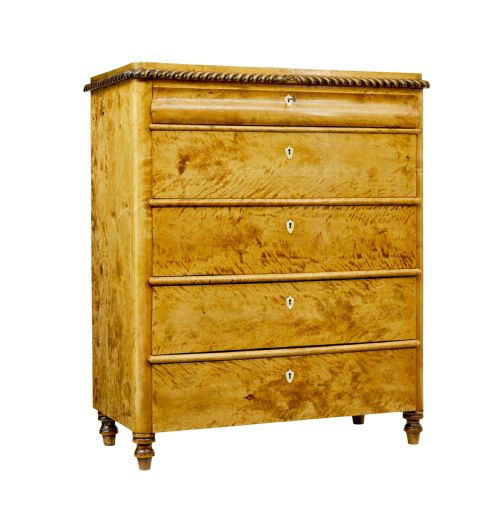
Makers utilised native timbers like birch alongside imported mahogany and walnut to construct these clean-lined carcases. The resulting pieces served practical bedroom and parlour storage functions while displaying distinctive wood figure.
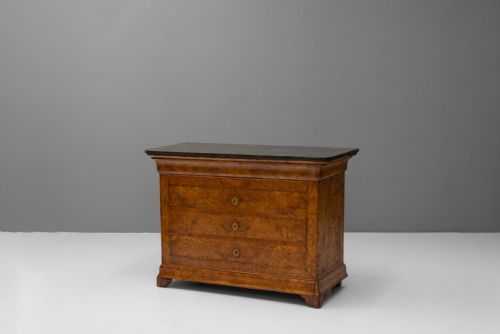
Regional variations span Swedish tiger birch designs, French commodes, and mahogany pieces from the Victorian era. Many incorporate marble tops or multiple drawers arranged in straight or serpentine configurations.
Materials and Construction
Construction relies on solid pine carcases faced with carefully selected wood veneers. Cabinetmakers arranged flame, burr, and masur birch veneers to create symmetrical patterns across drawer fronts.
Hardware elements like brass escutcheons and metal mounts appear alongside inlaid details in contrasting timbers. Selected pieces utilise marble slabs fitted directly to the top surface.
Surfaces receive hand-applied finishes that enhance the natural grain patterns of walnut, mahogany, and elm. Drawer frames employ traditional joinery designed to withstand daily domestic use.
Biedermeier Chest of Drawers Retail Price Guide 2026
Typical asking prices for biedermeier chest of drawers among the pieces listed under this phrase on Sellingantiques today, from the lower quarter to the upper quarter. They describe what is for sale here now, not the wider market.
Gemla Fabrikers contributed simulated birch hand-painted drawer units to the twentieth-century record.
Quality and Craftsmanship
Quality rests upon the selection and bookmatching of wood veneers across the drawer fronts. Finer examples display continuous grain patterns that flow smoothly from one drawer to the next.
The precision of the cabinetwork dictates the overall standard, visible in the tight tolerances of drawer fit and the subtlety of edge moulding. Scale and proportion also separate master-built pieces from simpler regional furniture.
Gemla Fabrikers
The Biedermeier Chest of Drawers Glossary
- Secretaire
- A chest of drawers incorporating a hinged writing drawer that folds down to reveal a fitted interior of small compartments.
- Commode
- A low cabinet or chest of drawers designed for domestic storage, often featuring a marble top in Continental examples.
- Veneer
- A thin layer of figured wood applied over a secondary timber carcase to create decorative visual patterns.
- Serpentine
- A curved furniture front characterised by a convex central section flanked by concave curves.
- Escutcheon
- A protective metal plate surrounding a keyhole, often cast in brass.
Biedermeier Chest of Drawers: Frequently Asked Questions
What is a biedermeier chest of drawers?
These pieces are nineteenth-century European storage furniture characterised by clean structural lines and prominent wood veneers.
Cabinetmakers focused on the natural grain of birch, mahogany, and walnut rather than relying on heavy carving.
How were secretaire chests used?
The top drawer folds outward to serve as a writing surface while concealing small drawers and pigeonholes inside.
This dual function provided a compact desk and drawer storage within a single room footprint.
Where were these chests made?
Production centred across Northern Europe, particularly Sweden, Denmark, and various German-speaking regions.
French workshops also produced comparable commodes during related nineteenth-century periods.
How do I identify birch varieties?
Birch appears in several distinct grain figures including flame, masur, tiger, and satin variations.
Each type creates unique optical patterns across the veneered surfaces of the furniture.