

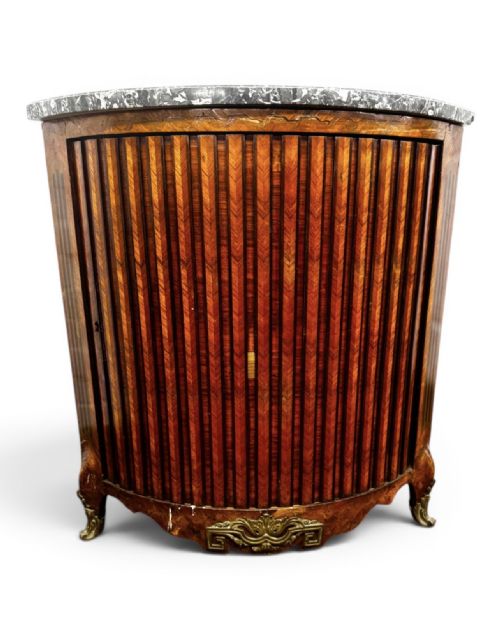
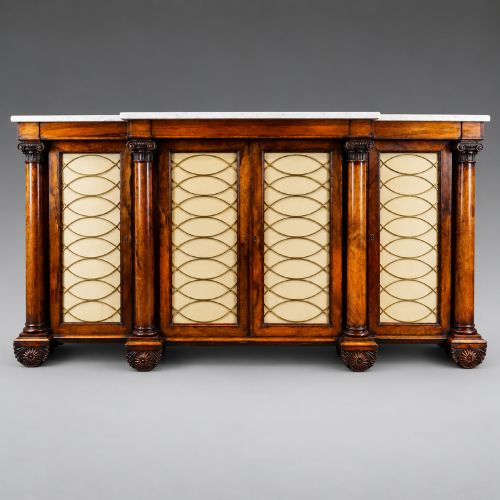
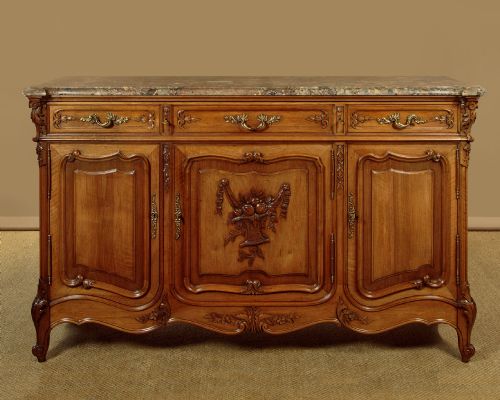
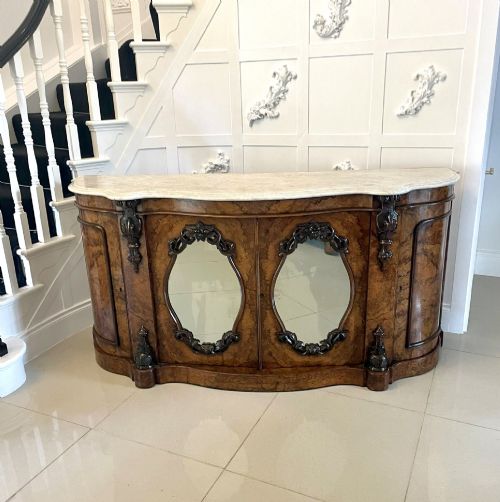

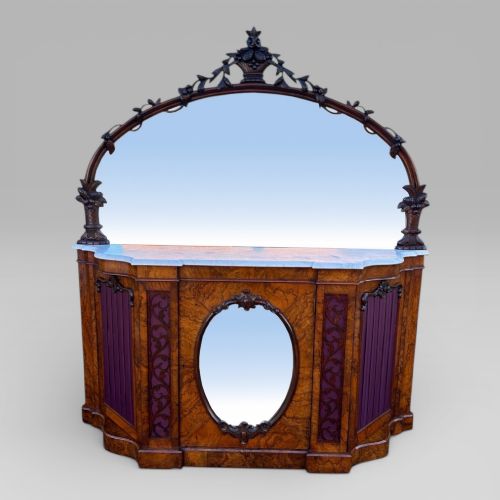
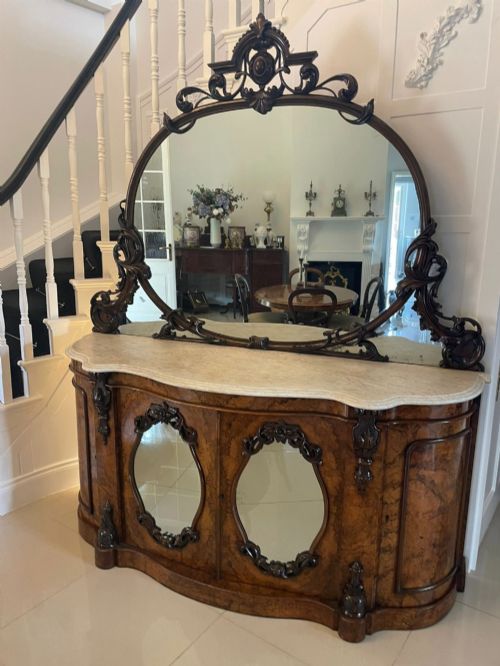
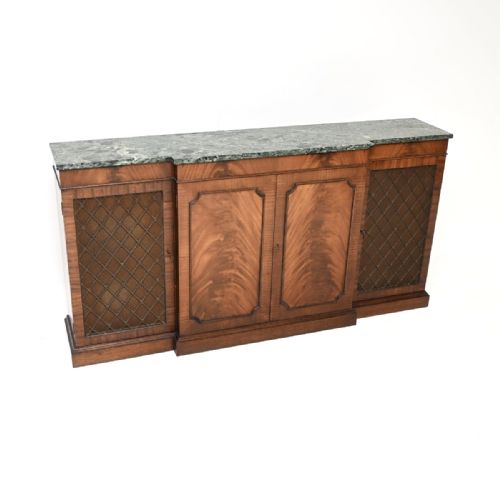
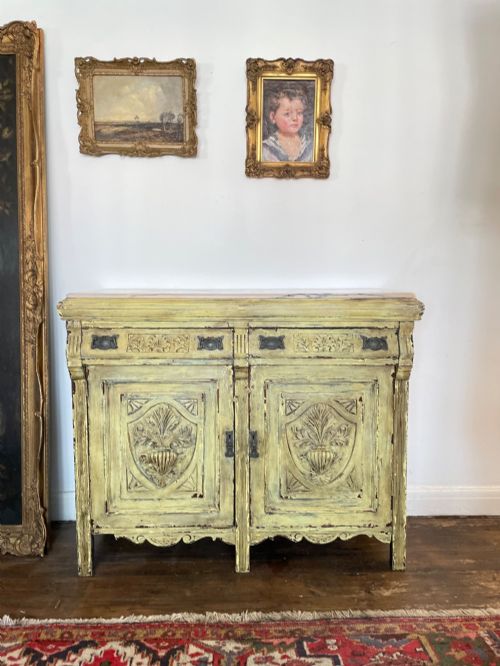
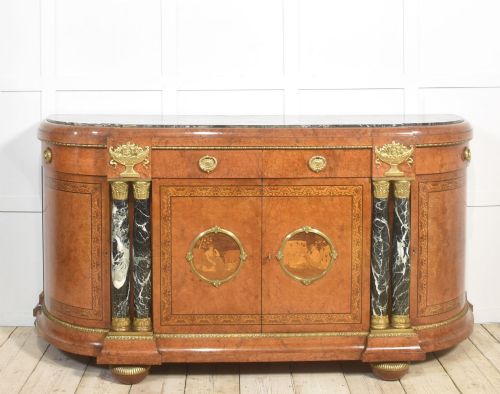


Antique Marble Top Buffet
An antique marble top buffet is a heavy, stone-surfaced serving piece combining practical storage with a cool, durable working surface.
Antique Marble Top Buffet
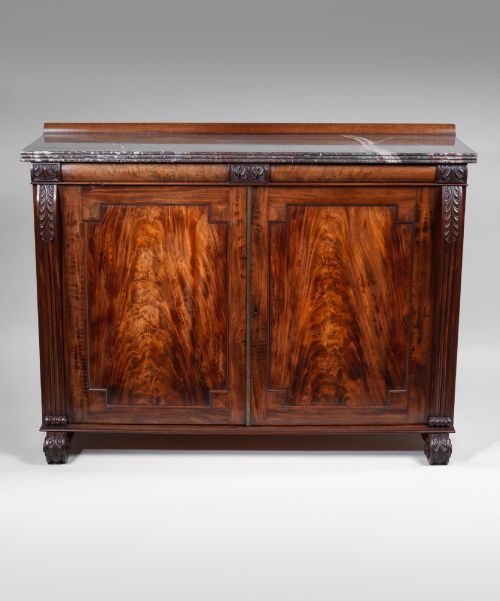
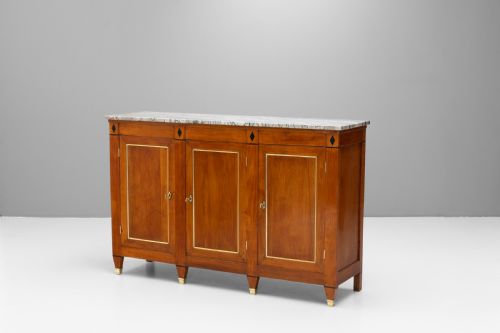
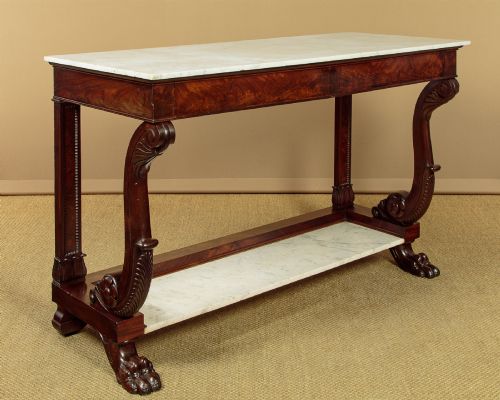
An antique marble top buffet serves as a substantial storage and display unit, frequently found in dining rooms and living spaces. These pieces combine a solid timber framework with a fitted stone surface designed to handle everyday use.
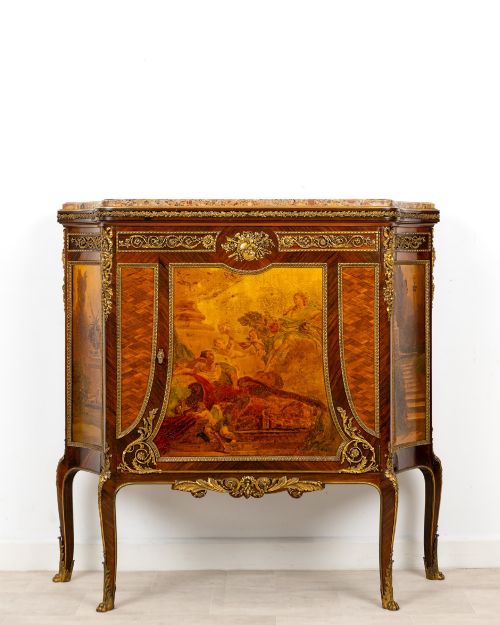
The versions met on this page lean heavily towards French origins, spanning provincial country pieces to more formal urban designs. Sideboards, credenzas, and commodes all appear across the inventory.
Makers utilised various regional aesthetics, from unadorned provincial walnut to elaborate revival styles featuring carved woodwork. The underlying form remains consistent: a low, wide base topped by thick stone.
How they were made
Constructed primarily from walnut and mahogany, these carcases rely on solid wood framing combined with veneers for large flat panels. Marquetry inlay appears on select Victorian examples, creating geometric or floral patterns across the timber surfaces.
The stone tops consist of heavy slabs of marble, occasionally in pink variations, cut and polished to fit the exact dimensions of the cabinet base. Ormolu mounts and brass hardware are secured to doors and drawers as decorative accents.
Antique Marble Top Buffet Retail Price Guide 2026
Typical asking prices for marble top buffet among the pieces listed under this phrase on Sellingantiques today, from the lower quarter to the upper quarter. They describe what is for sale here now, not the wider market.
Listings feature pieces spanning the mid-nineteenth century through to the early twentieth century, utilising walnut, mahogany, and iron.
What varies in quality
The grade of the marble slab sets the baseline for quality, with uniform colouration and thick, well-finished edges marking superior examples. Inferior pieces often use thinner stone with heavy veining that conceals natural flaws.
Joinery execution dictates the longevity of the cabinet carcase, distinguishing handmade regional furniture from mass-produced alternatives. Crisp carving on solid wood components demonstrates higher workshop competence than soft, rounded mouldings.
The Antique Marble Top Buffet Glossary
- Ormolu
- Gilded bronze mounts applied to furniture for decorative effect. This technique was widely utilised in French cabinet making.
- Marquetry
- Inlay work using thin pieces of wood veneer to form decorative pictures or patterns. It creates detailed surface designs on cabinet doors.
- Commode
- A low chest of drawers or cabinet with doors. French examples frequently carry marble tops.
- Biedermeier
- A Central European style focusing on utilitarian comfort and clean lines. Walnut and flame mahogany veneers define this aesthetic.
- Credenza
- A sideboard or buffet cabinet used for serving food and storing tableware. Victorian versions often include mirror backs.
Antique Marble Top Buffet: Frequently Asked Questions
What is an antique marble top buffet used for?
These pieces function primarily as dining room servers or side cabinets for storing dinnerware and linens. The stone surface provides a practical, heat-resistant shelf for placing dishes during meals.
In modern settings, they serve as display surfaces for lamps, glassware, and decorative objects in hallways or living rooms.
How do I clean an antique marble top?
Routine maintenance requires only warm water and a soft cloth to remove dust and surface debris. Avoid acidic cleaners, vinegar, and lemon juice, which etch the polished stone surface.
Purchasing specialist stone soap helps protect the marble from staining while preserving the natural finish.
Are these buffets difficult to move?
The combination of dense hardwood and heavy stone makes these pieces exceptionally heavy. Removing the loose marble slab before transport reduces the weight and prevents accidental cracking.
Moving the carcase requires at least two people to lift it safely without straining the joints.
How do I date an antique buffet?
Dating relies on examining construction methods, timber choices, and stylistic details such as brass mounts or carved motifs. Louis Philippe and Victorian pieces display distinct decorative markers corresponding to their respective eras.
Comparing drawer dovetails and internal timber seasoning helps confirm the period of manufacture.