


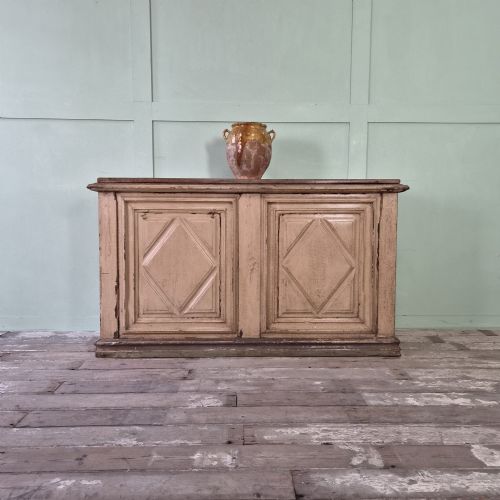
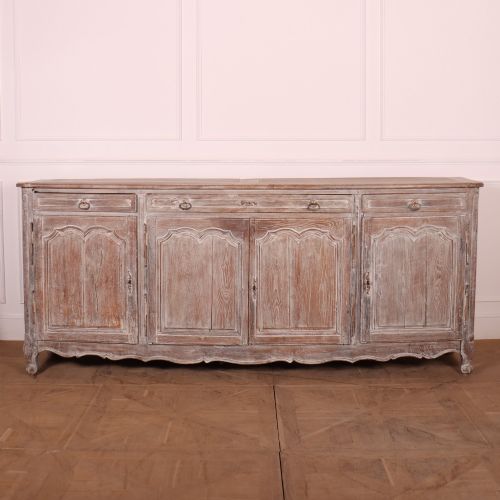
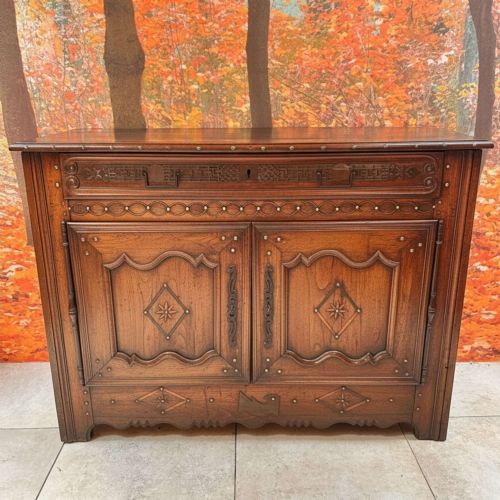
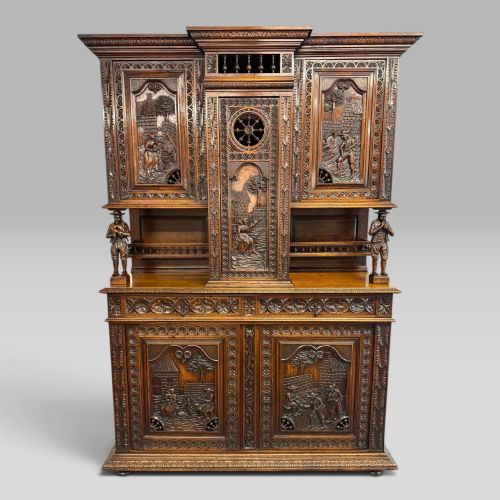
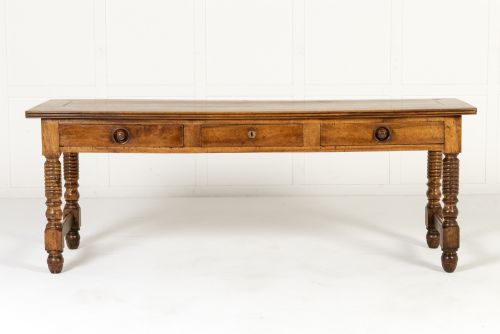
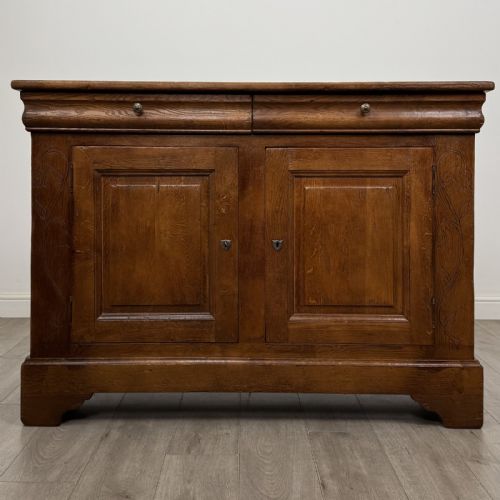
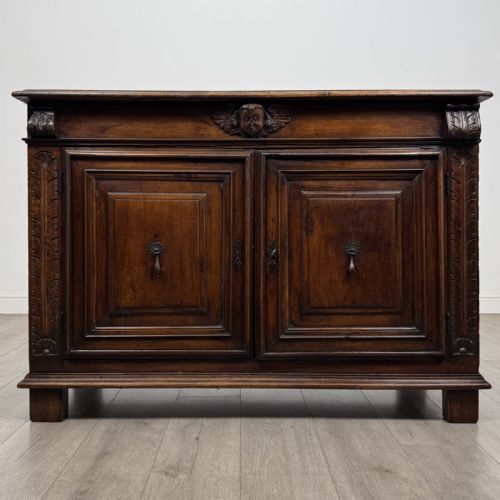
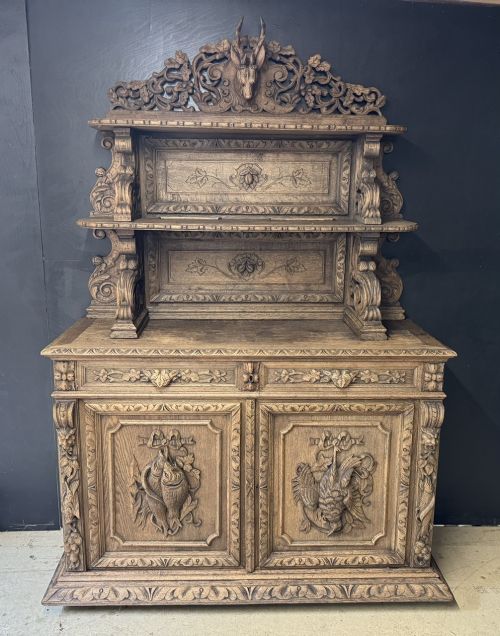
French Country Sideboard
When you handle a french country sideboard, you hold centuries of provincial craft, from heavy oak enfilades to washed pine pot-cupboards.
French Country Sideboard
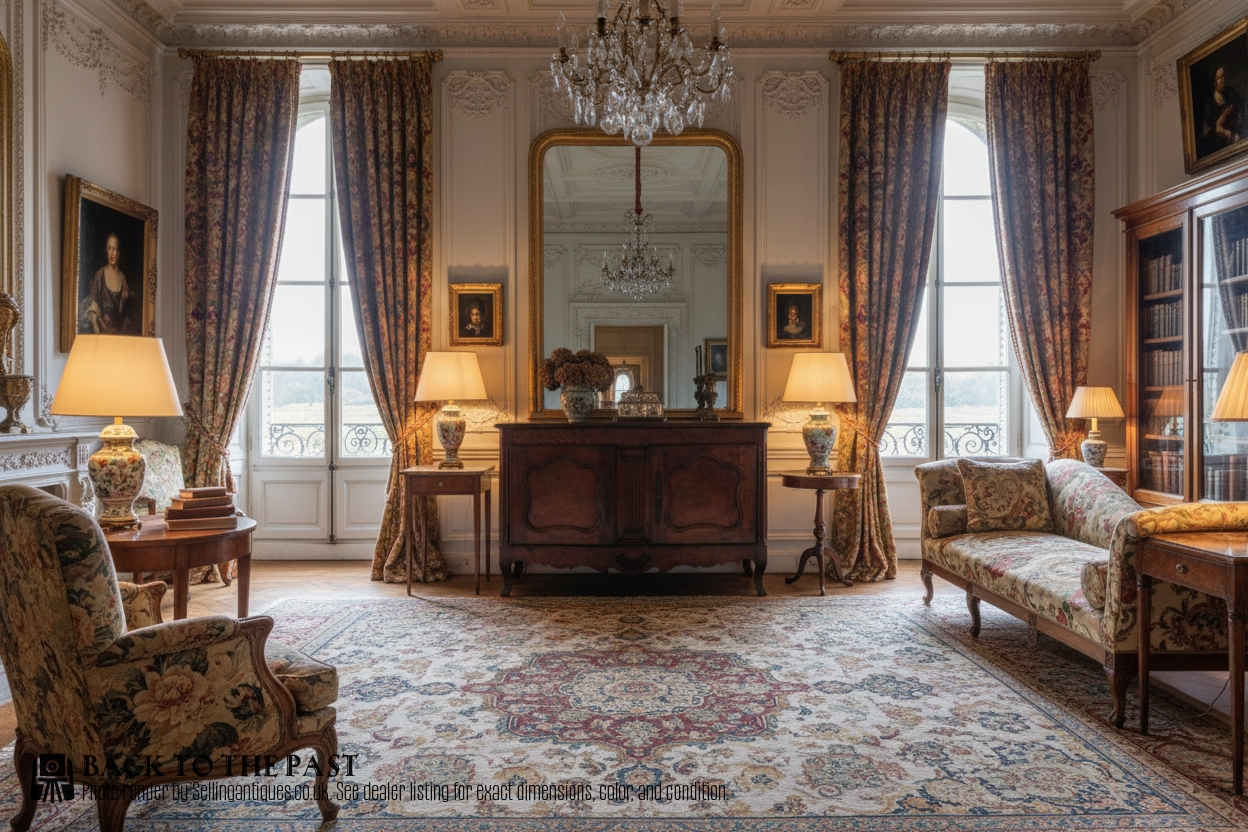
A french country sideboard brings practical provincial storage into a modern interior, offering deep cupboards, wide drawers and robust timber surfaces. These pieces serve dining rooms, kitchens and hallways with a grounded presence that reflects regional European domestic life.
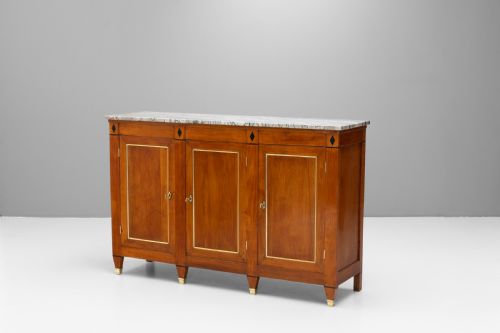
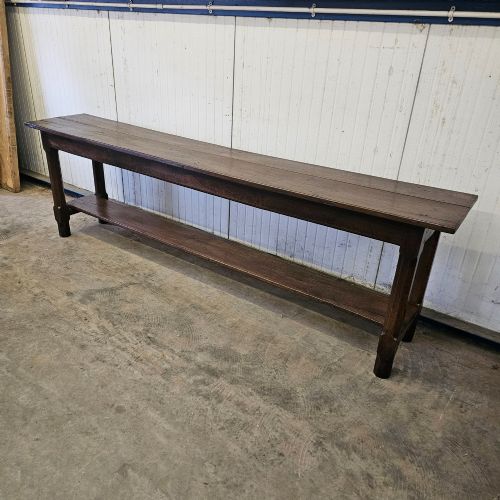
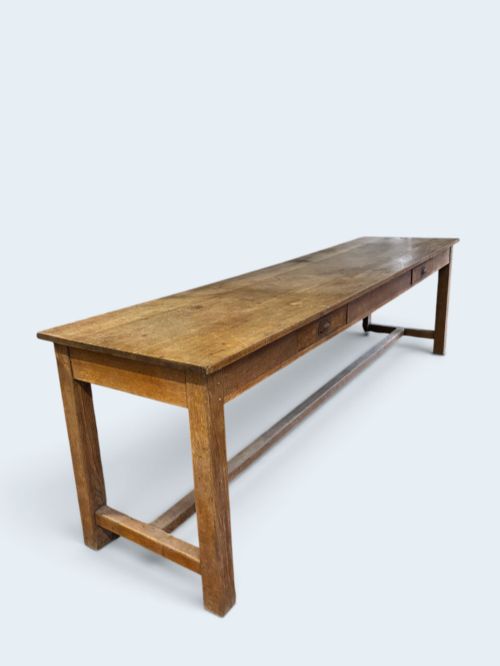
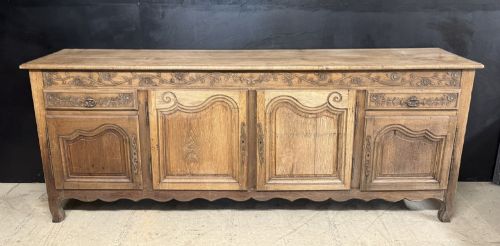
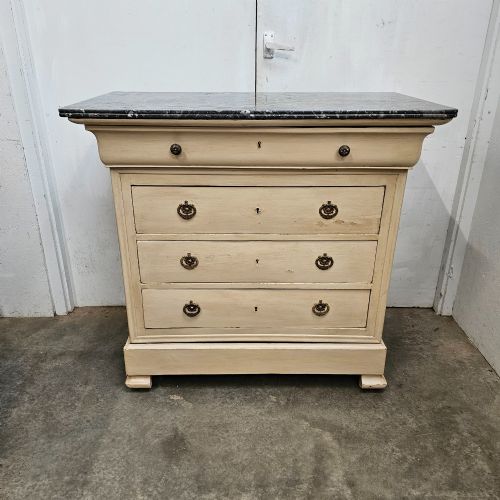
You will most frequently encounter solid oak and cherrywood buffet bases, low cupboards, and painted commodes dating from the eighteenth and nineteenth centuries. The selection spans rustic farmhouse tables, marble-topped serving surfaces and tall enfilades designed for daily utility.
How they were made
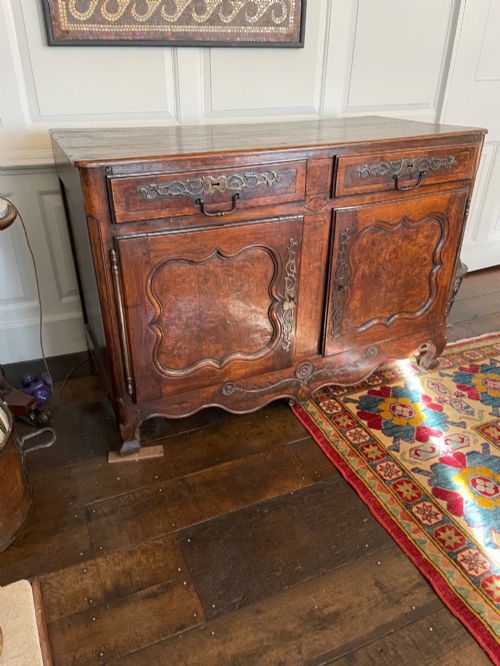
Cabinetmakers built these pieces using solid regional hardwoods such as oak, walnut, cherrywood and ash, joined with pegged mortise and tenon construction to withstand heavy daily use. Surfaces often received hand-carved panels, moulded drawer fronts and occasional contrasting inlays of burr elm or mahogany.
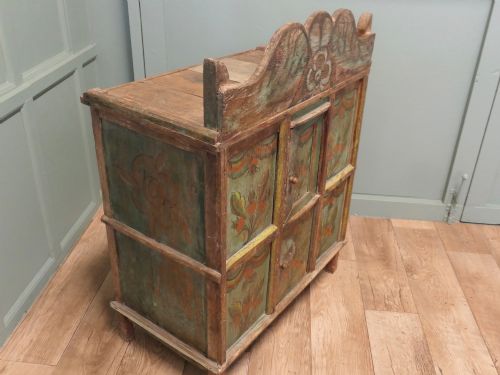
Many provincial examples feature practical additions like pink marble or plain timber tops, wrought iron hardware and brass fixtures, while others display original painted finishes or bleached patinas achieved through decades of domestic care.
French Country Sideboard Retail Price Guide 2026
Typical asking prices for french country sideboard among the pieces listed under this phrase on Sellingantiques today, from the lower quarter to the upper quarter. They describe what is for sale here now, not the wider market.
The inventory includes diverse forms such as enfilades, confitURIERS, commodes, workbenches, and shop counters.
What varies in quality
The distinction between standard provincial utility furniture and finer regional pieces lies in the selection of timber, the crispness of hand-carved detailing and the integrity of the original construction. Superior examples show thoughtful proportions, well-figured grain in woods like cherry and walnut, and intact period hardware.
Subtleties in regional joinery and the survival of untouched surfaces, whether historic paint or polished grain, elevate certain buffets and commodes. Pieces that retain their original marble slabs, structural stability and authentic patination command greater appreciation among collectors.
The French Country Sideboard Glossary
- Enfilade
- A long sideboard or buffet featuring a series of doors, typically three, designed for dining room storage. This form originated in grand houses but found sturdy expression in provincial French workshops.
- Commode
- A low chest of drawers or cabinet originating in France, often standing on short legs. Eighteenth and nineteenth-century versions frequently incorporate serpentine fronts and marble tops.
- Confiturier
- A small cupboard traditionally used for storing pots of confit and preserves. These compact pieces usually feature a single door and a small drawer.
- Buffet deux corps
- A tall two-tier cupboard consisting of a lower cabinet base beneath an upper shelving section. These imposing storage pieces showcase regional carpentry and ample display space.
- Marquetry
- The art of applying decorative pieces of veneer to a structure to form intricate designs. This technique appears on finer stylistic iterations within the French tradition.
French Country Sideboard: Frequently Asked Questions
Where should I place a sideboard?
These pieces suit dining rooms, wide hallways and spacious kitchens where their generous depth and storage capacity can be fully utilised. They anchor a room while providing a functional surface for serving food or displaying objects.
Ensure you measure both floor space and clearance for opening doors or drawers, as provincial proportions can be surprisingly deep and substantial.
How do I care for antique timber?
Maintain timber surfaces by applying natural beeswax periodically and avoiding direct placement near heat sources or strong sunlight. This preserves the historic patina and protects the grain from drying out.
Clean spills promptly with a dry or barely damp cloth, steering clear of modern chemical polishes that can degrade aged wood finishes.
Are marble tops original?
Many nineteenth-century serving tables, commodes and sideboards were fitted with marble slabs to provide a durable, heat-resistant surface for food preparation and service. These stone tops were integrated into the design from the workshop.
Inspect the edges and underside of the marble to ensure it sits correctly within the timber frame and matches the period of the base cabinet.
How do I identify provincial styles?
Provincial pieces display simpler lines, regional timber choices like cherry and pine, and robust construction compared to formal Parisian court furniture. Local cabinetmakers adapted high-style trends from Louis periods into sturdier domestic forms.
Look at the tool marks, joinery methods and hardware to understand where and roughly when a particular cupboard or buffet was constructed.