
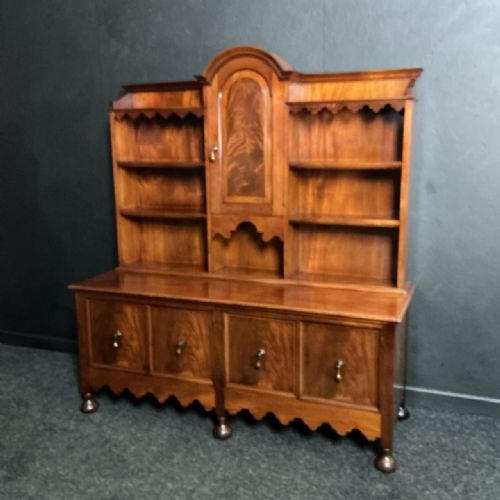
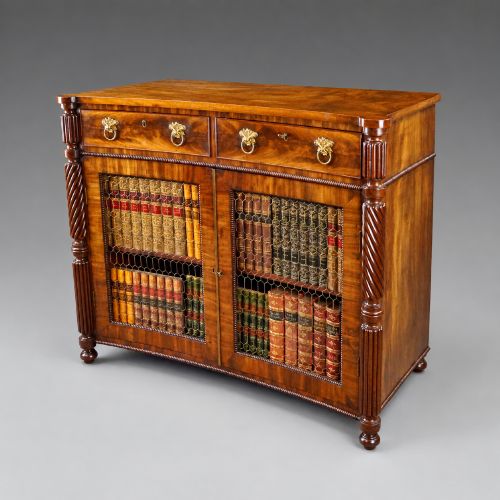
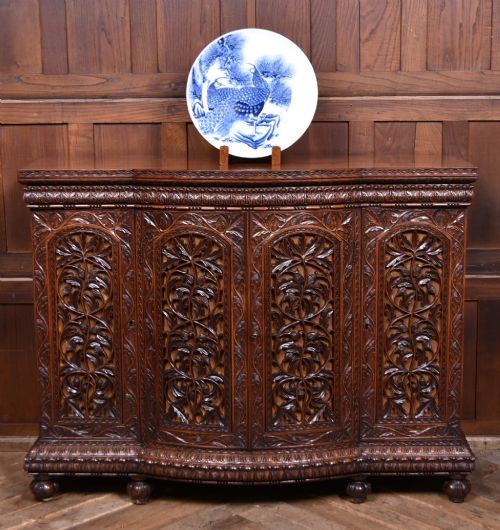

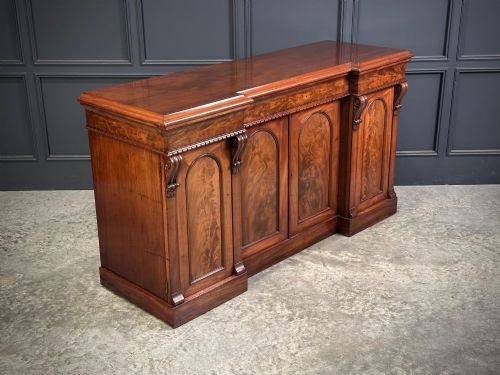
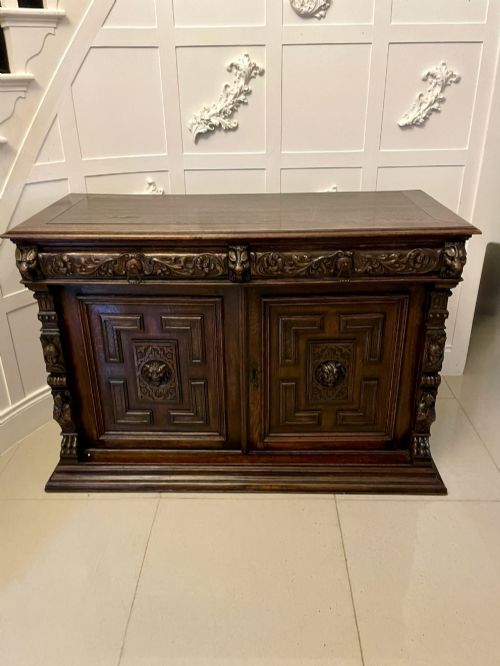

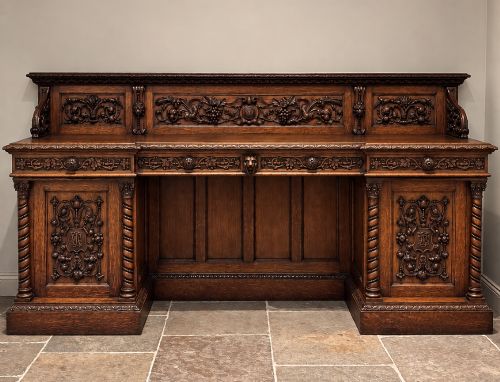
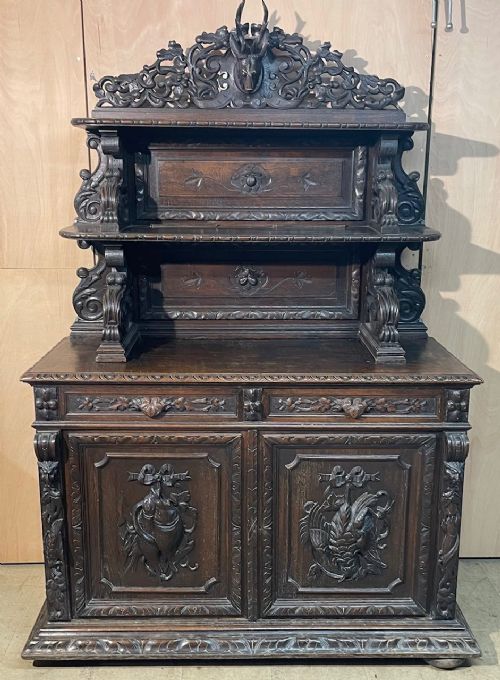

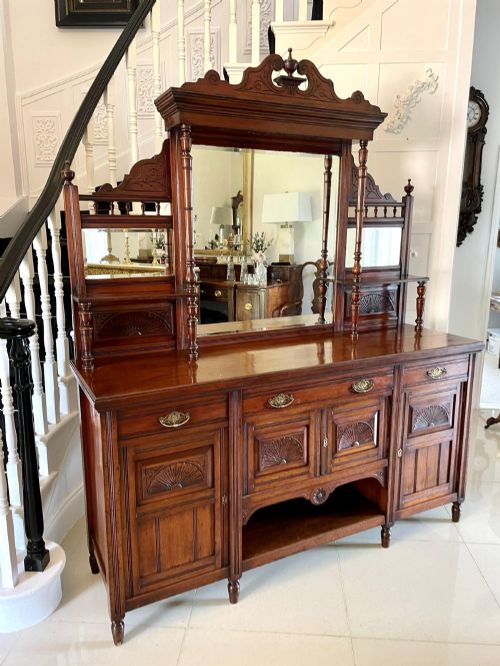
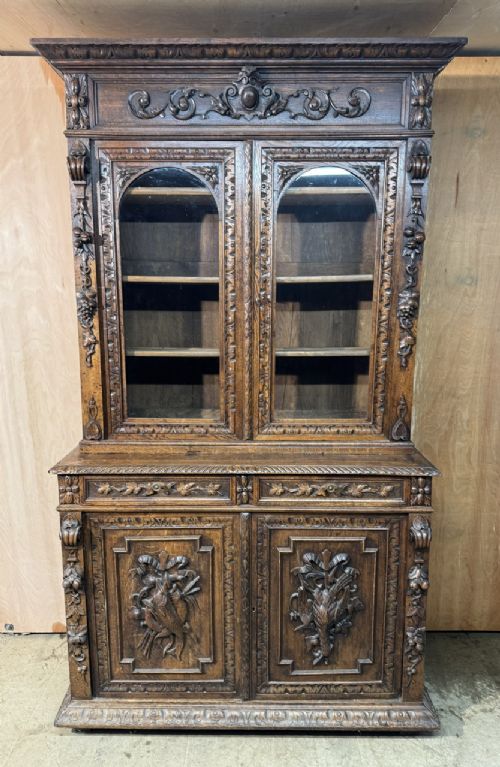
Carved Wood Sideboard
These substantial carved wood sideboard designs offer practical dining room storage through heavy timber architecture and elaborate ornamentation.
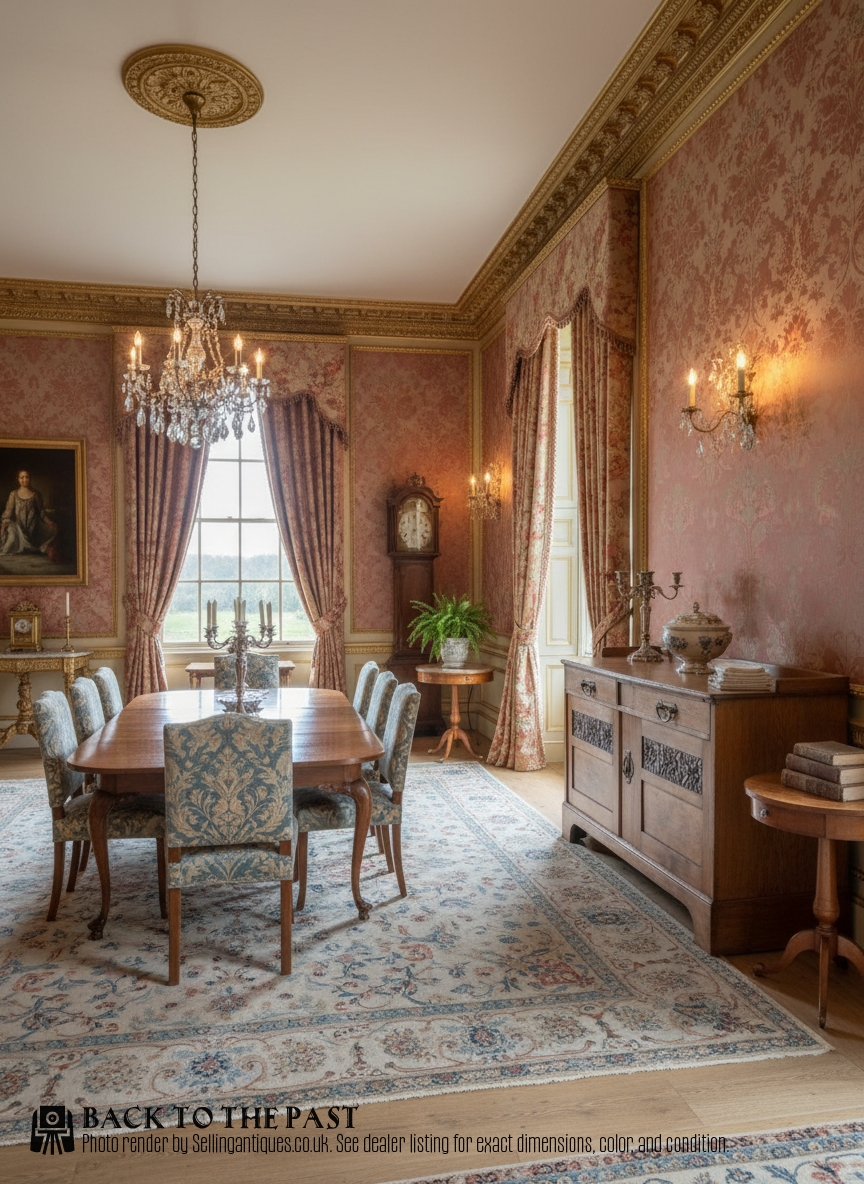
Carved Wood Sideboard
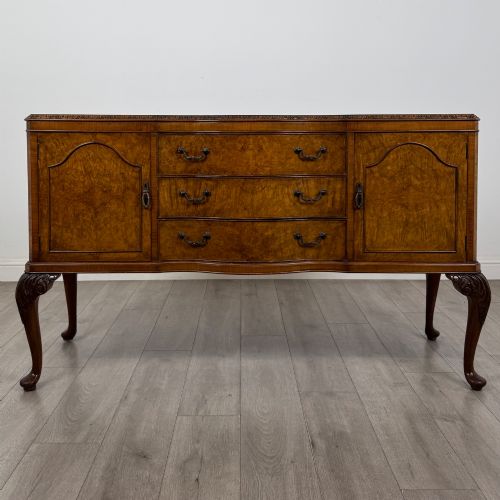
A carved wood sideboard serves as a major dining room or hallway storage piece, combining cupboards, drawers and display surfaces. The pieces gathered here span several centuries and styles, showing how dining furniture evolved from simple serving boards into grand architectural cabinets.
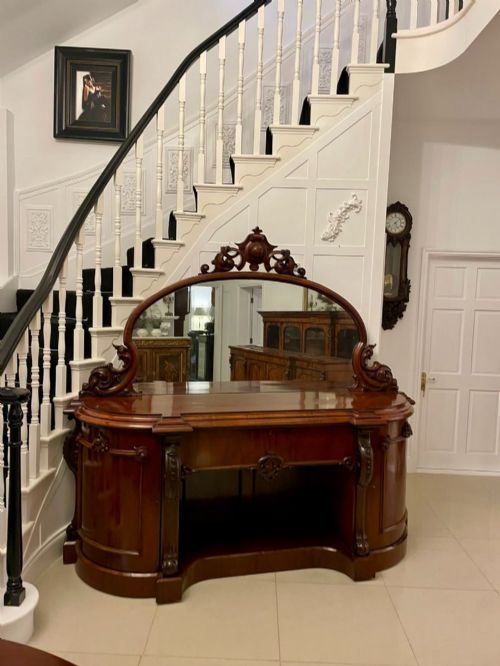
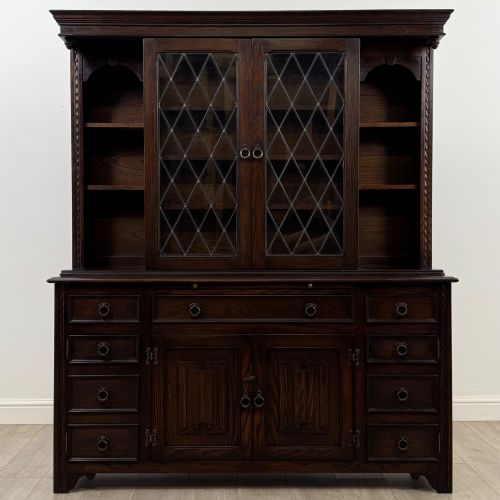
You will most frequently meet 19th-century and Edwardian examples on this page, particularly oak and mahogany pieces influenced by Jacobean, Gothic or Victorian tastes. These range from compact chiffoniers to massive mirror-back buffets designed to anchor a formal dining space.
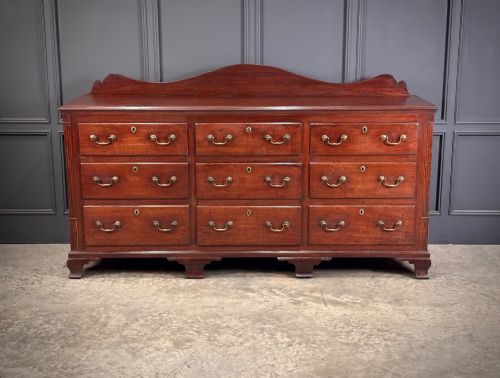
The selection also includes regional forms such as Welsh dressers, French hunting cabinets and Anglo-Indian padouk pieces, bringing varied carving traditions and timber choices to the standard sideboard layout.
Materials and Construction
Oak and mahogany form the structural core of most pieces on this page, frequently selected for their strength and ability to hold deep relief carving. Artisans also utilised rosewood, walnut, padouk and flame mahogany to achieve rich grain patterns and polished surfaces.
Secondary materials such as brass handles, iron hardware, glass panels and marble tops appear across various regional styles, notably on French buffets and console tables. Joinery relied on traditional framing techniques to support heavy doors, mirrored superstructures and carved panel work.
Carved Wood Sideboard Retail Price Guide 2026
Typical asking prices for carved wood sideboard among the pieces listed under this phrase on Sellingantiques today, from the lower quarter to the upper quarter. They describe what is for sale here now, not the wider market.
Regional variations represented here include French hunting cabinets, Welsh dressers and Anglo-Indian padouk cabinets.
Assessing Quality
Quality rests upon the depth and crispness of the carving, distinguishing mechanically produced decoration from skilled hand-chiselled work. Pieces featuring deeply undercut foliage, figures or panel scenes demand greater artisan skill and mark the upper tier of production.
Timber selection and secondary wood usage also separate standard items from exhibition grade pieces. Matched flame mahogany veneers, burr walnut figures and dense solid oak denote superior material choice and cabinet-making ambition.
The Carved Wood Sideboard Glossary
- Sideboard
- A dining room furniture piece used for serving food and storing tableware. It typically combines lower cupboards with drawers.
- Chiffonier
- A compact variety of sideboard popular during the 19th century, often fitted with small drawers and enclosed shelves below.
- Buffet
- A heavy serving piece or sideboard designed for displaying plate and storing dining room accessories.
- Mirror Back
- An upright wooden superstructure incorporating a mirror plate, attached to the rear of a sideboard surface for reflection and light.
- Padouk
- A heavy tropical hardwood with a reddish hue, utilised in Anglo-Indian and overseas trade furniture for intricate carving.
Carved Wood Sideboard: Frequently Asked Questions
How do I style a carved wood sideboard today?
A carved wood sideboard anchors a room through its sheer visual weight and dark timber tones. Pair it with simple ceramic lamps, plain glass vessels or neutral walls to balance the heavy relief carvings.
Allow the piece breathing room so the ornamentation and grain patterns remain the focal point of the space.
What is the difference between a sideboard and a buffet?
Sideboards and buffets share similar storage purposes, but a buffet traditionally leans towards heavier proportions and grander scale. Buffets frequently incorporate taller mirror-back superstructures and more elaborate display shelving.
Both serve identical functional roles in dining rooms for holding linen, cutlery and serving dishes.
How do I identify Victorian carved sideboards?
Victorian examples rely heavily on dark oak or mahogany, featuring deep geometric, floral or figural carving influenced by Gothic and Jacobean revivals. They often include mirror-back attachments, barley twist columns and heavy panelled doors.
Construction methods from this era show robust dovetail joints and substantial hardware made of brass or iron.
Are Edwardian sideboards different from Victorian ones?
Edwardian pieces often display lighter proportions and incorporate Adam revival motifs alongside traditional oak construction. While heavy carving persists, designers also turned towards simpler lines and inlaid details.
Barley twist legs and mirror backs remain common, yet the overall aesthetic feels somewhat less severe than mid-Victorian counterparts.