
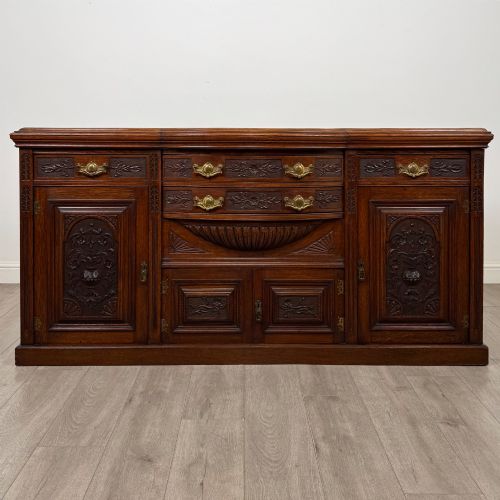
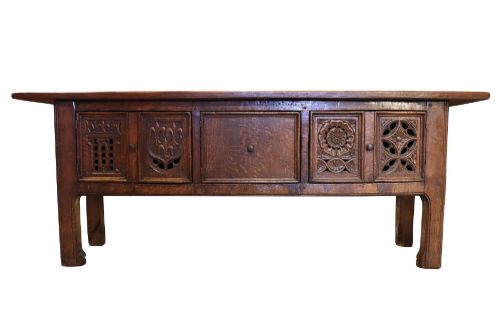
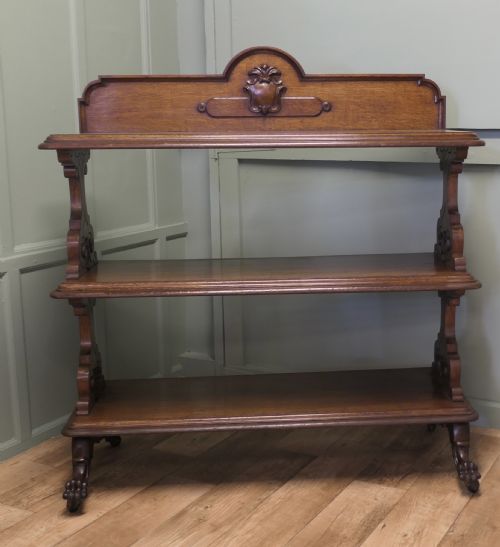
Victorian Carved Oak Sideboard
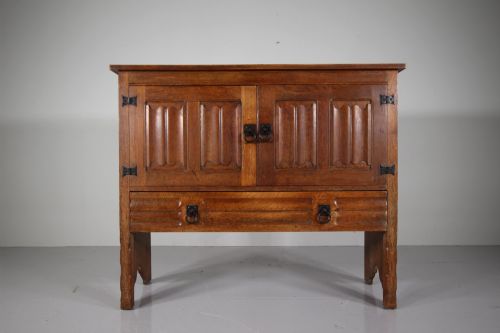
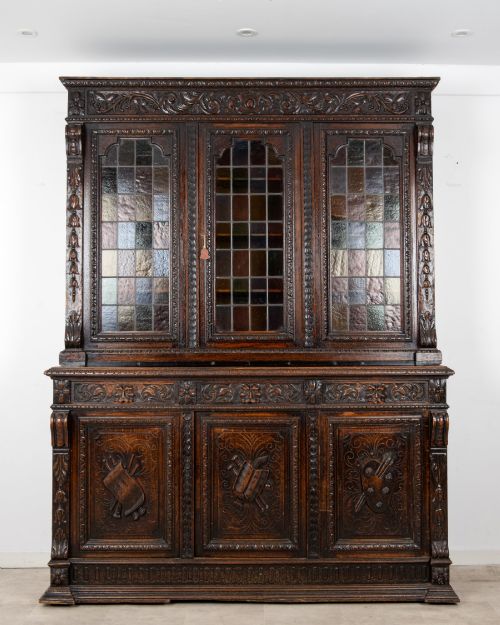
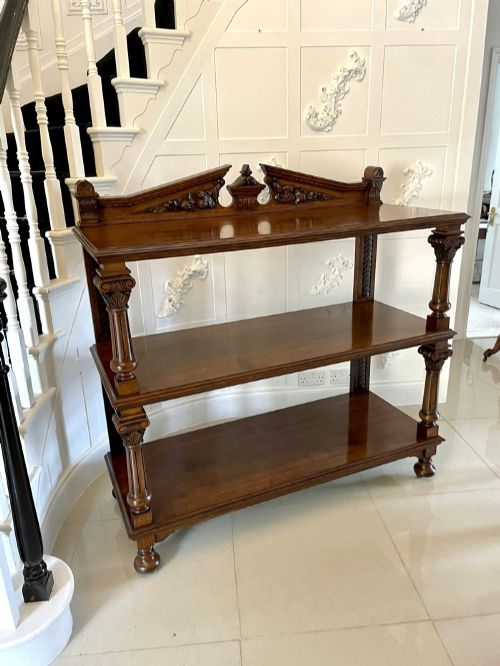
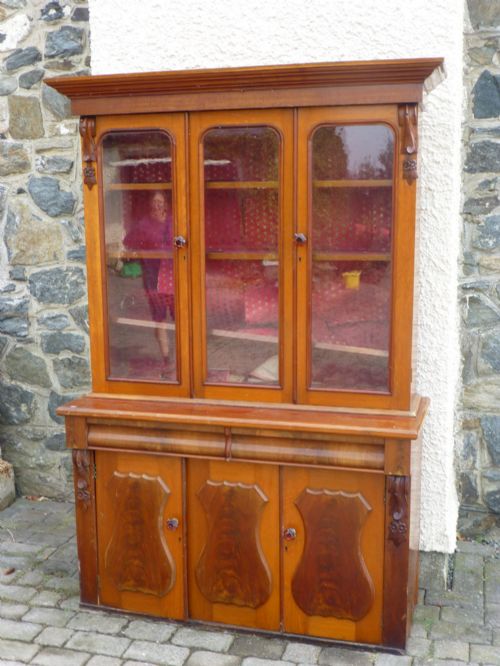
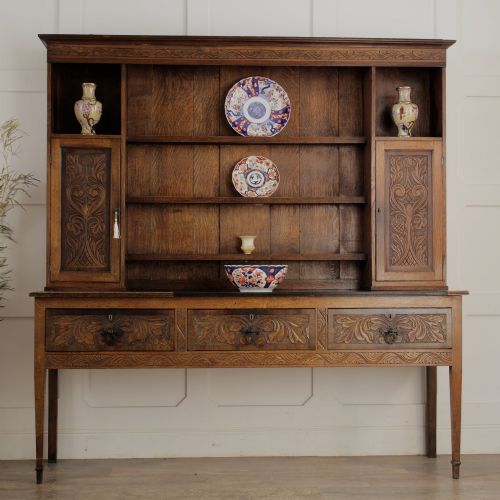
A victorian carved oak sideboard brings substantial nineteenth-century timber and deep relief work into a dining room or hall.

Victorian Carved Oak Sideboard
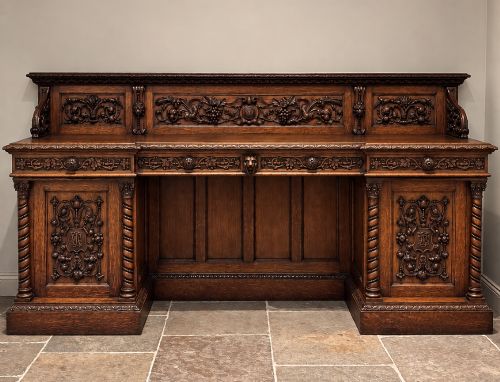
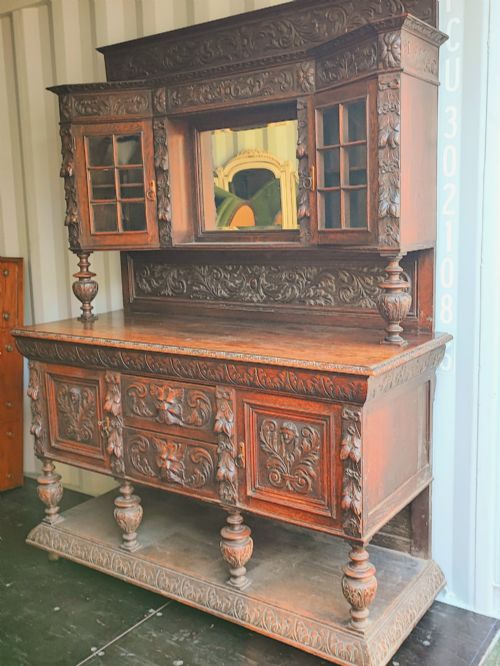
A victorian carved oak sideboard combines heavy timber construction with elaborate chisel work, serving as a principal storage piece and display surface in nineteenth-century interiors.
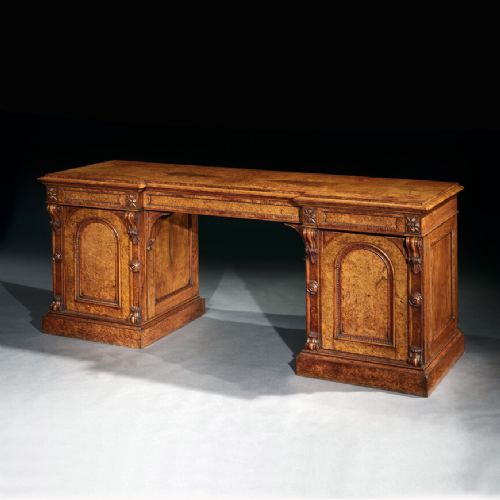
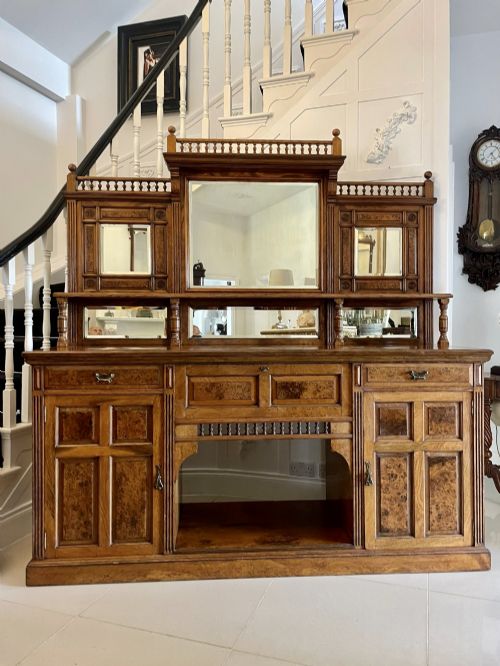
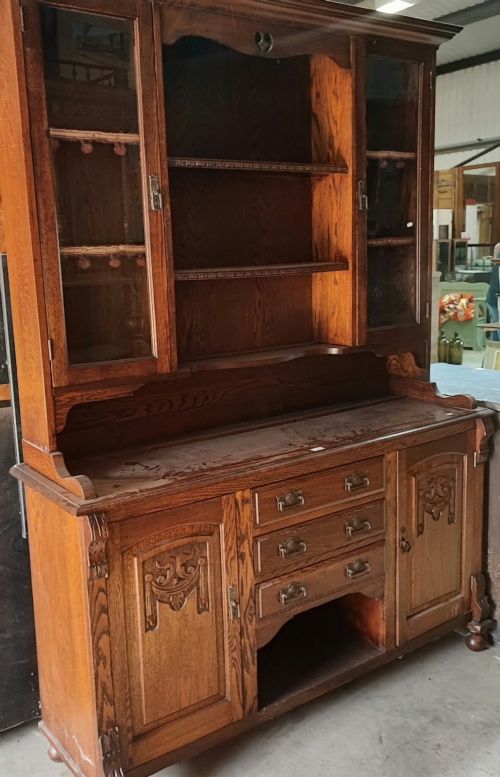
The selections span the middle and late decades of the nineteenth century, taking forms such as mirror-back buffets, pedestal sideboards, and breakfront server units.
Makers and workshops of the period adopted heavy ornamentation, frequently incorporating Gothic Revival tracery, Renaissance motifs, or folklore imagery into the timber.
Materials and construction
Carpenters utilised solid oak and figured variants such as pollard or tiger oak for the structural carcase, doors, and backboards.
Decorative schemes relied on deep panel carving, applied mouldings, and turned columns, often accompanied by brass hardware or mirrored glass panels set into tall upper frames.
Victorian Carved Oak Sideboard Retail Price Guide 2026
Typical asking prices for victorian carved oak sideboard among the pieces listed under this phrase on Sellingantiques today, from the lower quarter to the upper quarter. They describe what is for sale here now, not the wider market.
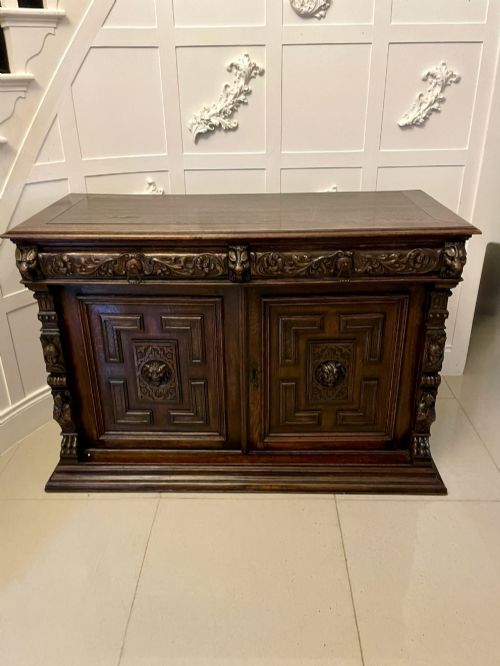
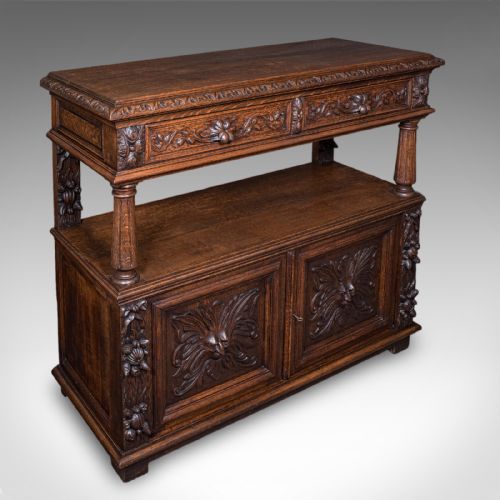
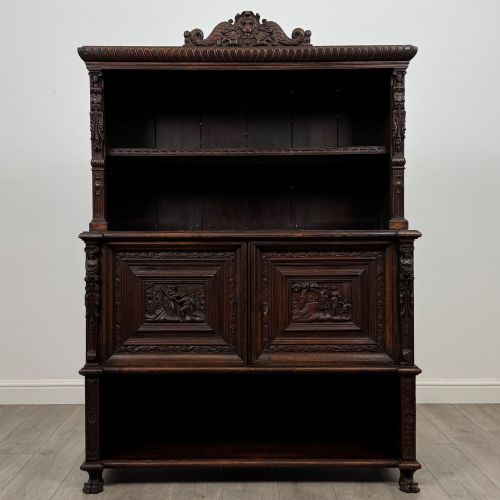
Staring woodland spirits peer out from numerous nineteenth-century cupboard doors, keeping a watchful eye on the dining room.
Judging the standard
Depth and crispness of the hand carving separate standard commercial output from exhibition-grade furniture, particularly in figural elements like green man masks or lions.
Construction methods dictate durability, with secondary timbers, drawer linings, and the integrity of large mirror-backed superstructures marking the standard of the workshop.
John Moyr Smith·Maple and Co.
The Victorian Carved Oak Sideboard Glossary
- Mirror back
- A tall superstructure incorporating a central mirror plate, designed to reflect light and display decorative china above the main serving surface.
- Green man
- A sculptural architectural motif representing a human face entwined with foliage, frequently appearing on nineteenth-century carved woodwork.
- Pedestal base
- A heavy supporting cabinet structure situated beneath the main sideboard top, often containing internal cellarettes or shelving.
- Breakfront
- A piece of furniture featuring a central section that projects forward from the flanking cabinets to create visual rhythm.
- Pollard oak
- Timber taken from trees that have been pollarded, producing a highly figured grain pattern used for decorative veneer and panel faces.
Victorian Carved Oak Sideboard: Frequently Asked Questions
How do I style a large sideboard?
Position the piece against a substantial wall in a dining room or wide hallway where its height and mirror back can dominate the space.
Balance the heavy carved timber surface by placing ceramics, metalware, or simple lamps on top without crowding the relief details.
What is a green man carving?
This decorative motif depicts a face emerging from or made of leaves and vines, symbolising rebirth and spring.
Cabinet makers carved these masks onto drawer fronts, cupboard doors, and central pediments during the Gothic Revival period.
How do I identify a mirror-back sideboard?
These versions feature a tall wooden framework attached to the rear of the serving surface, holding a large bevelled mirror plate and frequently small display shelves.
They were introduced to brighten dining rooms by reflecting natural daylight and holding decorative porcelain collections.
Are these sideboards made of solid oak?
Most examples utilise solid oak for structural frames, legs, and carved panels, sometimes combined with figured pollard oak veneers on prominent surfaces.
Secondary timbers like pine or mahogany may appear in concealed areas such as drawer linings and backboards.