


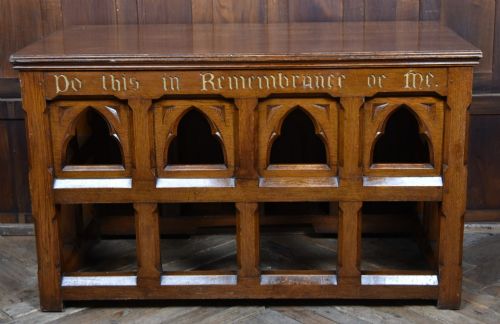
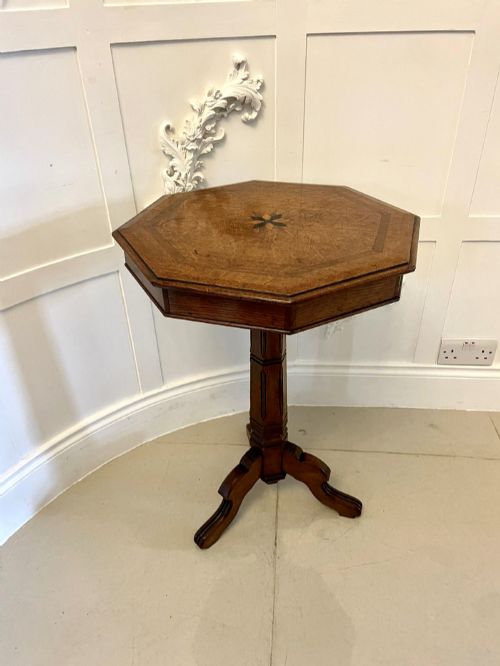
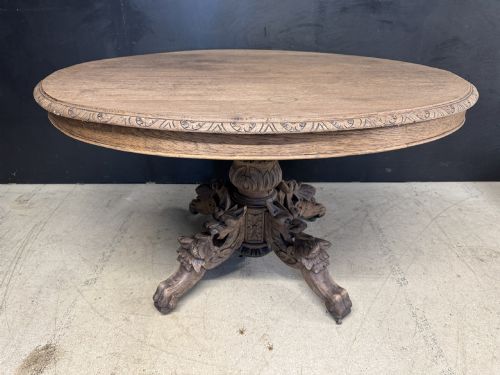
Gothic Revival Oak Table
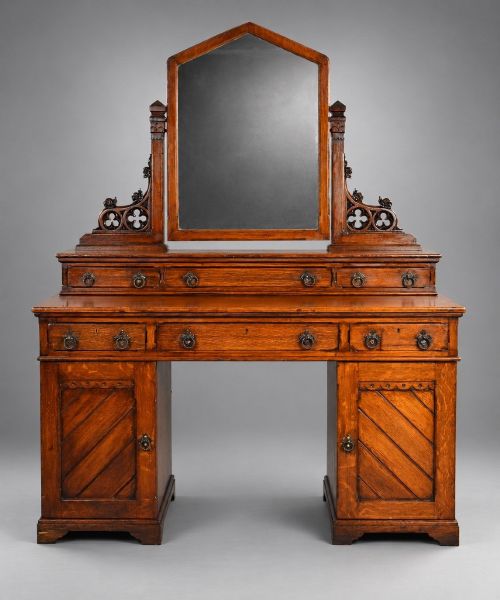
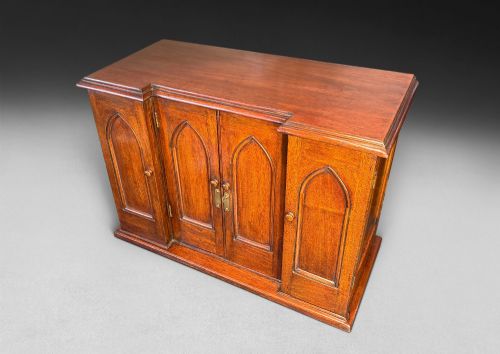
A gothic revival oak table brings centuries of architectural heritage into a room through heavy timber, pointed arches, and deep carved panels.
Gothic Revival Oak Table
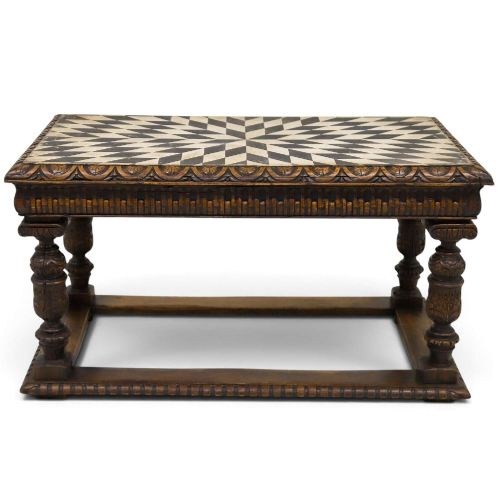
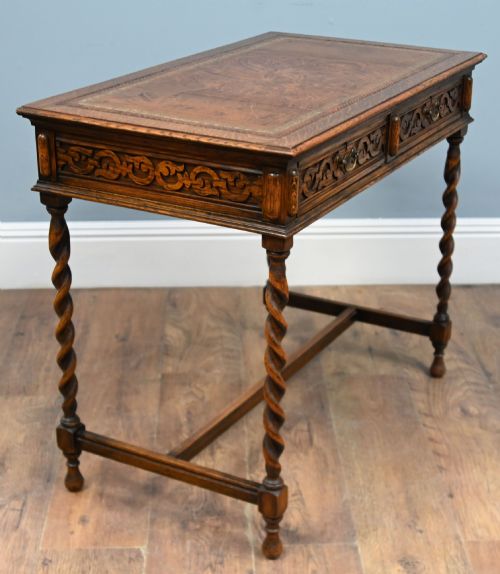
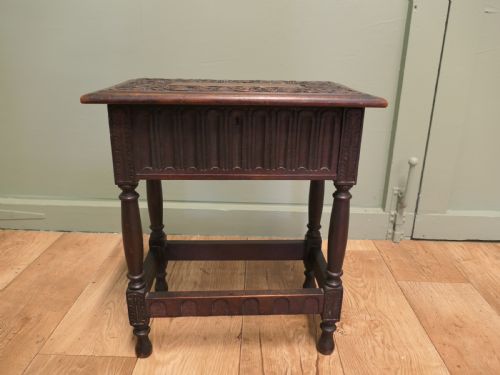
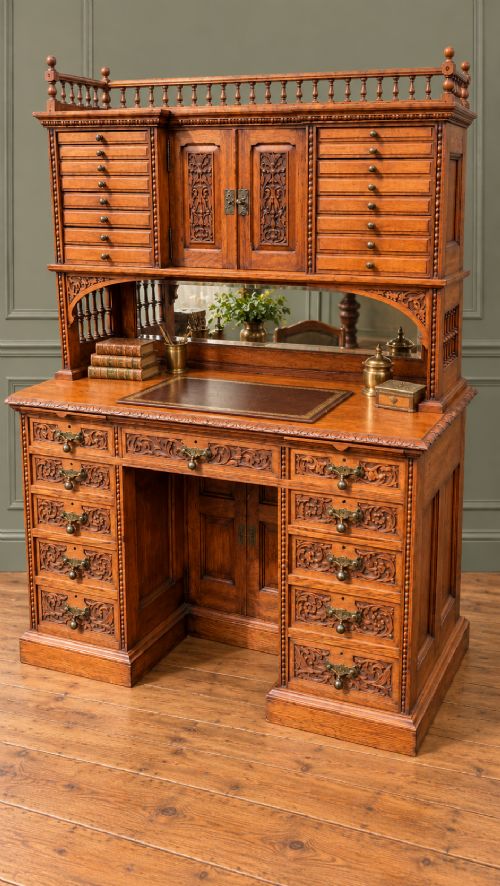
A gothic revival oak table bridges domestic utility and ecclesiastical design, drawing heavily on medieval church architecture and timber framing. When exploring a gothic revival oak table, you encounter diverse forms ranging from compact side tables and occasional stands to expansive library tables and writing desks.
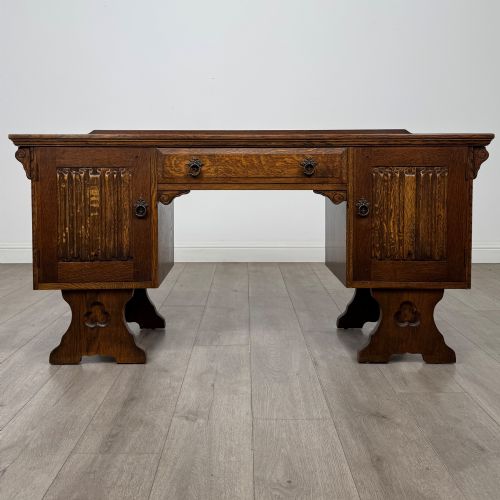
The pieces on this page span the nineteenth century into the twentieth, encompassing Victorian and Edwardian interpretations alongside related arts and crafts movements. Most examples favour solid timber construction, frequently embellished with linenfold carving, trefoil motifs, and heavy turned legs.
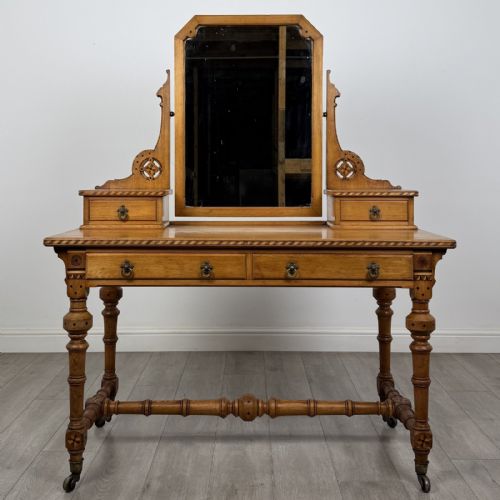
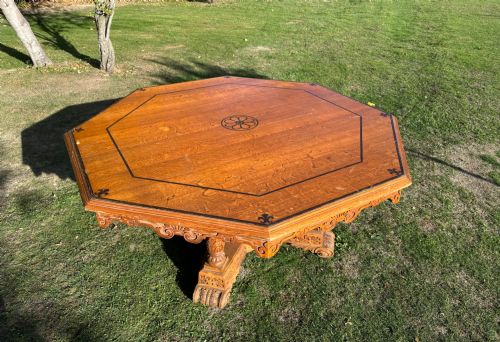
Makers and workshops of the Victorian and Edwardian periods adapted medieval motifs for domestic interiors, producing heavy hall tables, altar tables, and octagonal centre tables. These surfaces served practical functions in libraries, reception halls, and studies while displaying architectural detailing such as pointed arches and quatrefoils.
How They Were Made
Makers utilised solid oak, often quarter-sawn to reveal rich medullary rays, combined with structural ironwork, brass fittings, and inset leather writing surfaces. Joinery relied on traditional mortise and tenon construction, pegging the heavy timbers together to withstand decades of hard use in public schools, chapels, and grand homes.
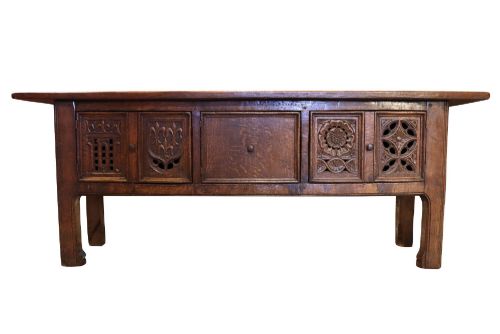
Carving was executed by hand, deploying chisel and gouge to create deep relief patterns including tracery, linenfold panels, and stiff-leaf foliage. Secondary materials such as ebonised wood, ceramic tiles, and occasional coromandel inlay appeared on more ambitious library tables and writing desks.
Gothic Revival Oak Table Retail Price Guide 2026
Typical asking prices for gothic revival oak table among the pieces listed under this phrase on Sellingantiques today, from the lower quarter to the upper quarter. They describe what is for sale here now, not the wider market.
Several tables were rescued from Victorian public schools and Welsh chapels, where generations of students likely carved their initials into the heavy oak.
What Varies in Quality
Quality rests upon the depth and crispness of the hand carving, the choice of timber figure, and the architectural proportion of the piece. Superior examples exhibit tightly figured oak with deliberate placement of medullary rays, whereas simpler vernacular pieces rely on plain sawn boards and mechanical surface stamping.
The integrity of the construction dictates the standing of a table, distinguishing robust library desks with pegged joinery from lighter occasional pieces assembled with modern fasteners. Original hardware, intact leather surfaces, and well-executed secondary details such as chamfered edges and moulded stretchers elevate certain pieces above standard commercial production.
W. Williamson and Sons·J and G W and Sons·Arthur Simpson of Kendal·Edwards and Roberts·Heals of London
The Gothic Revival Oak Table Glossary
- Linenfold
- A style of carved wooden panelling that resembles folded vertical sheets of linen, frequently seen on the friezes and doors of these tables. This motif was revived extensively during the nineteenth century to echo medieval church woodwork.
- Trefoil
- A graphic ornamentation consisting of three overlapping rings or lobes, commonly pierced through gallery rails or carved into table brackets. It provides a distinct architectural reference to Gothic stone window tracery.
- Library Table
- A large freestanding desk or table designed for central placement in a room, often fitted with drawers and inset leather writing surfaces. These heavy pieces formed the scholarly centrepiece of Victorian and Edwardian studies.
- Refectory Table
- A long dining or hall table featuring sturdy legs connected by low floor stretchers for stability. Planks of thick oak form the top, reflecting monastic dining traditions revived in nineteenth-century country houses.
- Quatrefoil
- A decorative framework composed of four partially overlapping circles, often utilised in the pierced stretchers or carved aprons of ecclesiastical and domestic furniture. The shape mirrors medieval stonework found in cathedrals.
Gothic Revival Oak Table: Frequently Asked Questions
How were these tables used originally?
These tables served varied practical and ceremonial roles in Victorian homes, institutions, and churches. Library tables and partners desks provided sturdy writing and reading surfaces for scholars and professionals, while hall tables managed incoming correspondence and reception duties.
Some specialised examples functioned as chapel altar tables or domestic serving buffets. Their robust construction allowed them to endure heavy daily use in demanding environments like public schools and libraries.
How do I live with a gothic revival table?
Integrating a gothic revival oak table into a contemporary interior works best when allowing its substantial timber and architectural carving to act as a visual anchor. Pairing the piece with simpler modern seating balances the heavy proportions and dark finishes typical of nineteenth-century oak.
Maintenance involves feeding the oak periodically with appropriate wax to preserve the grain and protect inset leather surfaces from drying out. Placing the table away from direct heat sources prevents the solid timber from splitting.
How do I tell periods apart?
Early nineteenth-century examples often lean towards strict architectural revivals influenced by designers like Pugin, displaying rigorous gothic tracery and heavy construction. Later Victorian and Edwardian pieces frequently blend gothic motifs with arts and crafts simplicity or jacobean revival influences, resulting in cleaner lines and different hardware.
Examining the construction methods, secondary woods, and carving styles helps place a table within its chronological context. Pieces marked by known workshops or retailers also offer clearer dating through documented production eras.