
Brown Oak Pedestal Table
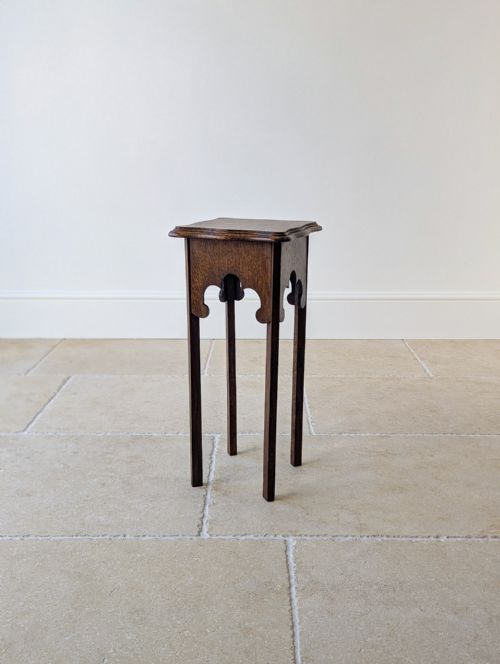
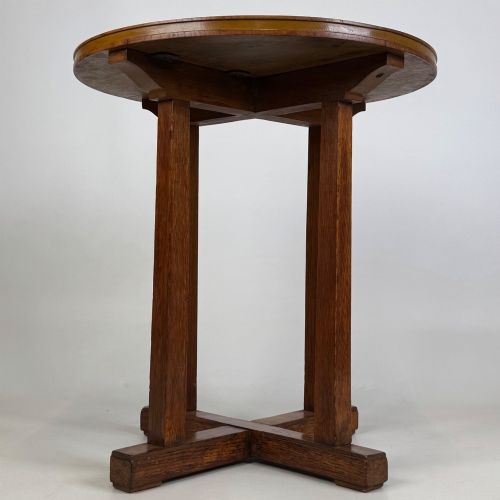
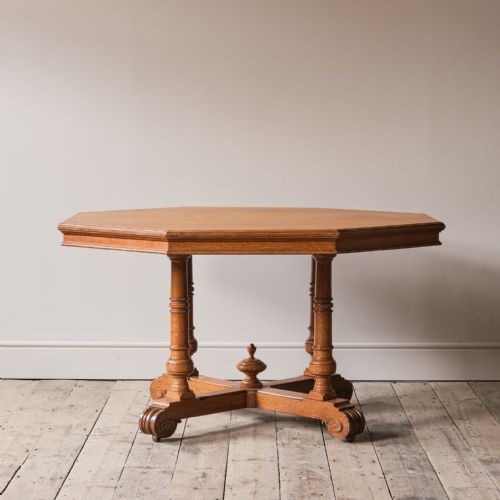
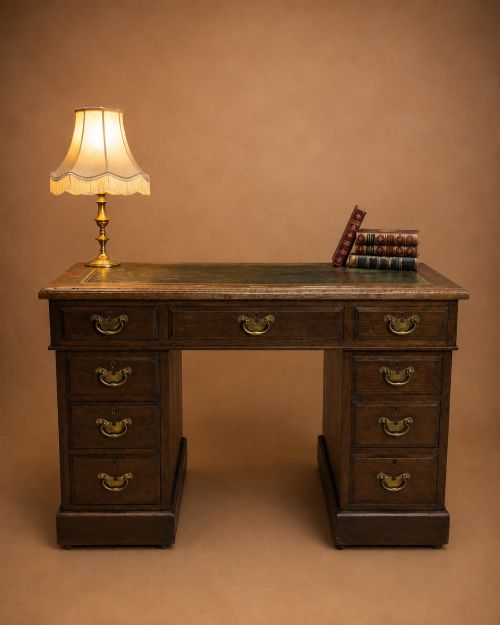
A brown oak pedestal table brings rich grain and solid timber together, offering a practical centrepiece for a study or drawing room.
Brown Oak Pedestal Table
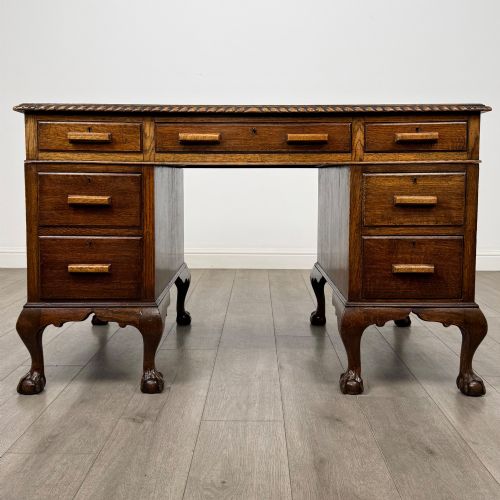
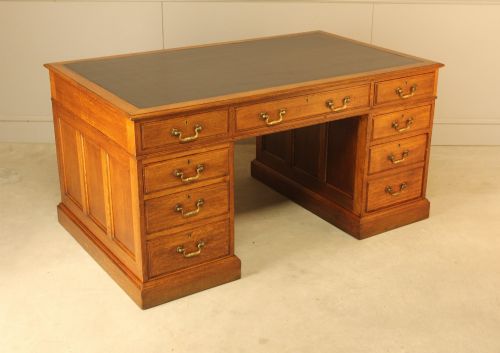
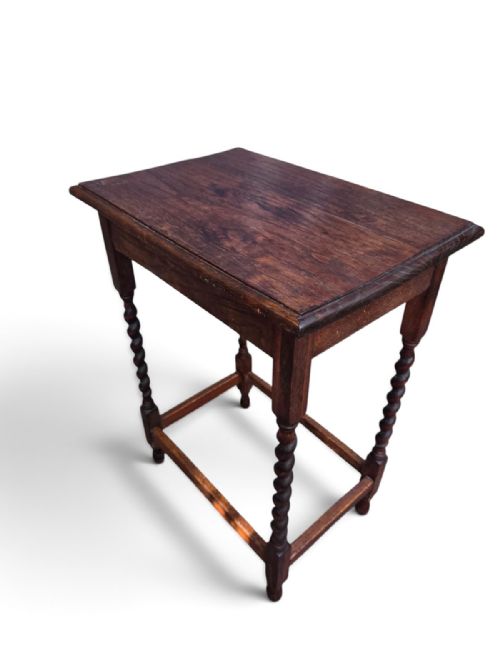
A brown oak pedestal table encompasses a variety of forms designed for writing, dining, and display. Buyers seeking a brown oak pedestal table will find pieces ranging from compact occasional stands to substantial library desks.
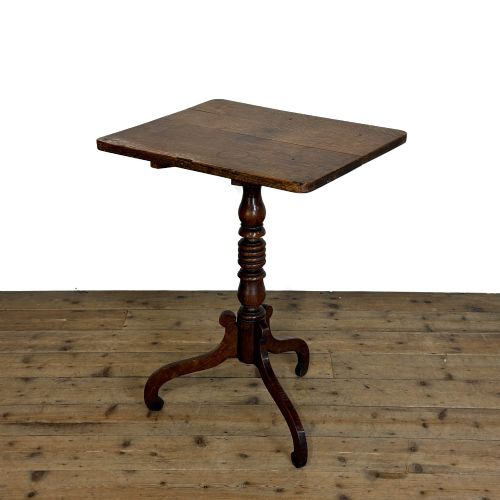
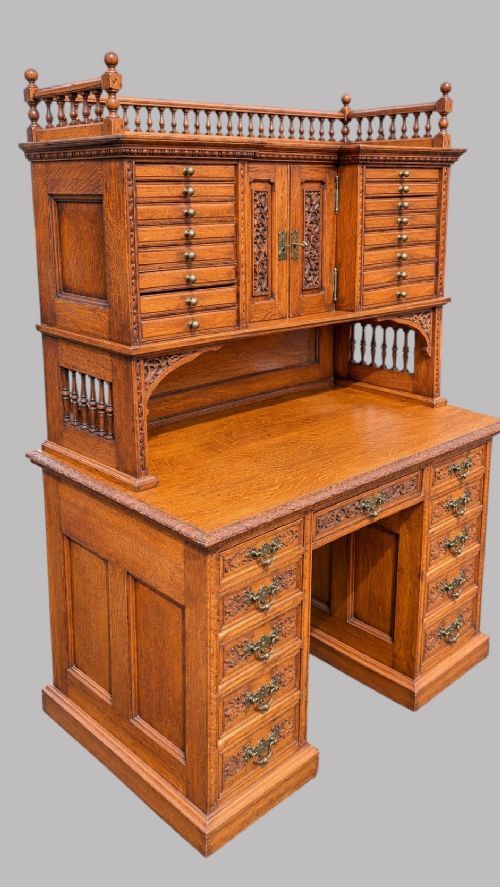
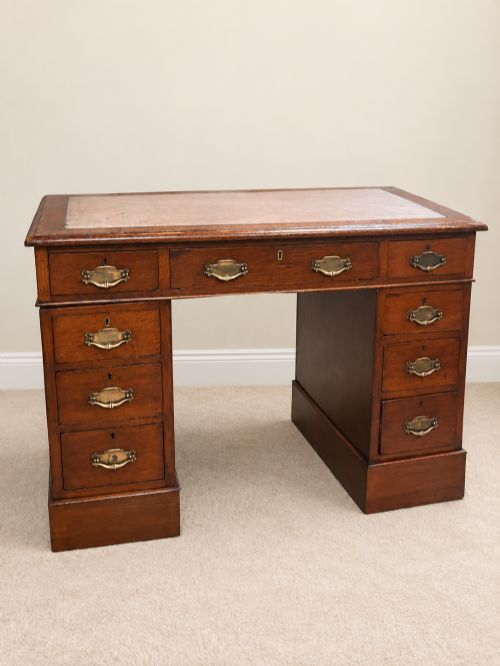
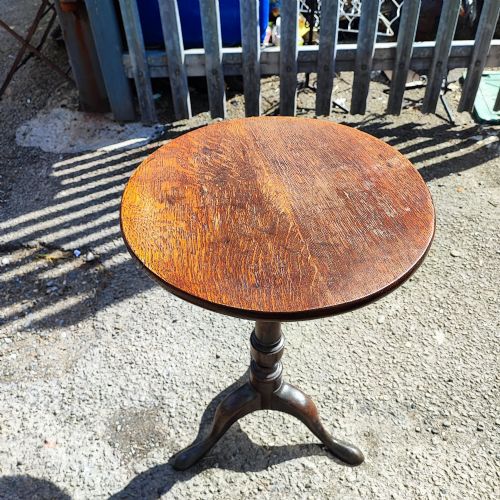
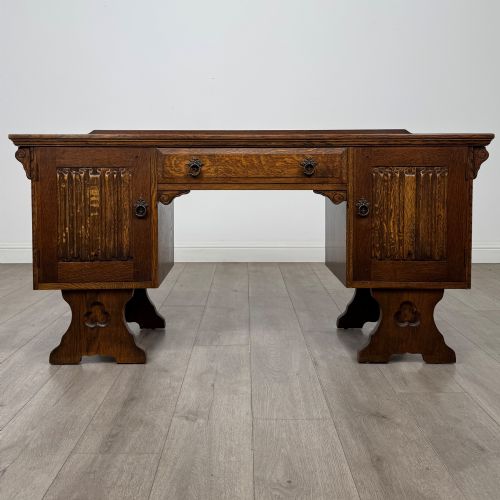
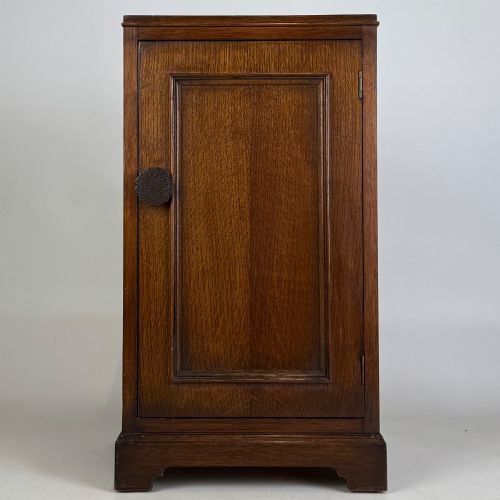
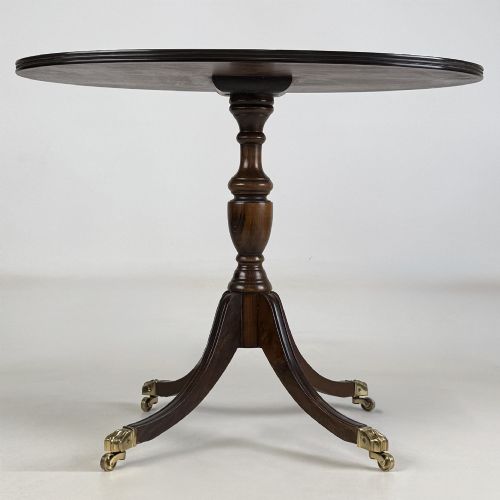
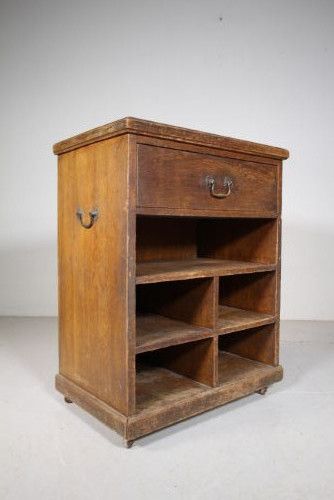
The selection on this page draws primarily from the nineteenth century and the Edwardian period, alongside Georgian and later twentieth-century examples. Common formats include kneehole desks, tilt-top tables, and tripod wine tables utilising timber with deep natural colouration.
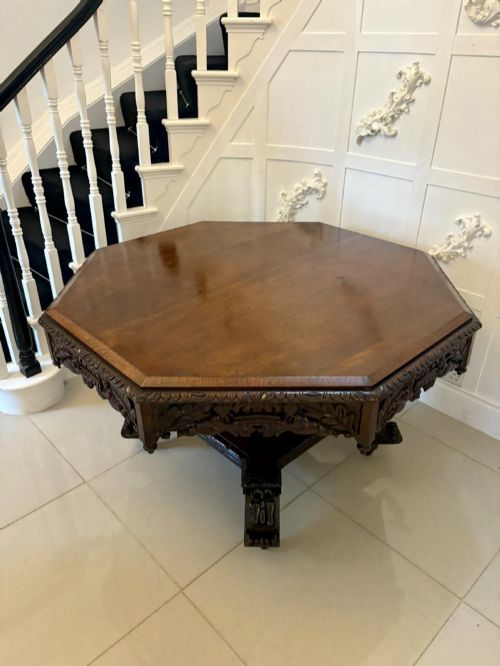
Makers and workshops of the Arts and Crafts and Jacobean Revival movements also contributed to this inventory. These items demonstrate how domestic furniture evolved to balance utility with expressive woodwork.
Assessing quality in construction and finish
Quality rests upon the selection of the timber and the depth of the figuring in the grain, particularly where burr oak or pollard oak veneer is applied. Superior pieces display harmonious matching of wood panels across desk tops and drawer fronts.
Hand-carved details, such as linenfold panels or barley twist turnings, indicate the level of craftsmanship invested by the workshop. Sound structural integrity, smooth drawer operation, and original brass hardware further separate standard utility pieces from finer examples.
Brown Oak Pedestal Table Retail Price Guide 2026
Typical asking prices for brown oak pedestal table among the pieces listed under this phrase on Sellingantiques today, from the lower quarter to the upper quarter. They describe what is for sale here now, not the wider market.
Some nineteenth-century tables feature hidden tilt mechanisms designed to tuck the surface flat against the wall when tea was finished.
Baillie Scott·Heal's
The Brown Oak Pedestal Table Glossary
- Brown oak
- Timber taken from oak trees affected by a fungus that imparts a deep, rich brown hue throughout the wood. This natural process enhances the decorative value of the grain.
- Pedestal table
- A table supported by a central column or pillar rising from a weighted base or feet. This design allows maximum legroom around the perimeter.
- Tilt-top table
- A table featuring a mechanism that allows the surface to hinge vertically when not in use. This clever space-saving design was particularly popular for eighteenth and nineteenth-century occasional tables.
- Burr oak veneer
- Thin slices of decorative wood cut from the knotty growths of an oak tree. It provides intricate, swirling grain patterns across tabletops and drawer fronts.
- Kneehole desk
- A compact writing desk featuring a central recessed space for the legs, flanked by pedestals of small drawers. They became a staple of domestic libraries during the Victorian era.
Brown Oak Pedestal Table: Frequently Asked Questions
What is a brown oak pedestal table used for?
These tables serve multiple functions depending on their specific form, operating as writing desks, library tables, or occasional stands for lamps and decorative objects. Their sturdy construction makes them suitable for daily household use.
Smaller tripod versions work well beside seating areas as wine or lamp tables, while larger pedestal desks provide a dedicated workspace with built-in drawer storage.
How do I date a brown oak pedestal table?
Dating relies on examining construction methods, hardware, and stylistic details such as carved linenfold panels or barley twist legs. Georgian and Victorian pieces often feature hand-cut dovetails and solid timber carcases.
Edwardian and later twentieth-century examples may incorporate machine-sawn elements or different internal secondary woods. Comparing the turning style and overall proportions to documented pieces helps narrow down the period.
How should I care for a brown oak table?
Maintain the timber by keeping the table away from direct heat sources and strong sunlight, which can dry out and fade the wood. Regular dusting with a soft, dry cloth prevents particulate build-up.
Applying a quality beeswax periodically helps nourish the grain and protects the polished surface from moisture. Avoid using silicone-based polishes that can permanently alter the finish.
What is the difference between pollard oak and brown oak?
Brown oak derives its rich colouration from a natural fungal process that deepens the tone of the heartwood. It is valued for its uniform warmth and subtle figuring.
Pollard oak comes from trees that were pruned close to the trunk to encourage dense branching, resulting in highly clustered, mottled grain patterns. Both timbers create striking decorative surfaces on tabletops.