




Victorian Oak Centre Table
A victorian oak centre table anchors a room with sturdy timber and honest period weight.

What they are
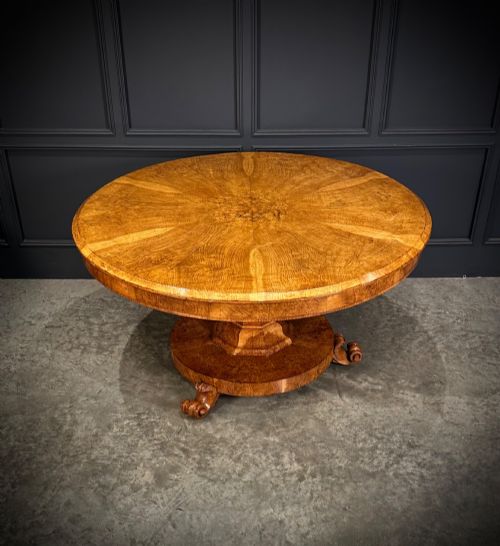
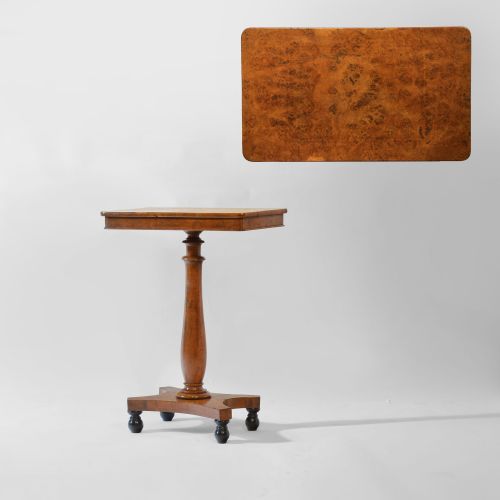
When you search for a victorian oak centre table, you encounter freestanding furniture designed to stand away from walls in the middle of a room. These versatile pieces served as library tables, dining tables, or grand hall surfaces.
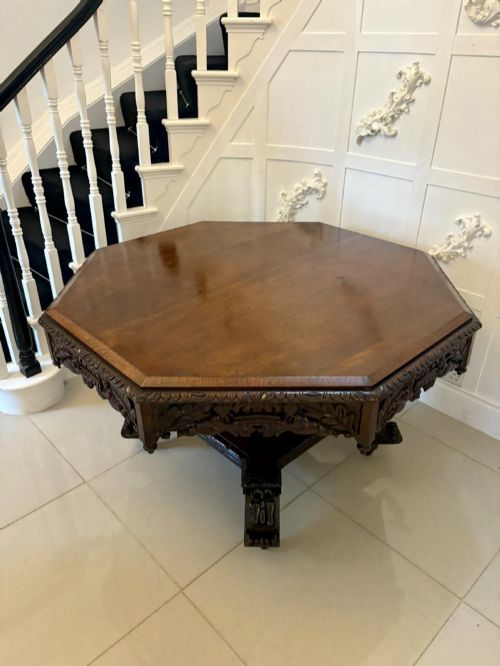
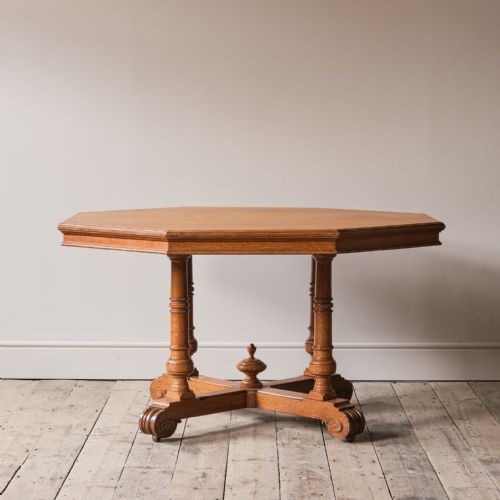
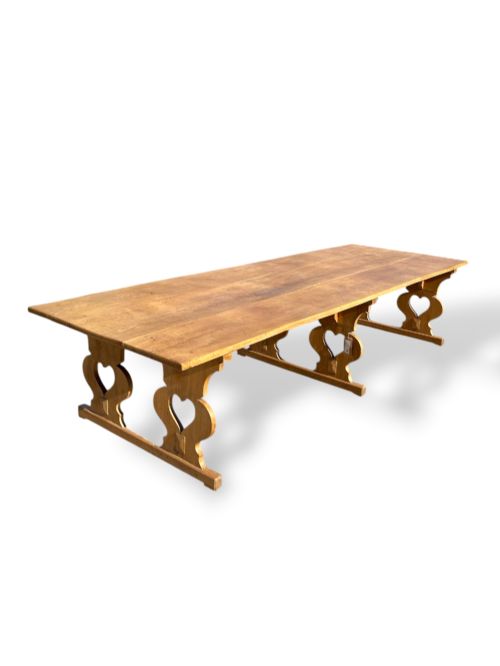
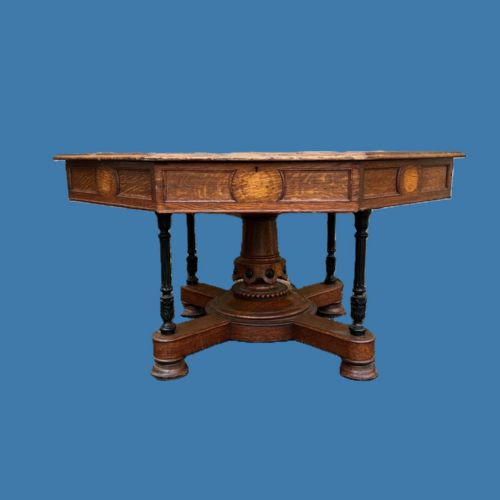
The examples on this page span the nineteenth century, including specific dates from eighteen eighty to eighteen ninety. You will find octagonal, oval, and rectangular forms rooted in Victorian, Gothic Revival, and Dutch styles.
Many items double as library or dining tables, showing the adaptable nature of nineteenth-century domestic interiors. They utilise solid timber construction to provide a stable platform for books, lamps, and daily use.
How they were made
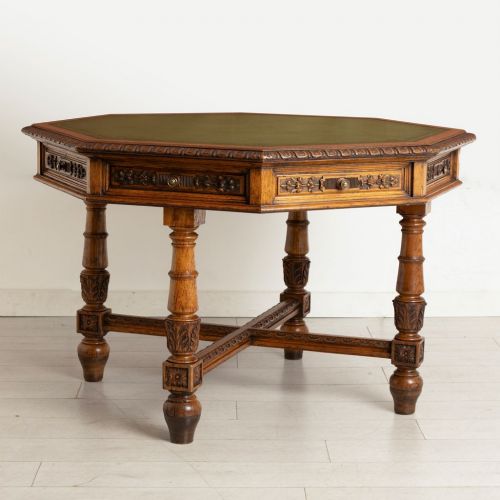
Cabinet makers built these pieces using solid oak, often complemented by brass, leather, and iron fittings. Some incorporate specialist details like marble tops, parquetry, or bleached finishes.
Carving defines the decorative approach, featuring motifs such as Gothic tracery, dolphin supports, and Green Man masks. Workshops employed traditional joinery to ensure the tables remained freestanding and structurally sound.
Retail Price Guide 2026
Typical UK retail prices for victorian oak centre table, calculated from the Sellingantiques database of over a million retail prices indexed since 2003. This retail price guide relies exclusively on Sellingantiques data; no external sources or auction records are used, so the figures do not describe the wider market.
Listings feature oak combined with brass, leather, iron, and marble across Victorian and Gothic Revival styles.
What varies in quality
The distinction between standard domestic pieces and high-end examples lies in the depth and ambition of the carving. Deeply carved details, such as dolphin pedestals or Green Man masks, indicate superior workshop execution.
James Shoolbred & Co. London·W. Williamson & Sons, Guildford·Howard and Sons
The Victorian Oak Centre Table Glossary
- Centre table
- A freestanding table finished on all sides so it can stand in the middle of a room rather than against a wall. These versatile pieces functioned variously as dining, hall, or library surfaces.
- Gothic Revival
- A nineteenth-century architectural and decorative style inspired by medieval forms. It manifests in these tables through pointed arches, heavy tracery, and solemn carved details.
- Library table
- A large rectangular or octagonal table sturdy enough to hold heavy volumes and frequently fitted with drawers. They often feature inset leather writing surfaces for correspondence and study.
- Parquetry
- Geometric wood mosaic work used for decorative floors and table tops. Makers arranged contrasting timber pieces to create intricate patterns across the surface.
- Green Man
- A sculptural motif depicting a human face disgorged from foliage or entirely made of leaves. This ancient symbol enjoyed a significant revival in Victorian Gothic and Flemish-style furniture carving.
Frequently Asked Questions
Where should I place a centre table?
These tables are designed to sit freestanding in the middle of a room, allowing access from all sides. They work well in large hallways, libraries, or spacious living areas.
Ensure you leave adequate walking space around the perimeter so the piece functions properly as a focal point.
How were library tables used?
Library tables provided a stable, central surface for reading heavy reference books, writing letters, and storing papers in drawers.
Their robust construction supported daily scholarly work and added formal utility to nineteenth-century domestic spaces.
What is the difference between oak and walnut?
Oak offers a heavy, coarse-grained timber with a naturally robust character suited to Gothic Revival and country farmhouse styles. Walnut generally presents a smoother grain with darker, richer tones.
Victorian makers selected oak for its strength and ability to hold deep, crisp carved details.
How do I care for an antique oak surface?
Maintain the timber by applying traditional beeswax periodically to nourish the grain and protect the finish. Avoid placing the table in direct sunlight or near heat sources to prevent timber shrinkage.
Use coasters and felt pads beneath objects to guard the polished wood against moisture and scratches.