
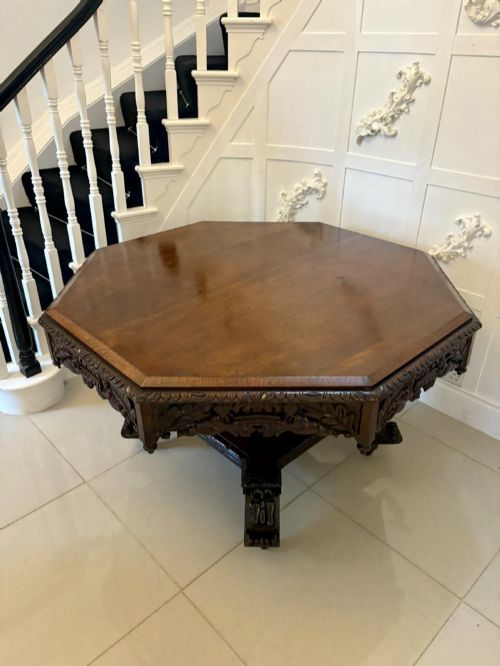
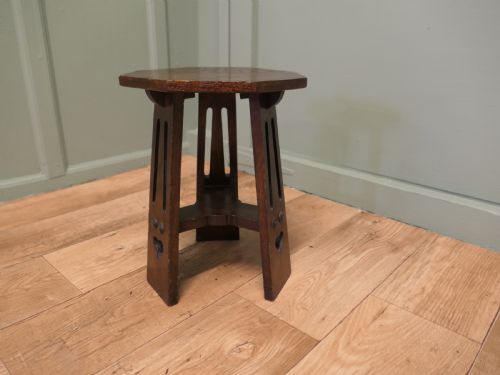
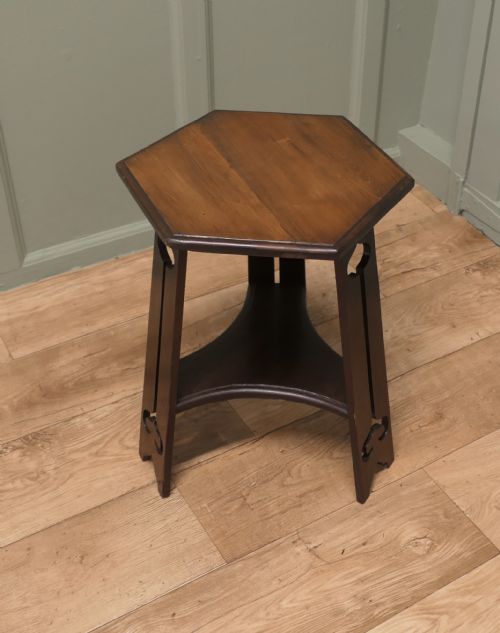
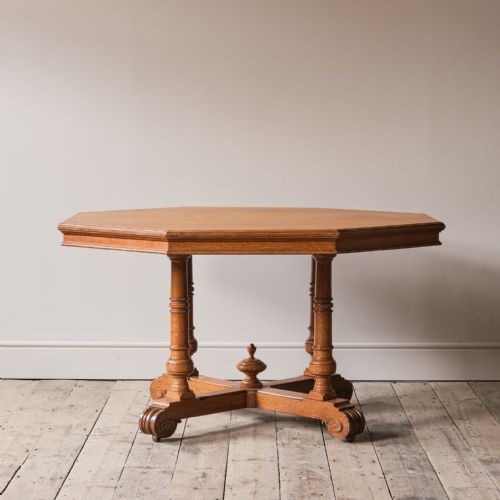
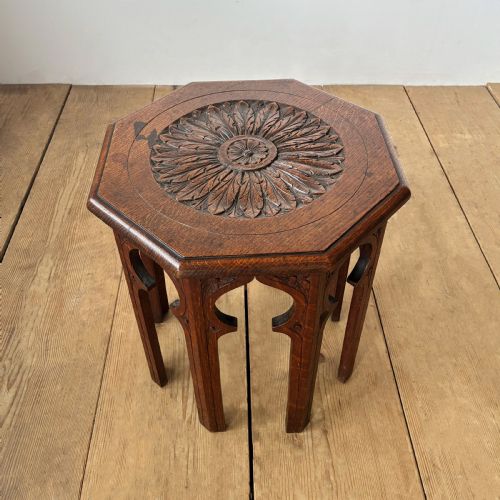

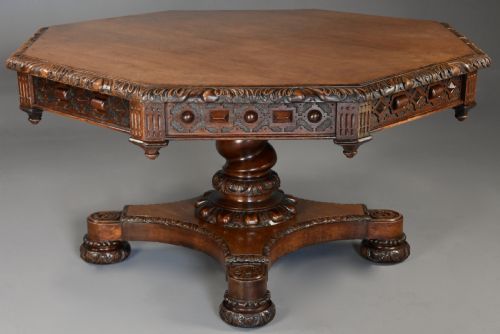

Octagonal Oak Table
When searching for an octagonal oak table, buyers encounter an array of heavy timber surfaces spanning the Victorian era through the Arts and Crafts movement.
Octagonal Oak Table
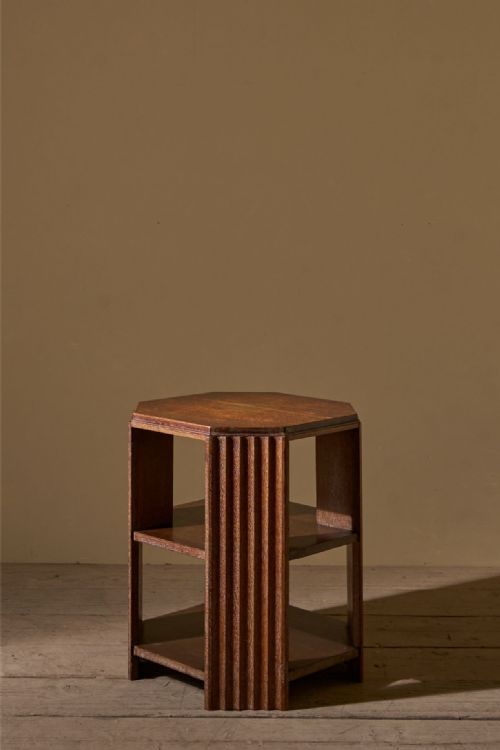
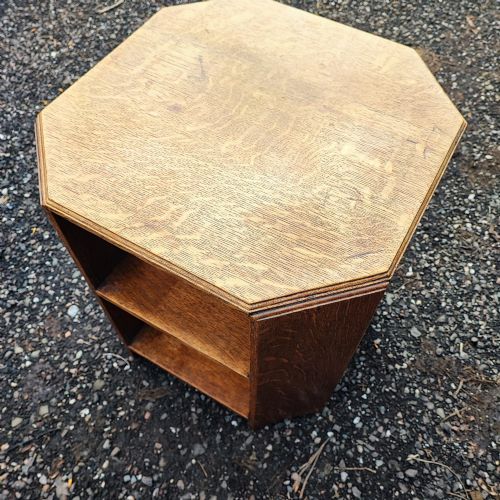
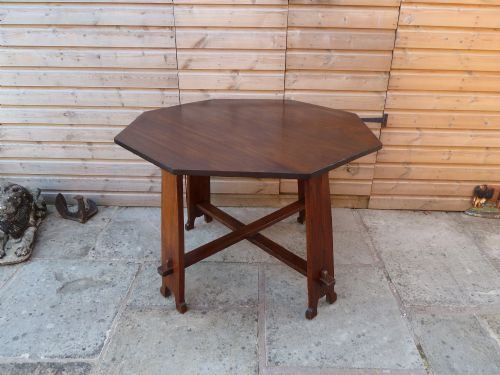
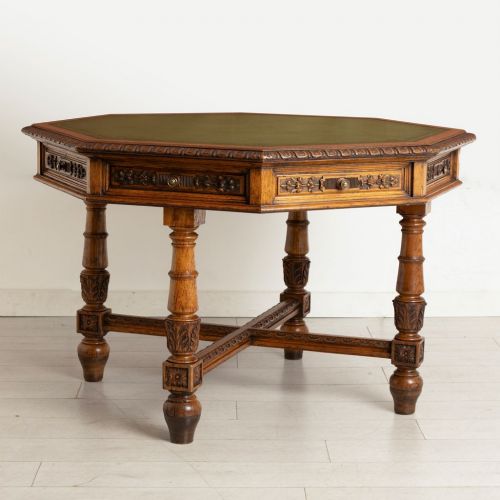
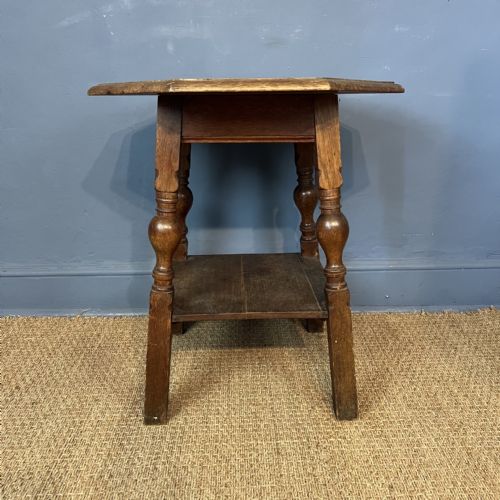
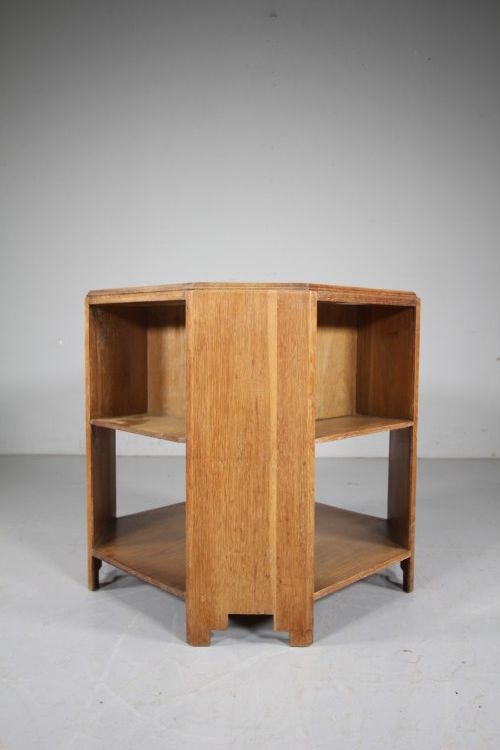
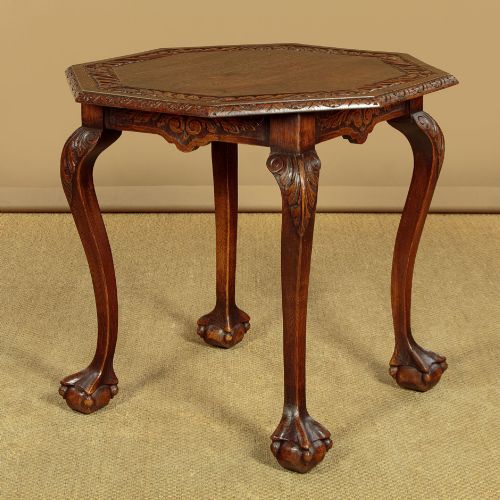
An octagonal oak table serves various domestic functions, appearing as compact occasional stands, multi-tiered book tables, and substantial library or centre tables.
The pieces on this page emerge from distinct historical periods, running from the eighteenth century through the Victorian age and into the nineteen-thirties.
Makers such as Liberty and Heals shaped the later iterations, while earlier examples display heavy Gothic Revival or Jacobean influences.
How They Were Made
Solid oak forms the primary structure of these tables, occasionally complemented by pollard oak, burr oak, or contrasting secondary hardwoods.
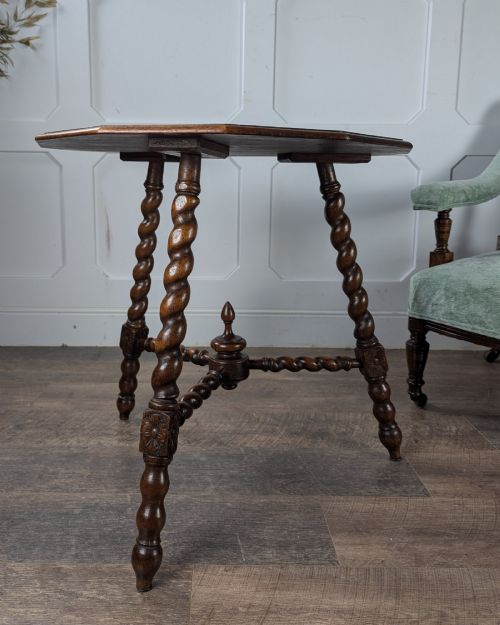
Joinery methods range from simple turned legs and tripod bases to complex carved panels, barley twist supports, and geometric parquetry decoration.
Additional materials like leather inserts, copper inlays, and brass hardware appear on specific library and occasional designs.
Octagonal Oak Table Retail Price Guide 2026
Typical asking prices for octagonal oak table among the pieces listed under this phrase on Sellingantiques today, from the lower quarter to the upper quarter. They describe what is for sale here now, not the wider market.
Listings feature items from the eighteenth century up to nineteen-thirty, with Victorian and Arts and Crafts examples forming the bulk.
What Varies in Quality
The distinction between standard commercial output and superior craftsmanship rests in the depth of hand-carved detailing and the selection of figured timber.
Attribution to documented workshops like James Shoolbred or Howard and Sons elevates the standing of a piece within the market.
Structural integrity relies on the retention of original joints, timber stability, and the preservation of patination on the oak surface.
James Shoolbred and Co·Liberty and Co·W Williamson and Sons·Howard and Sons·Lamb of Manchester·TH Filmer and Sons
The Octagonal Oak Table Glossary
- Centre table
- A free-standing table designed to be viewed from all sides rather than pushed against a wall. These often feature symmetrical octagonal tops.
- Library table
- A large, sturdy table intended for holding books and writing materials. They frequently incorporate drawers or lower display shelves.
- Barley twist
- A type of turned wooden leg resembling a spiral rope. This decorative feature is common on Victorian and Edwardian oak furniture.
- Parquetry
- Geometric patterns formed by small pieces of wood fitted together on a tabletop. It creates a decorative mosaic effect utilising contrasting grains.
- Limed oak
- A wood finishing technique that fills the grain with a whitish paste to lighten the timber. This treatment is particularly characteristic of nineteen-thirties modernism.
Octagonal Oak Table: Frequently Asked Questions
What is an octagonal oak table used for?
These tables function as central display pieces, library desks, or bedside stands depending on their height and proportion.
Smaller variants serve as plant stands or coffee tables, while larger library editions accommodate books and writing equipment.
How do I date an octagonal oak table?
Dating relies on stylistic clues, combining period characteristics like Gothic Revival carving or Art Deco limed finishes with construction methods.
Maker stamps, stamps on the timber, and known retail attribution periods also narrow down the year of manufacture.
Are these tables solid oak?
The majority utilise solid oak for the structural elements, tops, and legs, though some incorporate specialised veneers like pollard or burr oak.
Secondary woods may appear in hidden structural areas, whilst decorative models integrate leather, copper, or marble insets.
Where were these tables made?
Most pieces originate from English workshops, ranging from provincial cabinet makers to major London department stores and manufacturing firms.
Specific regional variations include Scottish oak examples and imported items from the broader British Empire.