

Carved Wood Centre Table
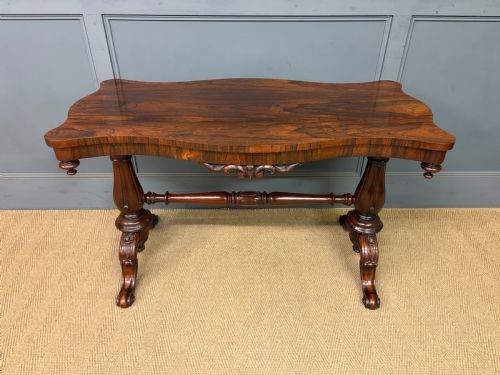
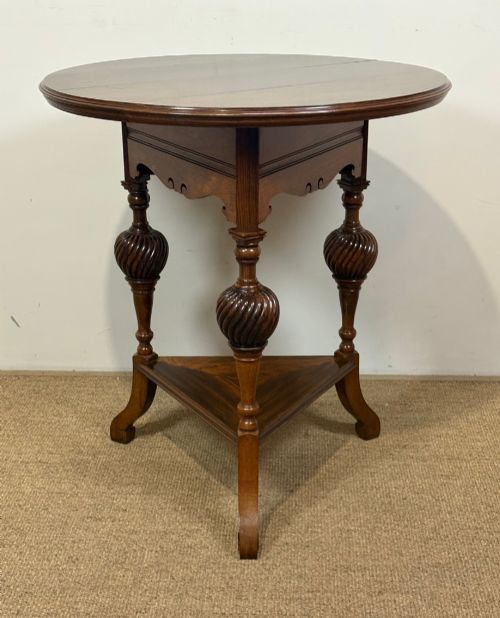
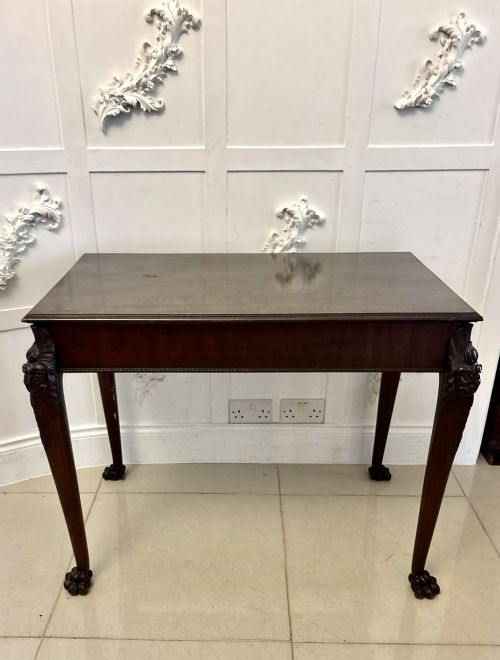
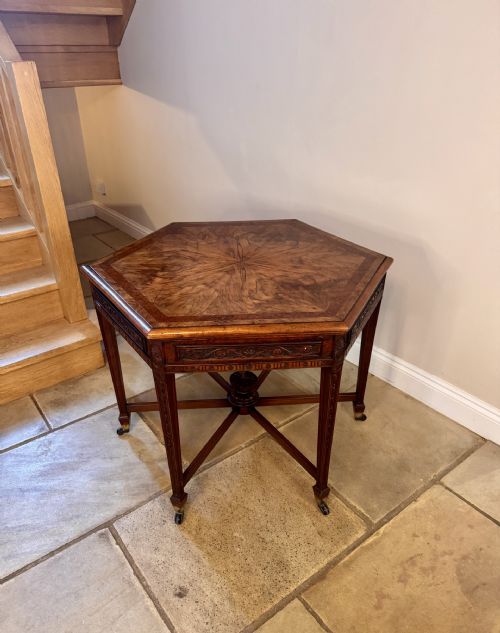
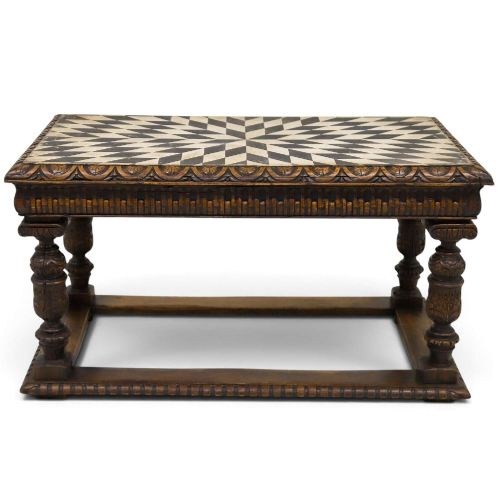
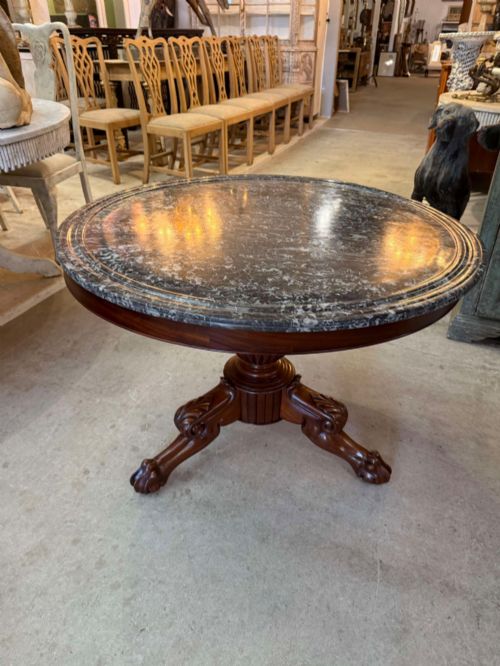
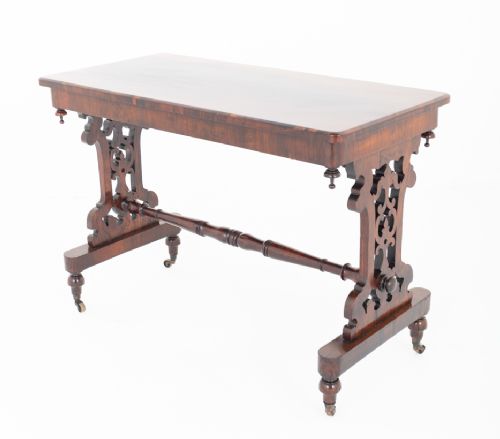
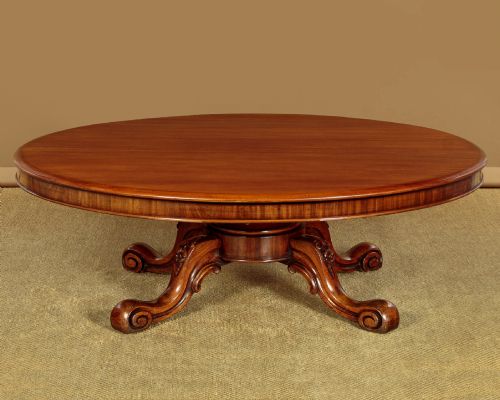
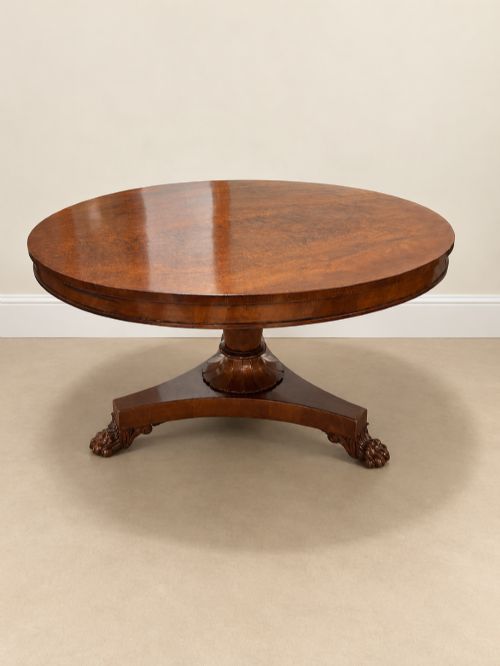
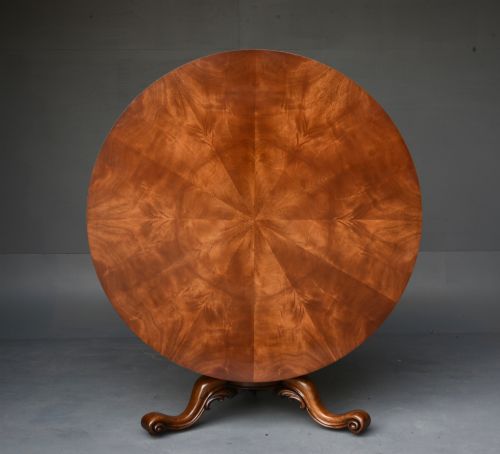
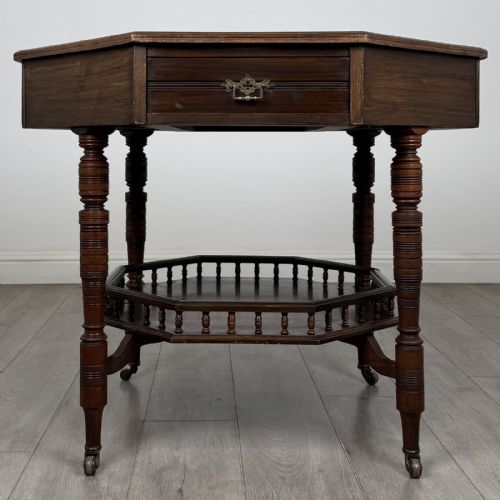
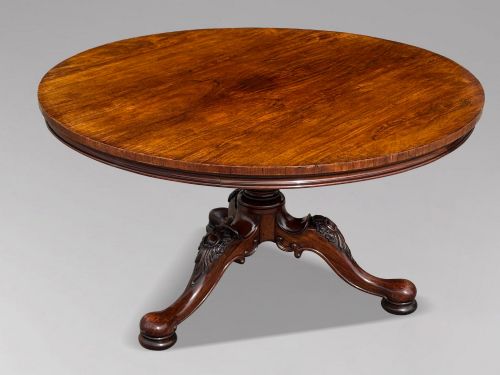
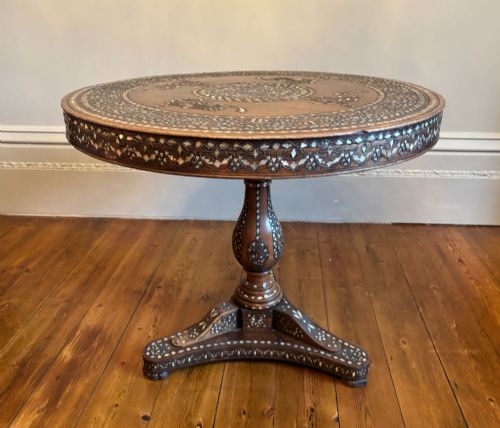
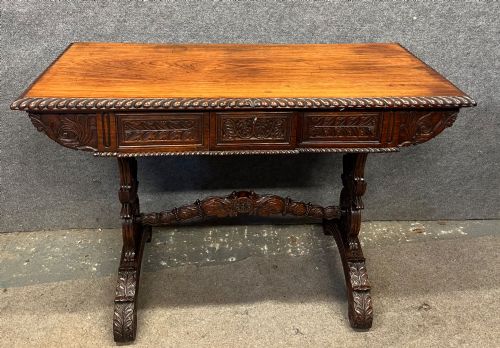
These carved wood centre table pieces are freestanding room anchors crafted from walnut, oak, and rosewood, drawing the eye in any proper interior.
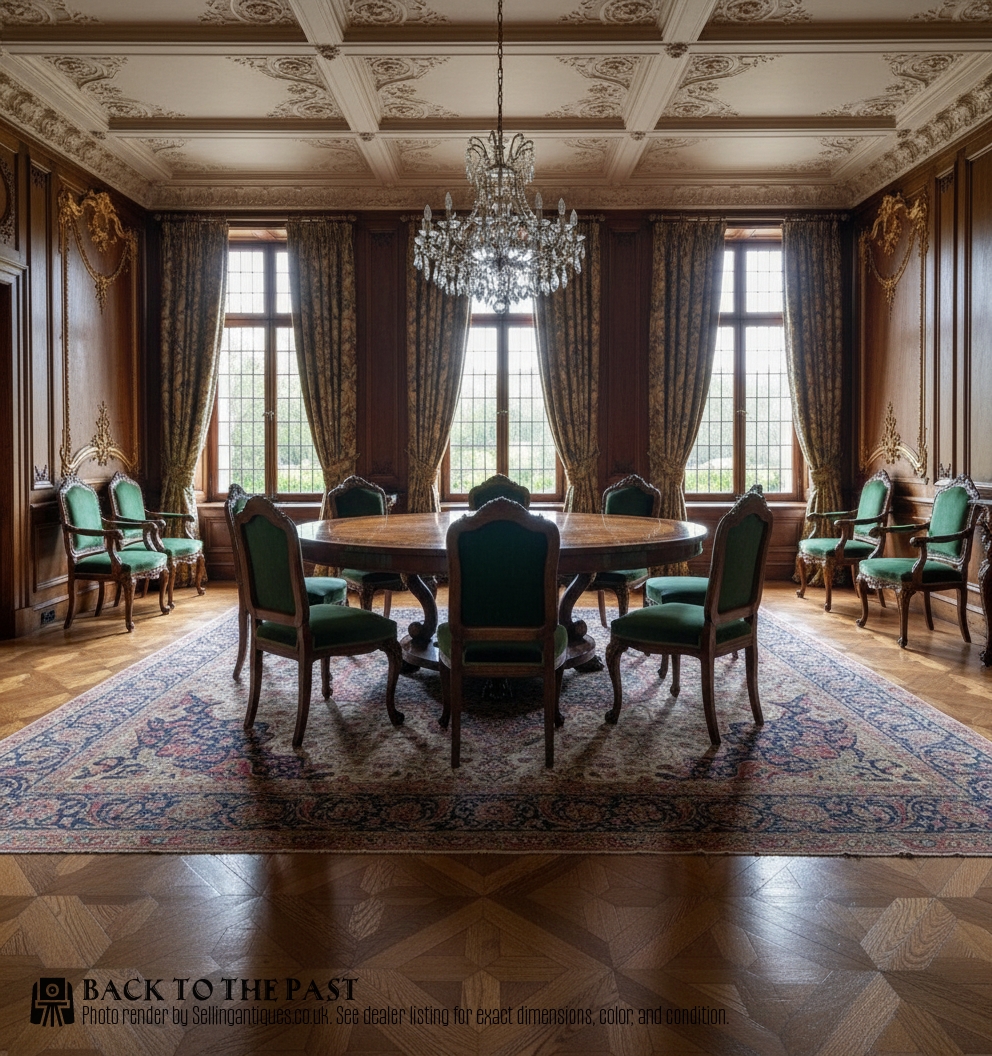
Carved Wood Centre Table
A carved wood centre table stands distinct by occupying the middle of a room rather than hugging a wall, serving as a focal point for display or gathering. The forms encountered range from grand Victorian dining and hall tables to compact low coffee tables and console shapes.
Examples on this page span the nineteenth century, including Victorian interpretations and specific revivals. Timber choices cover burr walnut, oak, rosewood, and pine, frequently topped with inset marble or onyx.
Origins stretch across British, Italian, Dutch, Chinese Qing Dynasty, and Anglo-Indian workshops. Buyers select these tables to anchor a principal reception space with substantial timber presence and carved detail.

Materials and construction
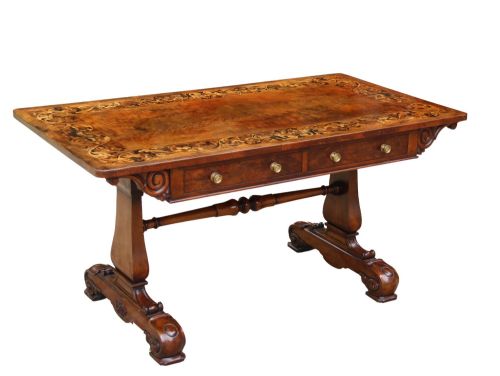
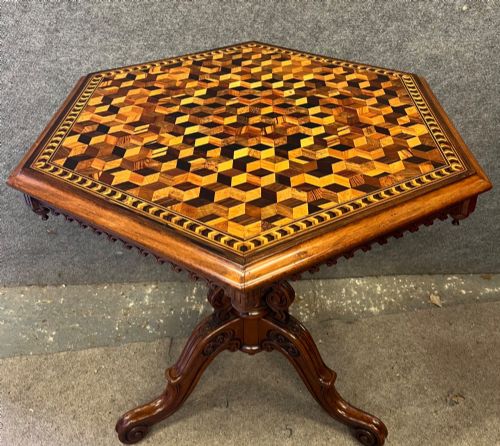
Cabinet makers utilised dense hardwoods like oak, walnut, rosewood, padouk, and fruitwood, often shaping bases with deep hand-chisselled relief work. Burr walnut and marquetry inlay added complex surface patterns to tabletops.
Finishes include parcel-gilt wood, polychrome, giltwood, and bleached pine, alongside inset slabs of white marble or onyx. Joinery supported heavy stone tops and freestanding multi-tier frames.
Carved Wood Centre Table Retail Price Guide 2026
Typical asking prices for carved wood centre table among the pieces listed under this phrase on Sellingantiques today, from the lower quarter to the upper quarter. They describe what is for sale here now, not the wider market.
Several tables double as flower stands, proving that nineteenth-century botanists took their parlour arrangements very seriously indeed.
Judging quality in carved woodwork
Quality rests in the crispness and depth of the hand-carving rather than plain moulded edges. Superior pieces display sculptural fluidity in floral or scroll motifs without mechanical stiffness.
The choice of primary timber and secondary materials dictates grade, particularly where figured burr walnut, heavy marble inserts, or intricate marquetry inlay meet solid structural frames.
Amulet Bertoni
The Carved Wood Centre Table Glossary
- Marquetry inlay
- Decorative patterns formed by fitting small pieces of veneer into a prepared wooden surface. This technique creates complex pictorial or geometric designs on tabletops.
- Parcel-gilt wood
- Timber surfaces partially highlighted with gold leaf over a prepared base. This method emphasises specific carved details against the dark grain of the wood.
- Giltwood
- Timber covered entirely with a thin layer of gold leaf. It produces a brilliant reflective finish seen on revival and baroque frames.
- Burr walnut
- Wood taken from a walnut tree growth, yielding swirling, knotty grain patterns. Cabinet makers prized it for high-status table surfaces.
- Console table
- A table designed to stand against a wall, though period examples often share stylistic details with freestanding centre tables.
Carved Wood Centre Table: Frequently Asked Questions
Where do you put a centre table?
These tables are built to stand clear of walls, traditionally positioned in the middle of a principal room or grand hallway as a focal point.
Because they feature finished carving on all sides, they allow circulation around them and hold objects like lamps, urns, or floral displays.
How do I care for a marble top?
Marble and onyx inserts need simple wiping with a damp cloth and mild soap, avoiding acidic cleaners that etch the polished stone surface.
Keep the timber frame nourished with appropriate wax to maintain the grain without buildup.
Are these tables sturdy enough for dining?
Larger scaled examples, particularly nineteenth-century oak and walnut editions, were built to serve heavy dining or conference use.
Lighter or lower tables, such as coffee variations or display stands, suit decorative placement rather than heavy weight.
How do I distinguish Victorian from earlier styles?
Victorian pieces often combine heavier proportions with revival motifs like Rococo scrolls or Grand Regency lines.
Examination of the timber backing, joinery marks, and carving depth helps confirm the nineteenth-century production period.