

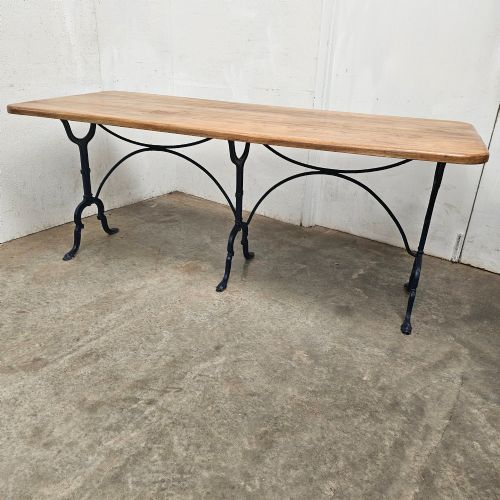
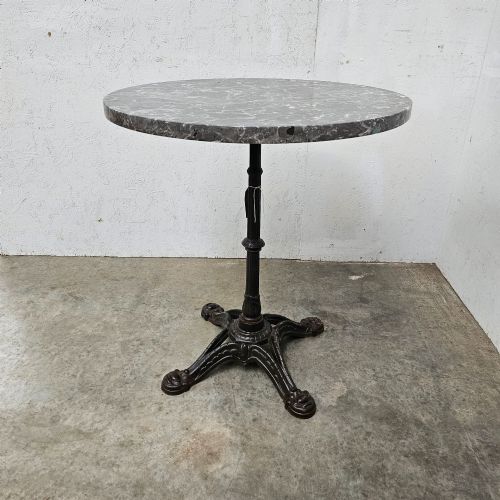
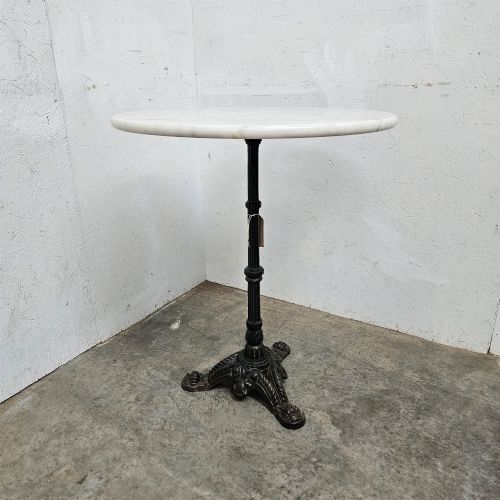

French Bistro Table
A french bistro table brings the sturdy utility of nineteenth-century European pavement cafes and gardens directly into a modern home.
French Bistro Table
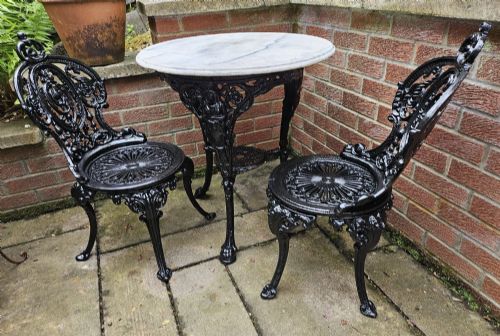
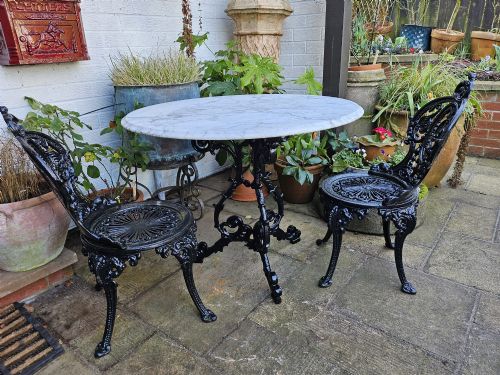
A french bistro table represents a functional category spanning nineteenth-century examples through to pieces from the nineteen-twenties and thirties, originally built for commercial hospitality use. You will frequently encounter compact round cafe tables paired with heavy cast-iron bases and smooth stone surfaces.
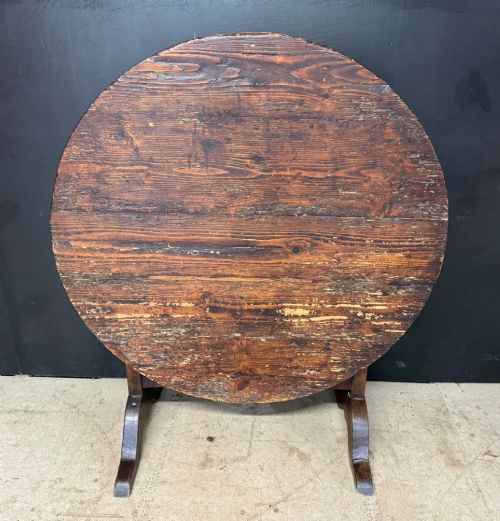
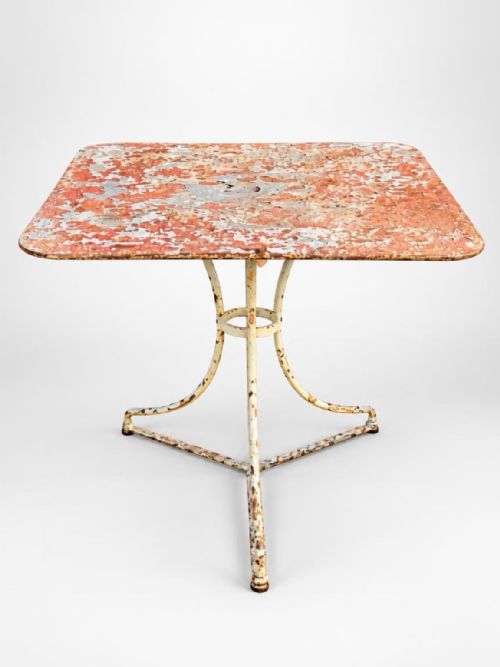
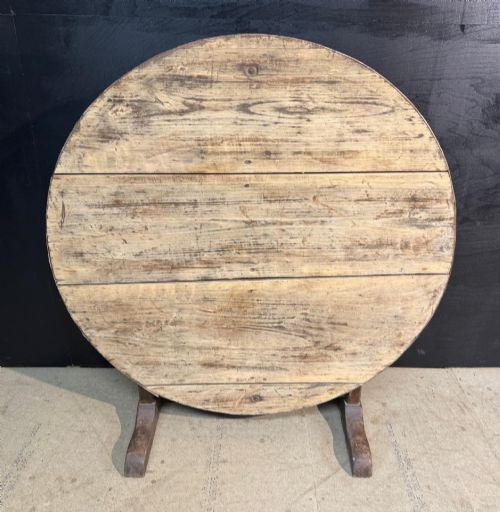
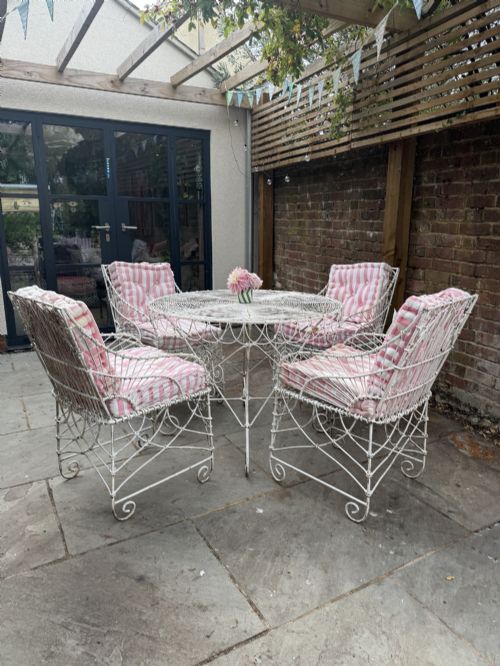
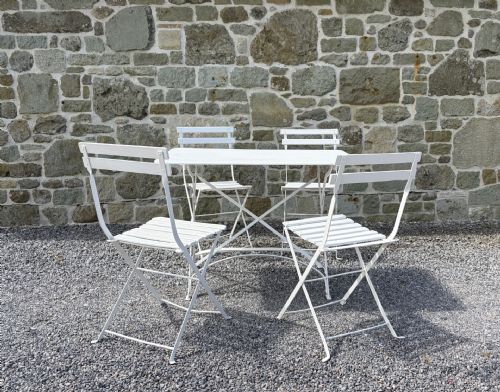
The inventory on this page ranges from utilitarian folding vineyard and vendange tables in oak and cherry to decorative Victorian wirework and cast-iron garden sets. These designs bridge interior dining rooms, conservatories, and outdoor terraces with equal ease.
Originating predominantly from French provincial workshops and city cafes, the surviving forms include console tables, side tables, and larger dining variations alongside classic round cafe iterations.
Materials and Construction
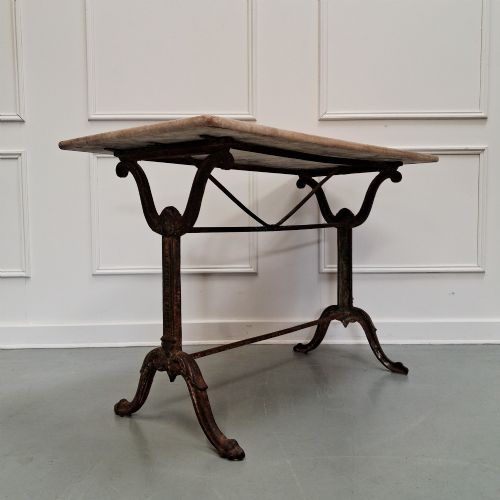
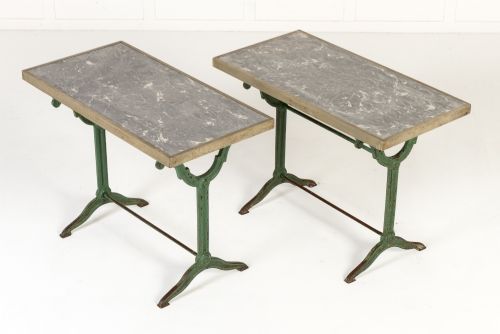
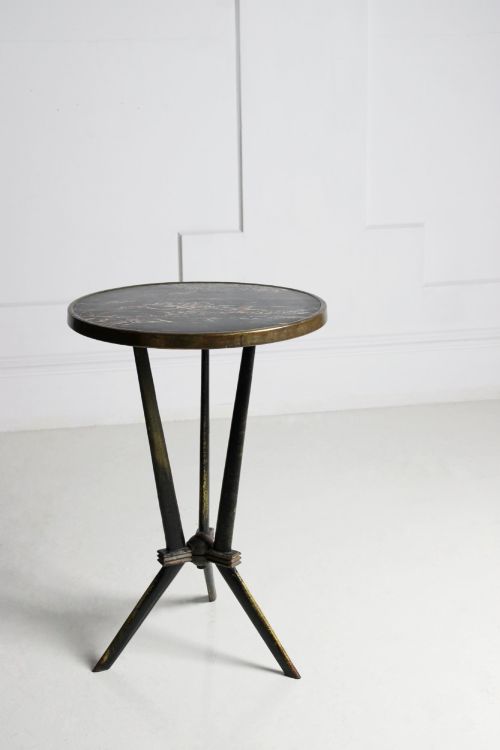
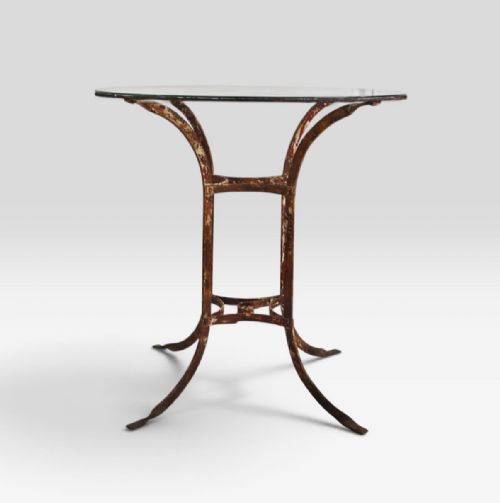
Construction relies heavily on the marriage of durable metals and dense timbers, combining cast-iron, wrought iron, and occasional brass with oak, walnut, cherry, and elm. Bases often feature robust cast-iron supports with intricate scrollwork or tripod configurations designed for stability on uneven pavement.
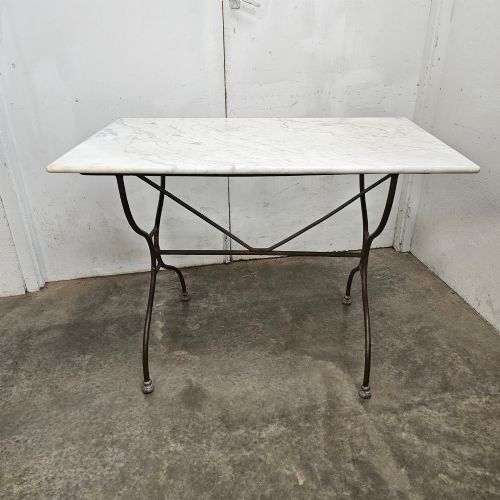
Table surfaces display a deliberate contrast between cold, smooth white or green marble, zinc, and warm patinated wood planks. Folding mechanisms on vineyard and vendange tables utilise iron hinges and wooden cross-frames built for seasonal storage.
French Bistro Table Retail Price Guide 2026
Typical asking prices for french bistro table among the pieces listed under this phrase on Sellingantiques today, from the lower quarter to the upper quarter. They describe what is for sale here now, not the wider market.
Listings feature pieces spanning from the mid-nineteenth century through the nineteen-thirties, dominated by cast iron, marble, oak, and wrought iron.
Markers of Quality
Quality rests in the proportional harmony of the base relative to the top, alongside the integrity of the material pairing. Heavy, unblemished marble slabs paired with crisp, deeply cast iron bases represent the upper tier of production.
The refinement of the metalwork, such as detailed casting on pedestal bases and intact original painted surfaces, distinguishes standard utility pieces from finer examples. Timber tables show distinction through dense grain selection in woods like oak and cherry, coupled with smooth operation in folding variants.
Belfisotti
The French Bistro Table Glossary
- Gueridon
- A small round table, typically supported by a single central column or pedestal. These are frequently found with marble tops and cast-iron bases.
- Arras
- A style of heavy green-painted metal garden furniture originating from northern France. These pieces are characterised by robust strapwork and riveted iron construction.
- Zinc top
- A sheet metal surface applied to wooden tables for waterproof utility. This material develops a dull grey oxidation over decades of use.
- Console table
- A table designed to stand against a wall, often featuring a half-circle or rectangular top supported by wall brackets or heavy legs. They appear frequently in marble and cast-iron configurations on this page.
French Bistro Table: Frequently Asked Questions
Can I use a french bistro table outside?
Many examples on this page were built specifically for outdoor cafe terraces and gardens using weather-resistant cast-iron and stone. Iron frames and marble surfaces withstand outdoor conditions well, though wooden versions benefit from winter storage.
Protecting timber tops from prolonged winter moisture preserves the natural grain and historic patination. Iron bases tolerate the elements but require observation for surface oxidation over time.
How do I clean a marble top?
Marble surfaces require simple wiping with a damp cloth and mild neutral soap to maintain the stone without etching the polish. Avoid acidic cleaners that can damage the calcium-based mineral composition.
Patina accumulated over a century tells the history of the piece, so gentle cleaning preserves this character. Harsh scrubbing removes the softened finish that collectors value.
Are folding vineyard tables stable?
Vineyard and vendange tables use cross-frame wooden structures and iron braces designed for commercial deployment and frequent storage. When fully extended and locked, the original wooden mechanisms provide reliable everyday support.
Checking the pivot points and wooden pins ensures the folding mechanism remains secure during use. These designs prioritize practical utility alongside space-saving convenience.
How do I date a cast iron base?
Dating relies on the casting sharpness, the complexity of the Victorian or Art Deco motifs, and construction marks. Earlier nineteenth-century examples often display heavier, sand-cast iron textures compared to later twentieth-century production.
Examining the underside of the top rim reveals assembly bolts and structural mounting methods typical of specific decades. Stylistic shifts from ornate Victorian scrollwork to streamlined nineteen-twenties geometry help narrow the manufacturing period.