
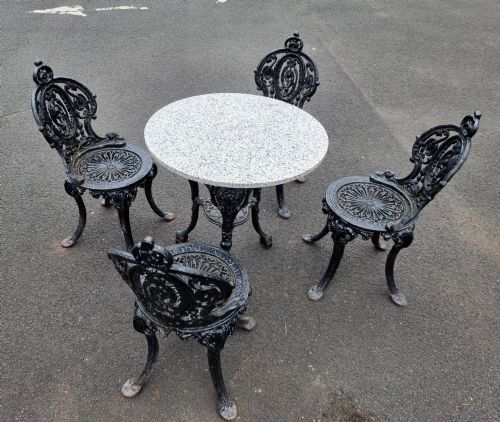
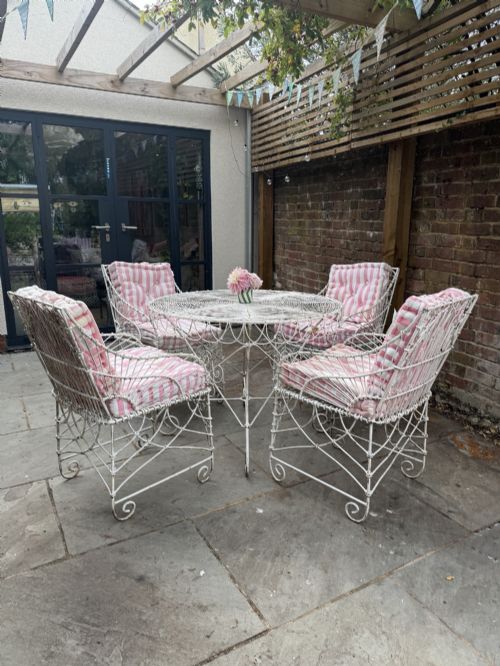
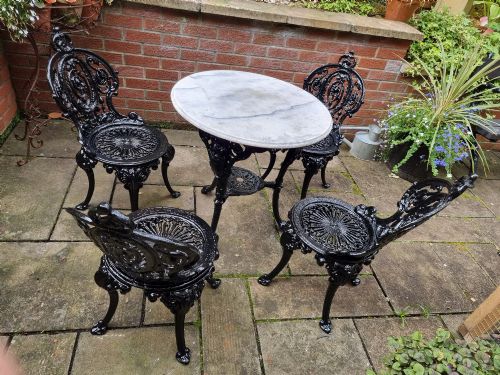
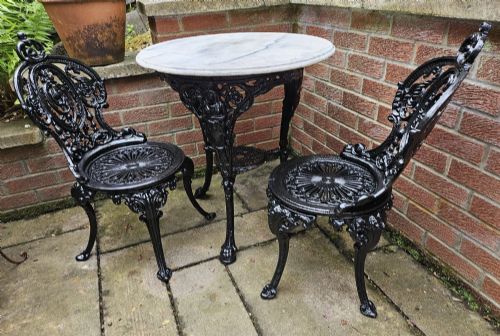
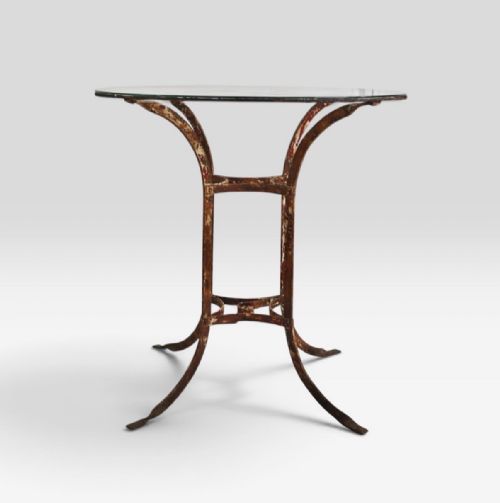


Wrought Iron Bistro Table
These wrought iron bistro table examples bring durable French and Victorian café design straight to your terrace.
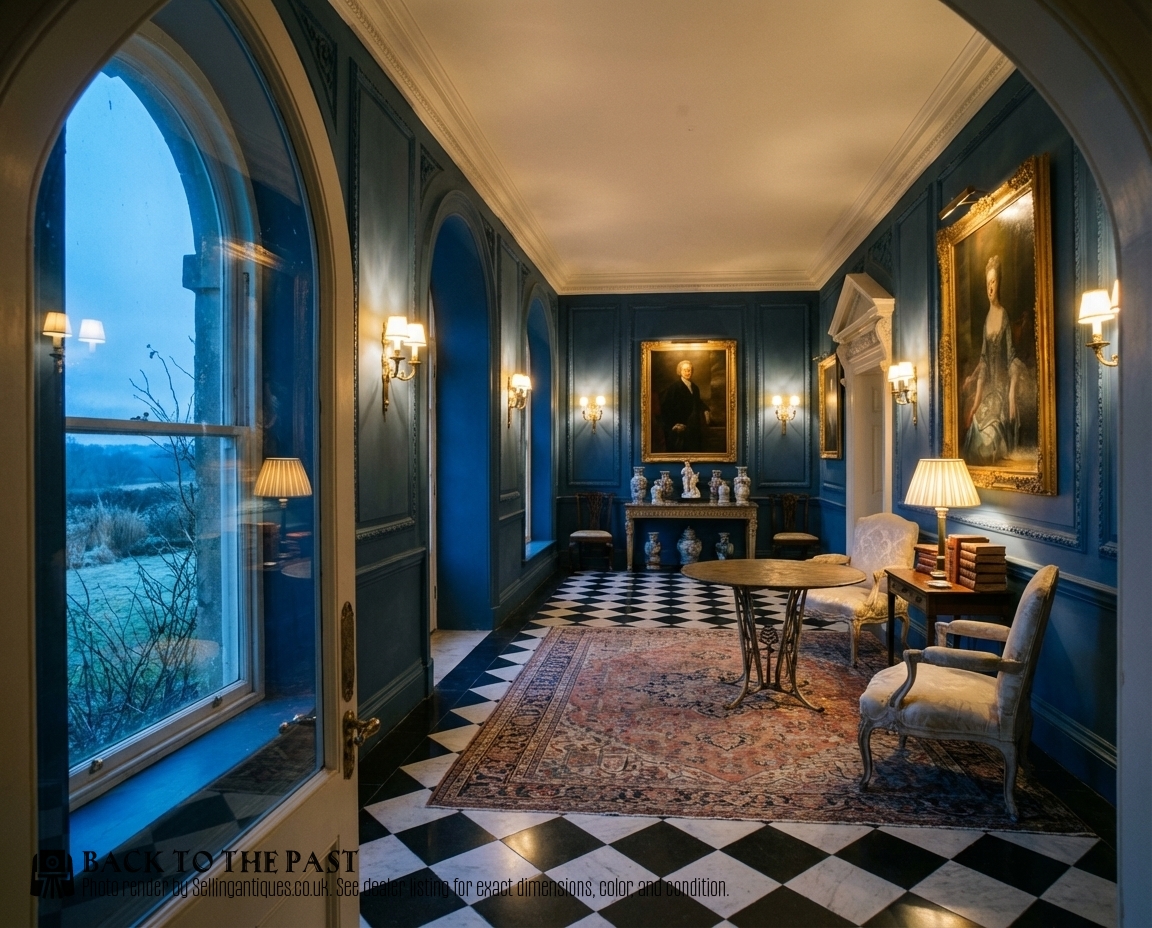
Wrought Iron Bistro Table
When you search for a wrought iron bistro table, you find compact outdoor and indoor dining surfaces shaped by nineteenth and early twentieth century French and Victorian tastes. These pieces range from simple round garden tables to folding café designs intended for easy daily storage.
You are most likely to meet French and Victorian examples featuring scrollwork or plain iron frames, frequently paired with marble, zinc, wood or metal tops. The selection includes standalone occasional tables as well as complete sets matched with folding or rigid chairs.
How they were made
Maker workshops built these tables using forged iron, cast iron and wirework frames joined to solid tops of marble, zinc, wood or stone. Metal components often received a coat of protective paint to withstand regular outdoor exposure.
Structural methods combine heavy casting for decorative pedestals and bases with precise hand-forging for scrollwork and folding mechanisms. Tops were securely fitted to sturdy metal framing to support daily hospitality use.
Wrought Iron Bistro Table Retail Price Guide 2026
Typical asking prices for wrought iron bistro table among the pieces listed under this phrase on Sellingantiques today, from the lower quarter to the upper quarter. They describe what is for sale here now, not the wider market.
Some folding café tables retain tiny brass latches that once kept pavement seating from collapsing under rushing waiters.
What varies in quality
Quality rests on the integrity of the metalwork, the weight of the casting and the original material selected for the top, such as solid marble or zinc. Stronger examples show crisp casting detail in scrollwork and secure, rigid joints across the frame.
The choice of top material and the harmony between the base and top also distinguish finer items. Original surface patinas and intact hardware indicate better preservation over decades of use.
The Wrought Iron Bistro Table Glossary
- Wrought iron
- Tough, malleable iron heated and beaten into shape by hand. This material allows for slender, strong structural lines.
- Cast iron
- Molten metal poured into a mould to form rigid decorative bases. It provides heavy stability for garden tables.
- Zinc top
- Sheet metal surface applied to timber framing for a waterproof finish. It develops a distinct weathered grey patina over time.
- Wirework
- Technique using intertwined metal wires to form intricate lattice patterns. It is typical of nineteenth-century garden furniture.
Wrought Iron Bistro Table: Frequently Asked Questions
Are these tables suitable for outdoor use?
Most of these pieces were originally built for gardens, patios and pavement cafés. Their metal frames withstand outdoor conditions well when properly maintained.
However, delicate wooden or marble tops benefit from winter storage indoors. Regular care helps preserve the original painted or rusted surface patinas.
How do I identify a Victorian piece?
Victorian examples often display heavy cast iron scrollwork and robust pedestal bases. They reflect nineteenth-century British and continental decorative preferences.
Dates are usually assessed through construction methods, weight and stylistic motifs rather than maker marks.
What top materials are common?
Surfaces include marble, zinc, wood, stone and plain metal sheeting. French café and patisserie tables frequently paired marble or zinc with iron bases.
Each material changes the overall weight and intended setting of the table.
Do folding mechanisms work on old tables?
Many early twentieth-century designs incorporate folding iron frames intended for quick storage. Surviving hinges and latches generally operate smoothly if they remain straight and unrusted.
Careful cleaning of the pivot points restores movement to stiff folding mechanisms.