
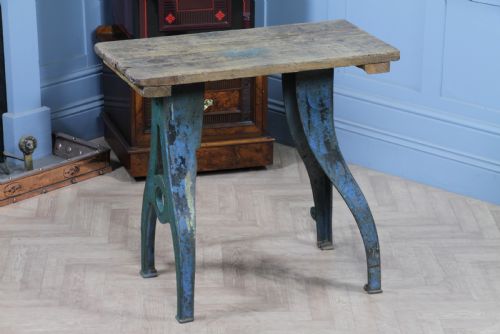


Industrial Iron Base Table
An industrial iron base table brings robust utility and utilitarian character into a modern room through heavy metal supports paired with timber tops.
Industrial Iron Base Table
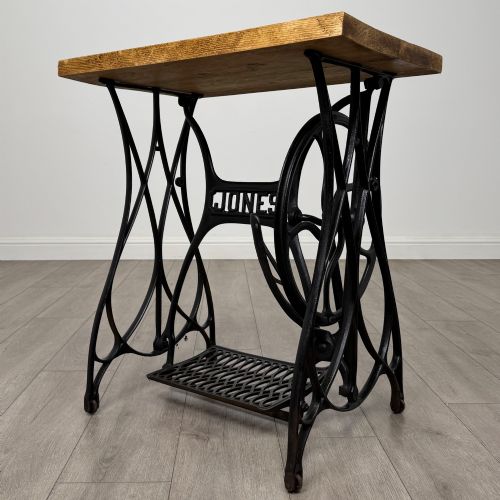
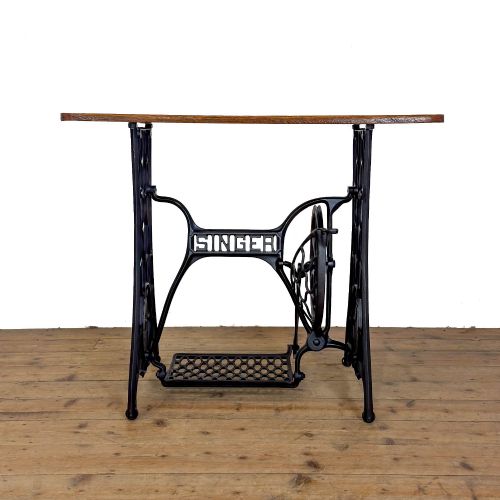
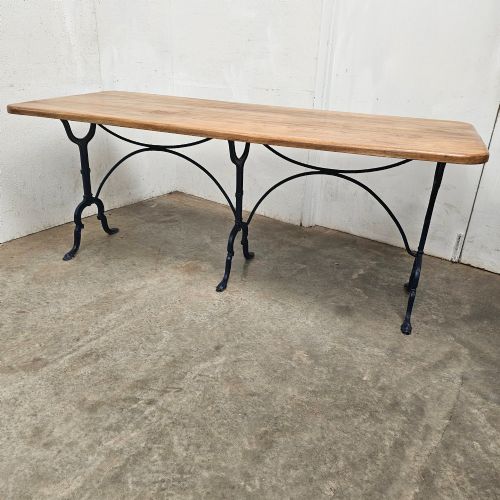
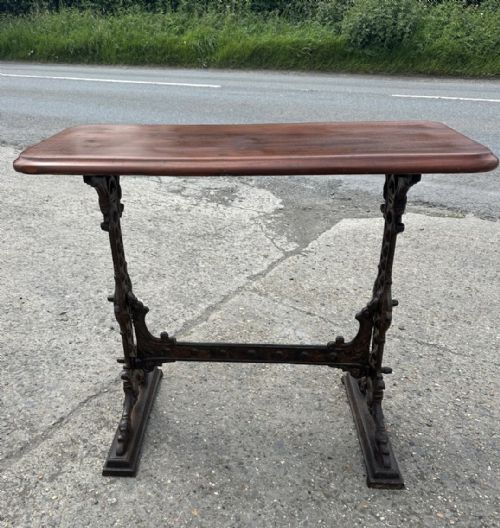
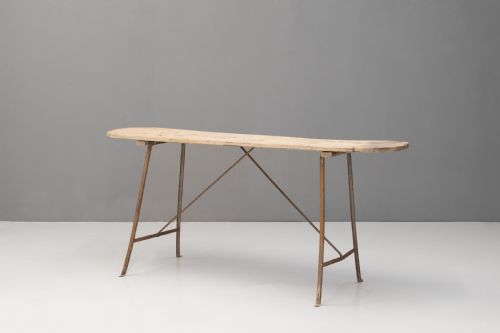
When you search for an industrial iron base table, you are looking at heavy-duty furniture built around functional metal frames, most commonly seen as pub tables, bistro tables, and work tables dating from the Victorian era into the early twentieth century. These pieces combine cast iron or plain iron structures with wooden surfaces such as oak, pine, elm, and mahogany, reflecting their original utilitarian purposes in commercial and domestic spaces.
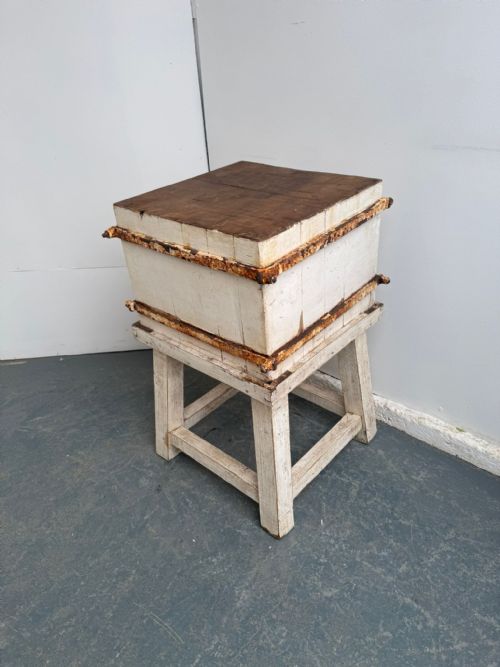
Makers recorded in the listings include firms such as Singer and Carters of London, alongside specialised pub and tavern furniture makers. Forms range from simple garden and café bases to adjustable tables, ships tables, and butchers blocks.
Materials and construction
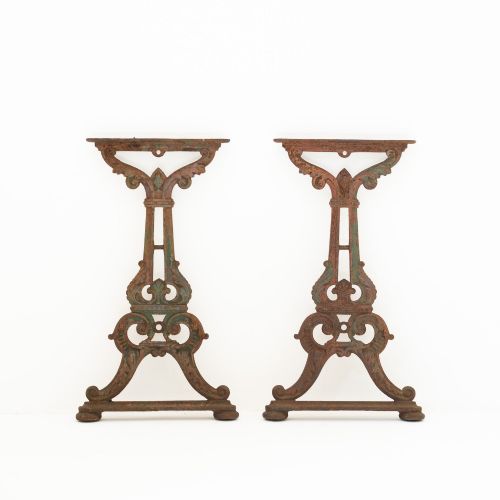
The construction of these tables relies on durable metals, specifically cast iron and iron, shaped into robust bases, pedestals, and trestles. These metal elements provide substantial weight and structural stability, often featuring decorative casting work or adjustable mechanisms.
Wooden elements such as oak, pine, elm, and mahogany are utilised for the tabletops, secured directly to the iron frames. The combination of dense metals and solid timbers ensured longevity under heavy daily use in trade and domestic environments.
Materials recorded across the inventory include cast iron, oak, pine, brass, glass, and timber.
Factors of quality
Quality in an industrial iron base table is determined by the integrity of the original pairing between the metal base and the timber top, as well as the sophistication of the casting work. Pieces with marked manufacturer details or intact original mechanisms show higher craftsmanship.
The grade of the timber and the depth of patina accumulated across the surface also distinguish finer examples. Retaining original finishes on both the iron and the wood elevates the character of the piece.
Singer·Carters of London
The Industrial Iron Base Table Glossary
- Cast iron
- An iron-carbon alloy poured into moulds to create rigid, decorative, or structural furniture bases. It provides the heavy foundation characteristic of industrial tables.
- Trestle
- A structural framework consisting of a horizontal beam supported by pairs of sloping legs. This form appears frequently on work tables and long dining tables.
- Bistro table
- A small table traditionally used in cafes and pubs, often constructed with a single iron pedestal base and a round wooden top.
- Patina
- The surface appearance developed through age, wear, and polishing. It shows the history and authenticity of the timber and metal.
- Pub table
- A sturdy commercial table designed for heavy tavern use, typically featuring a cast iron base and a durable hardwood top such as mahogany or oak.
Industrial Iron Base Table: Frequently Asked Questions
Are these tables suitable for everyday dining?
Most variants provide sturdy surfaces capable of handling daily meals and heavy use.
Their solid construction and durable timber tops make them practical for dining rooms and kitchens.
How do I identify the period of the base?
Dating relies on casting marks, patent details, and stylistic clues typical of nineteenth and early twentieth century manufacturing.
Victorian and Edwardian examples often feature heavier decorative ironwork compared to later designs.
Can these tables be used outdoors?
Certain forms, such as garden tables, were built for external environments using weather-resistant iron and treated wood.
Indoor tables require protection from moisture to preserve the wooden tops and prevent metal corrosion.
What maintenance do the iron bases require?
The metal frames need minimal upkeep beyond dusting and occasional light cleaning to remove surface debris.
Avoiding excessive moisture keeps the iron stable and preserves any original dark finishes or enamel.