


French Pub Table
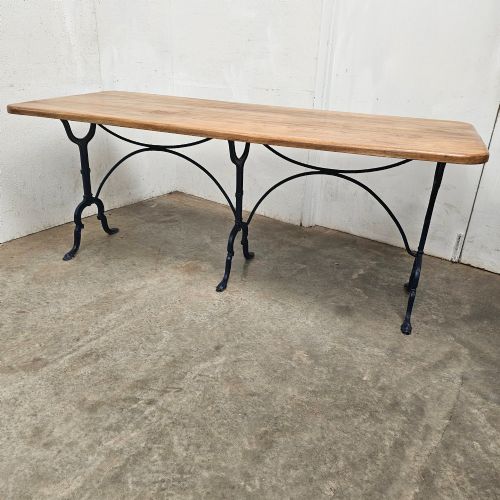
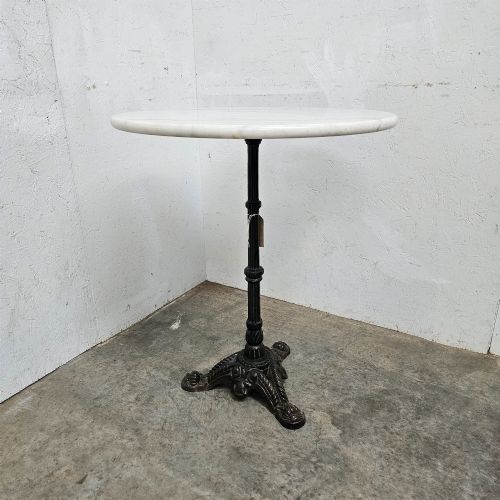
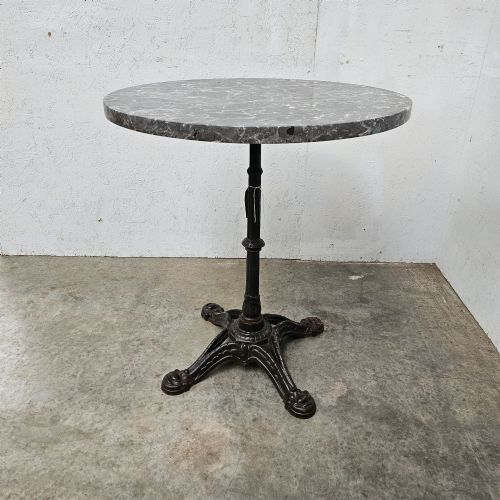
A french pub table brings robust hospitality into the home, combining heavy cast iron bases with smooth marble or timber tops.
French Pub Table
A french pub table is a sturdy utility piece designed for commercial social spaces, combining industrial strength with domestic elegance. These tables appear in forms such as bistro tables, dining tables, garden tables, and side tables.
Most examples found here date from the nineteenth century up to the nineteen-twenties, reflecting periods like the Victorian era and nineteen-hundred. They carry distinct regional styles including French bistro, French industrial, French country, and French provincial.
Buyers meet round and long formats resting upon stable metal supports, ready for everyday use in kitchens, conservatories, and dining rooms. The typical combination pairs a heavy metallic pedestal with a durable surface suited to heavy daily traffic.
Materials and Construction
The structure relies fundamentally on cast iron for the base, providing the heavy ballast necessary to prevent tipping in busy environments. This metal framework frequently incorporates intricate decorative casting or plain industrial engineering.
Tops consist predominantly of marble, including white marble, grey marble, and green marble, alongside timber varieties such as oak, elm, and general wood. These surface materials are chosen for their resilience against spills and their ability to withstand constant cleaning.
Current listings feature pieces spanning the 19th Century, 1900, 1910, 1920, and the Victorian period, utilising cast iron, marble, oak, and elm.
Judging Quality
Quality rests upon the harmony of the proportions and the integrity of the materials rather than mere age. A superior piece displays crisp casting detail in the iron base without crude repairs or excessive pitting.
The choice of top significantly dictates the character, where fine veining in marble or dense, well-grained elm elevates the piece visually. The weight distribution must feel solid and reassuring, ensuring the table stands firmly without wobble.
The French Pub Table Glossary
- Cast Iron
- An iron-carbon alloy poured into moulds to create strong, ornate furniture bases. This material forms the structural foundation of the vast majority of these tables.
- Bistro Table
- A small dining table originally intended for cafes and drinking establishments. They maximise floor space while remaining stable under daily use.
- White Marble
- A metamorphic rock composed of recrystallised carbonate minerals showing pale or cloudy patterns. It provides a cool, hygienic surface for food and drink preparation.
- Elm
- A durable hardwood known for its interlocking grain and resistance to splitting. Cabinet makers select it for surfaces that endure heavy physical contact.
French Pub Table: Frequently Asked Questions
Are these tables suitable for outdoor use?
Many examples function well in gardens or conservatories due to their robust metal construction. However, protecting marble and timber from prolonged harsh weather preserves their finish.
Garden tables and conservatory tables in the listings demonstrate that these pieces bridge indoor and outdoor hospitality successfully.
How do I clean a marble top?
Use warm water and mild, non-acidic soap to wipe down the surface regularly. Avoid harsh chemical cleaners that can etch the polished stone.
White and green marble surfaces require gentle care to maintain their original sheen over decades of daily domestic use.
What is the difference between bistro and cafe tables?
Bistro and cafe tables share identical functional roots in French social venues, serving patrons food and drink in tight spaces. The terms often describe similar compact formats with metal bases.
Both styles focus on combining a compact footprint with heavy stability.
How do I date an iron base?
Nineteenth-century and early twentieth-century ironwork exhibits distinct casting seams and tool marks from period manufacturing methods. Examining the bolts and structural joints reveals the age of the assembly.
Victorian and nineteen-ten pieces show specific decorative motifs typical of their manufacturing decades.