



Vintage Cafe Table
A vintage cafe table brings functional French bistro charm and sturdy metal-and-stone construction into domestic spaces.
Vintage Cafe Table
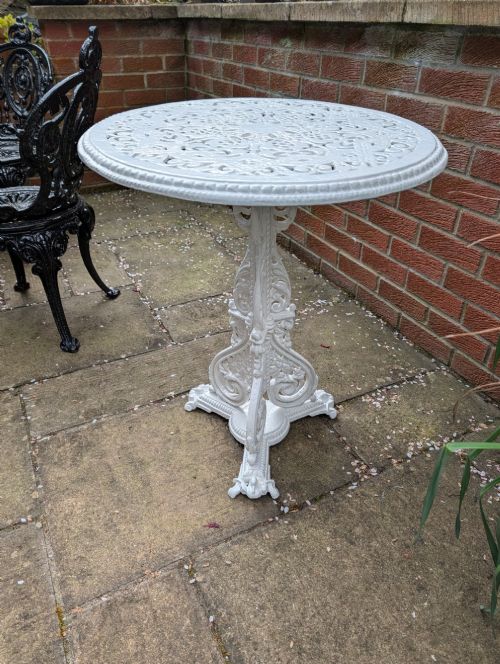
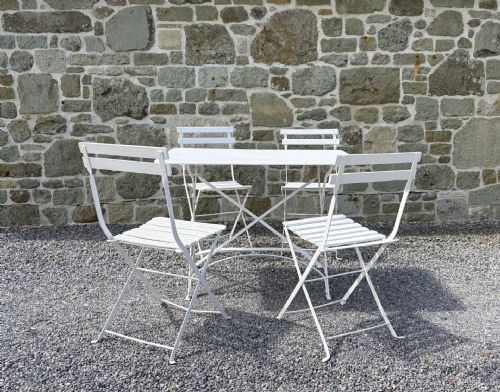
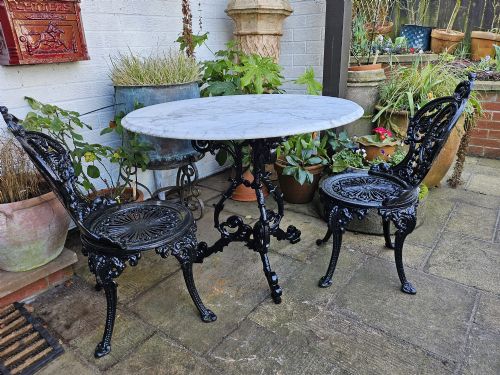
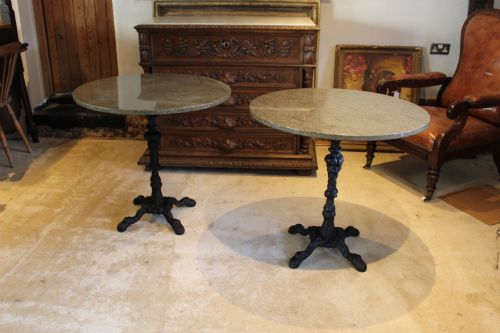
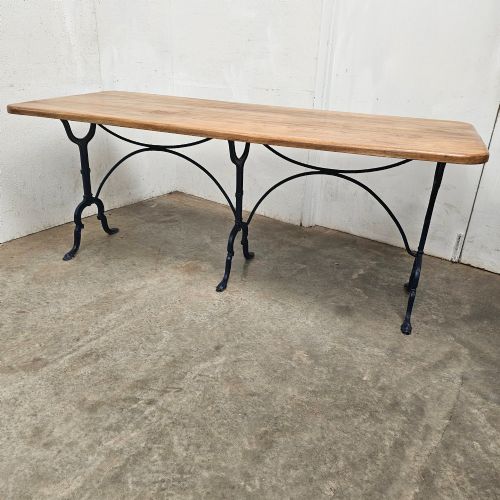
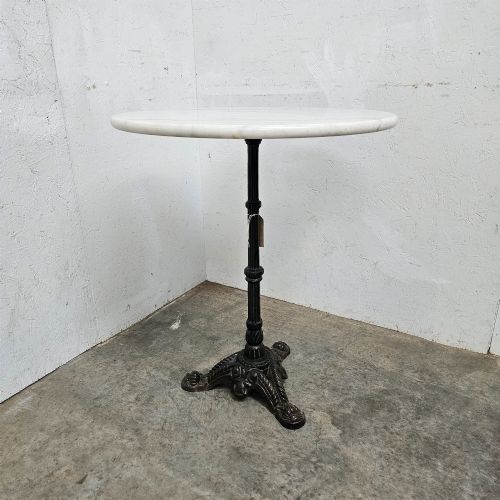
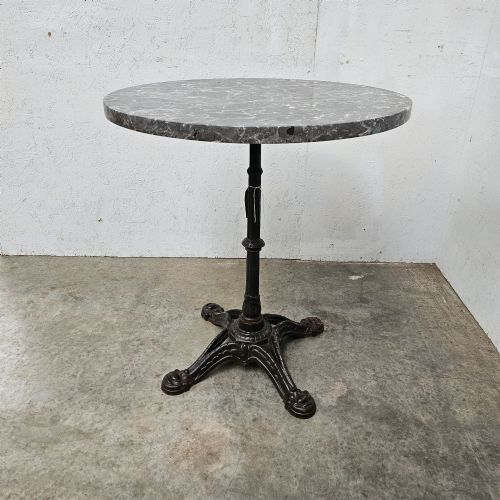
A vintage cafe table is a compact surface built for public dining and socialising, now frequently repurposed for residential kitchens, balconies and gardens. When you examine the pieces collected here, you will notice formats ranging from round bistro tables to rectangular garden dining sets and occasional side tables.
The dominant aesthetic draws heavily from French bistro, industrial and Victorian design traditions originating across the nineteenth and early twentieth centuries. Many examples pair heavy metal supports with stone or timber tops, creating a compact footprint suited to smaller rooms and outdoor spaces.
Materials and construction methods
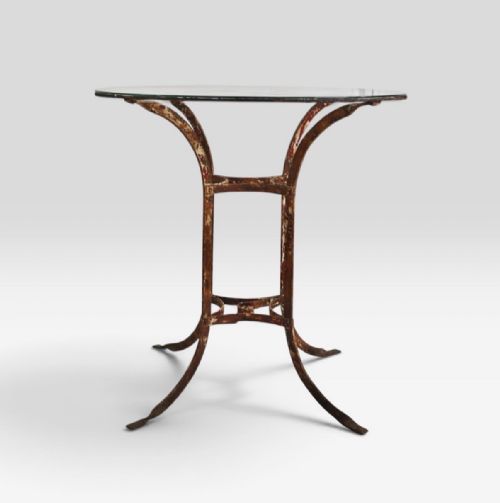
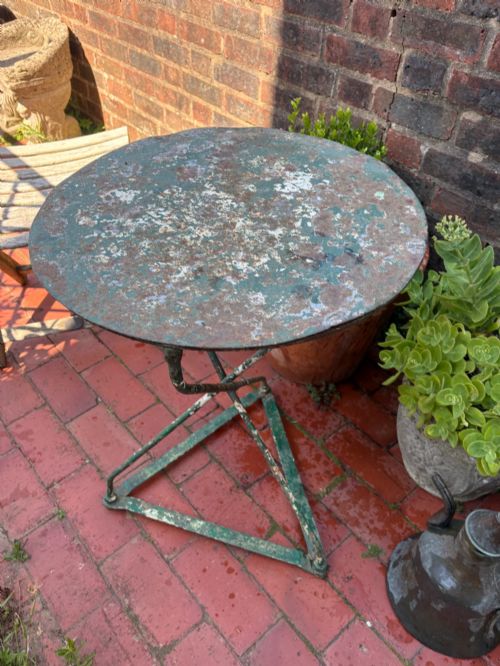
The foundational element of these pieces is metal, utilising cast iron, wrought iron, and occasionally brass or copper to form elaborate pedestal bases and legs. These structural frames often feature decorative casting or painted surfaces that have acquired patination through decades of use.
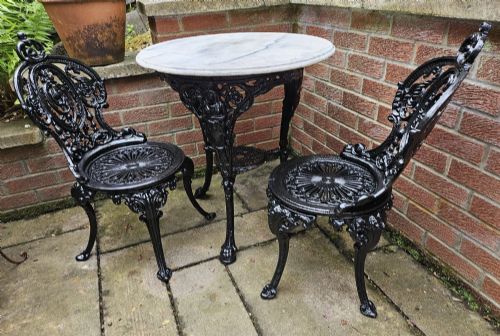
Table surfaces are constructed from contrasting materials, notably white or green marble, granite, mosaic, and hardwoods such as oak, elm and mahogany. These heavier tops rest securely upon the stable metal bases, balancing industrial utility with domestic refinement.
Several tables retain traces of old green paint, suggesting someone long ago wanted their garden furniture to match the lawn.
Assessing quality and authenticity
Quality in these pieces rests upon the integrity of the materials and the crispness of the cast iron detailing on the base. Superior examples exhibit well-fitted stone or timber tops that sit flush against stable, heavy metal frames without structural wobble.
The presence of original surfaces, such as aged paint on the cast iron or well-worn wooden boards, distinguishes pieces with unbroken histories from later recreations or heavily altered combinations.
Christopher Dresser·Thonet
The Vintage Cafe Table Glossary
- Cast iron
- A strong, rigid alloy poured into moulds to create intricate, heavy table bases. It forms the structural backbone for the majority of these bistro designs.
- Gueridon
- A small round table supported by a single central pillar or pedestal. This French form appears frequently among nineteenth-century examples.
- Bistro set
- A matched grouping consisting of a small table accompanied by matching chairs. These sets were originally designed for pavement cafes and small courtyards.
- Patina
- The surface sheen and wear acquired by materials through age and use. On these tables, it shows in the softening of painted iron and the weathering of stone tops.
Vintage Cafe Table: Frequently Asked Questions
Can I leave my cafe table outside all year?
Most of these pieces utilise cast iron and stone which tolerate outdoor environments well, though prolonged exposure to frost can affect painted finishes and vulnerable timber tops.
Storing wooden-topped or brass-detailed variants under cover during harsher months helps preserve the original materials.
How do I clean a marble cafe table top?
Marble surfaces require gentle cleaning with mild soap and warm water to avoid etching the stone. Acidic substances can damage polished marble over time.
Regular wiping maintains the smooth finish without stripping away the character accumulated through years of use.
Are these tables heavy to move?
The combination of cast iron bases and marble or granite tops makes many of these tables surprisingly heavy and stable. This weight prevents tipping in busy environments or gardens.
Lifting from the base rather than the top helps distribute the weight safely when rearranging furniture.
How do I distinguish a Victorian piece from a 1920s one?
Nineteenth-century pieces often display heavier Victorian cast iron ornamentation and dense timbers like mahogany or elm. Pieces from the 1920s and 1930s frequently lean towards simpler French bistro or Art Deco lines.
Examining the construction joints and the style of the metal casting provides key clues to the era of manufacture.