




Industrial Cast Iron Table
These industrial cast iron table pieces combine robust metal bases with timber tops, offering practical utility and a rugged aesthetic for modern interiors.
Industrial Cast Iron Table
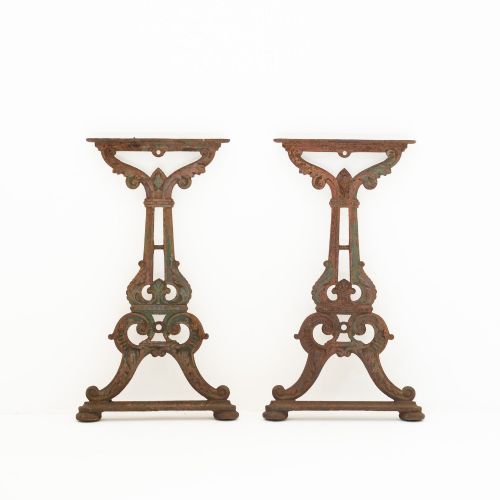
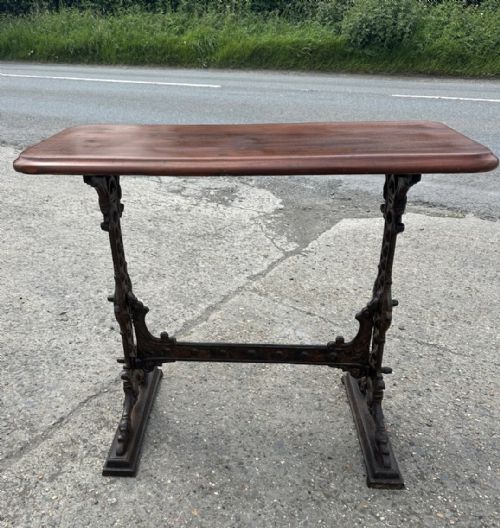
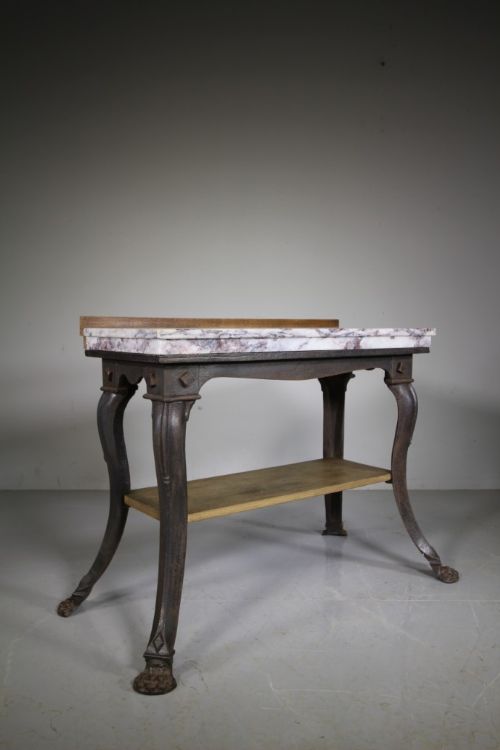
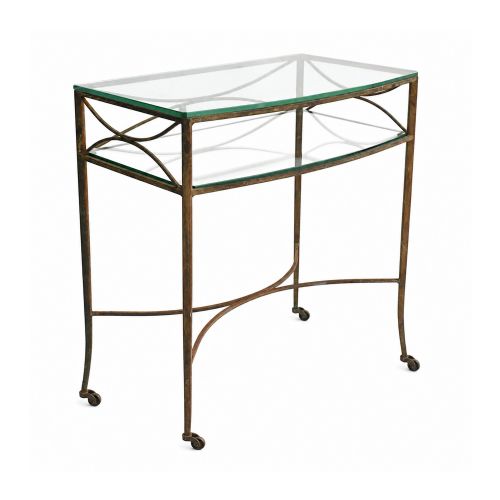
Buyers seeking an industrial cast iron table encounter robust items originating from pub furniture, domestic settings, and commercial workshops. These furnishings bridge utilitarian origins and interior decorative use, presenting distinctive metal framework.
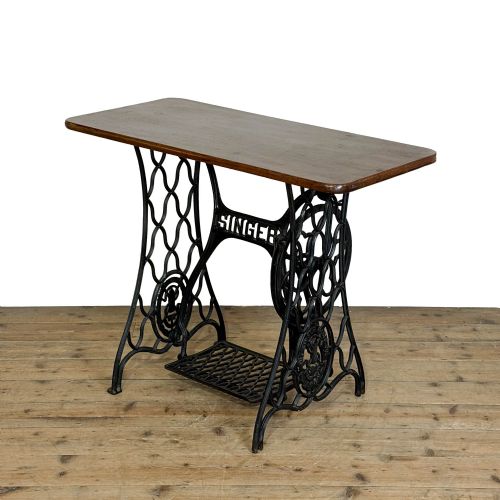
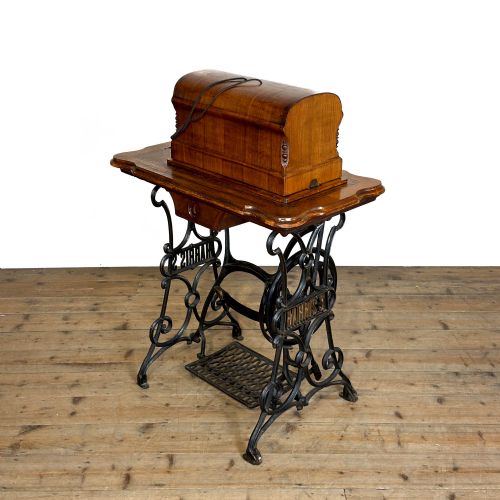
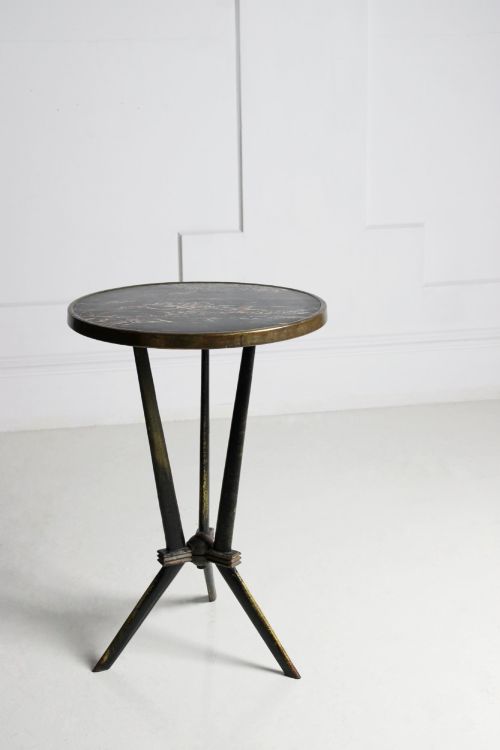
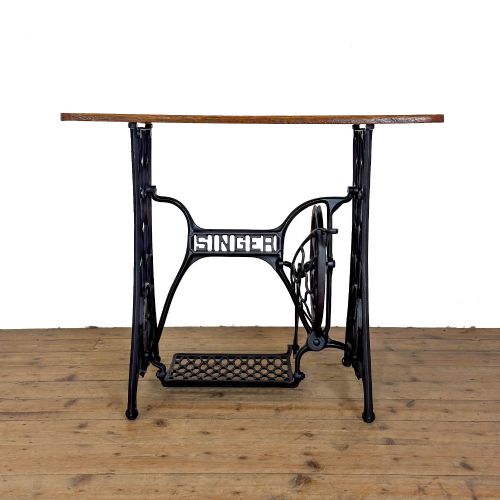
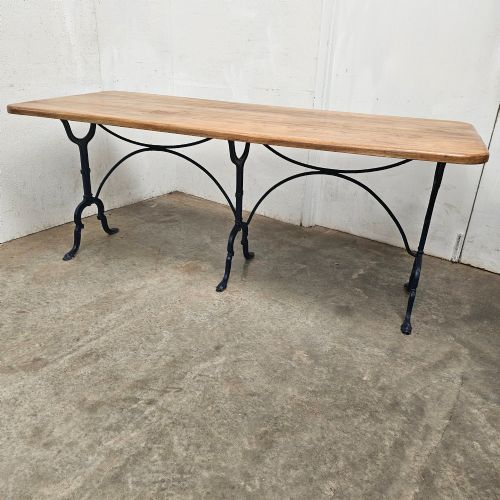
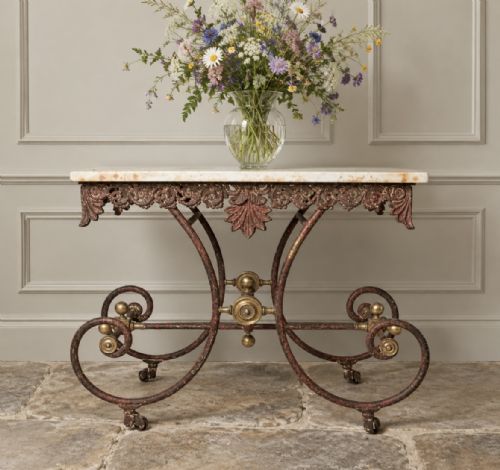
The selections on this page span the Victorian era, the nineteenth century, and the 1920s and 1930s. Common forms include pub tables, side tables, bistro tables, and specialised pieces such as laundry equipment and sewing machine bases.
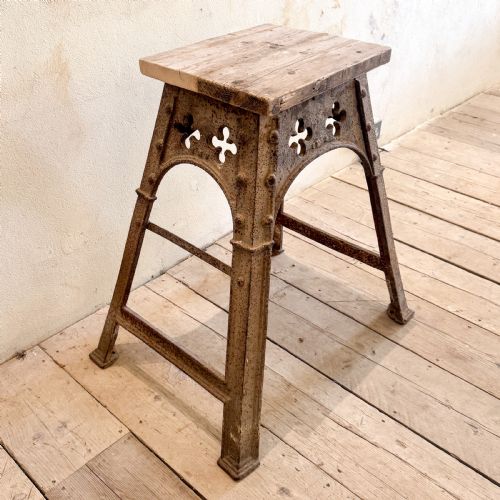
Pieces frequently feature heavy metal supports paired with wooden surfaces, reflecting both British and French origins. Such examples range from long tavern counters to compact domestic side tables.
Materials and construction methods
Construction relies heavily on durable metal casting for the structural bases and frames. Workshops shaped the iron into ornate or functional supports, often utilising patterns like the Britannia design.
Wooden elements incorporate timber, mahogany, and oak for the table surfaces and casing. These natural materials were joined to the metal framework to create stable and enduring furniture.
Industrial Cast Iron Table Retail Price Guide 2026
Typical asking prices for industrial cast iron table among the pieces listed under this phrase on Sellingantiques today, from the lower quarter to the upper quarter. They describe what is for sale here now, not the wider market.
Listings feature items from the 1880s, the Victorian era, and the 1930s, utilising cast iron, oak, and mahogany.
Assessing quality and authenticity
Quality rests upon the integrity of the original casting and the character of the associated wooden top. Retaining original timber surfaces rather than modern replacements elevates the standing of a piece significantly.
The distinction between standard utility items and finer examples lies in the crispness of the ironwork details and the harmonious proportion between base and top.
Burgess Brothers of Weaverham
The Industrial Cast Iron Table Glossary
- Cast iron
- A strong, hard alloy of iron and carbon that is poured into moulds to create intricate or heavy structural shapes. It forms the essential base of these tables.
- Britannia metal or pattern
- A specific figural cast iron base design often depicting Britannia, commonly found on nineteenth century tavern furniture. This style represents a distinct subsection of pub tables.
- Mahogany
- A durable reddish-brown tropical hardwood prized for furniture tops. It provides a refined surface contrasting with the heavy industrial iron base.
- Mangle
- A laundry machine featuring heavy rollers used for pressing water from wet clothing. These mechanisms are sometimes repurposed into decorative tables.
Industrial Cast Iron Table: Frequently Asked Questions
What periods do these tables come from?
The available selection spans the nineteenth century, the Victorian era, and the decades of the 1920s and 1930s. These dates reflect the height of industrial manufacturing and commercial pub culture.
Buyers will find that earlier examples often bear the heavier decorative ironwork characteristic of nineteenth century tavern furnishings.
How were these cast iron tables used?
Many served practical functions in public houses as pub tables or in commercial spaces as bistro tables. Others originated from domestic laundry equipment or sewing machine cabinets.
Over time, these utilitarian objects transitioned from working environments into domestic interiors for daily use.
What woods are paired with the iron?
Surfaces utilise natural timber, mahogany, and oak depending on the specific origin and period of the piece. Pub tables frequently showcase original mahogany tops.
Side tables and sewing machine bases more commonly feature oak or general natural timber surrounds.
Are sewing machine tables included?
Yes, enclosed sewing machine bases from around 1920 feature in the listings. These typically combine an oak case with a cast iron mechanism.
They offer compact surfaces suitable for use as side tables while retaining their original mechanical character.