



Victorian Pub Table
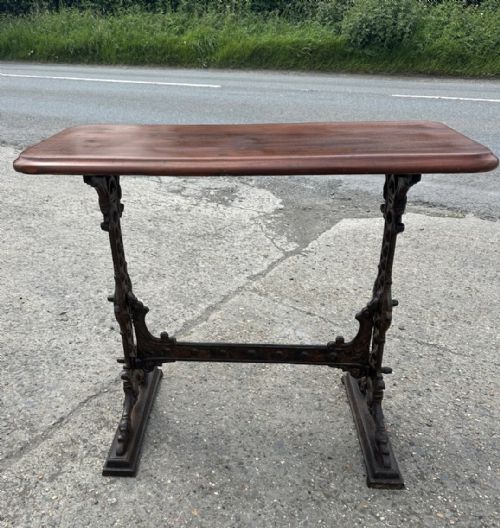
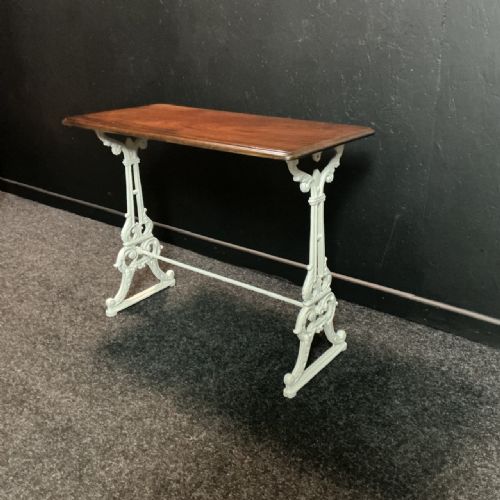
A victorian pub table brings industrial strength and social history into a modern room, combining a heavy cast iron base with timber or stone.

Victorian Pub Table
A victorian pub table is primarily defined by a durable cast iron pedestal or trestle base paired with a solid wooden or stone top, designed to withstand heavy daily use in commercial taverns. These tables span the nineteenth century, with many examples featuring distinct regional foundry patterns or figural motifs on the ironwork.
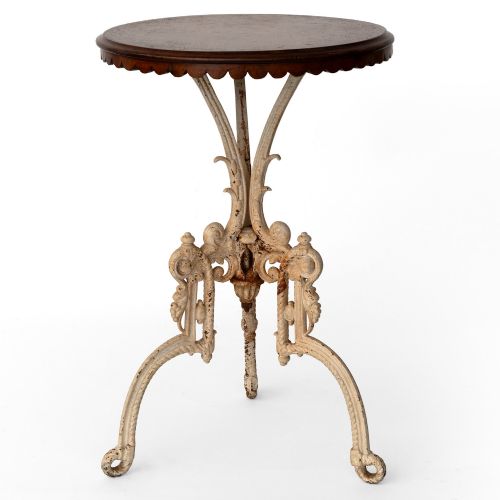
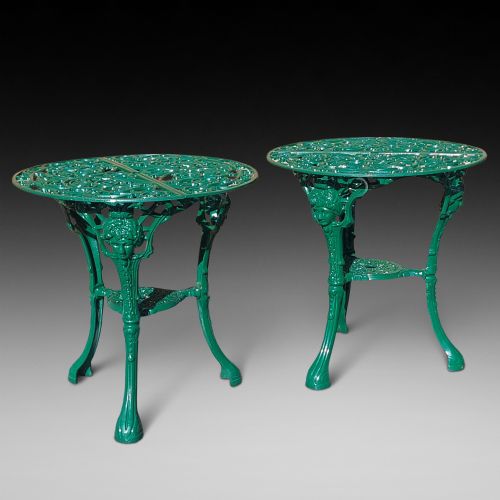
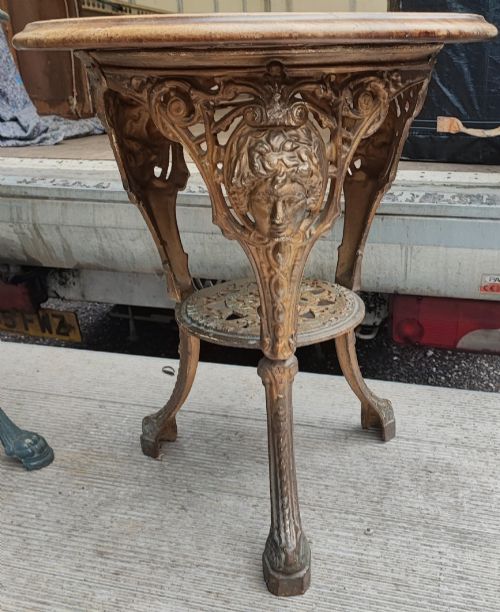
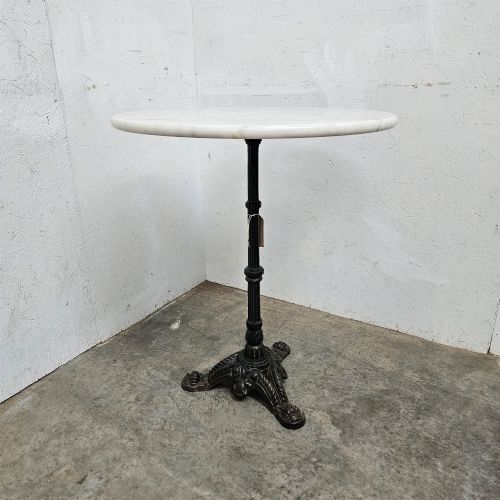
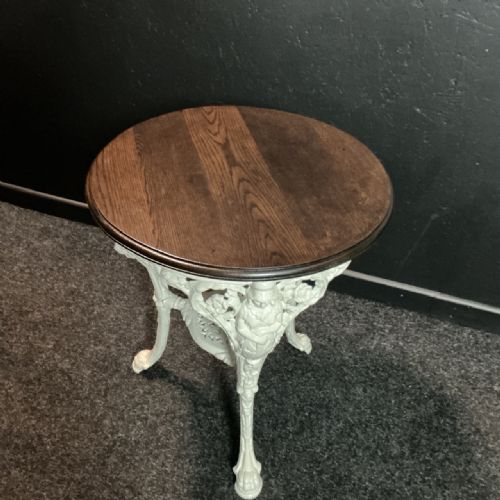
The version most commonly encountered on this page pairs a circular or rectangular top with a heavily decorated cast iron base, frequently identified in trade terms as a Britannia pattern. Buyers also find variants featuring mahogany, oak, pine, or marble surfaces suited for both interior spaces and garden settings.
Materials and construction
Foundries produced the bases using durable cast iron, often moulding them with intricate scrollwork, lions, or patriotic emblems that added necessary weight to keep the furniture stable on uneven floors. These robust metal supports were then paired with timber tops in mahogany, oak, or pine, or fitted with smooth marble and granite slabs.
Joinery on the wooden components reflects traditional nineteenth century carpentry, using stout stretchers and screws to secure the heavy tops to the iron pedestals. Surviving pieces often retain original painted finishes on the iron and patinated wax surfaces on the timber.
Victorian Pub Table Retail Price Guide 2026
Typical asking prices for victorian pub table among the pieces listed under this phrase on Sellingantiques today, from the lower quarter to the upper quarter. They describe what is for sale here now, not the wider market.
Foundries occasionally cast named tavern titles directly into the iron bases, immortalising long-gone drinking establishments in metal.
Assessing the craftsmanship
Quality in a victorian pub table rests largely in the crispness of the iron casting and the integrity of the top material. Finer bases exhibit sharply detailed moulding without pitting, while superior tables retain original timber surfaces rather than modern replacements.
The harmony between the base and the top dictates the overall character of the piece. Tables that retain their original manufacturer markings or specific regional foundry attributions generally represent higher standards of period production.
Goodall Burton on Trent·Caskell Chambers Birmingham
The Victorian Pub Table Glossary
- Britannia
- A common style of nineteenth century pub table featuring a cast iron base depicting seated Britannia or related patriotic motifs. This design provided exceptional stability for tavern environments.
- Cast iron
- An iron carbon alloy poured into moulds to create intricate, heavy furniture bases. It resists wear and provides a rigid foundation for commercial seating.
- Trestle table
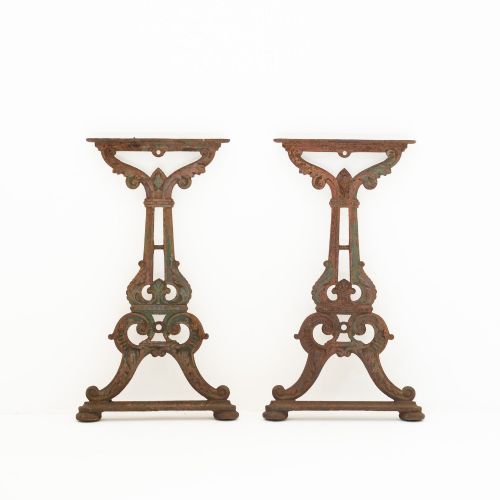
- A table supported by horizontal beams and vertical feet rather than four distinct corner legs. This construction maximises legroom in tight spaces.
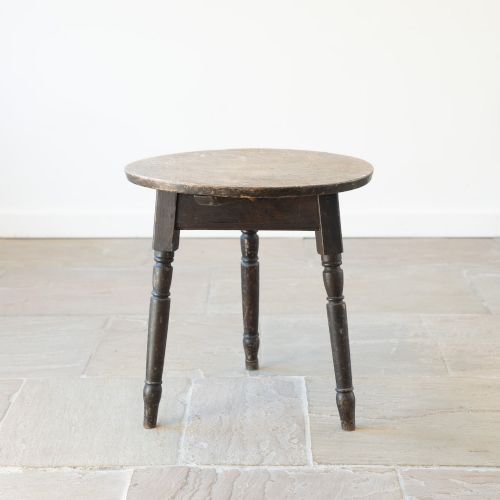
- Vernacular country
- Domestic or commercial furniture made using local materials and traditional methods without high style pretensions. These pieces reflect regional utility rather than metropolitan fashion.
Victorian Pub Table: Frequently Asked Questions
What is a Britannia table?
A Britannia table is a specific nineteenth century pub table style featuring a heavy cast iron base that incorporates the figure of Britannia or classical scrollwork.
These iron pedestals were mass-produced by regional foundries to provide commercial taverns with stable, tip-resistant furniture that could endure heavy daily patronage.
Are these tables suitable for outdoor use?
Many surviving examples were originally placed in pub gardens or conservatory spaces, meaning the cast iron bases handle outdoor environments well.
However, buyers should consider the specific material of the top, as untreated pine or polished mahogany requires protection from prolonged moisture and frost.
How do I identify a period top?
Period wooden tops generally display deep patination, shrinkage cracks, and surface wear consistent with decades of commercial tavern use.
Inspectors often look underneath for traditional screw placements and blocked joins that match nineteenth century joinery practices rather than modern replacement hardware.
Can I use one as a dining table?
Smaller circular variants function well as breakfast or coffee tables, while longer rectangular formats suit kitchen dining or casual workspace needs.
Buyers should verify the height and leg clearance beneath the iron pedestal to ensure comfortable seating before pairing the table with standard chairs.