

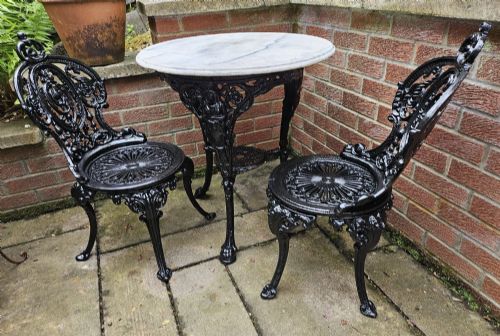
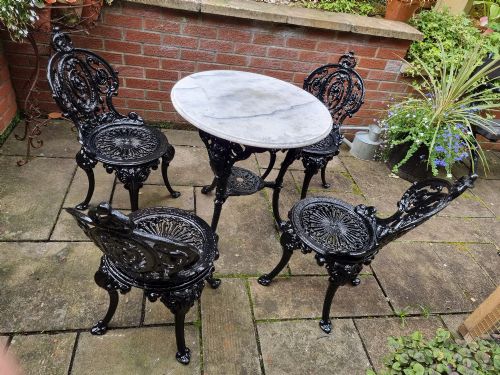
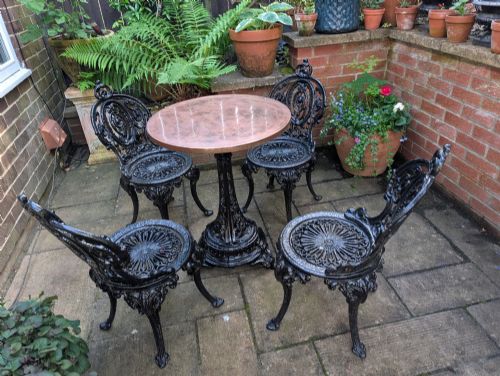
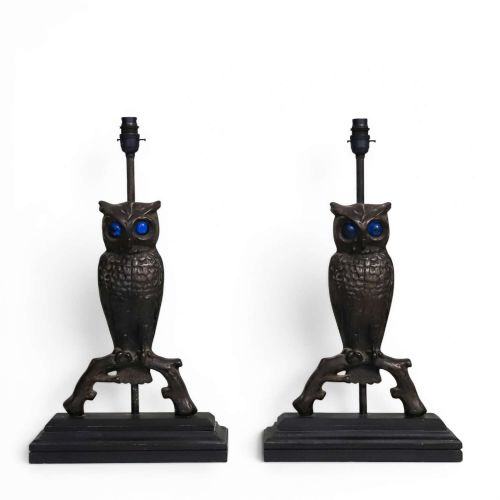
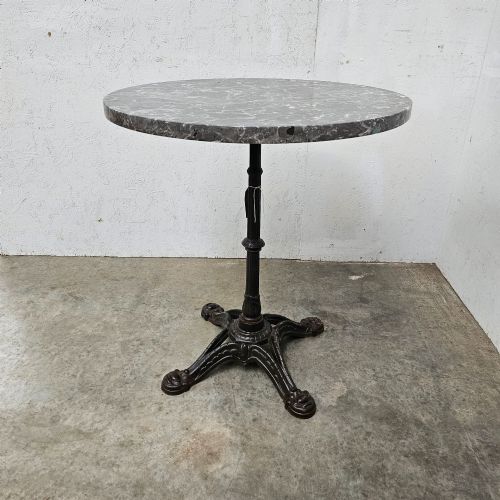
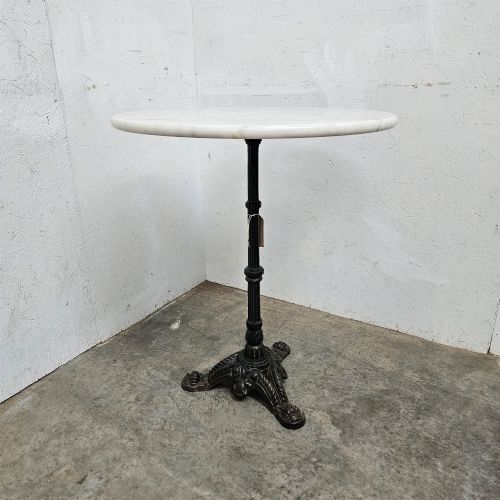


Black Cast Iron Table
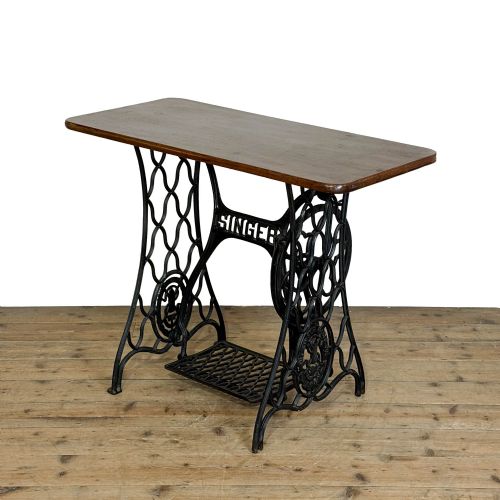
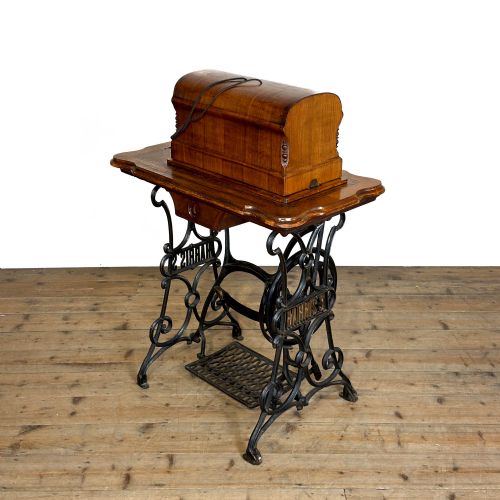
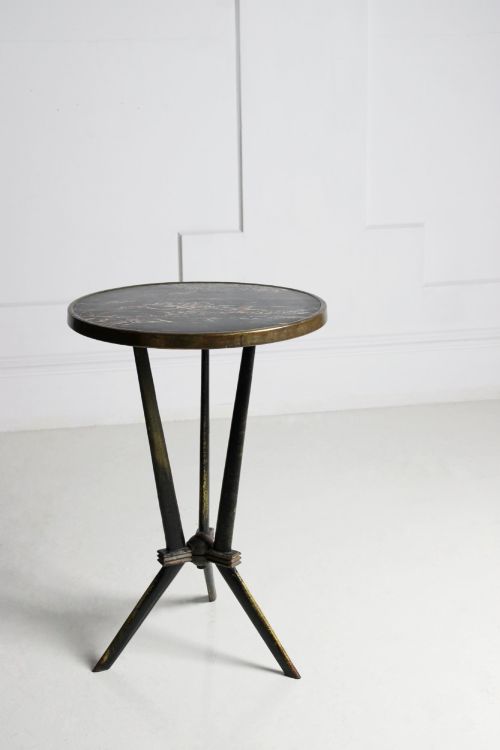
A black cast iron table brings industrial strength and enduring utility to interior or garden spaces, prized for its robust metal base and classic form.

Black Cast Iron Table
A black cast iron table comprises a heavy metal support paired with a durable top, frequently sought for practical utility and robust character. When searching for a black cast iron table, buyers encounter varied iterations spanning garden furniture, pub tables, and French bistro designs.
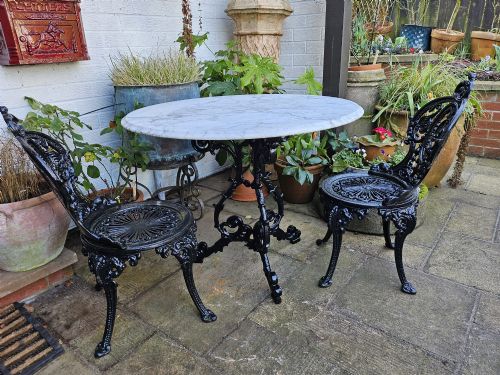
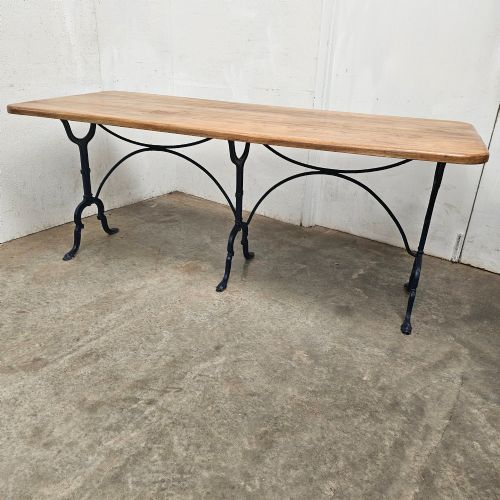
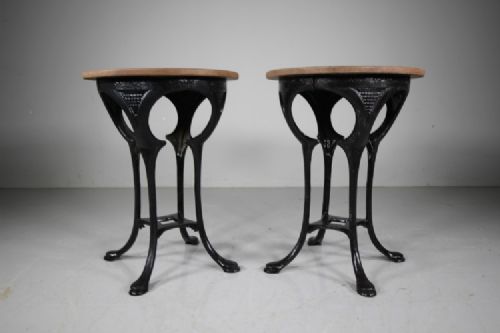
The selections on this page feature pieces primarily originating from the nineteenth century, the Victorian era, and early twentieth-century decades up to nineteen thirty. Common configurations include garden sets, occasional tables, and cafe tables featuring circular or rectangular surfaces.
Origins stretch across English pub settings, French provincial cafes, and industrial workshops. These tables serve multiple functions today, operating as patio furniture, console surfaces, and compact side tables within modern interiors.
What varies in quality
Quality depends upon the crispness of the casting in the iron base, where finer examples display sharp relief work, clean scroll details, and well-defined foundry marks. Heavier castings generally indicate sturdier construction and greater stability.
The materials chosen for the top surface also influence overall standard, with thick slab marble or polished granite commanding higher regard than simpler timber boards. Originality of components, such as retaining an early mahogany top or original marble surface, elevates the integrity of the piece.
Black Cast Iron Table Retail Price Guide 2026
Typical asking prices for black cast iron table among the pieces listed under this phrase on Sellingantiques today, from the lower quarter to the upper quarter. They describe what is for sale here now, not the wider market.
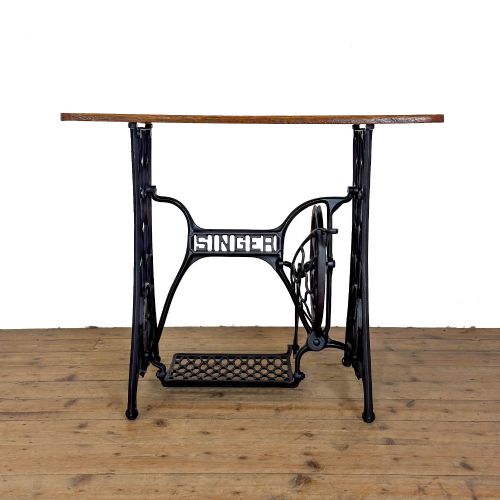
Cast iron bases occasionally moonlighted as sewing machine stands and garden cannon mounts before settling down as coffee tables.
Archibald Knox·The Rotherham
The Black Cast Iron Table Glossary
- Cast Iron
- An iron-carbon alloy poured into a mould to create rigid, heavy structural forms. This material provides the foundational weight and ornate scrollwork characteristic of Victorian and industrial furniture bases.
- Bistro Table
- A small dining or cafe table designed for compact spaces. These typically feature a central cast iron pedestal base paired with a round marble or wooden top.
- Britannia Metal
- A specific alloy often utilised in manufacturing decorative metalwork. It provides a durable base for nineteenth-century pub tables and decorative items.
- Occasional Table
- A light, movable side table utilised for specific tasks in living spaces. These frequently incorporate cast iron bases with wooden or stone surfaces.
- Patination
- The natural ageing and surface changes accumulated on metal, wood, and stone over decades. Collectors value this surface evolution as evidence of authenticity and age.
Black Cast Iron Table: Frequently Asked Questions
How do I clean a cast iron base?
Wipe the metal surface down with a dry or slightly damp cloth to remove dust and debris. Avoid harsh chemical cleaners that can strip original dark finishes and patination.
Dry the metal thoroughly after cleaning to prevent moisture retention. Applying a light coat of neutral wax can help protect the iron surface over time.
Can these tables stay outside?
Many cast iron tables originate as garden or patio furniture designed to withstand outdoor conditions. Iron and stone components tolerate weather well if monitored for moisture.
Protect wooden tops from prolonged dampness by storing them under cover during winter months. Regular checks help maintain the integrity of the metal and prevent rust accumulation.
How do I date a cast iron table?
Examine the style of the casting, construction joints, and material pairings to determine the likely period. Victorian and nineteenth-century examples often feature heavier scrollwork and specific pub table configurations.
Look for maker stamps, registration marks, or foundry names cast directly into the iron base. Comparing construction methods against documented styles from the Edwardian era or nineteen-twenties provides further temporal clues.
Are marble tops original to the iron bases?
Inspect the fit between the stone slab and the iron support flange to assess originality. Many French bistro and cafe tables were manufactured with interchangeable stone or wooden surfaces.
Original marble tops typically display edge profiles and weight consistent with the period of the base. Minor variations in mounting hardware can indicate whether a top was paired with the base later in its life.