
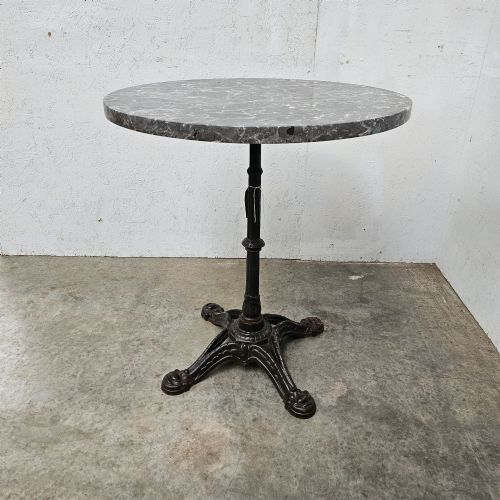


Outdoor Cafe Table
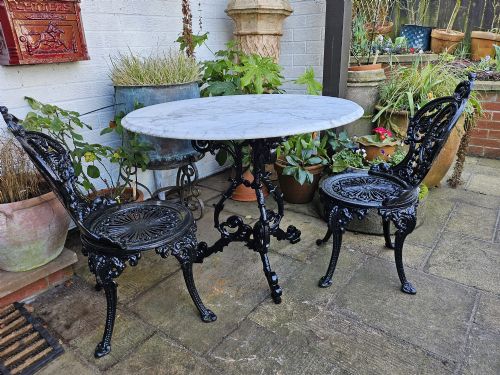
An outdoor cafe table brings the practical charm of nineteenth-century terraces and French bistros straight to your garden or patio.
Outdoor Cafe Table
An outdoor cafe table serves as a durable surface for small gardens, patios and conservatories, drawing heavily on French bistro and Victorian traditions. When you search for an outdoor cafe table, you encounter compact dining and side tables designed for social seating in small spaces.
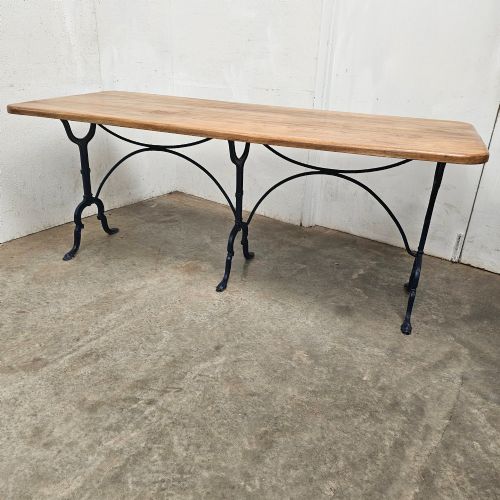
The selections span the nineteenth century up through the nineteen-thirties, with French provincial and industrial designs appearing regularly alongside Victorian examples. These pieces typically manifest as round or long tables built to withstand external conditions while maintaining domestic elegance.
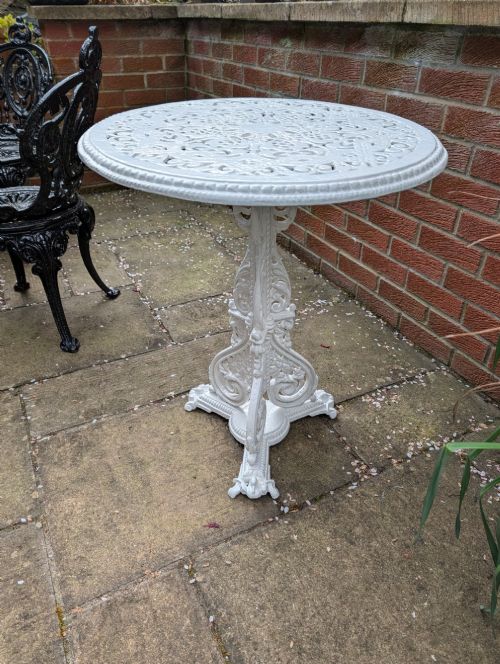
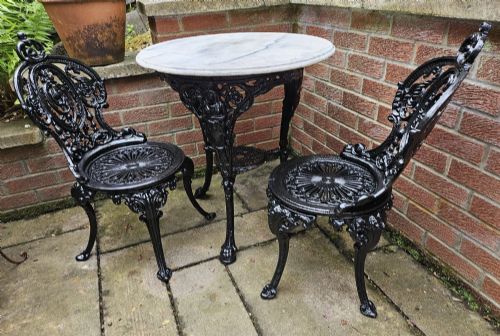
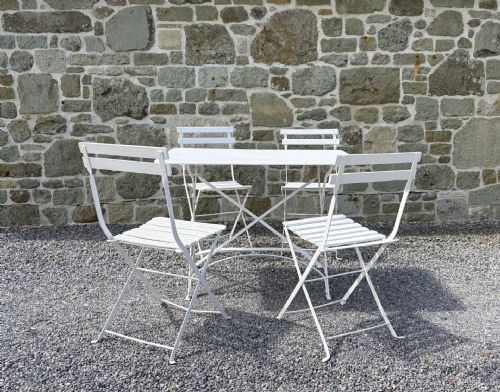
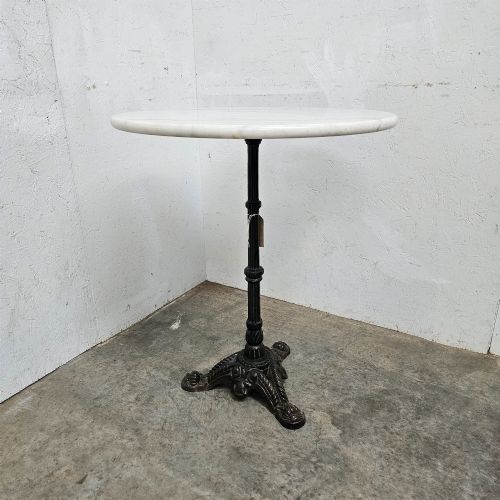
Common forms include bistro sets complete with matching seating, alongside freestanding garden tables and side tables. Most variations rely on sturdy metal bases paired with smooth upper surfaces suited for outdoor dining.
How they were made
Makers utilised heavy cast iron and wrought iron for structural frames and decorative pedestals, ensuring stability against the wind. These metal components frequently received protective coats of paint or retained patinated dark finishes.
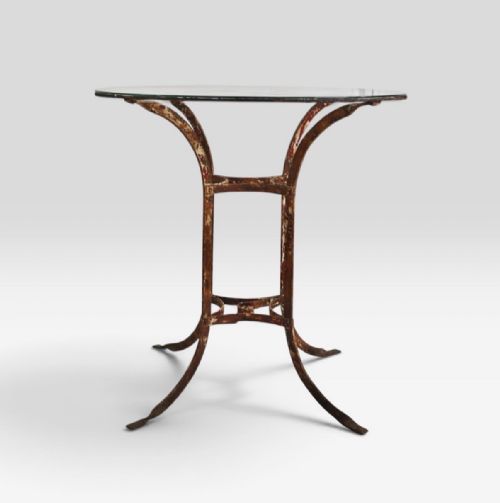
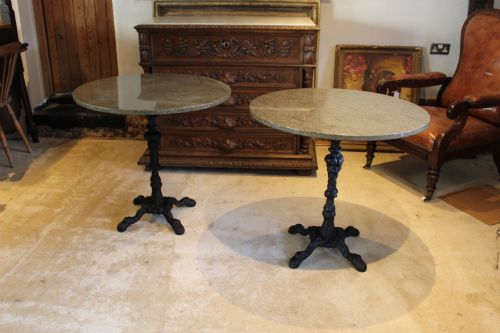
Upper surfaces combine natural materials like marble, polished granite, Spanish mosaic, glass and timber such as French elm. Marble and stone slabs rest securely atop heavy metal tripod or four-legged bases, while wooden elements provide warmth.
Materials span cast iron, marble, wrought iron, French elm, and Spanish mosaic.
What varies in quality
The distinction between standard utility and finer craftsmanship lies in the intricacy of the cast iron base and the quality of the stone top. Elaborate scrollwork and heavier gauge metal indicate a higher grade of production intended for commercial or grand residential terraces.
Materials also dictate the character of the piece, with solid marble or polished granite slabs representing a more substantial build than simpler timber or glass alternatives. The integration between the top and the metal frame shows the care taken during assembly.
Christopher Dresser
The Outdoor Cafe Table Glossary
- Cast iron
- A sturdy alloy poured into moulds to create ornate, durable furniture bases with decorative relief details. It provides the heavy foundation needed for outdoor tables.
- Bistro set
- A small table accompanied by matching chairs, designed for compact dining spaces and pavement cafes. These sets originated in nineteenth-century France.
- Mosaic
- A surface pattern created by setting small pieces of coloured stone or tile into mortar. Spanish examples often feature this decorative technique on cafe tables.
- French elm
- A dense hardwood utilised for rustic table tops, valued for its distinctive grain and durability. It appears frequently on longer nineteenth-century tables.
Outdoor Cafe Table: Frequently Asked Questions
Can I leave my outdoor cafe table outside all year?
Most of these pieces utilise robust materials like cast iron and stone designed to endure external environments. However, severe winter frost can affect certain stones and unsealed woods, so storing them under cover during harsher months is sensible.
Regular maintenance of painted iron surfaces helps prevent rust accumulation over decades of exposure to damp weather.
How do I clean a marble-topped cafe table?
Marble surfaces require gentle cleaning with mild soap and warm water to preserve the polished finish. Avoid acidic cleaners or harsh chemicals that can etch the stone over time.
Applying a suitable stone sealer periodically protects the marble from staining caused by food and drinks.
Are these tables heavy to move around the garden?
The combination of solid cast iron bases and marble or granite tops makes many of these tables surprisingly heavy and stable. This weight prevents them from tipping easily in windy weather.
Moving larger or stone-topped variants typically requires two people to lift them safely across lawns or uneven paving.
How do I date a Victorian cast iron table?
Dating relies on examining the construction methods, the crispness of the iron casting, and stylistic indicators typical of the nineteenth century. Makers often incorporated specific Victorian aesthetic preferences and heavier structural elements.
Comparing the bolt types, patina on the metal, and any registered design marks helps narrow down the period of manufacture.