

Grey Marble Top Table
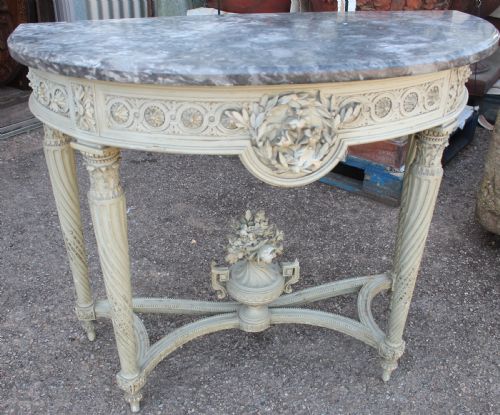
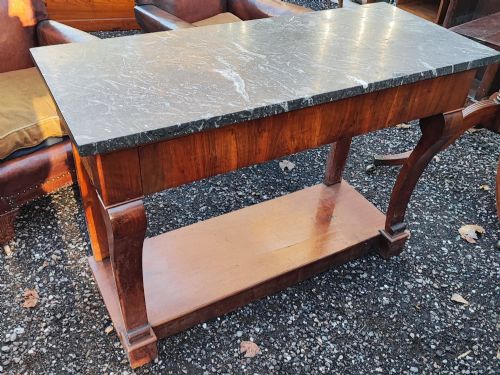
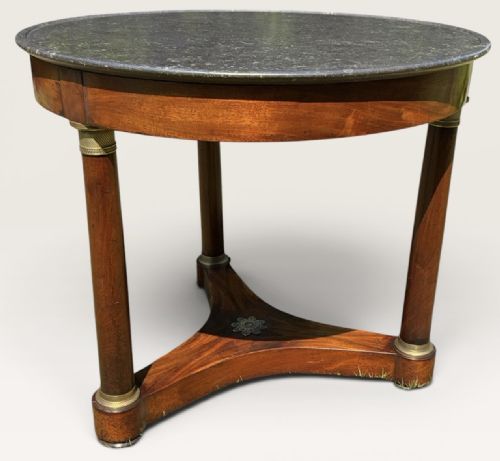
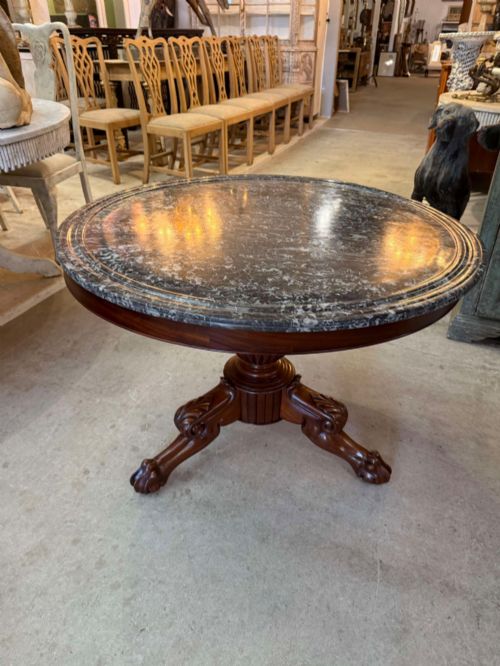
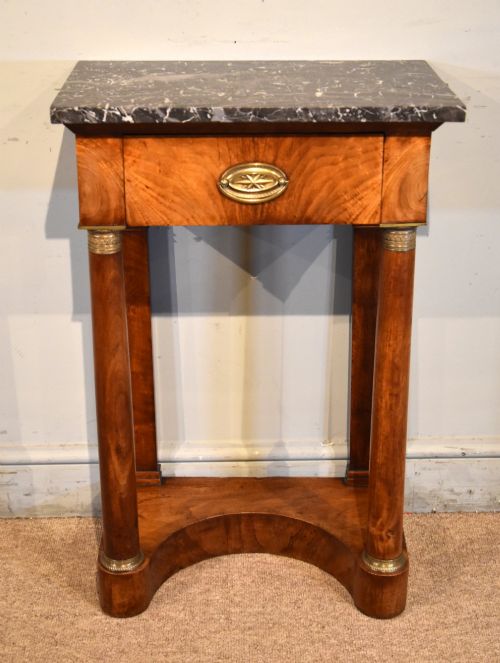
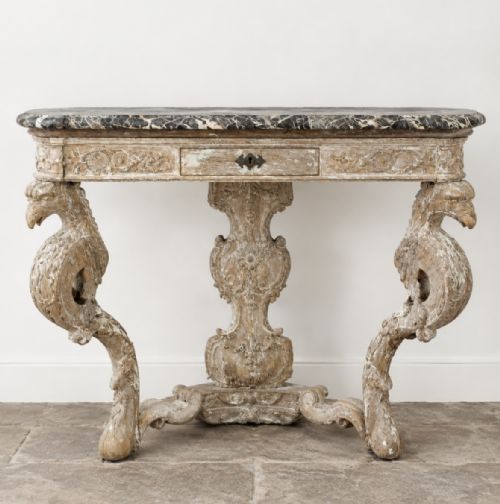
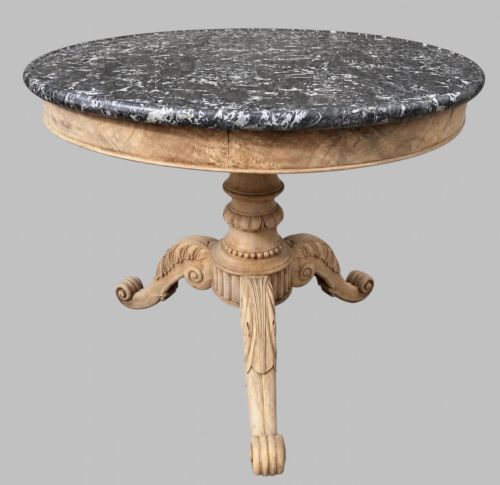
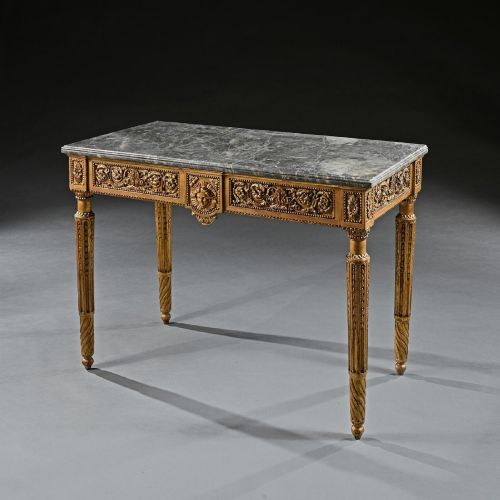
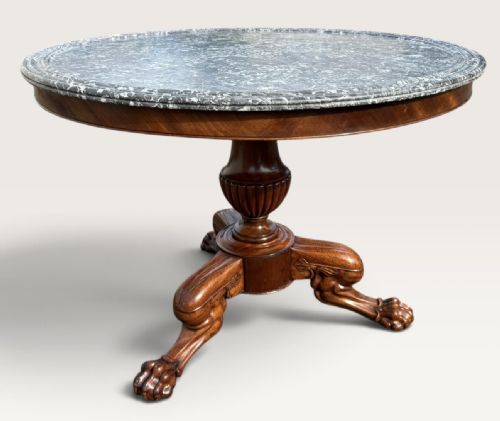
A grey marble top table brings a cool, enduring stone surface to a room, whether set on a carved giltwood console or a mahogany gueridon base.

Grey Marble Top Table
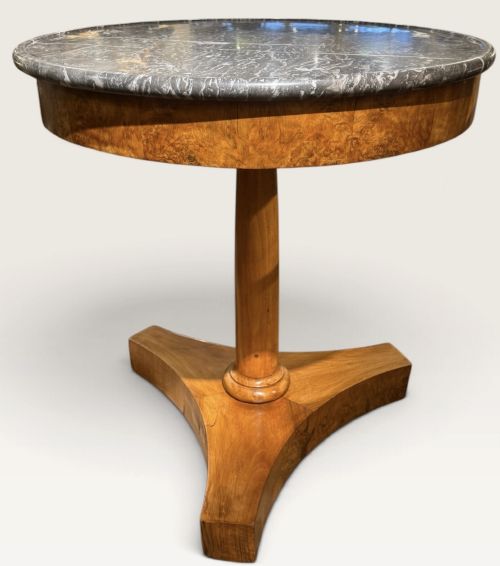
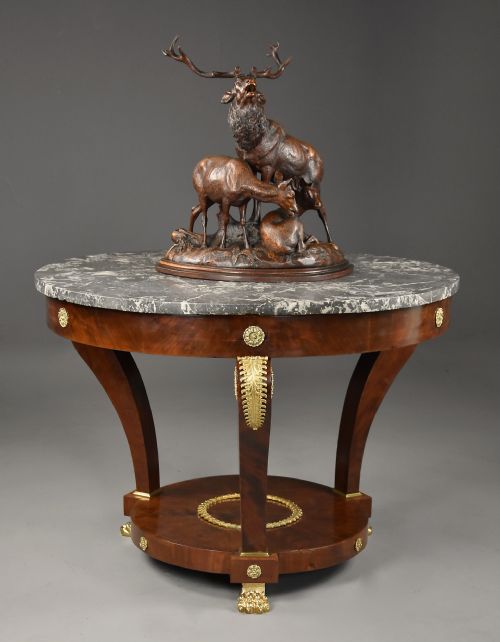
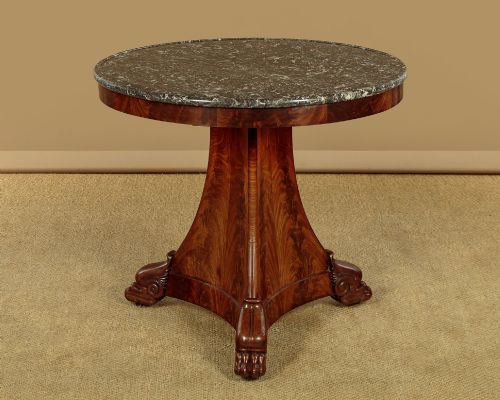
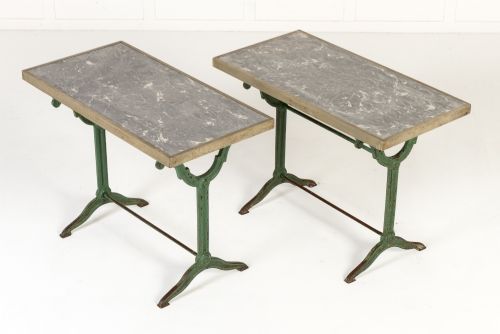
A grey marble top table encompasses a variety of forms designed for different domestic spaces, with gueridon tables, console tables, and bedside cabinets appearing frequently across the selection. These pieces span centuries of design, from eighteenth-century Italian giltwood and nineteenth-century French mahogany to Edwardian wrought iron and later oak iterations.
Buyers encounter numerous regional interpretations when searching for this phrase, notably French Empire and provincial styles alongside Italian neoclassical examples. The forms serve distinct functions, operating as centre tables for display, narrow consoles for hallways, or smaller bedside pieces topped with durable stone.
The integration of grey marble unites disparate periods, linking Georgian mahogany frames, painted pine cabinets, and cast iron bistro bases through a shared utilitarian yet decorative surface. This stone top provides a cool, water-resistant plane that suited nineteenth-century washstands and living spaces alike.
Materials and construction methods
Carpenters constructed the structural bases of these tables using dense timbers such as mahogany, walnut, oak, and rosewood, frequently employing flame veneers or intricate carvings to enrich the aesthetic. Giltwood and parcel-gilded pine appear on formal console tables, while simpler utility pieces utilise cast iron, wrought iron, or painted wood.
The stone surfaces consist of genuine grey, veined, or Belgian Sainte-Anne marble, shaped to fit the specific profiles of circular gueridon tables or rectangular console bases. These slabs rest upon the wooden or metal frames, often secured by their own considerable weight or subtle wooden battens.
Grey Marble Top Table Retail Price Guide 2026
Typical asking prices for grey marble top table among the pieces listed under this phrase on Sellingantiques today, from the lower quarter to the upper quarter. They describe what is for sale here now, not the wider market.
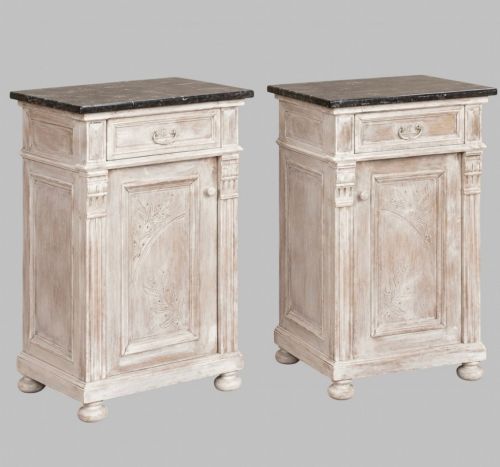
Several bedside cabinets are painted in a modern dark grey shade, proving that historic furniture still enjoys a fresh coat of contemporary paint.
Distinctions in quality
Quality reveals itself in the harmony between the stone slab and its supporting frame, where thick, characterfully veined marble pairs with dense, finely figured timbers such as flame mahogany or walnut. Superior pieces display crisp hand-carving on giltwood or wooden bases, whereas simpler examples rely on cast iron or painted pine.
The integrity of the original materials dictates the standing of a piece, particularly whether the grey marble top remains free from major repairs and matches the age of the base. Finer examples show precision in the joinery of the skirting and pedestals, maintaining structural stability without relying on modern reinforcements.
The Grey Marble Top Table Glossary
- Gueridon
- A small round table, typically supported by a central pillar and tripod base, frequently fitted with a marble top.
- Console table
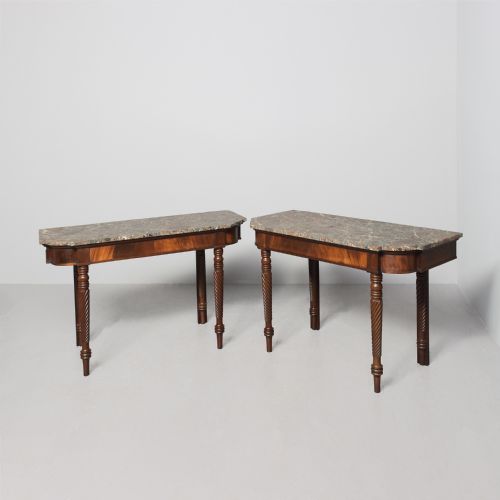
- A table designed to stand flat against a wall, historically supported by wall brackets or front legs.
- Belgian Sainte-Anne marble
- A distinctive dark grey or black limestone with white calcite veins, quarried in Belgium and favoured for nineteenth-century furniture tops.
- Flame mahogany
- A decorative veneer cut from the branch junction of a mahogany tree, displaying a distinctive flamed or feathered grain pattern.
- Parcel gilt
- Partially gilded with gold leaf, highlighting specific carved details on a painted or wood ground.
Grey Marble Top Table: Frequently Asked Questions
How do I clean a grey marble top?
Wipe the surface gently with a damp cloth and mild, non-acidic soap to preserve the polish and prevent staining.
Avoid abrasive cleaners or acidic substances like vinegar or lemon juice, which etch the polished stone.
Were these tables used for dining?
Most examples listed as gueridon or console tables served as centrepieces for displaying lamps and decorative objects rather than heavy dining.
Smaller bistro or cafe variants were built for hospitality use, whilst larger console tables anchored hallway displays.
Is the marble top always original?
Many pieces retain their original veined stone slabs, fitted specifically to the contours of the wooden or iron frames.
Replacement tops do occur, often matched in grey or white marble to replicate the original aesthetic of the period.
How do I date a mahogany console table?
Examine the secondary timbers used for the interior framing and drawer construction, alongside the style of the carved decoration.
Nineteenth-century versions often feature deep mahogany veneers and heavy proportions, whereas eighteenth-century examples display distinct hand-tool marks.