

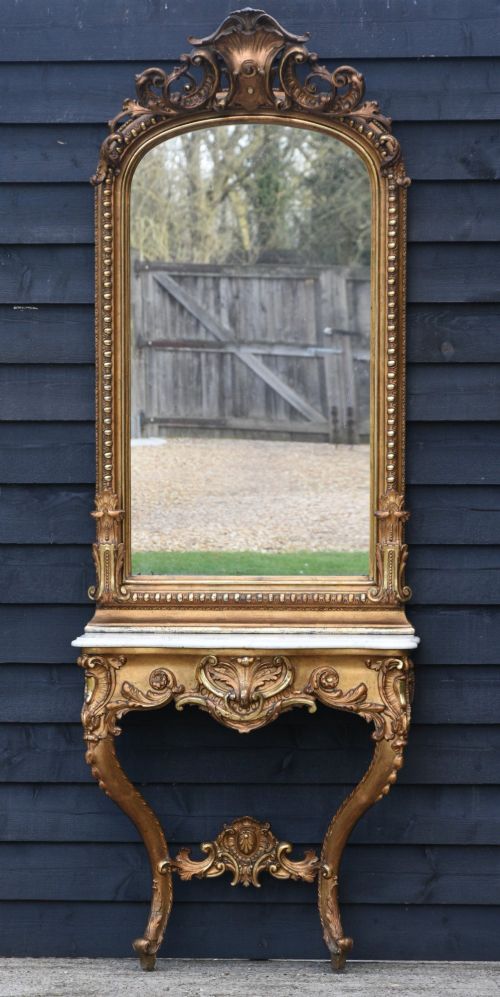
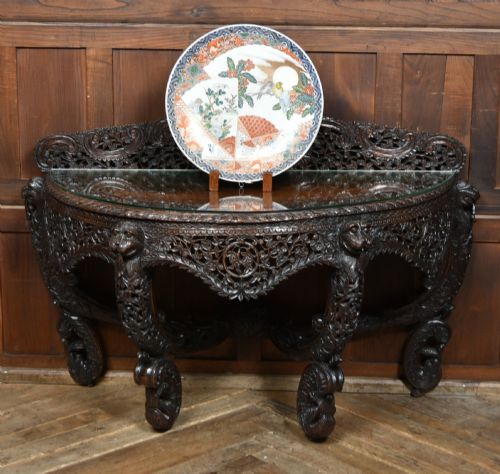
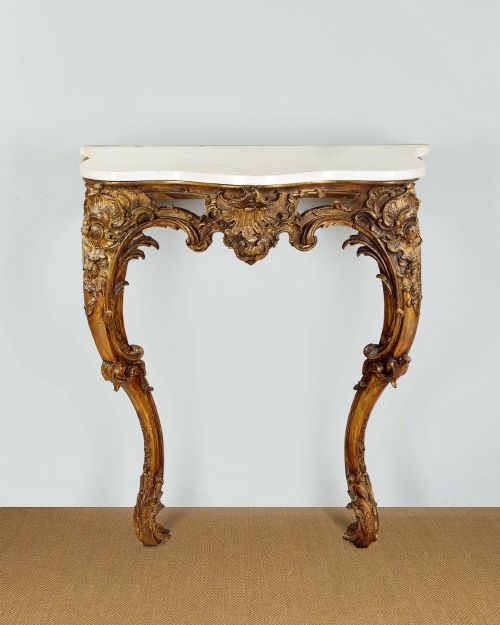
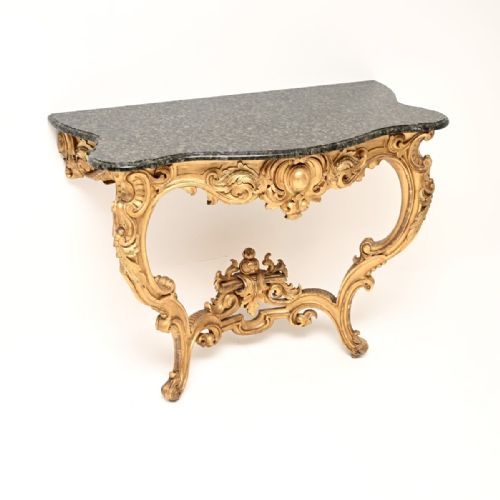
Carved Wood Pier Table
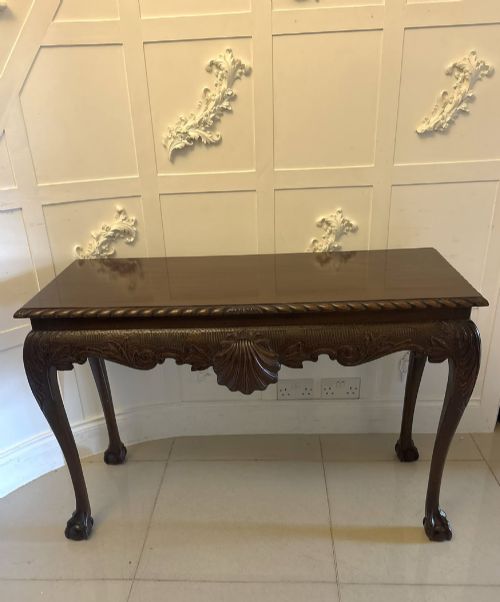
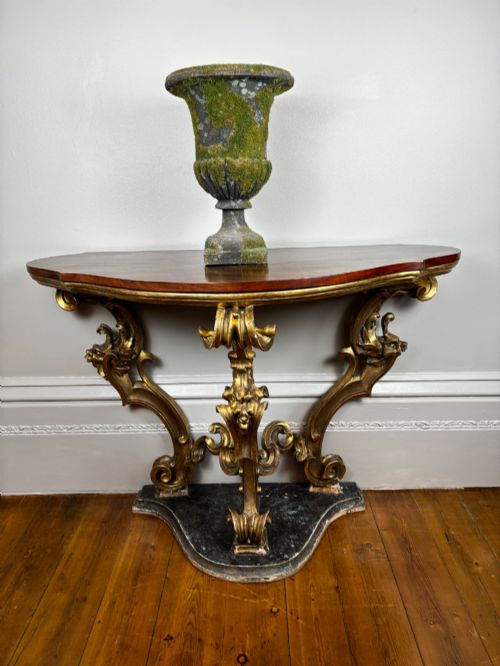
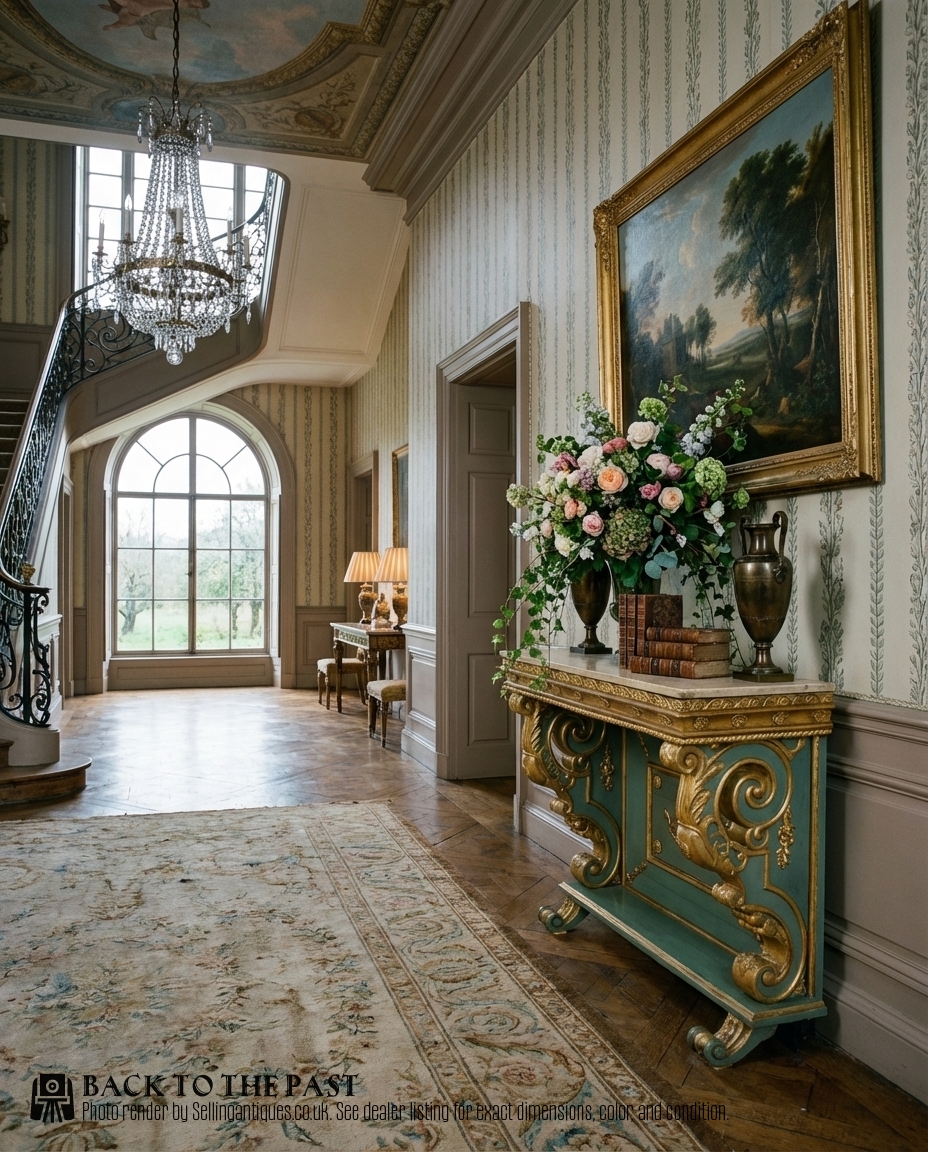
A carved wood pier table stands flat against a wall, bringing sculptural presence and a heavy stone or timber top to a room.
Carved Wood Pier Table
A carved wood pier table is a console or side table designed to sit in the architectural space between windows, frequently paired with a matching wall mirror above. The pieces gathered under this phrase span the eighteenth, nineteenth, and early twentieth centuries, drawing heavily on French, Italian, and English design vocabularies.
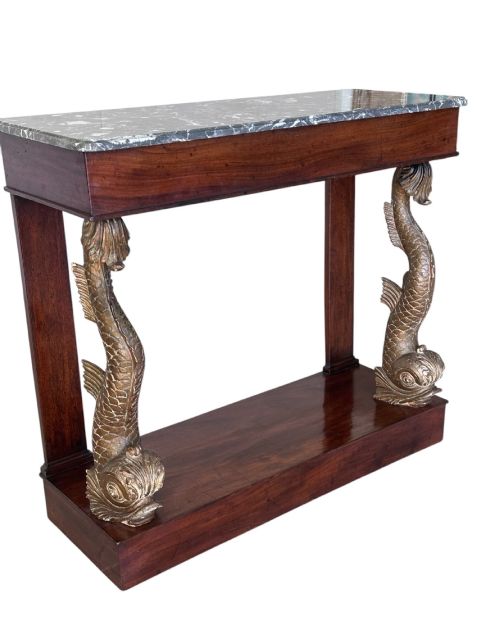
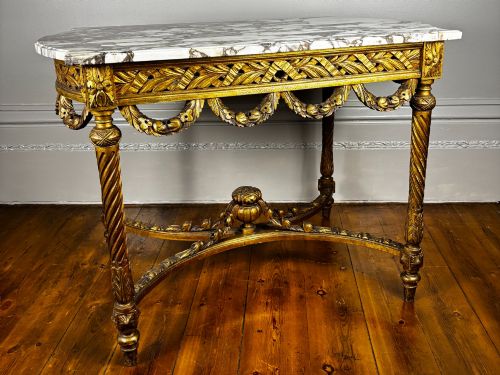
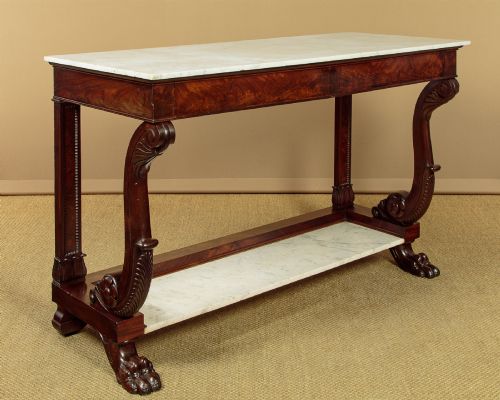
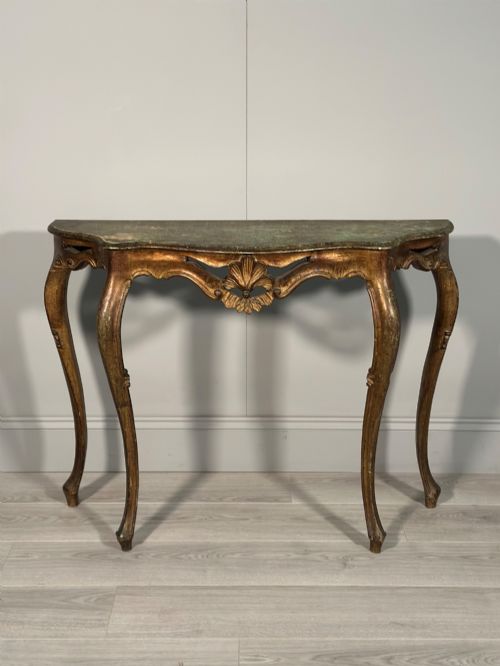
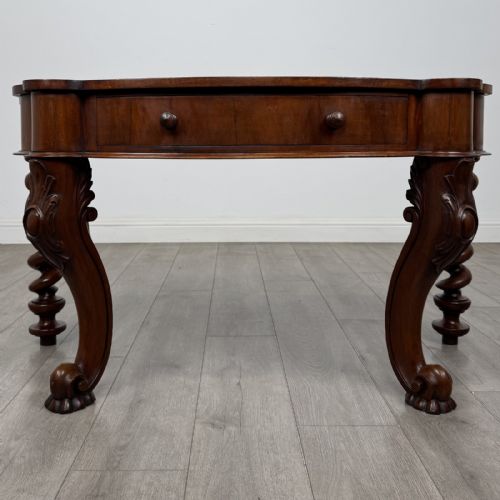
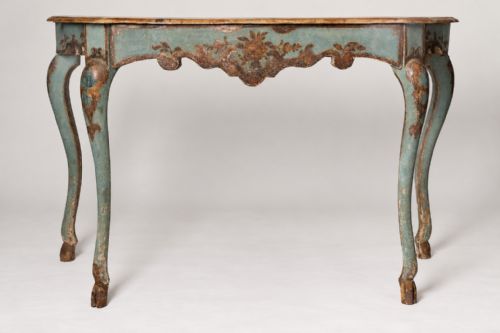
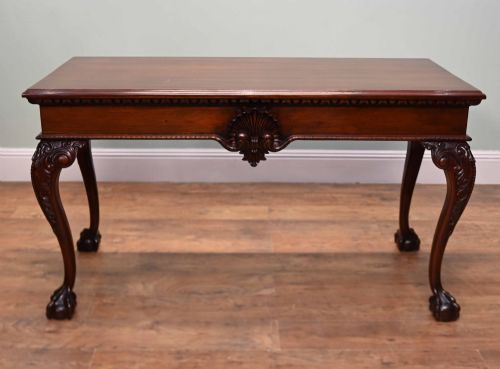
The form appears most often with a rectangular or serpentine marble slab resting upon an elaborate wooden base. Makers utilised mahogany, walnut, and heavily carved giltwood or gesso frames to support heavy stone tops, resulting in substantial furniture built for formal reception rooms.
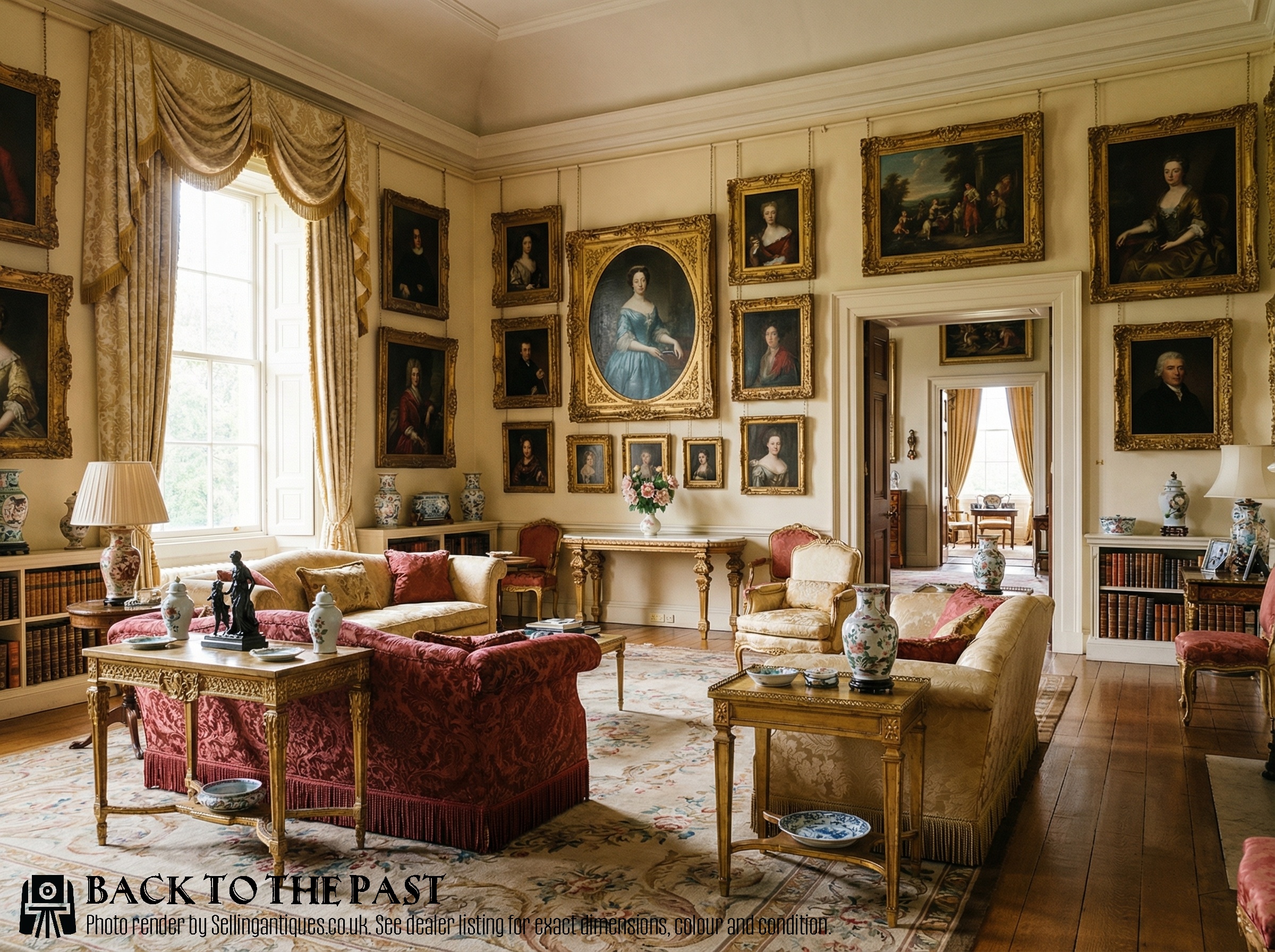
Materials and construction
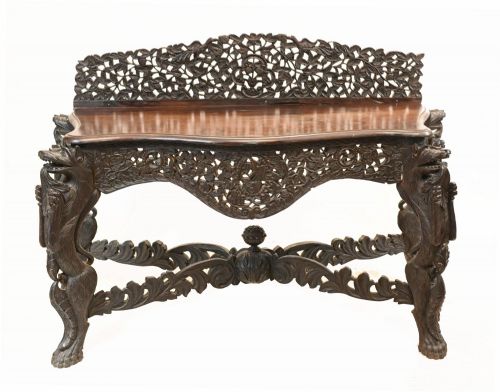
Makers fashioned the structural frames from dense timbers like mahogany and walnut, or carved softwoods intended to receive layers of gesso and gold leaf. These wooden carcasses required deep relief carving to articulate scrolling foliage, animal supports, and classical motifs along the aprons and legs.
Heavy slabs of figured marble, including breccia and breche d'alep varieties, form the upper surfaces of the majority of pieces. These stone tops rest directly upon the timber framework, often secured by their own considerable weight.
Carved Wood Pier Table Retail Price Guide 2026
Typical asking prices for carved wood pier table among the pieces listed under this phrase on Sellingantiques today, from the lower quarter to the upper quarter. They describe what is for sale here now, not the wider market.
Giltwood and painted finishes dominate the archived archive, while mahogany forms appear frequently among nineteenth-century domestic offerings.
Variations in quality
Quality rests in the crispness and depth of the wood carving, where master hands achieved sharp undercut details rather than shallow, mechanical moulding. Giltwood surfaces demonstrate superiority when the underlying gesso preparation remains smooth and the gold leaf burnished by hand.
The selection of materials dictates the upper tier of pieces, particularly where thick, well-figured marble slabs match the ambition of the supporting woodwork. Simpler painted or mahogany examples rely entirely on the proportion of the serpentine fronts and the joining of the timber.
Felix Alfred Ternisien·Robert Strahan
The Carved Wood Pier Table Glossary
- Giltwood
- Wood that has been coated with thin sheets of gold leaf over a prepared layer of gesso. This finish creates a brilliant reflective surface popular in formal neoclassical and revival interiors.
- Serpentine
- A furniture front or top that curves outward in the centre and inward at the sides, or vice versa. This flowing contour requires careful carpentry to shape both wood and stone.
- Console table
- A table supported by wall brackets or console legs, designed to stand flat against a vertical surface. They often feature decorative carving primarily on the front and sides.
- Gesso
- A plaster-like mixture applied to wood surfaces as a smooth base for gilding or painting. It allows craftsmen to build up fine details before applying gold leaf.
Carved Wood Pier Table: Frequently Asked Questions
Where should I place a pier table?
These tables belong against a flat wall, traditionally positioned in the architectural pier space between two windows. Placing them beneath a matching wall mirror completes the historical arrangement.
Because of their shallow depth, they also function effectively in hallways and reception rooms where floor space is limited.
How do I care for the marble top?
Marble requires gentle cleaning with a soft cloth and warm water, avoiding acidic or abrasive household cleaners that etch the polished stone surface. Using coasters prevents liquid rings from penetrating porous natural marble.
Applying a specialist stone wax periodically helps protect the finish from accidental stains.
Are these tables designed to be freestanding?
Most examples rely on the wall for ultimate stability, as their front legs carry the visual weight while wall brackets or fixings secure the rear. Checking the base construction reveals whether a piece requires attachment to the wall.
Freestanding console variations do exist, but traditional pier tables were engineered with wall placement in mind.
What distinguishes Rococo Revival from Neoclassical styles?
Rococo Revival pieces feature asymmetrical scrolling, naturalistic floral motifs, and flowing, organic curves derived from mid-eighteenth-century French taste. Neoclassical examples lean toward geometric symmetry, straight fluted legs, and architectural details like urns and swags.
Recognising these carving motifs helps date the decorative ambition of the wooden base.