







Gold Leaf Side Table
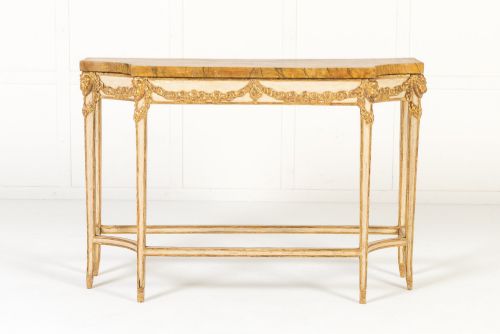
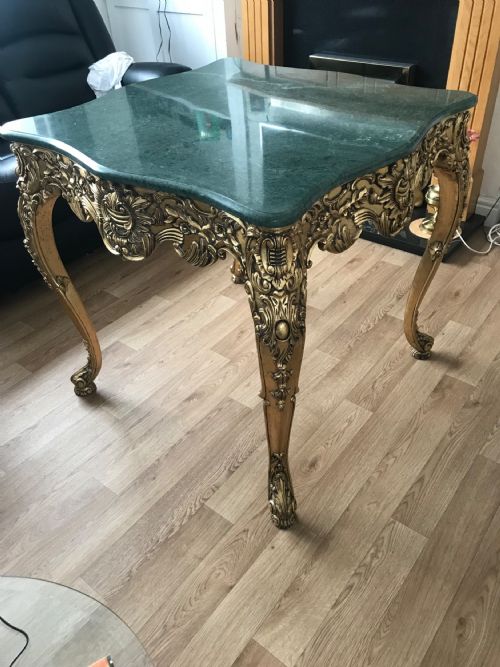
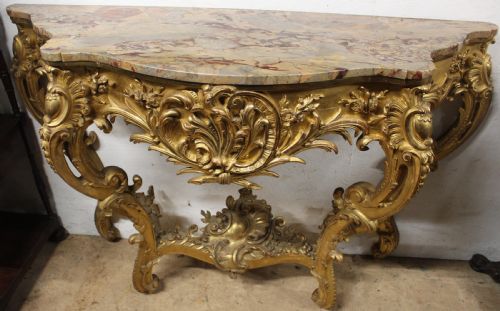
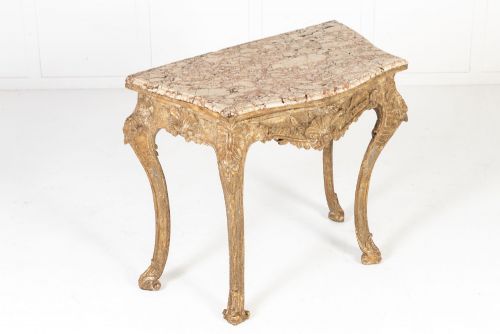
A gold leaf side table brings giltwood, paint and marble into a room through console, lamp and occasional forms.
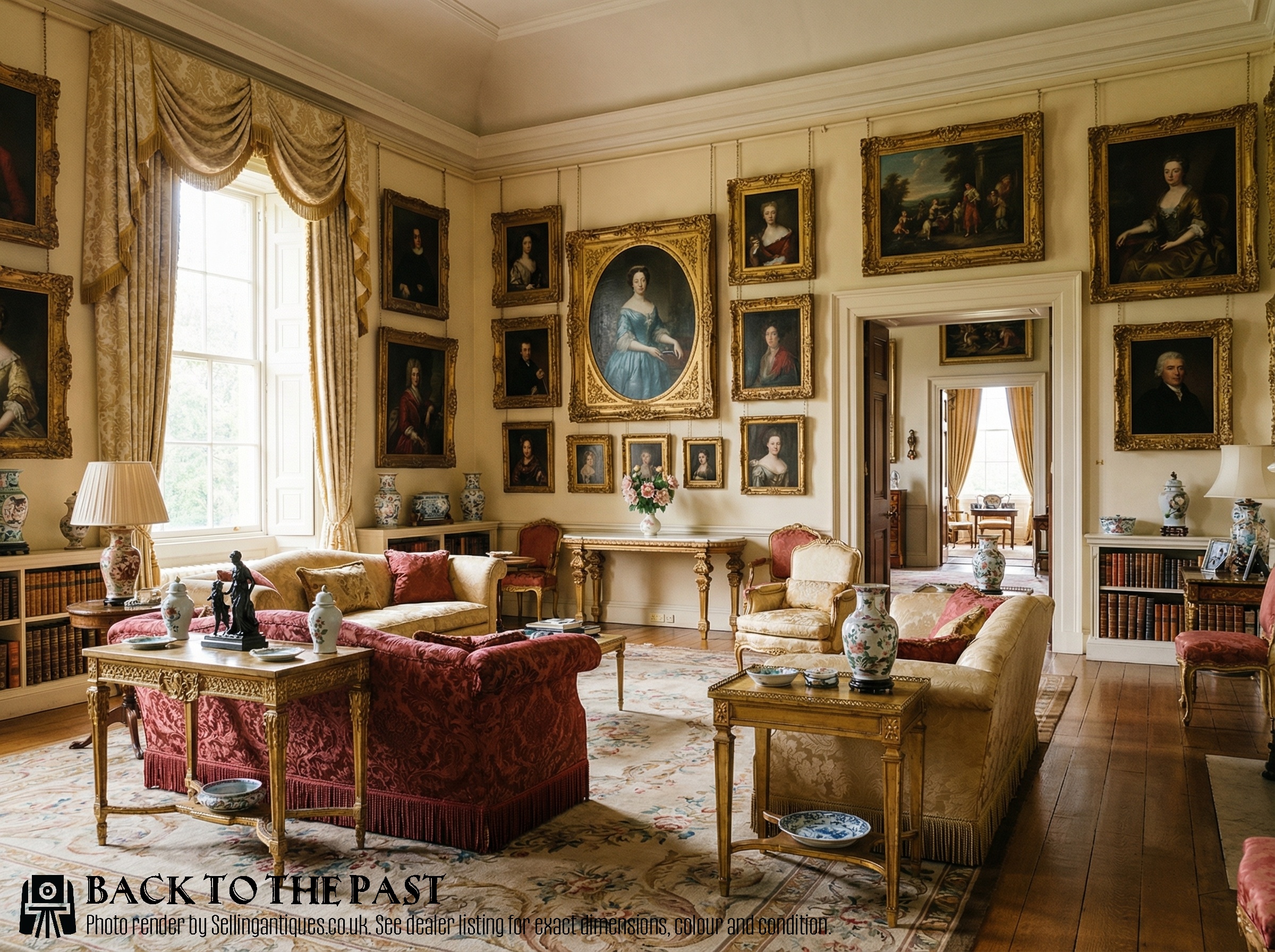
Gold Leaf Side Table
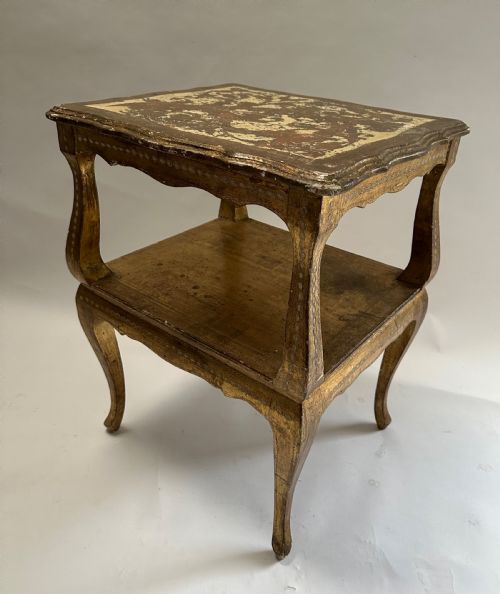
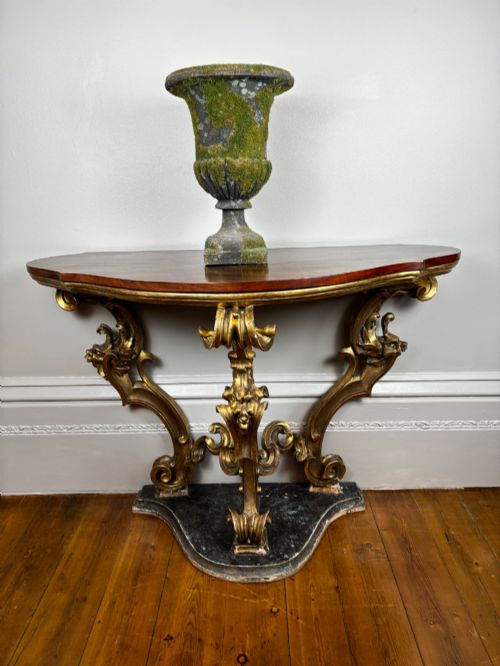
A gold leaf side table spans console tables, occasional tables and lamp tables originating from Italian, French and English workshops. These pieces emerge across the eighteenth, nineteenth and twentieth centuries in styles ranging from Italian Baroque and Rococo to French Chateau and Chinoiserie.
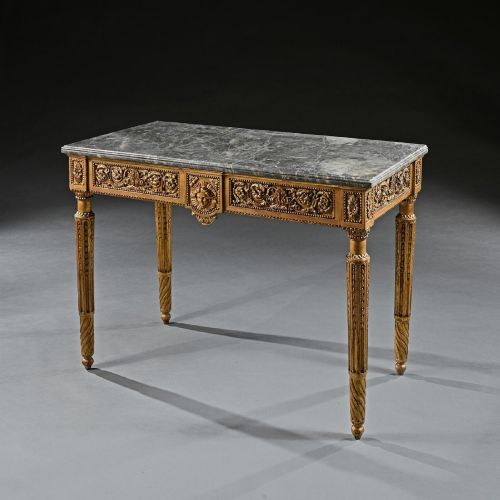
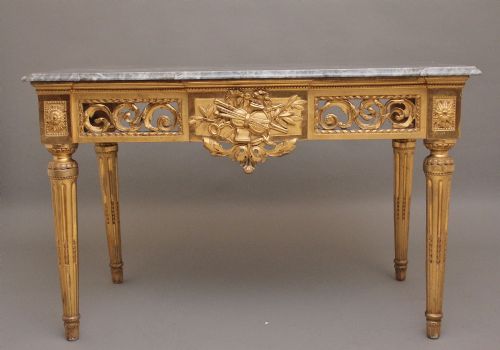
The most common examples on this page are eighteenth and nineteenth century console tables featuring carved giltwood and marble tops. Alongside these console forms, buyers find nest of tables, coffee tables, bedside tables and occasional pieces in painted and lacquered wood.
Origins trace principally to Italy and France, with particular regional variations such as Venetian painted decoration or Florentine bedside tables. Dating stretches from the seventeen-fifties through the Regency period and into mid-twentieth century adaptations.

Materials and technique
Carved wood frames provide the structural foundation for giltwood and painted tables, utilising lime wood and other timbers shaped in Italian and French workshops. Artisans apply gesso as a smooth preparation layer before laying down gold leaf or silver gilt.
Marble slabs form the heavy tops on many console and occasional tables, often selected in green or rouge varieties and polished to a smooth finish. Lacquered wood and painted surfaces receive detailed ornamentation, particularly in Chinoiserie and Venetian styles.
Gold Leaf Side Table Retail Price Guide 2026
Typical asking prices for gold leaf side table among the pieces listed under this phrase on Sellingantiques today, from the lower quarter to the upper quarter. They describe what is for sale here now, not the wider market.
Listings feature marble, gesso, giltwood and lacquered wood across console, occasional and lamp table forms dating from the eighteenth to the twentieth century.
Design and execution
Depth and precision of the wood carving separate standard joinery from exceptional craftsmanship, visible in the handling of Baroque scrolls, animal heads and floral motifs. The quality of the gilding and the weight and figuring of the marble top determine the overall standing of each piece.
Design coherence across the frame and top dictates visual success, whether in an Italian Rococo console or a French Louis XVI centre table. Original surfaces and period marble slabs carry significantly more weight among collectors than later restorations.
The Gold Leaf Side Table Glossary
- Giltwood
- Wood that has been coated with gold leaf over a prepared gesso ground. This technique creates a luminous metallic surface characteristic of console and occasional tables.
- Console table
- A table designed to stand against a wall, frequently secured with brackets and topped with marble. These pieces form a primary category within gilded furniture.
- Gesso
- A plaster mix applied to wood frames to create a smooth surface for gilding or painting. It allows intricate carved details to remain sharp under layers of gold leaf.
- Chinoiserie
- European artistic style reflecting Chinese motifs and decorative techniques. It appears on lacquered lamp tables and occasional pieces.
- Demi-lune
- Half-moon shape characteristic of console tables designed to fit flat against a wall. This profile accommodates marble tops in various colourways.
- Ormolu
- Gilded bronze ornamentation applied to furniture and lamps. The technique involves mercury gilding on a bronze base.
Gold Leaf Side Table: Frequently Asked Questions
Where should I place a console table?
Console tables sit flat against a wall in hallways, drawing rooms or dining spaces, often positioned beneath a mirror or painting. Their shallow depth suits narrow passages and reception rooms without obstructing movement.
Because many examples feature heavy marble tops, positioning them securely against a structural wall ensures stability during everyday use.
How do I clean marble top tables?
Wiping marble surfaces with a soft, damp cloth removes dust and everyday marks without damaging the polished stone. Avoiding acidic cleaners protects the calcium carbonate composition of the marble.
Allowing the stone to dry naturally preserves the sheen on green and rouge marble slabs found on these occasional and console tables.
What is the difference between giltwood and paint?
Giltwood involves applying thin sheets of gold or silver leaf over a gesso and wood base to create a reflective metallic sheen. Painted surfaces utilise pigments applied to wood or lacquered finishes to achieve decorative colour.
Both finishes frequently appear together on eighteenth and nineteenth century Italian and French furniture.
How do I identify an eighteenth century table?
Eighteenth century tables display hand-carved wooden frames, traditional joinery methods and patination appropriate to their age. Italian and French examples from this era often incorporate specific regional Baroque or Rococo motifs.
Examining the underside and construction details reveals the manual tooling characteristic of workshop production before industrial manufacturing.