







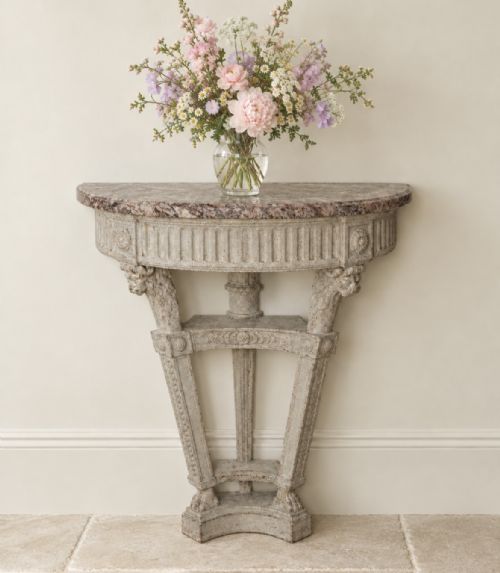

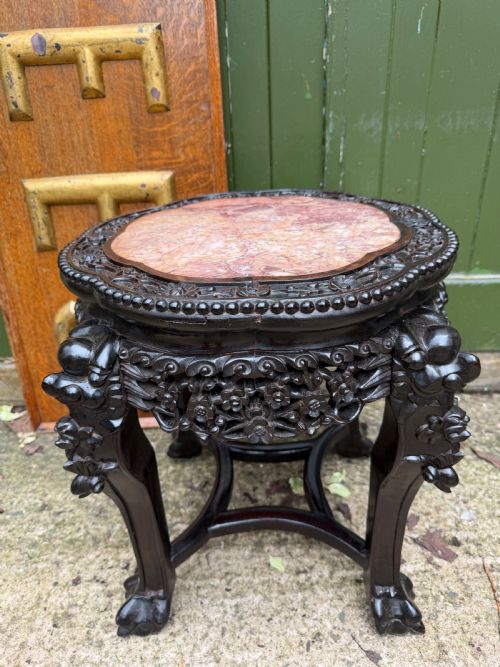
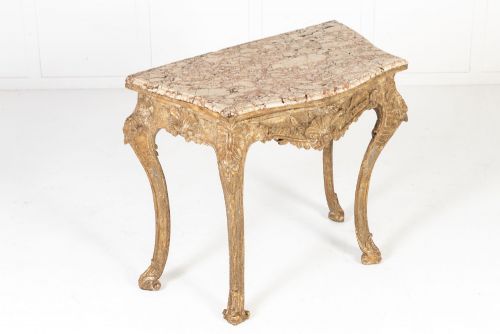


Pink Marble Side Table
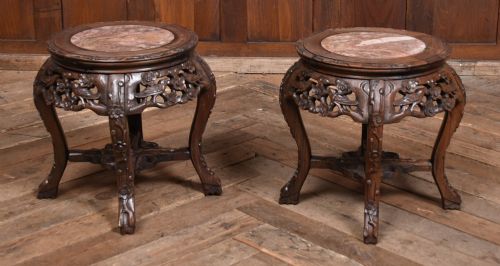
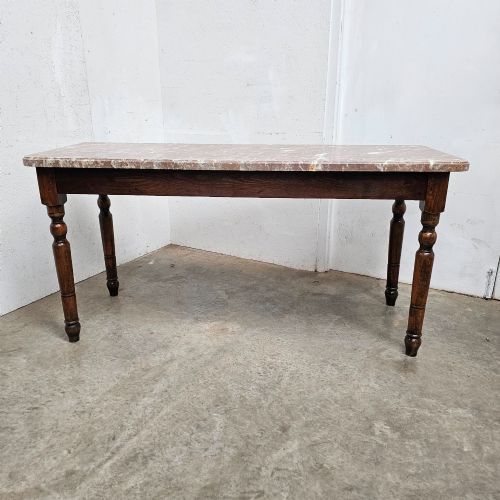
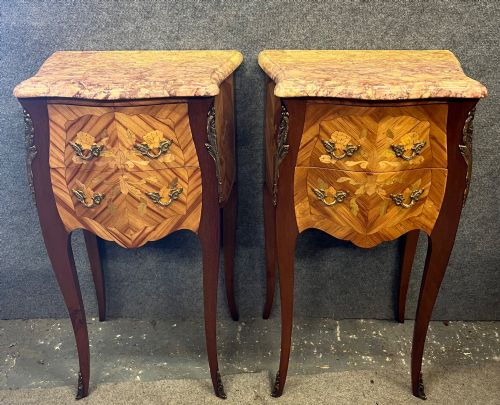
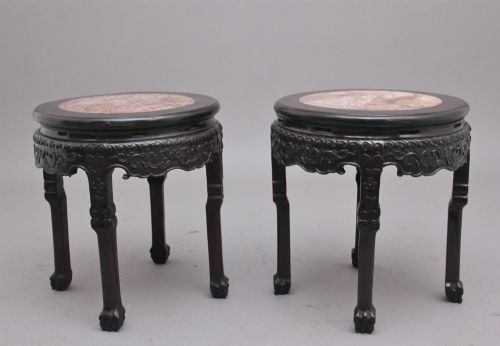
A pink marble side table brings a cool, mineral surface and rich timber framing into a room.

Pink Marble Side Table
A pink marble side table encompasses compact plant stands, bedside cabinets, and occasional tables designed for display and practical daily use. The pieces appearing here span the nineteenth century through the early twentieth century, originating from European workshops and Chinese export traditions.
Buyers meet diverse forms ranging from French gueridon tables to carved hardwood plant stands and low jardiniere tables. These items utilise inset stone panels supported by sturdy frames of walnut, rosewood, mahogany, and cast iron.

How they were made
Cabinetmakers constructed the wooden frames using hardwoods such as rosewood, walnut, and mahogany, often applying intricate marquetry, carving, or gilt brass mounts. The stone tops, including pink Salome and rouge marble, were shaped, polished, and set precisely into wooden or cast iron recesses.
Traditional joinery secures the legs and aprons, while metal elements like ormolu and brass provide structural reinforcement and decorative contrast against the polished stone surfaces.
Pink Marble Side Table Retail Price Guide 2026
Typical asking prices for pink marble side table among the pieces listed under this phrase on Sellingantiques today, from the lower quarter to the upper quarter. They describe what is for sale here now, not the wider market.
Several stands double as aristocratic plant holders, proving Victorian ferns possessed superior interior design taste.
What varies in quality
Quality rests on the depth and crispness of the timber carving, the selection of dense hardwoods, and the grain variation within the marble top. Examples with finely figured walnut or dense rosewood paired with unblemished stone show superior craftsmanship.
The integration of the stone top into the wooden rebate distinguishes finer workshops from standard production. Substantial cast iron bases, precise marquetry inlay, and fire-gilded bronze mounts elevate the execution of these tables.

The Pink Marble Side Table Glossary
- Gueridon
- A small round table, typically French in origin, often utilised as a lamp or wine stand. These pieces usually feature a central pillar or tripod base.
- Jardiniere
- A decorative stand or container intended to hold plants or floral arrangements. They frequently incorporate marble inserts to resist moisture from watering.
- Ormolu
- Gilded bronze applied as decorative mounts on furniture frames. This technique was widely employed in French revival styles during the nineteenth century.
- Marquetry
- The art of applying small pieces of veneer to a structure to form decorative patterns. It appears frequently on the cabinet bodies of bedside tables.
- Hongmu
- A traditional Chinese term for dense, heavy hardwoods used in fine furniture. These timbers often display dark, rich patination alongside carved details.
Pink Marble Side Table: Frequently Asked Questions
Where should I place a pink marble side table?
These tables fit well beside seating areas as lamp supports or in bedrooms as compact bedside cabinets. The smooth stone surface provides a practical landing spot for daily items.
Ensure the piece is positioned away from high-traffic walkways to protect delicate carvings and protruding legs.
How do I clean pink marble?
Wipe the surface regularly with a soft, damp cloth and mild, neutral soap. Avoid acidic cleaners, vinegar, or harsh chemicals that can etch the polished stone.
Dry the marble thoroughly afterwards to prevent water spots and maintain its natural lustre.
How can I date a marble top table?
Examine the timber construction beneath the stone, looking for hand-cut joinery, screw types, and wood ageing characteristics. Style indicators like French Louis revival or Chinese export carving also point to specific decades.
The weight and thickness of the marble slab can offer further clues regarding its period of manufacture.
Are these tables sturdy enough for daily use?
Most pieces are built from dense hardwoods or cast iron, making them structurally sound for everyday items like lamps and books. Regular use requires normal care to avoid straining joints.
Heavier items should be placed carefully to prevent tipping on smaller tripod or pedestal bases.