


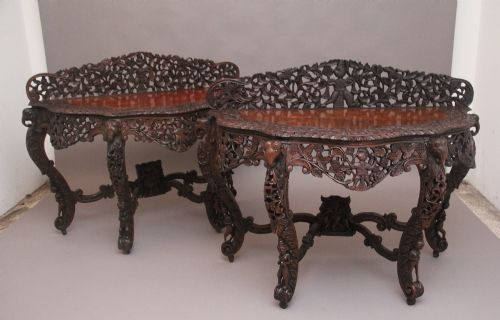
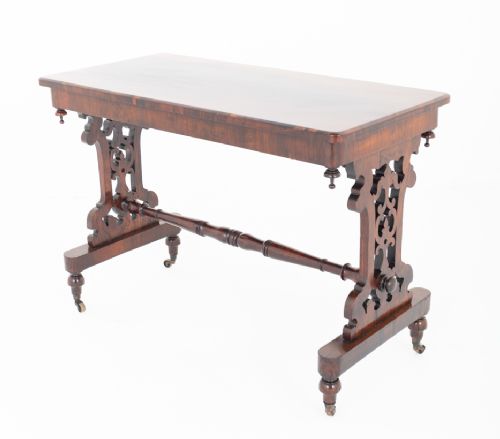
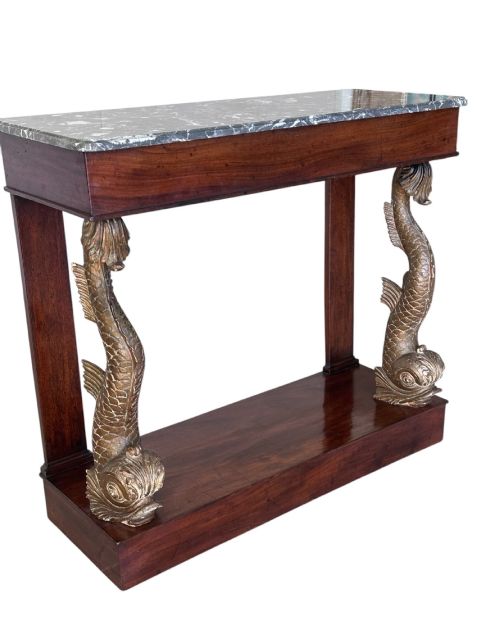
Carved Wood Console Table
A carved wood console table brings formal architectural presence into a room, offering a decorative surface set flush against a wall.
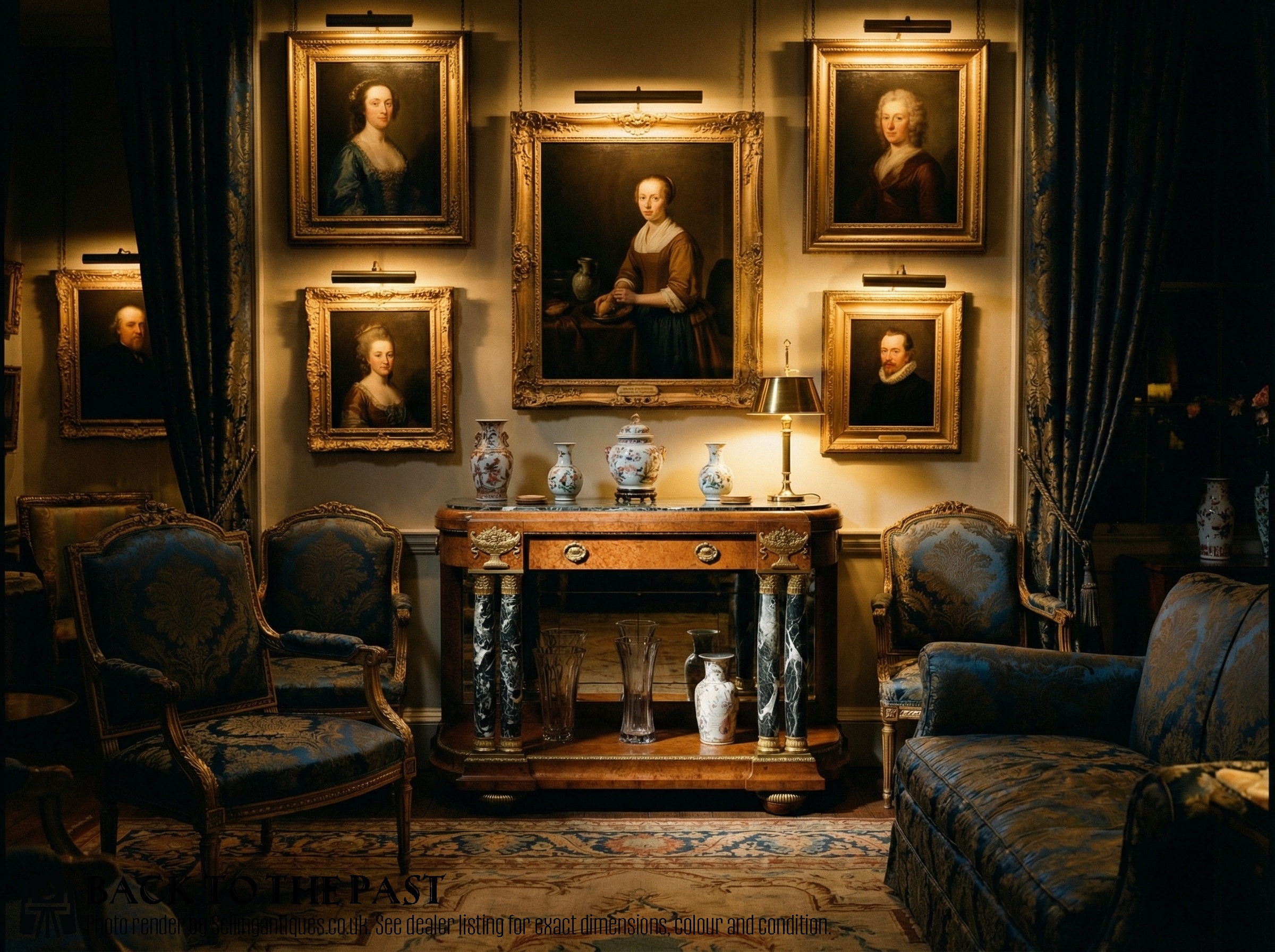
Carved Wood Console Table
A carved wood console table is an architectural wall table designed to anchor a hallway, drawing room or reception space, frequently paired with a matching pier mirror above it. The form bridges purely decorative display and functional surface utility, often sharing characteristics with side tables, card tables and serving tables across the inventory.
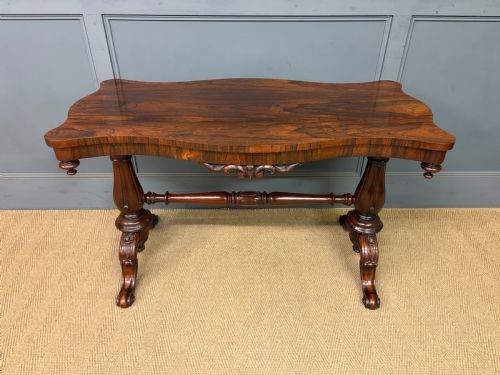
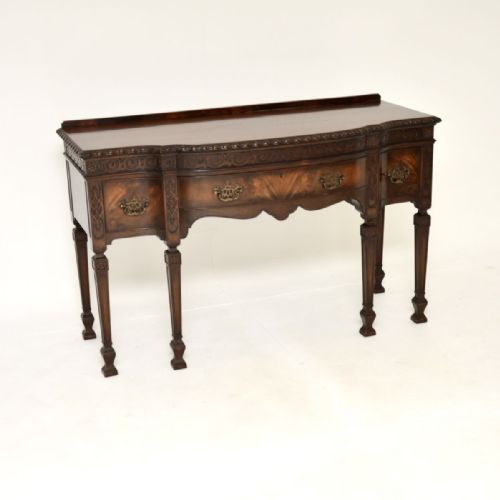
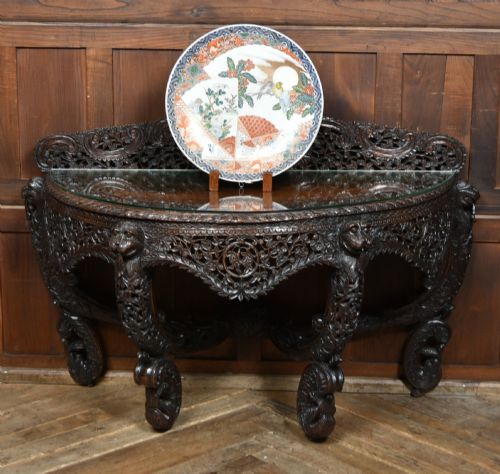
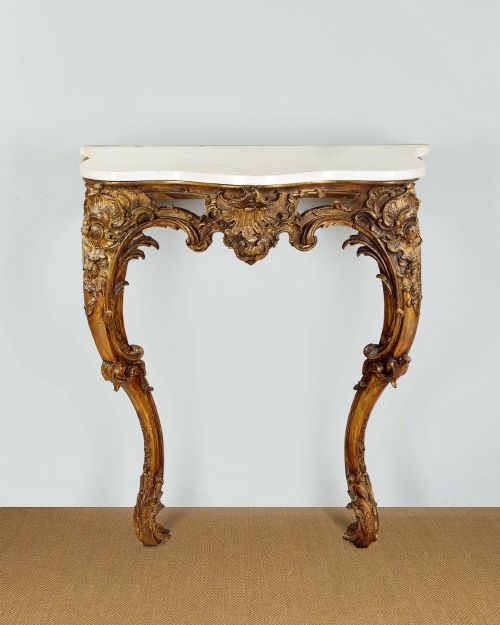
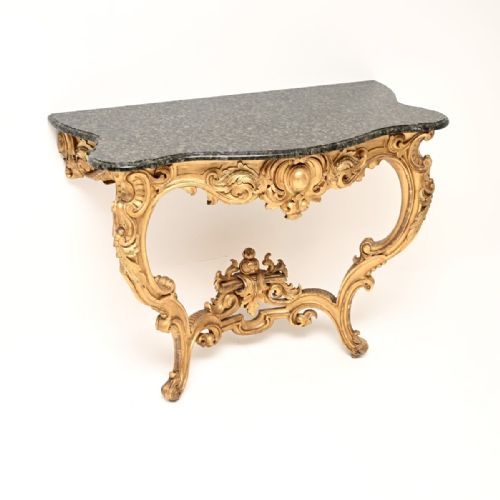
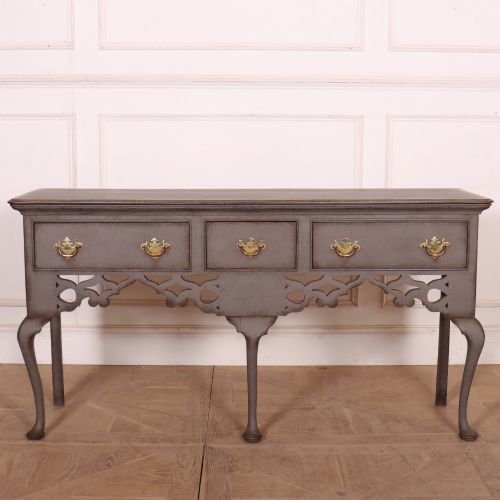
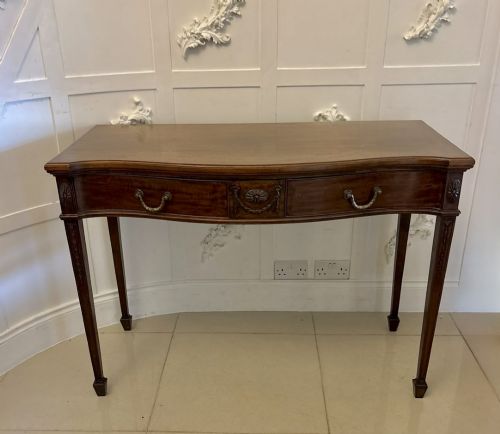
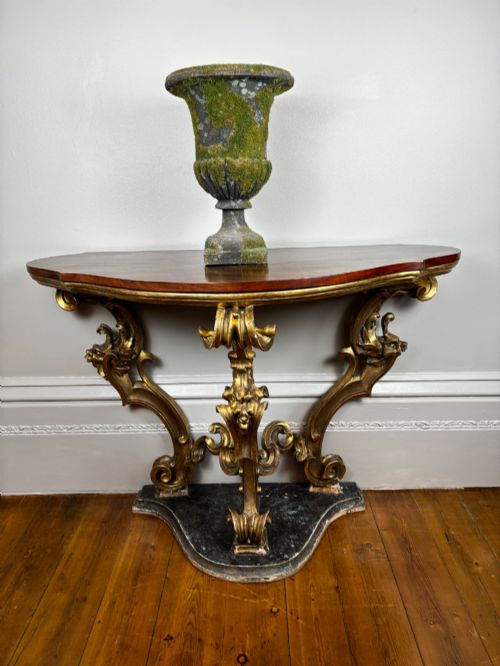
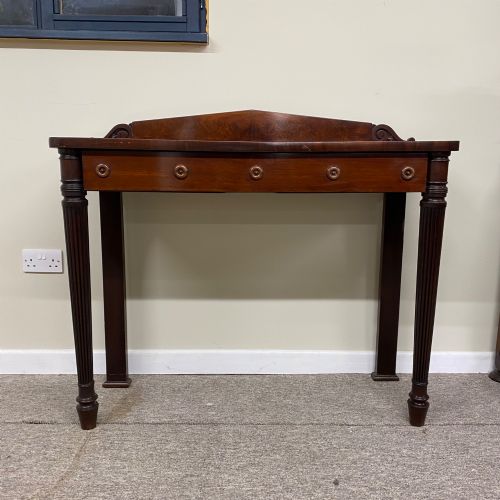
The pieces appearing on this page span several centuries and geographic origins, encompassing 18th-century Italian giltwood examples, French Napoleon and Rococo revival pieces, and robust Victorian walnut or mahogany iterations. Buyers will encounter serpentine fronts, demi-lune profiles and straight-legged neoclassical designs alongside heavy giltwood surfaces intended for formal domestic interiors.
Many tables incorporate heavy stone surfaces, combining carved timber bases with inset marble or onyx slabs, while others rely entirely on finely figured mahogany, rosewood or burr walnut. From diminutive hallway ledges to large exhibition pieces, these tables reflect the decorative tastes of the Victorian, Regency and Edwardian eras.
How they were made
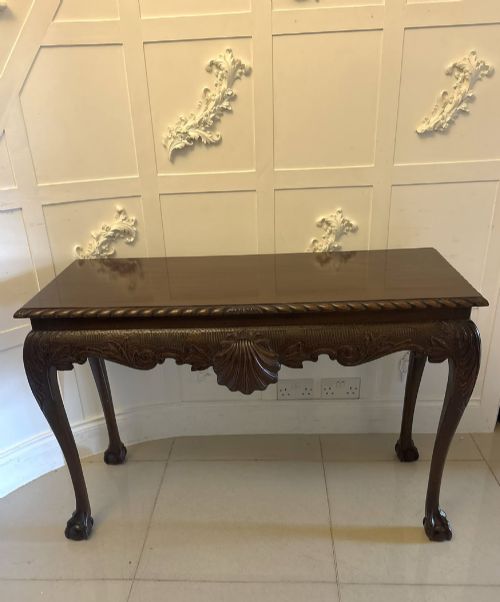
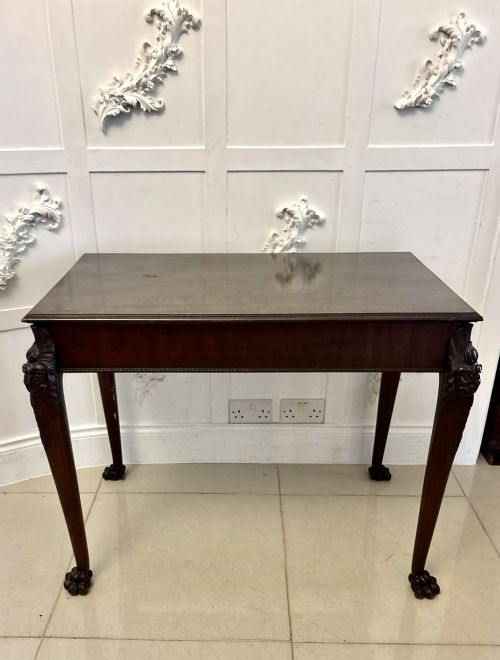
Cabinetmakers constructed the structural frames of these tables using dense hardwoods such as mahogany, oak, walnut and rosewood, frequently applying intricate hand-carved details directly into the solid timber or onto applied mouldings. Giltwood and gesso surfaces required meticulous layers of chalk preparation over carved wood before the application of gold leaf.
Many 19th-century and earlier tables incorporate heavy inset marble tops, including shaped breche d'alep varieties, which demanded precise stonemasonry to fit flush within the wooden framework. Brass inlay, hand-painted polychrome decoration and carved basket or scroll bases further demonstrate the combination of carpentry, gilding and decorative arts employed by period workshops.
Carved Wood Console Table Retail Price Guide 2026
Typical asking prices for carved wood console table among the pieces listed under this phrase on Sellingantiques today, from the lower quarter to the upper quarter. They describe what is for sale here now, not the wider market.
Materials span heavy Italian marble, onyx, brass inlay and carved walnut across various European origins.
What varies in quality
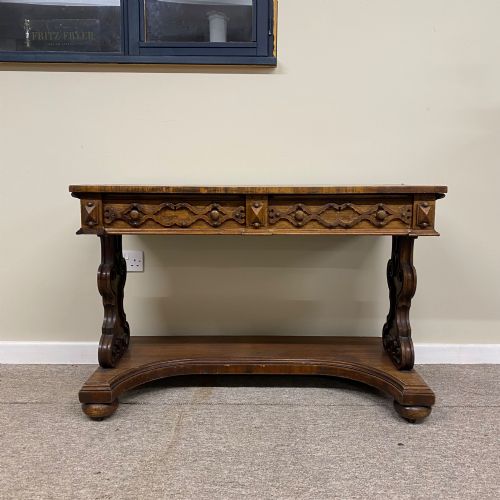
The distinction between ordinary and exceptional examples rests upon the depth, crispness and ambition of the hand-carving executed on the wooden frame or gilt gesso. Superior tables display deep undercut foliage, scrolls and figural motifs that retain sharp definition, whereas lesser pieces feature shallow, mechanical moulding.
Material selection also dictates the hierarchy of quality, seen in the choice of heavily figured burr walnut, rich rosewood veneers, or heavy imported marbles rather than plain secondary woods and painted substitutes. Furthermore, structural integrity such as freestanding finished backs, balanced proportions and original gilding separate standard production furniture from exhibition-grade commissions.
Felix-Alfred Ternisien·Amleto Bertoni
The Carved Wood Console Table Glossary
- Console table
- A table designed to be fixed against a wall or supported by brackets, frequently featuring ornamental front legs. These pieces originally served as architectural ornaments in formal rooms.
- Giltwood
- Timber that has been coated with a thin layer of gold leaf or gold powder over a prepared gesso base. This technique creates a brilliant reflective surface popular in Rococo and Neoclassical design.
- Demi-lune
- A half-moon or semicircular shape utilised for the top and footprint of small tables. This profile allows the furniture to sit snugly against flat walls in narrow hallways.
- Serpentine
- A furniture front or edge shaped with a central convex curve flanked by two concave curves. The flowing contour requires advanced carpentry and adds visual movement to heavy timber.
- Pier table
- A decorative table specifically built to stand against the wall space between two windows, frequently paired with a matching wall-mounted mirror above it.
Carved Wood Console Table: Frequently Asked Questions
What is a console table used for?
These tables provide a decorative surface for displaying lamps, porcelain and ornamental objects while occupying minimal floor space against a wall.
Historically, they anchored formal reception rooms and hallways, often supporting heavy mirrors or serving as focal points beneath architectural artwork.
How do you tell a console table from a side table?
A traditional console table is designed to stand flush against a wall and may historically have relied on wall brackets for support rather than standing entirely independently.
Side tables feature four fully freestanding legs and can float anywhere within a room, though the terms often overlap in modern inventory descriptions.
What periods do these tables come from?
The available pieces span the 18th, 19th and early 20th centuries, covering periods such as Regency, Victorian, Edwardian and William IV.
Stylistic revivals from the 19th century also frequently reproduce earlier French Rococo and Neoclassical designs from the Louis periods.
Are the marble tops original to the tables?
Many 19th-century French and Italian tables retain their original inset marble or onyx slabs, which were fitted directly into the carved wooden frames during manufacture.
Because marble tops were heavy and susceptible to damage over time, buyers should examine the fit and stone type to determine period authenticity.
How should I care for a giltwood console table?
Giltwood surfaces require gentle dusting with a dry, soft cloth and must be kept away from direct sunlight and moisture to prevent the delicate gold leaf from flaking.
Avoid using any commercial liquid polishes, abrasive cleaners or damp cloths on gilded or painted wooden finishes.