







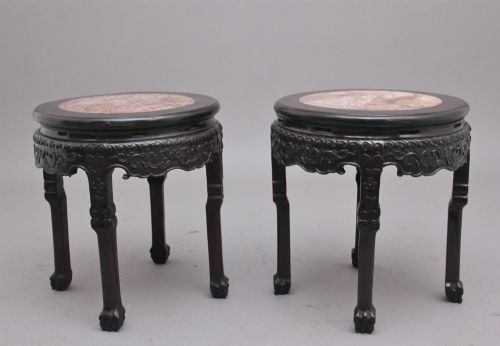

Oriental Marble Top Table
An oriental marble top table brings sculpted hardwood and cool stone together to anchor a room with calm, structural balance.
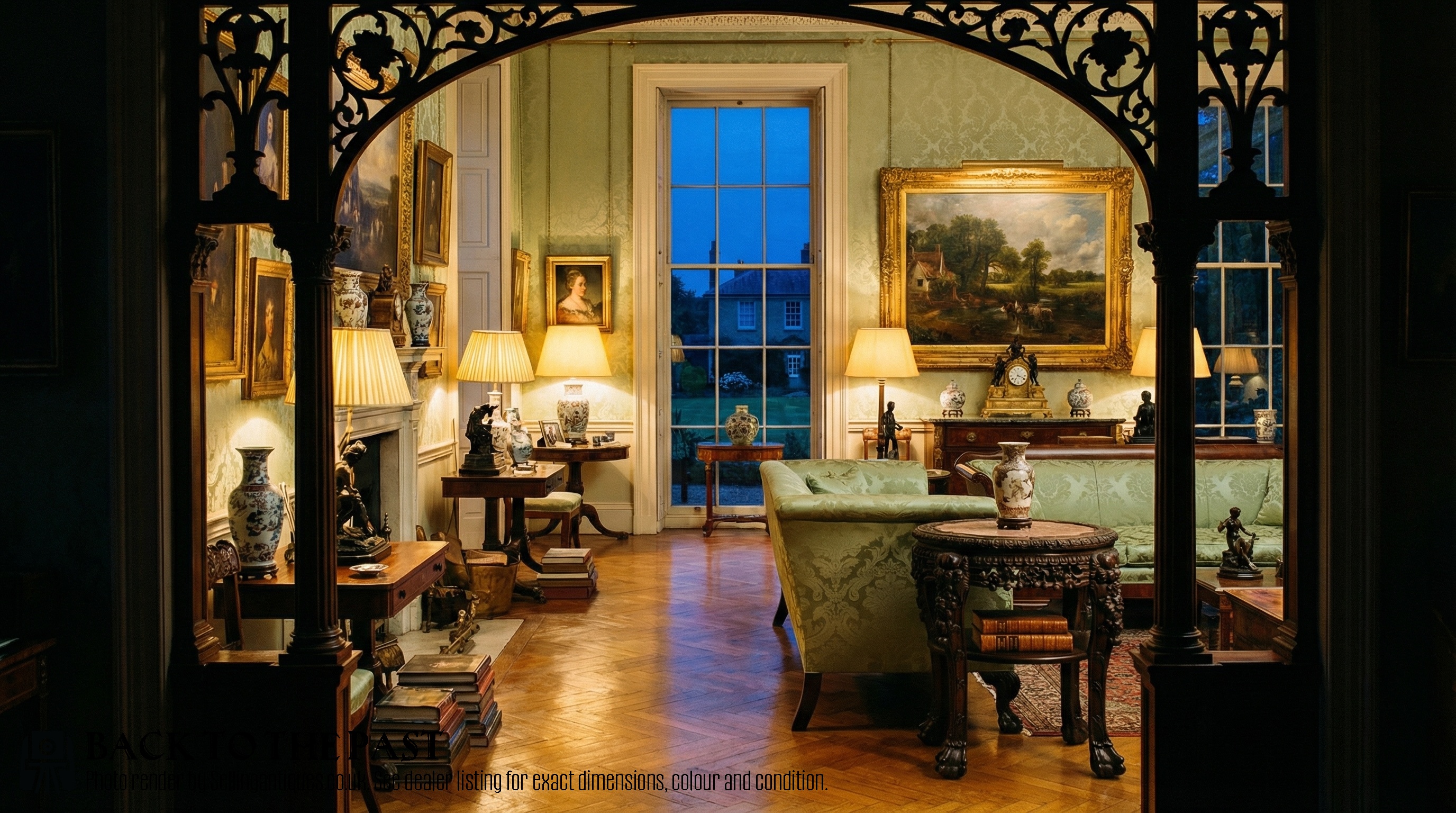
Oriental Marble Top Table
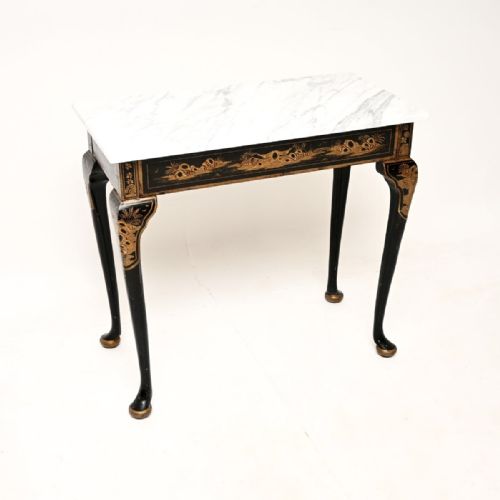
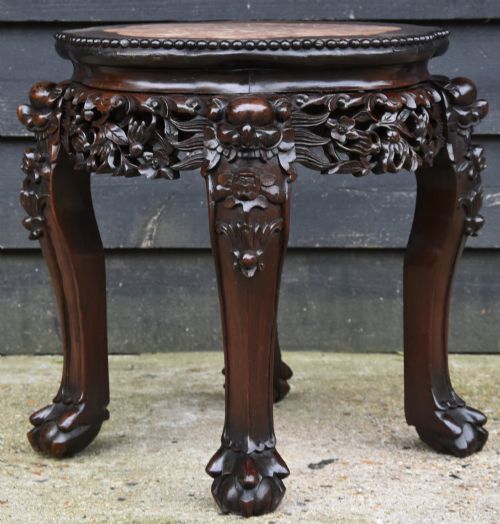
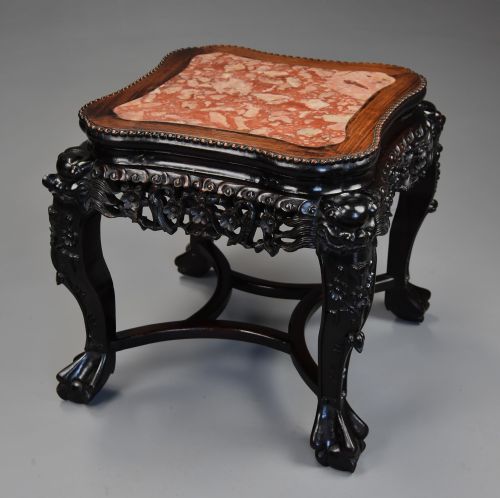
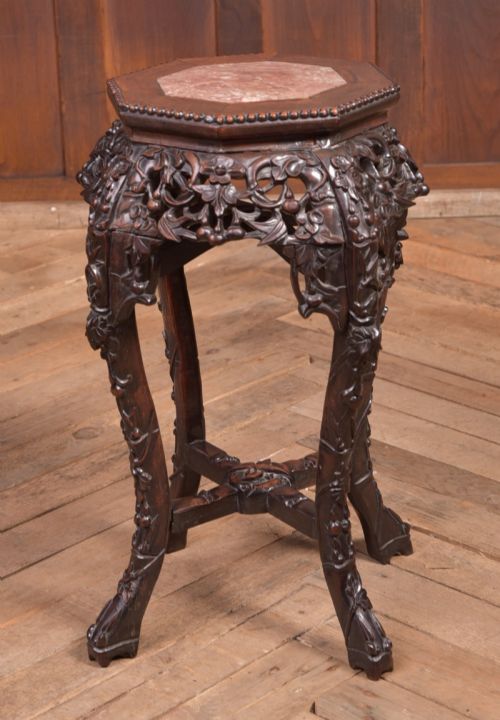
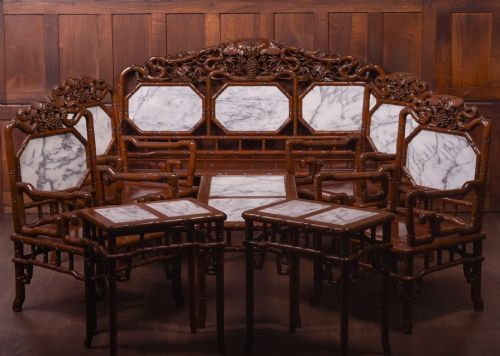
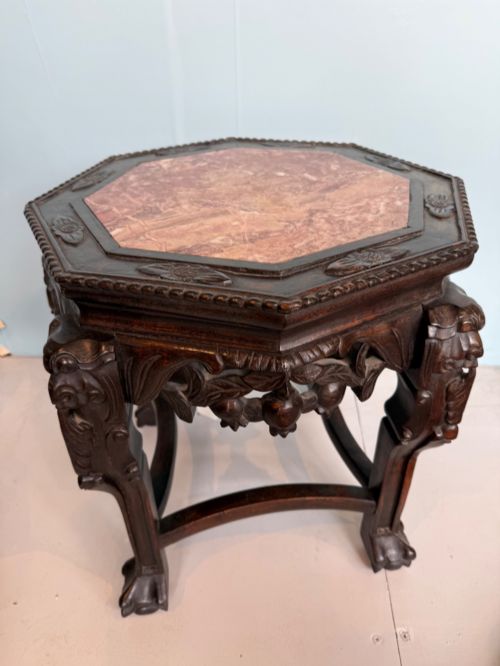
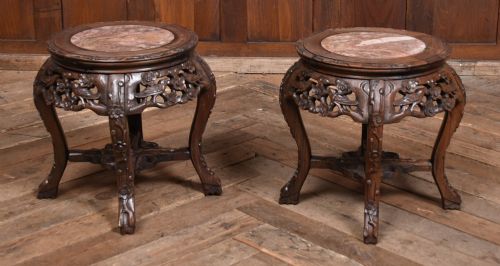
An oriental marble top table unites heavy dark hardwood frames with inset stone panels, taking forms such as low tables, bedside tables, side tables, centre tables, urn stands, and plant stands. You are most likely to encounter nineteenth-century pieces bearing Chinese export, Qing dynasty, or Meiji period characteristics.
The construction ranges from compact stands designed to elevate plants and urns to broader side tables and centre tables meant for display. These forms draw upon nineteenth-century craftsmanship, balancing utility with intricate relief carving in the hardwood frames.
How they were made
Cabinetmakers used dense hardwood to build rigid frames that could support the weight of heavy stone inserts without warping. These timbers were joined with traditional woodworking methods that accommodated the natural movement of the wood.
Smooth marble slabs were cut and fitted precisely into recessed wooden channels atop the stands. Artisans then carved detailed floral or geometric motifs directly into the surrounding hardwood rails and aprons using hand chisels.
Oriental Marble Top Table Retail Price Guide 2026
Typical asking prices for oriental marble top table among the pieces listed under this phrase on Sellingantiques today, from the lower quarter to the upper quarter. They describe what is for sale here now, not the wider market.
Current listings feature hardwood, marble, and mother-of-pearl across nineteenth-century and early twentieth-century forms.
What varies in quality
The distinction between ordinary and exceptional work rests on the depth and crispness of the hardwood carving. Finer examples display sharply defined relief work with smooth transitions, whilst simpler pieces rely on basic turned legs and minimal surface decoration.
The integration of the marble top also defines the standard of the piece, with better items featuring stone tightly fitted into the wooden rebate without excessive filler. The figure and tone of the marble itself contribute to the overall visual cohesion of the stand.
The Oriental Marble Top Table Glossary
- Hardwood
- Dense, durable timber harvested from slow-growing trees, typically utilised for structural stability and intricate carving.
- Marble
- Metamorphic rock cut into thin slabs to provide a cool, smooth inset surface on table tops and stands.
- Plant Stand
- A tall, narrow piece of furniture designed specifically to elevate potted plants or decorative vessels.
- Centre Table
- A freestanding table intended to be viewed from all sides, placed prominently in the middle of a room.
- Qing Dynasty
- The final imperial dynasty of China, spanning the seventeenth to the early twentieth century, known for elaborate decorative arts.
Oriental Marble Top Table: Frequently Asked Questions
Where should I place a marble top table?
These pieces suit corners or entryways where a sturdy surface is needed for display.
They also function well beside seating to hold small lamps or decorative items without cluttering the floor plan.
How do I care for the marble top?
Wipe the stone surface regularly with a soft, damp cloth to remove dust and prevent staining.
Avoid acidic cleaning agents that can etch the polished finish of the marble over time.
Are these tables heavy to move?
The combination of dense hardwood and solid stone makes these stands surprisingly heavy for their physical size.
Lifting them from the lower frame rather than the top edge ensures safe handling when rearranging a room.
How do I identify a nineteenth-century piece?
Nineteenth-century examples show hand-carved joinery details and patinated hardwood surfaces developed through decades of handling.
Construction methods reflect traditional workshop practices prior to mass industrial furniture production.