







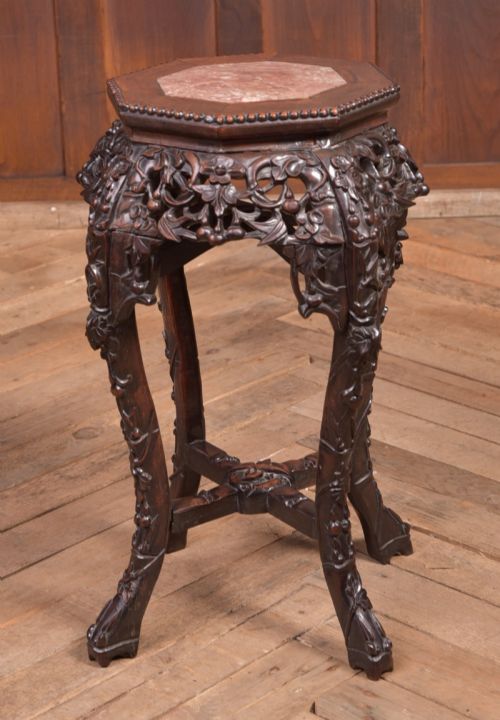

Chinese Plant Stands
These chinese plant stands are decorative tables that elevate jardinieres and urns, bringing refined form and traditional craftsmanship into a room.
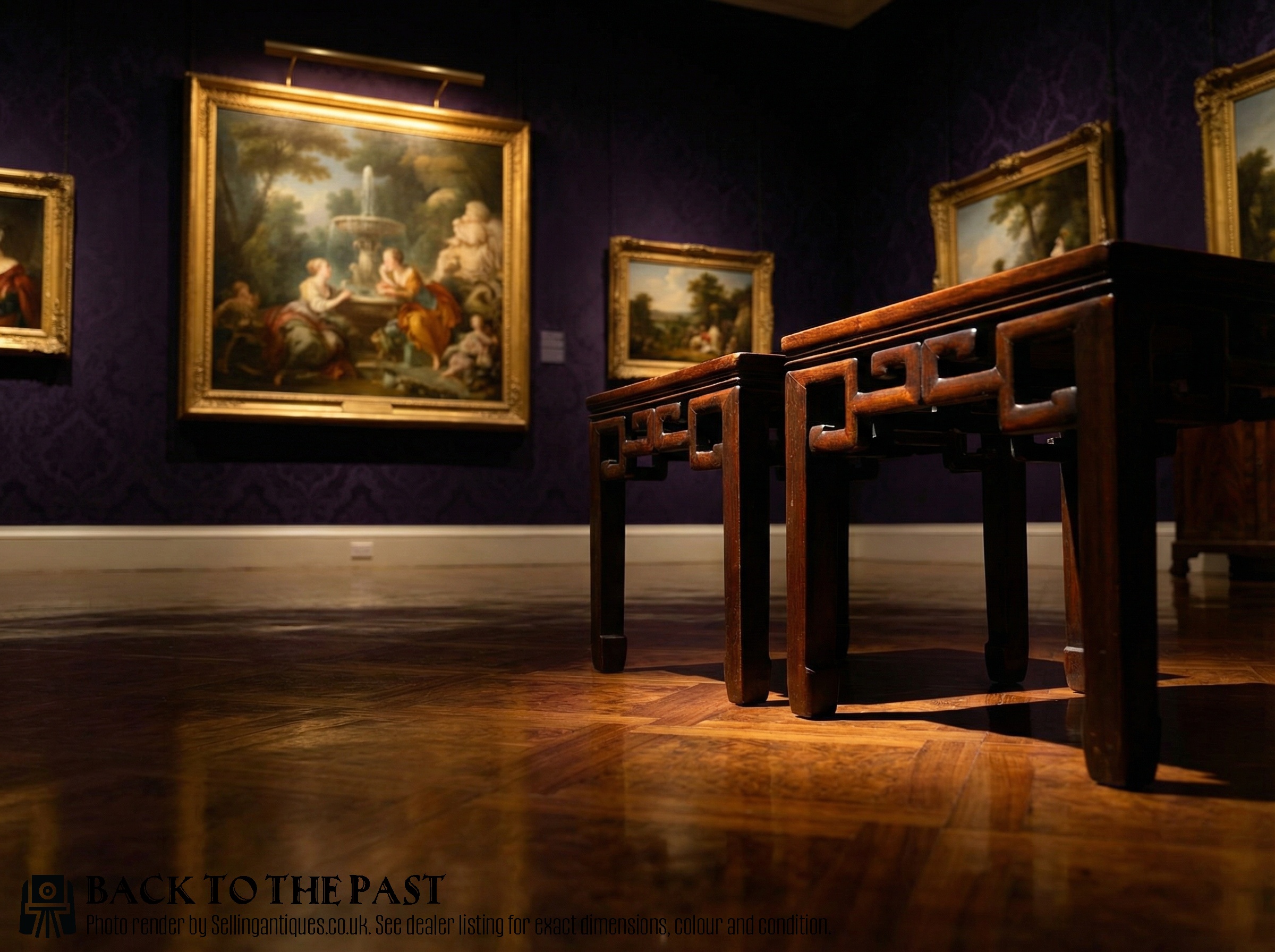
Chinese Plant Stands
When you search for chinese plant stands, you encounter sturdy tables and stools designed to elevate heavy ceramic vessels, urns and jardinieres. These pieces serve as functional side tables and occasional surfaces within domestic interiors.
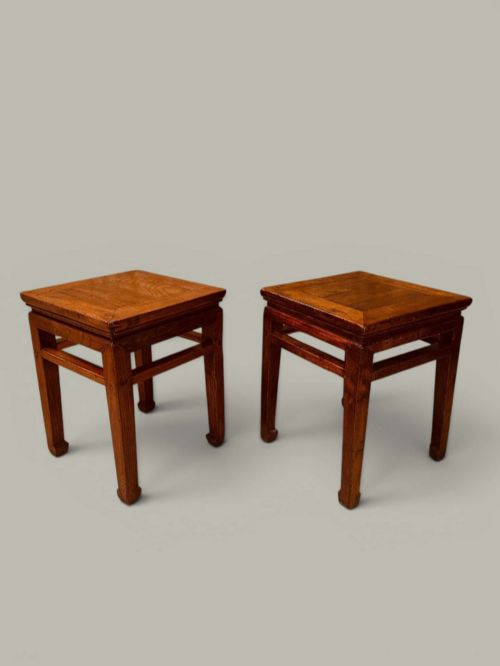
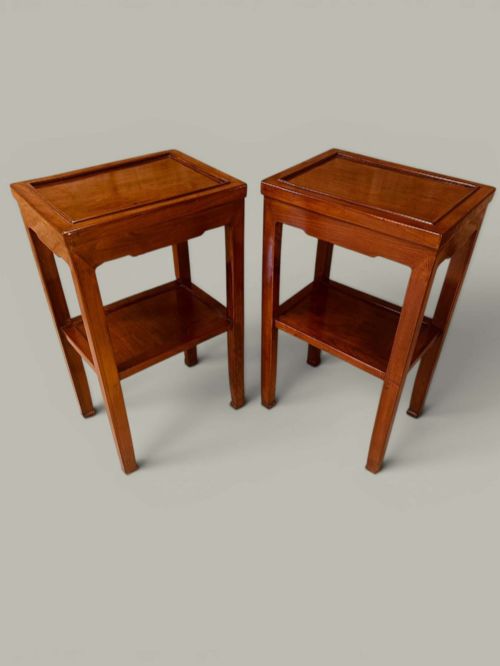
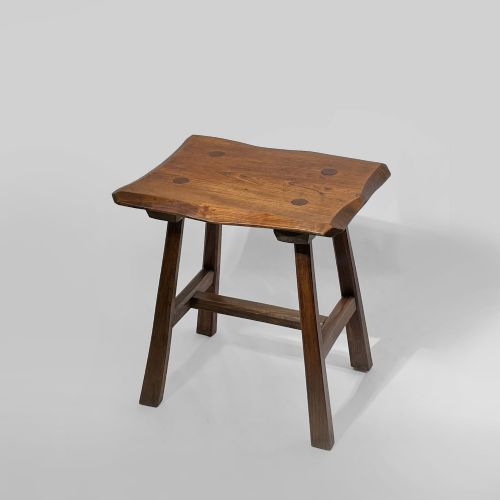
The selections span the late nineteenth century through to the Republic period, covering both the Qing Dynasty and later nineteenth-century manufacturing. Forms vary from traditional dish-top stools to taller urn stands and side tables.

How They Were Made
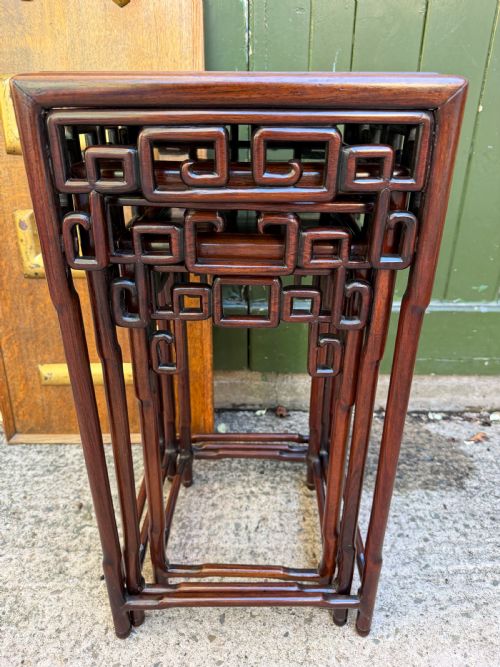
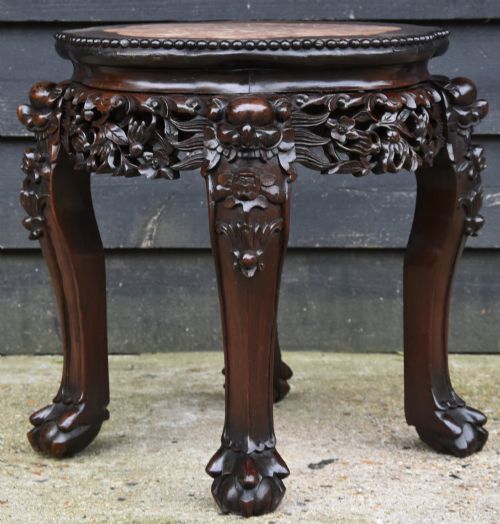
Artisans built these supports using heavy, durable timbers such as huali hardwood and hongmu, selecting woods renowned for their tight grain and deep natural colour. These dense materials provide the structural integrity required to bear the weight of heavy stone and ceramic vessels.
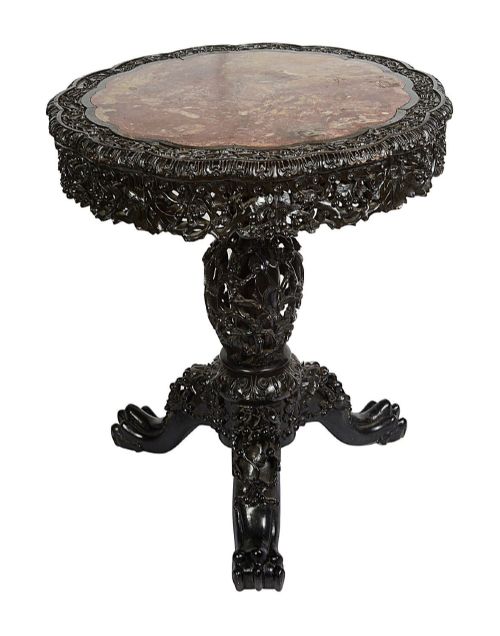
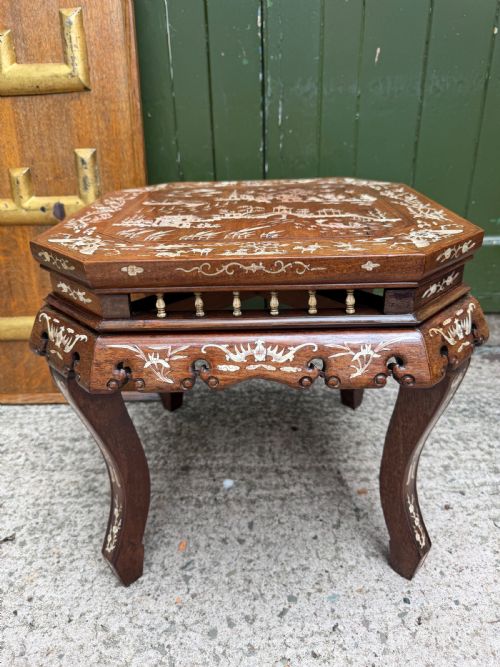
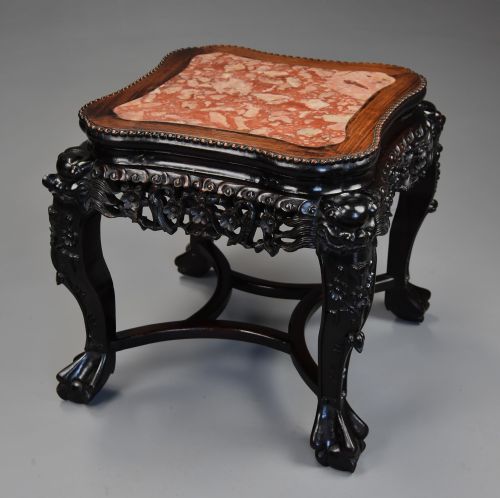
Many examples feature intricate surface ornamentation, including hand carving and the meticulous inlay of mother-of-pearl to create floral or geometric motifs. Other variations integrate smooth inset marble tops or decorated porcelain panels directly into the wooden framework.
Chinese Plant Stands Retail Price Guide 2026
Typical asking prices for chinese plant stands among the pieces listed under this phrase on Sellingantiques today, from the lower quarter to the upper quarter. They describe what is for sale here now, not the wider market.
Some stands wear their age quietly through tiny gaps in the wood where the mother-of-pearl still catches the light.
What Varies in Quality
The distinction between standard utility pieces and finer examples rests upon the selection of timber and the depth of the carving. Dense woods like hongmu and huali support sharper, more elaborate relief work that retains its crispness over generations of use.
Integration of secondary materials also elevates a piece, particularly where inset marble or porcelain panels fit flush with the surrounding woodwork. The precision of the joinery and the subtlety of mother-of-pearl inlay differentiate standard production from superior craftsmanship.
The Chinese Plant Stands Glossary
- Hardwood
- A dense, slow-growing timber used by traditional makers for durability and fine carving. It resists daily wear and supports heavy decorative objects.
- Hongmu
- A traditional category of dense, dark tropical hardwood valued for its weight and rich tone. Makers utilised this material for high-status furniture.
- Huali
- A fragrant hardwood species prized for its distinctive grain patterns and warm hue. It forms the primary structure of many fine nineteenth-century stands.
- Mother-of-Pearl
- The iridescent inner layer of mollusc shells, shaped into thin pieces and set into wooden surfaces. This technique adds luminous contrast to dark timber.
- Qing Dynasty
- The final imperial dynasty of China, spanning from sixteen forty-four to nineteen twelve. Pieces from this era reflect established aesthetic codes and formal hierarchy.
Chinese Plant Stands: Frequently Asked Questions
What were chinese plant stands used for?
These tables served primarily to elevate heavy ceramic pots, jardinieres and bronze urns off the floor. This placement protected fine flooring and positioned ornamental plants closer to natural light within traditional interiors.
Over time, owners adapted them to function as general side tables or display surfaces for decorative objects. Their sturdy construction allowed them to bear significant weight without tipping.
How do I identify a Qing Dynasty stand?
You identify Qing Dynasty pieces through their dense timber construction, traditional joinery methods and specific decorative motifs. Stylistic cues often align with the late nineteenth-century aesthetic seen across surviving examples.
Examine the carving style and the integration of inset panels like marble or porcelain. These material choices reflect the prevailing tastes of the period and the workshop traditions of the time.
What timbers were used to make them?
Makers relied on heavy, dense Asian hardwoods such as huali and hongmu for their structural strength and rich natural colour. These timbers possess the density required to execute deep, intricate hand carvings.
The choice of wood directly influences the weight and durability of each piece. Lighter occasional tables utilise similar timber traditions adapted for domestic portability.
Are these stands sold as pairs?
Many examples on this page appear as matched pairs, reflecting how they were originally commissioned to balance a room or flank a doorway. Symmetrical placement was central to traditional interior arrangement.
Single pieces also occur, serving effectively as standalone accent tables in smaller spaces. Each option offers distinct placement possibilities within a modern home.
How should I care for hardwood furniture?
Maintain hardwood surfaces by dusting with a soft, dry cloth and avoiding direct exposure to strong sunlight or sudden temperature shifts. This preserves the natural moisture and finish of dense timbers like huali and hongmu.
Refrain from using harsh chemical polishes that can degrade the traditional polish or damage inlaid mother-of-pearl. Gentle, periodic care ensures the wood retains its character over time.