





Dark Hardwood Side Table
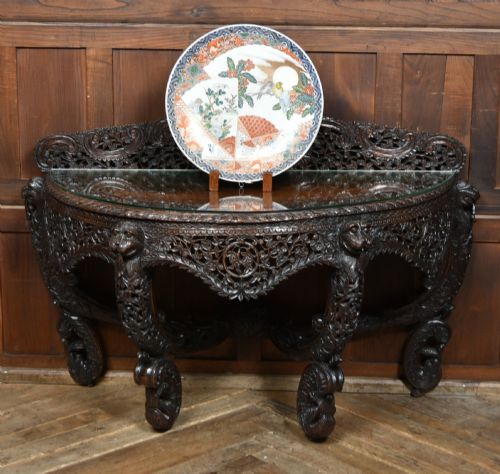
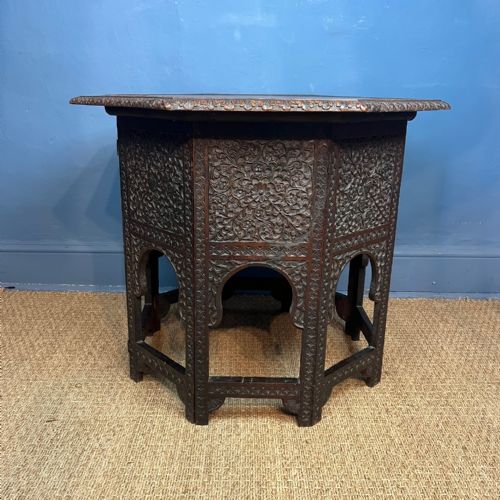
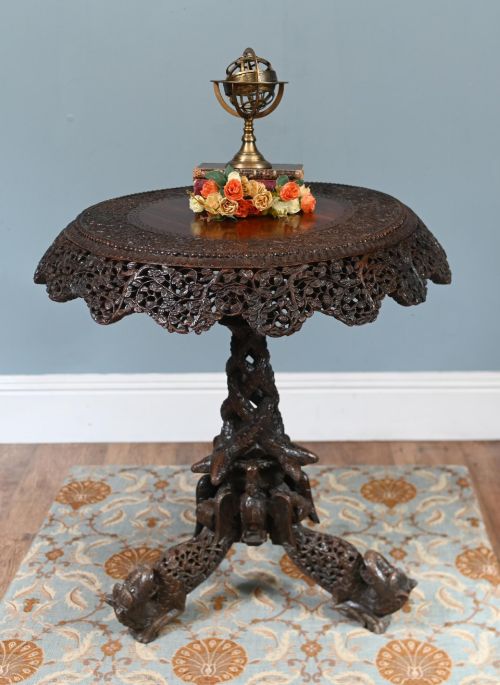
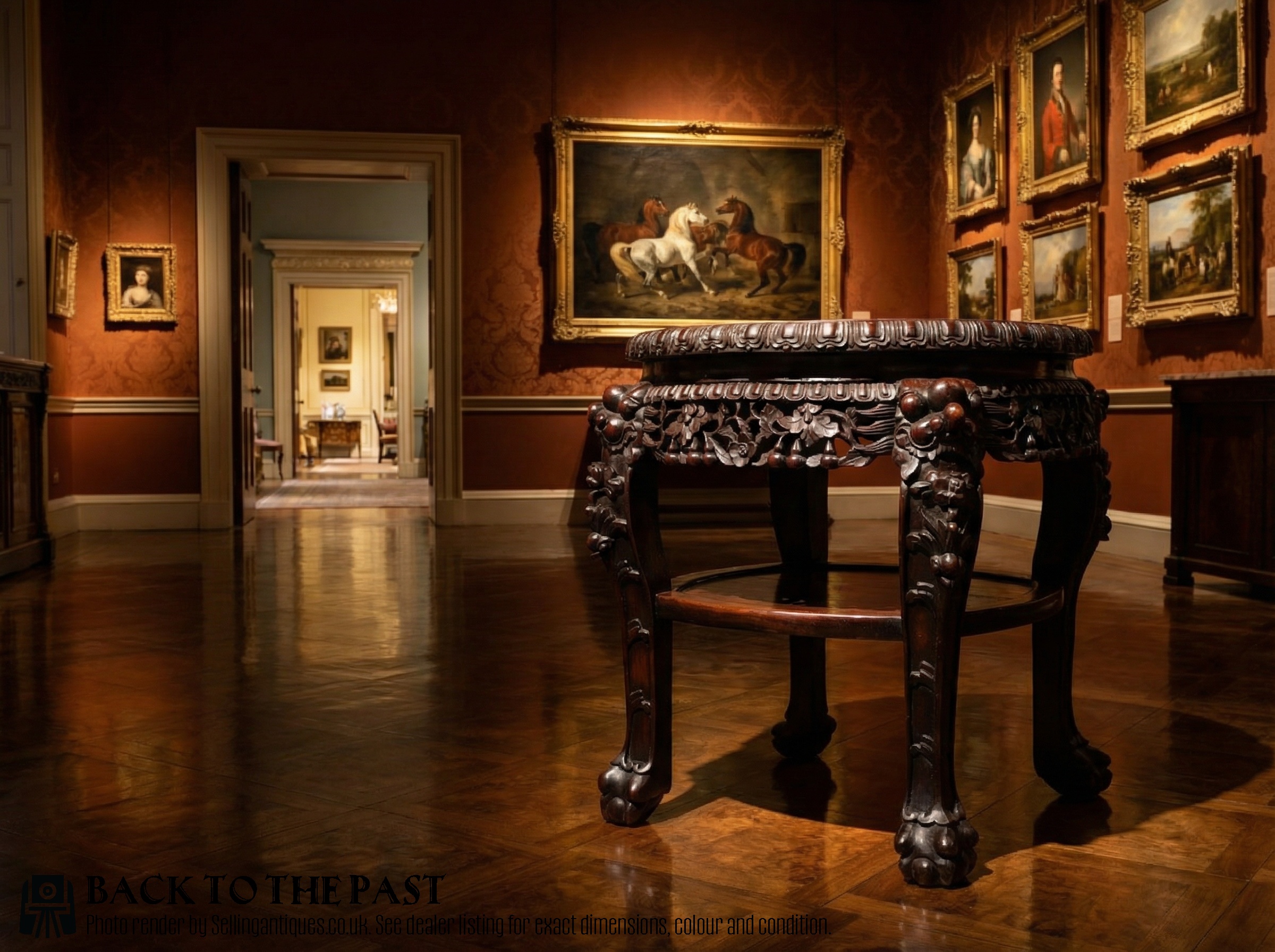
A dark hardwood side table brings dense grain, deep colonial or eastern carving, and heavy joinery into a room.
Dark Hardwood Side Table
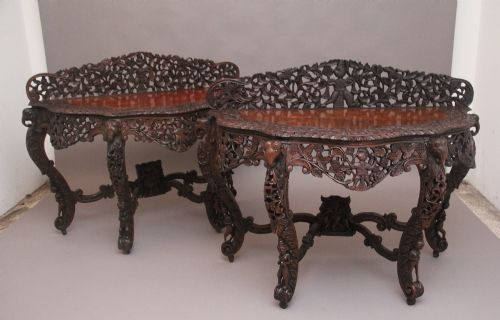
A dark hardwood side table brings dense grain, deep colonial or eastern carving, and heavy joinery into a room. When you search for a dark hardwood side table, you encounter nineteenth-century production spanning Chinese export workshops, Anglo-Indian colonial cabinetmakers, and Victorian British makers.
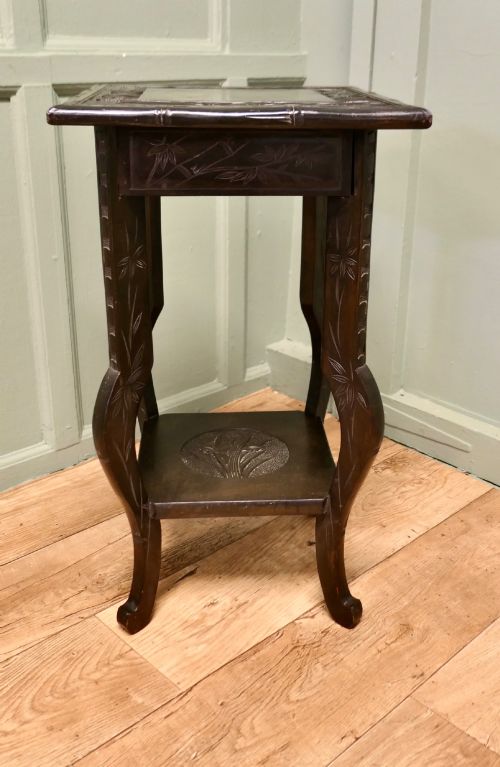
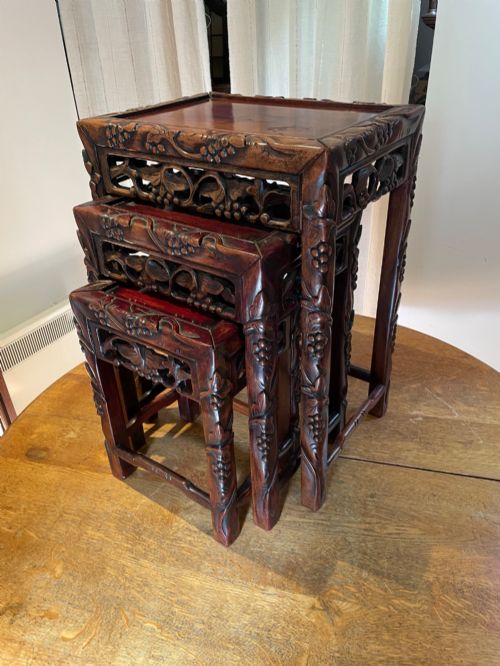
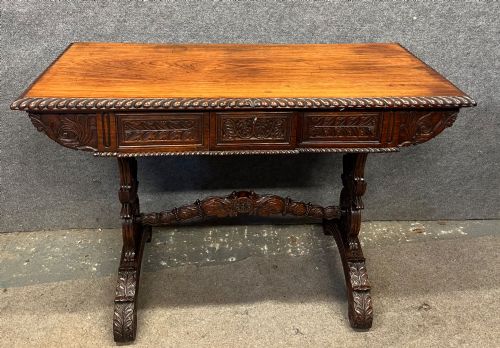
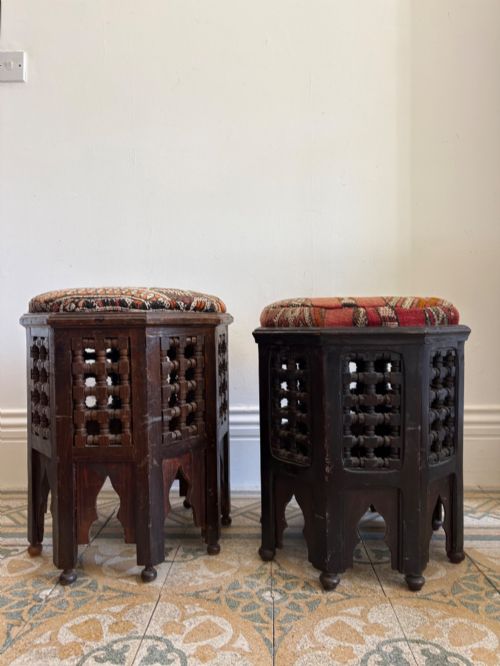
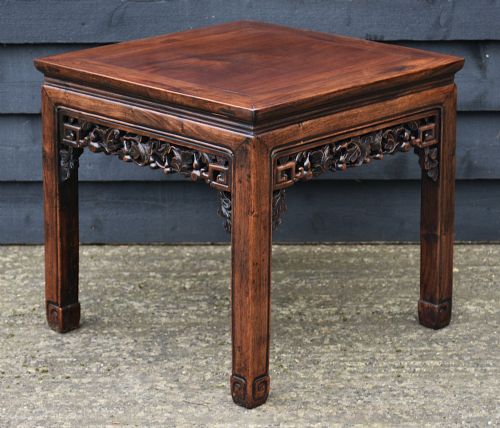
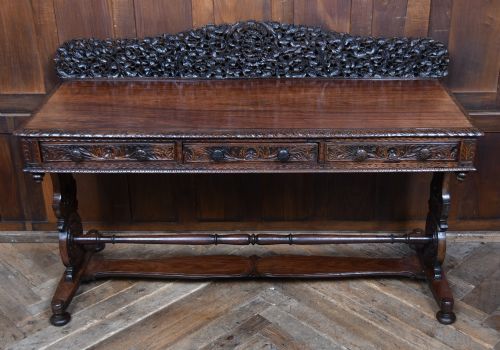
The forms on this page range from low square tables and nested sets to tall jardiniere stands, pedestal tables, and occasional tables with carved aprons. Chinese Qing Dynasty export pieces and Anglo-Indian padauk or rosewood tables dominate the selection, alongside Victorian mahogany and exotic timber variants.
These items served domestic roles as plant stands, lamp tables, low tea surfaces, and display furniture in nineteenth-century drawing rooms and colonial verandahs. They rely on solid native timbers rather than veneered deal substrates, giving them substantial weight and dark natural patination.
Evaluating Quality
Quality rests in the crispness of the hand-carving and the selection of the timber, where dense, heavy rosewood or padauk outperforms lighter or softer substitutes. Superior examples display deep relief work that remains sharp across foliage, dragons, or geometric borders, rather than soft, shallow machine shaping.
The integrity of the structural joints and the matching of timber grains across table tops separate workshop standards. Pieces that retain their original inset marble slabs without hairline cracks or replacement fixings command higher regard among collectors.
Dark Hardwood Side Table Retail Price Guide 2026
Typical asking prices for dark hardwood side table among the pieces listed under this phrase on Sellingantiques today, from the lower quarter to the upper quarter. They describe what is for sale here now, not the wider market.
Several tables carved with elephant heads and trunks remind us that nineteenth-century drawing rooms loved a touch of jungle theatre.
Liberty & Co·Gabriel Viardot
The Dark Hardwood Side Table Glossary
- Hongmu
- A traditional Chinese term for dense, reddish-brown exotic hardwoods used in high-status furniture. It translates literally as red wood.
- Padauk
- A heavy tropical hardwood with a characteristic reddish hue that darkens to deep brown over time. It was favoured by Anglo-Indian and Burmese cabinetmakers for carved tables.
- Jardiniere stand
- A tall pedestal or small table designed specifically to support a heavy ceramic plant pot or flower bowl. These often feature inset marble tops to prevent water damage to the timber.
- Nest of tables
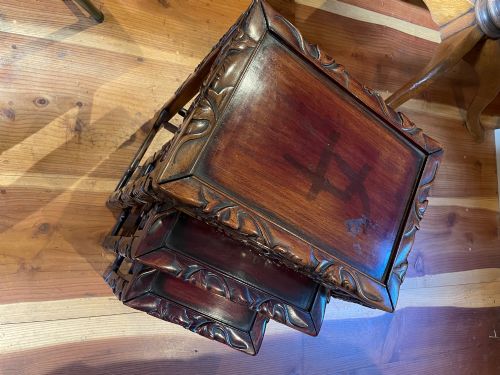
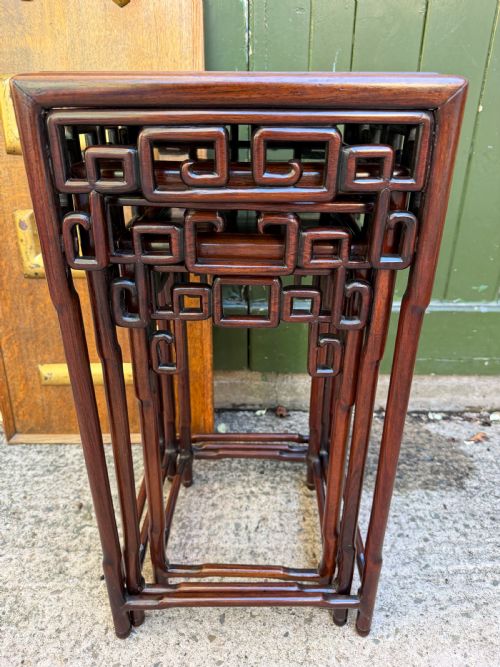
- A set of graduated occasional tables designed to fit one beneath another to save floor space. Nineteenth-century examples often employ carved bamboo-style frames or solid hardwood tops.
Dark Hardwood Side Table: Frequently Asked Questions
How do I clean a dark hardwood side table?
Dust regularly with a dry, soft cloth to prevent particulate accumulation on carved surfaces. Apply a light application of neutral beeswax periodically to nourish the dry tropical timber.
Avoid liquid polishes containing silicone, which build up a film over the natural grain and attract dust. Keep these tables away from direct heat sources to prevent timber shrinkage and panel splitting.
Were these tables made in China or Britain?
The pieces originate from diverse workshops, including nineteenth-century Chinese export centres, Anglo-Indian colonial makers, and British Victorian cabinetmakers. Chinese pieces often feature traditional mortise joinery and motifs like dragons, while colonial tables incorporate dense padauk or teak.
European makers also produced Japonisme or Anglo-Indian styles inspired by imported goods. Examining the timber species and construction methods reveals the likely workshop origin.
How do I care for the marble insert?
Wipe marble surfaces with a damp cloth and mild soap, drying immediately to prevent water spotting. Avoid acidic cleaners, citrus oils, or vinegar, which etch the polished stone surface.
Marble inserts in nineteenth-century tables generally rest loose within a rebated wooden frame. Lift the stone carefully only if necessary during moving, supporting it fully from underneath.
What is the difference between hongmu and rosewood?
Hongmu is a Chinese categorical term encompassing several dense, dark tropical hardwoods with rich red and brown tones. Rosewood refers broadly to various heavy, oily timbers with pronounced grain patterns.
In nineteenth-century export furniture, these terms often overlap as makers utilised available dense exotic woods. Both provide the heavy weight and dark coloration characteristic of these tables.