








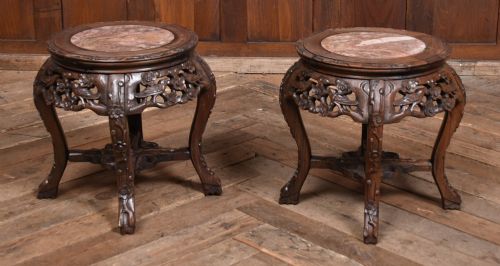

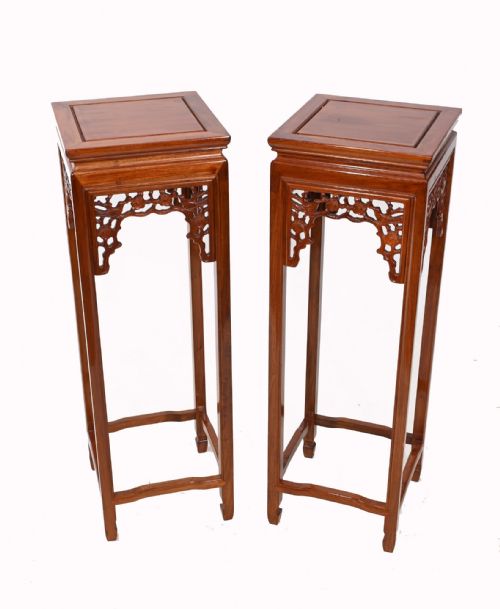


Carved Rosewood Urn Stand
These carved rosewood urn stand pieces are solid hardwood Chinese tables built to elevate heavy planters and display prized ornaments with distinction.
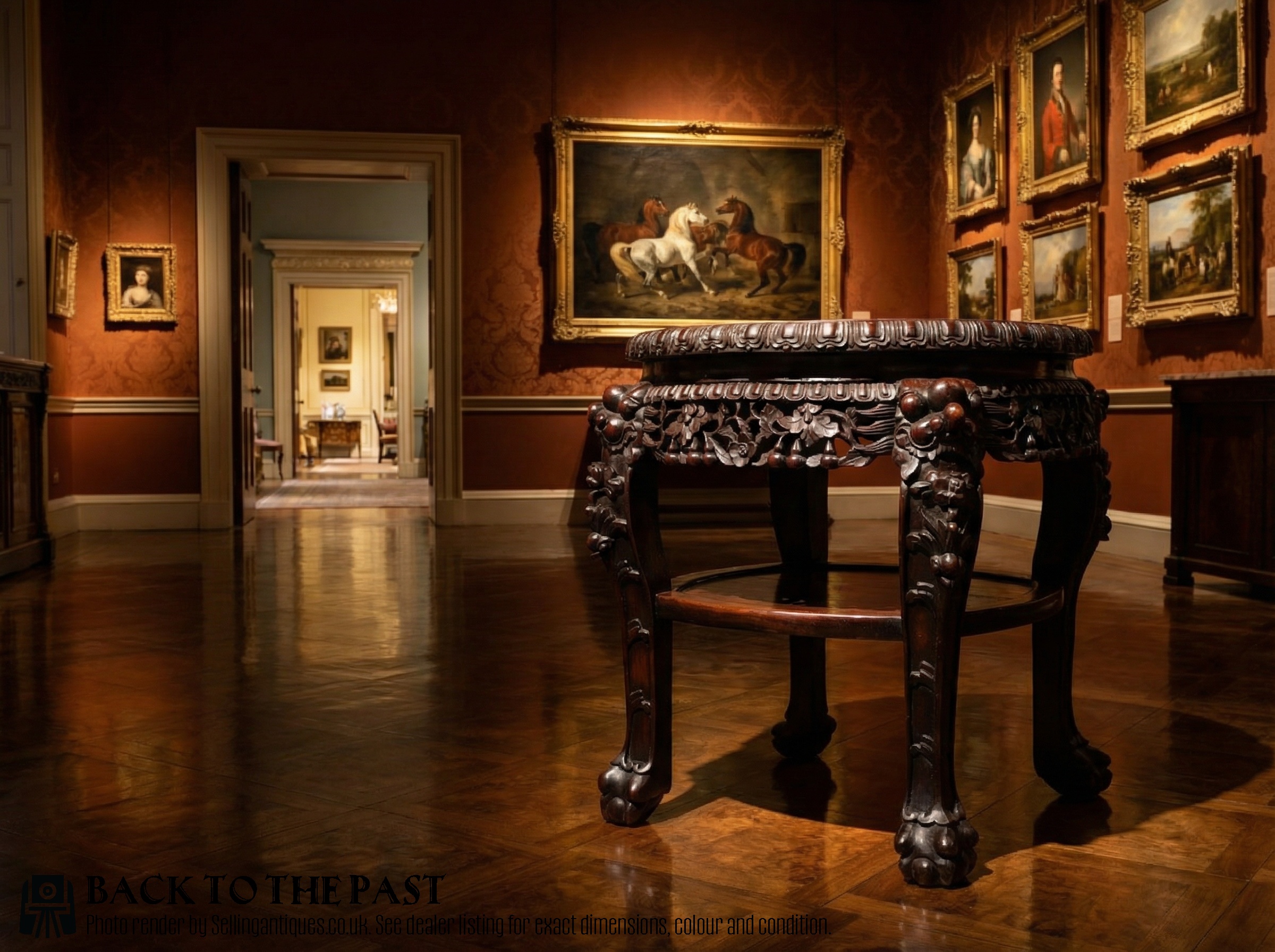
Carved Rosewood Urn Stand
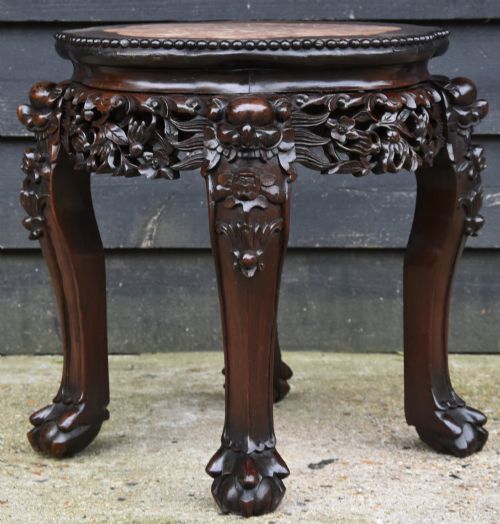
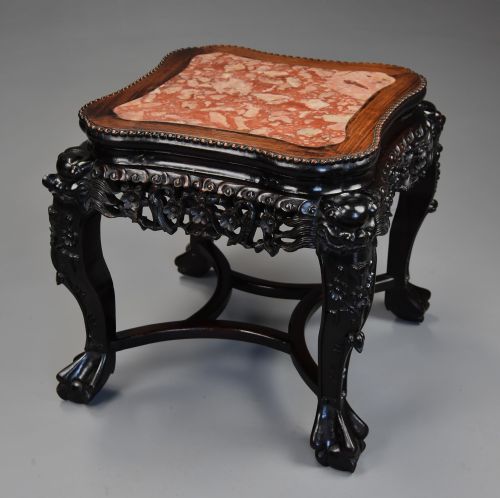
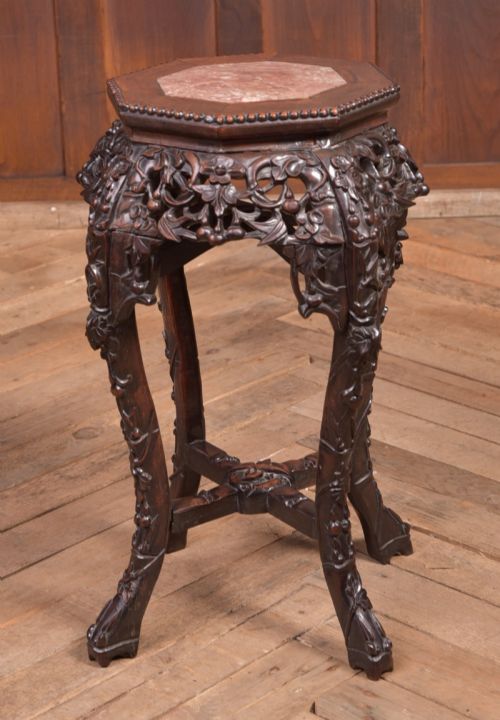
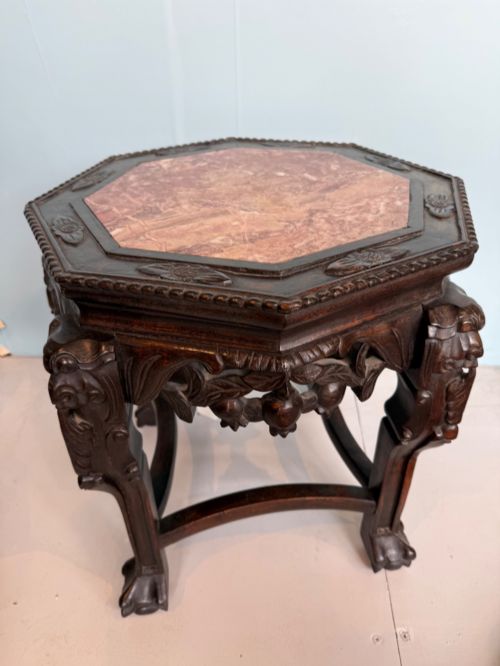
A carved rosewood urn stand is a sturdy Chinese table designed specifically to display heavy planters, urns, and decorative ceramics within a room. Most examples meet the eye as compact occasional tables, plant stands, or side tables originating from the Qing Dynasty, Chinese Export traditions, or the Republic Period.
The evidence shows forms ranging from the Victorian era down to the 1930s, encompassing pieces from 1860, 1870, 1890, and 1900. These sturdy supports served practical domestic roles in holding substantial garden vessels indoors while adding intricate structural craftsmanship to interior spaces.
How they were made
Craftsmen utilised dense tropical hardwoods, primarily rosewood, which required expert joinery to support heavy loads without metal fasteners. The natural weight and density of the timber allowed artisans to carve deep, continuous floral and structural motifs directly into the aprons and legs.
Many examples incorporate inset marble panels into the timber top, providing a cool, stable surface that resisted moisture from plant urns and jardinières. This combination of stone and carved hardwood demanded precise carpentry to join differing materials securely.
Carved Rosewood Urn Stand Retail Price Guide 2026
Typical asking prices for carved rosewood urn stand among the pieces listed under this phrase on Sellingantiques today, from the lower quarter to the upper quarter. They describe what is for sale here now, not the wider market.
The inventory records two distinct surface materials across the collection: smooth marble and solid hardwood.
What varies in quality
The depth and clarity of the wood carving separate standard tables from exceptional ones, with superior examples displaying crisp undercutting and balanced symmetry. Finer pieces demonstrate meticulous attention to detail in every carved joint and decorative motif.
The integration of the inset marble top also defines the tier of the piece, where tight stone fitting and attractive natural veining elevate the overall execution. Material selection plays a role, as heavy, dense rosewood signifies a superior build compared to lighter mixed hardwoods.
The Carved Rosewood Urn Stand Glossary
- Rosewood
- A heavy, dense tropical hardwood valued for its rich colour and ability to hold intricate carved detail. This material forms the primary structure of better urn stands.
- Jardinière
- A decorative ceramic pot or planter designed to hold growing plants indoors. These heavy vessels necessitated sturdy stands with reinforced tops.
- Qing Dynasty
- The final imperial dynasty of China, spanning from sixteen forty-four to nineteen twelve. Many antique stands originate from the later years of this historical period.
- Occasional table
- A small, versatile piece of furniture designed for specific, intermittent uses such as holding a lamp or an urn. These form a large portion of the available inventory.
- Chinese Export
- Furniture and decorative objects manufactured in China specifically for Western markets during the nineteenth and early twentieth centuries. These pieces often blend traditional Asian forms with tastes popular in Britain.
Carved Rosewood Urn Stand: Frequently Asked Questions
What is an urn stand used for?
These tables provide a stable elevated platform for heavy ceramic urns, large plant pots, and decorative bronze pieces. Placing heavy vessels on a dedicated stand protects floor surfaces and brings the display up to eye level.
They also function effectively as compact side tables or occasional tables in living areas and hallways. Their sturdy construction handles weight reliably while occupying minimal floor space.
How do I identify a rosewood stand?
Rosewood stands feel noticeably heavy for their size and display a dense, tight grain beneath dark reddish-brown or blackish tones. The timber takes a fine polish and shows deep natural lustre rather than a thick applied surface finish.
Carpenters utilised this heavy wood to support intricate, deep-relief carving without weakening the structural integrity of the legs and apron. The presence of dense hardwood sets these apart from lighter furniture.
Why do some stands have marble tops?
Marble insets provide a durable, waterproof surface that withstands dampness from watering plants placed on the table. Stone surfaces also resist scratches from heavy ceramic bases and heat from decorative metal urns.
This material combination adds significant weight and stability to tall, narrow plant stands. The cool stone contrasts visually with the warm tones of the surrounding carved hardwood.
How do I care for a hardwood table?
Maintain the timber by dusting regularly with a soft, dry cloth and avoiding silicone-based polishes that build up over time. Keep the stand away from direct heat sources and drastic humidity changes to protect the joinery and wood stability.
Treat marble inserts gently with mild soap and water, wiping them completely dry to protect the stone. Proper placement away from radiators ensures the antique wood remains stable for decades.