







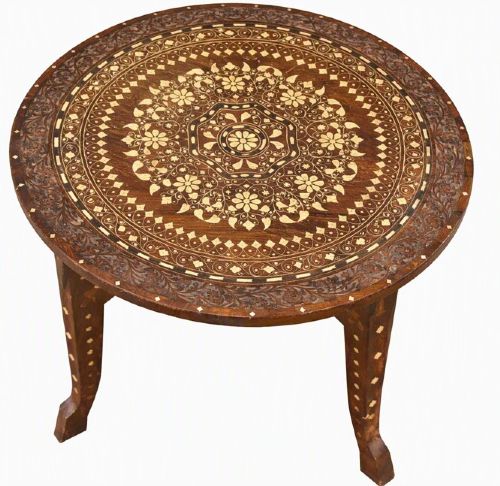

Dark Hardwood Plant Stand
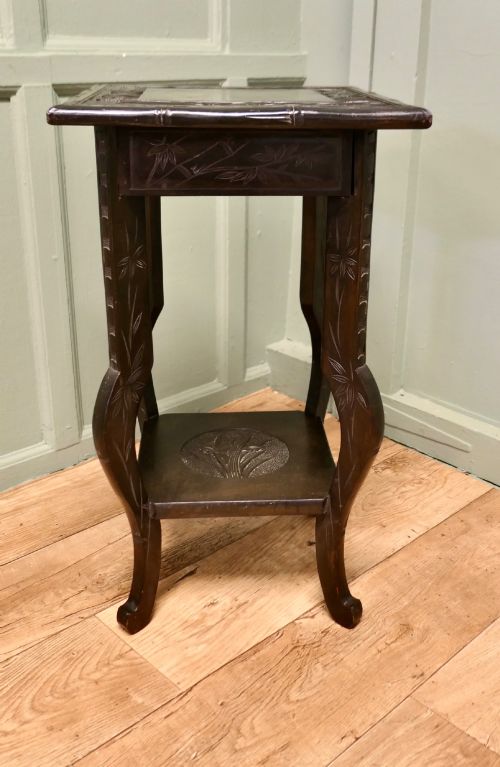
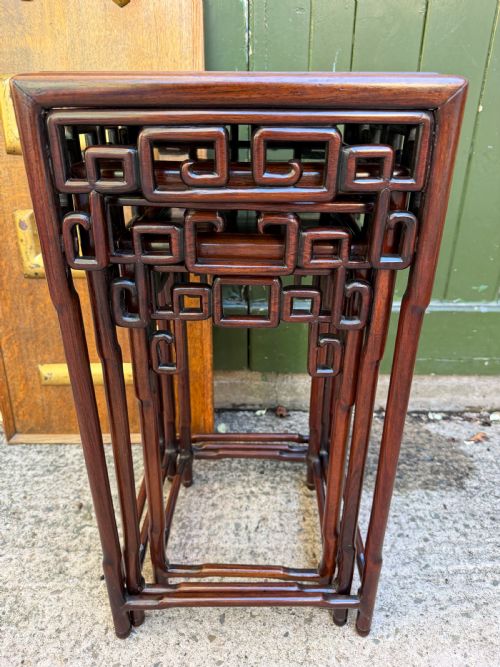
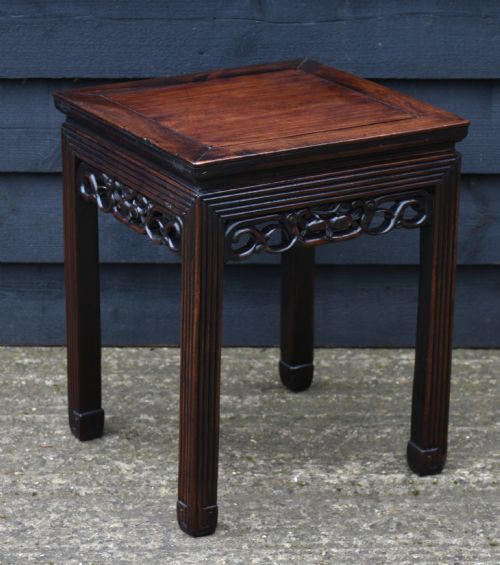
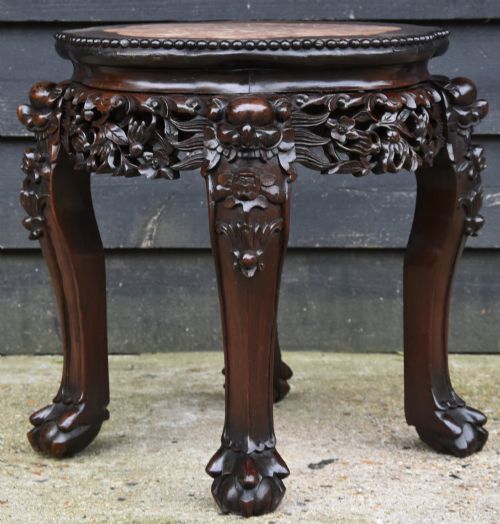
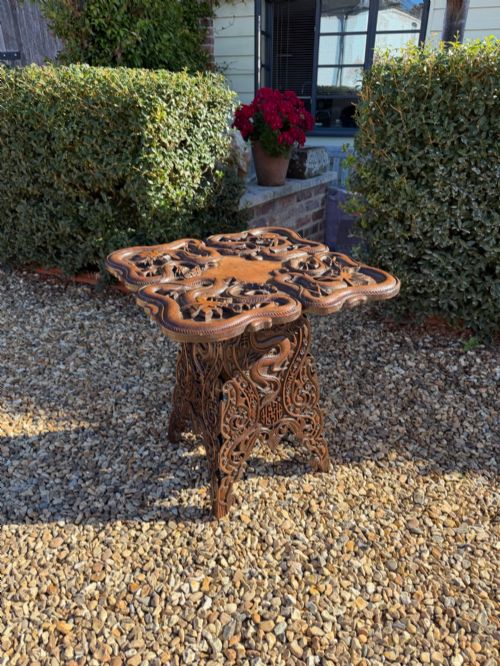
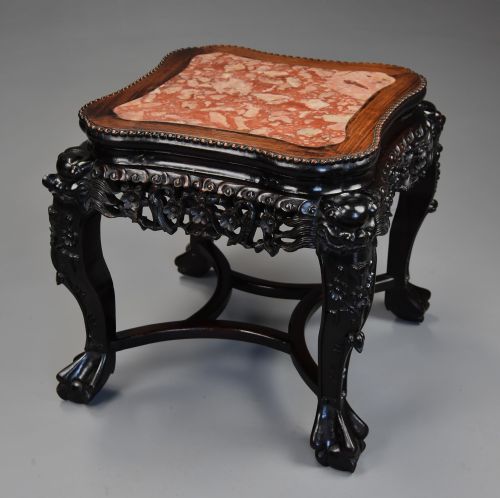
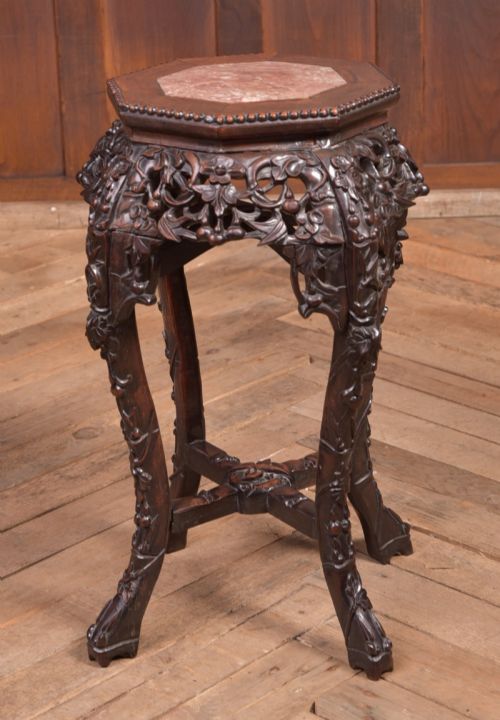
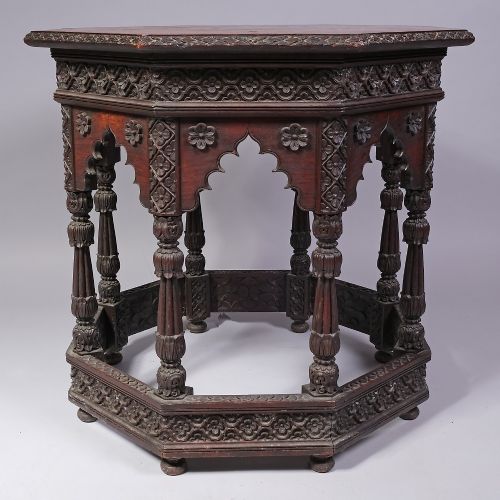
These dark hardwood plant stand pieces range from nineteenth-century Chinese export carvings to Anglo-Indian tables, offering sturdy platforms to elevate heavy planters and display ornaments.

Dark Hardwood Plant Stand
A dark hardwood plant stand serves primarily to elevate porcelain jardiniere vessels, vases and heavy planters above the floor, though many double as low occasional tables, stools or pedestals. When searching for a dark hardwood plant stand, you will frequently encounter Chinese Qing Dynasty hongmu stands, rosewood pot stands, and Anglo-Indian carved tables.
The forms vary from tall torchere columns and circular vase tables to square low tables, octagonal lamp tables, and nested sets. Regional variations span traditional Chinese export workshops, nineteenth-century Japanese Meiji pieces, and colonial Anglo-Indian production from centres such as Bombay.
Production dates cluster heavily in the nineteenth century, extending into the Edwardian era around nineteen twenty, encompassing Victorian interpretations like Moorish octagonal tables alongside traditional Asian forms.
Materials and construction methods
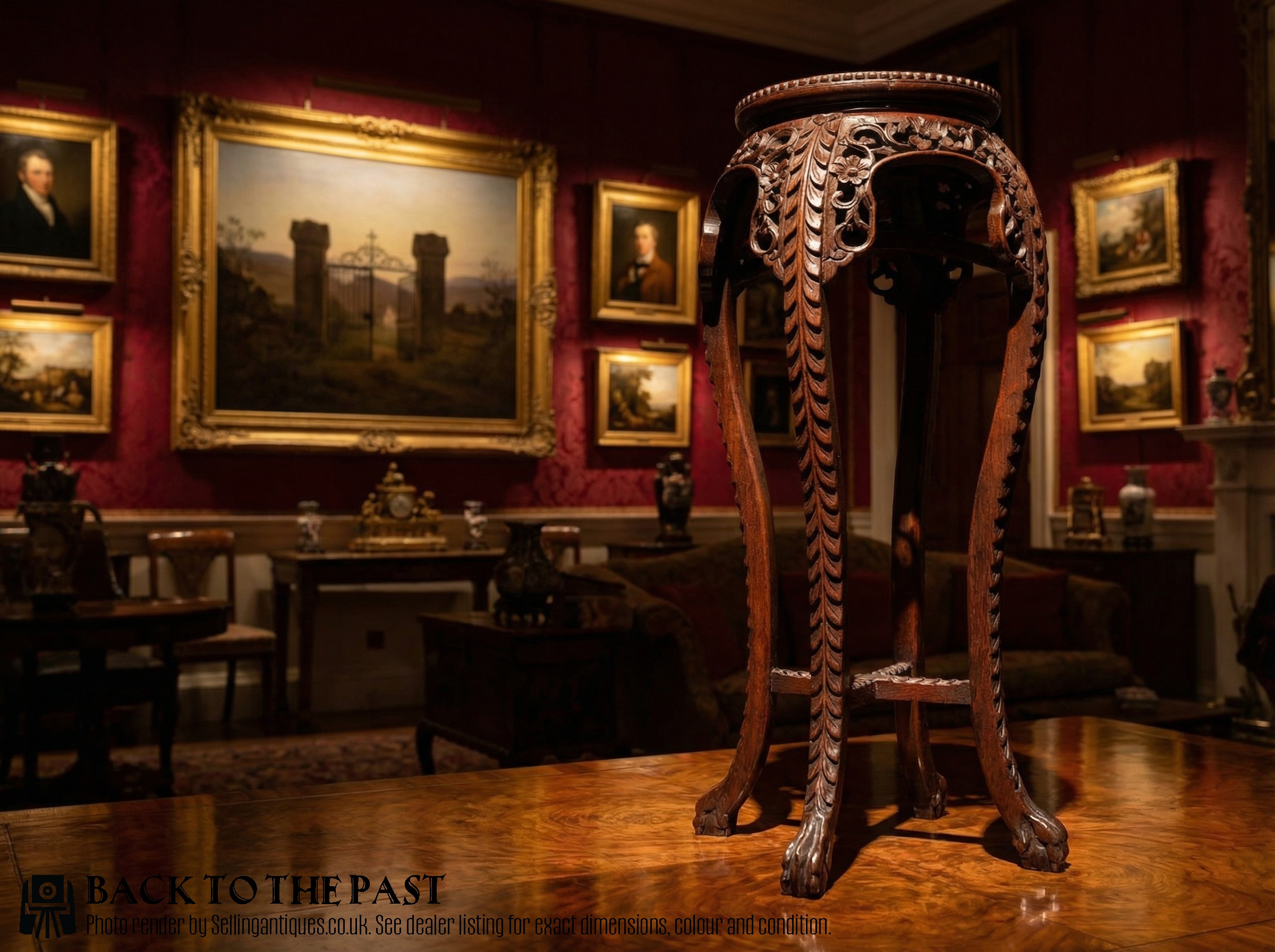
Makers utilised dense timbers including padouk, rosewood, and ebonised wood, often carved by hand with deep relief motifs depicting dragons, foliage, and figures. These heavy tropical hardwoods provide the structural rigidity necessary to support inset marble tops without warping.
Many examples incorporate contrasting decorative elements, such as inlaid bone, mother-of-pearl, and brass wire work set directly into the dark timber surfaces. Marble inserts, particularly variegated rouge stone, are bedded into circular or shaped frames to create moisture-resistant display surfaces for damp plant pots.
Dark Hardwood Plant Stand Retail Price Guide 2026
Typical asking prices for dark hardwood plant stand among the pieces listed under this phrase on Sellingantiques today, from the lower quarter to the upper quarter. They describe what is for sale here now, not the wider market.
Listings feature items spanning from the nineteenth century through to nineteen twenty, utilising rosewood, padouk, and inset marble.
Assessing quality in dark hardwood stands
Quality rests upon the crispness of the hand carving and the selection of the timber, where dense grain and heavy weight indicate superior material use. Pierced undercuts and intricate relief work distinguish ambitious workshop output from routine commercial production.
The integration of inset marble panels and the tightness of joinery dictate long-term durability. Superior pieces maintain stability through seasonal humidity shifts without relying on heavy adhesives or secondary pine framing.
Liberty & Co·Gabriel Viardot
The Dark Hardwood Plant Stand Glossary
- Hongmu
- A traditional Chinese term denoting dense red-black hardwoods such as rosewood and padouk utilised in classical furniture making.
- Jardiniere stand
- A low table or pedestal specifically designed to hold a heavy plant container or ceramic flower bowl.
- Torchiere
- A tall stand or column originally built to support a candle lamp, adapted over time for display purposes.
- Meiji
- A Japanese historical period spanning the late nineteenth and early twentieth centuries associated with intricate export woodwork.
Dark Hardwood Plant Stand: Frequently Asked Questions
What is a dark hardwood plant stand used for?
These stands are built to elevate heavy ceramic planters, jardiniere bowls, and decorative vases away from floor level. They also function as lamp tables, occasional side tables, and display pedestals for interior ornaments.
Historically, raising the vessel protected wooden floors from moisture and showcased prized botanical specimens at a comfortable viewing height within reception rooms and parlours.
How do I tell Chinese stands from Anglo-Indian ones?
Chinese pieces typically feature traditional Qing Dynasty motifs, hongmu or rosewood construction, and frequently incorporate inset rouge marble tops. Anglo-Indian examples often display dense overall foliate carving, animal figures such as elephants or dragons, and occasional bone or brass inlay.
Colonial Anglo-Indian workshops also utilised padouk timber and produced distinct octagonal or circular table forms influenced by both British and local regional aesthetics.
Can these stands support heavy pots?
The dense tropical hardwoods used in their construction, such as rosewood and padouk, provide exceptional structural strength. Solid joinery and heavy frames allow them to bear the substantial weight of large ceramic vessels and wet soil without flexing.
Inspecting the stability of the legs and the tightness of the lower stretchers will confirm whether an individual piece remains suitable for heavy daily loading.
How do I care for marble top stands?
The inset marble panels require simple dusting with a soft cloth and occasional wiping with a damp sponge to remove surface dirt. Avoid harsh chemical cleaners that can dull the polished stone surface or damage the surrounding wooden rebate.
Applying a neutral wax to the timber frame helps nourish the dark hardwood while keeping moisture away from the grain surrounding the stone insert.