





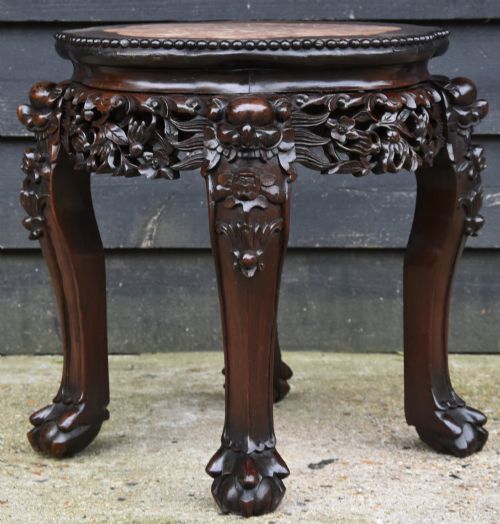

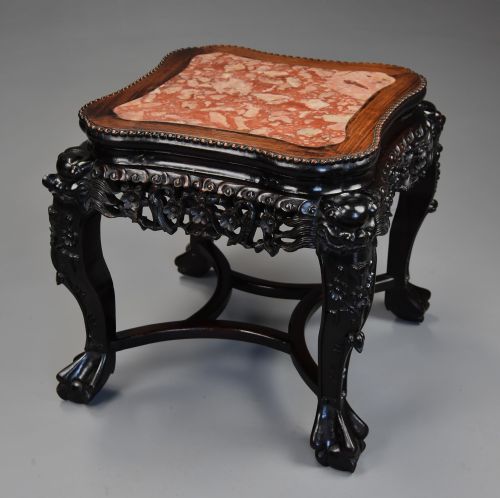
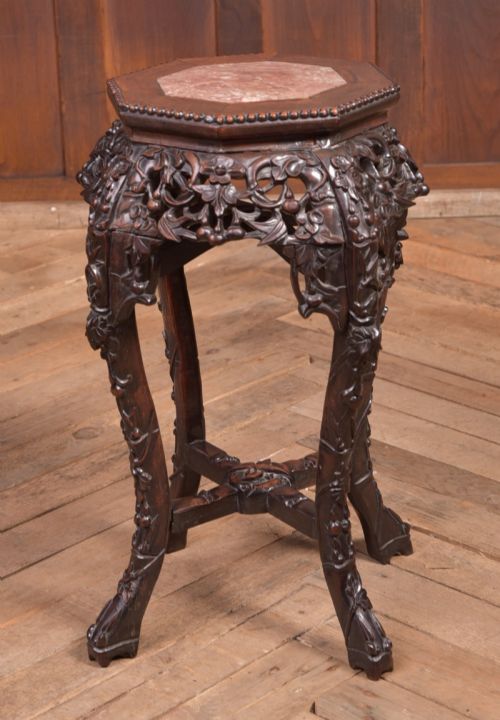
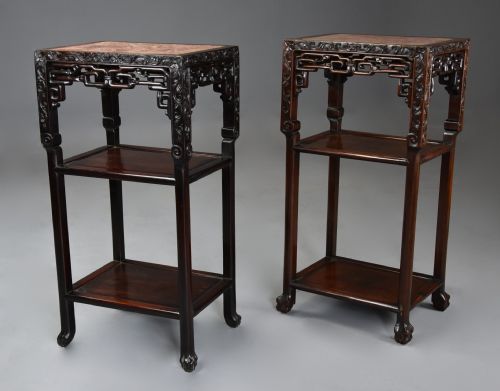

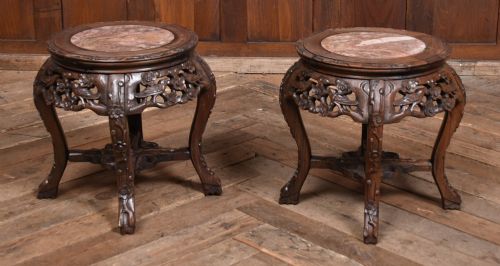
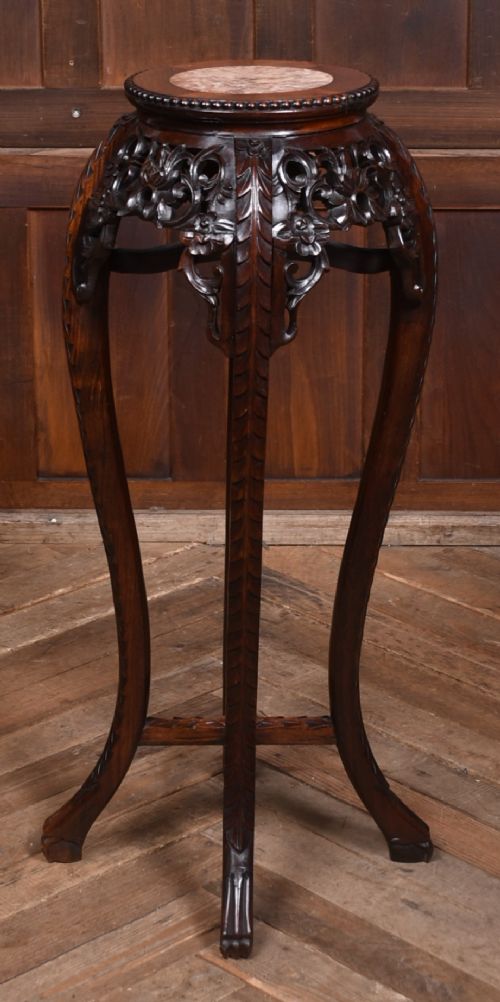
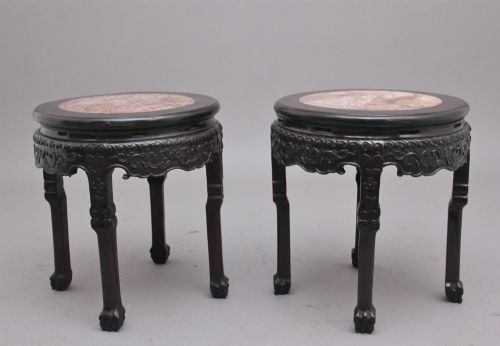


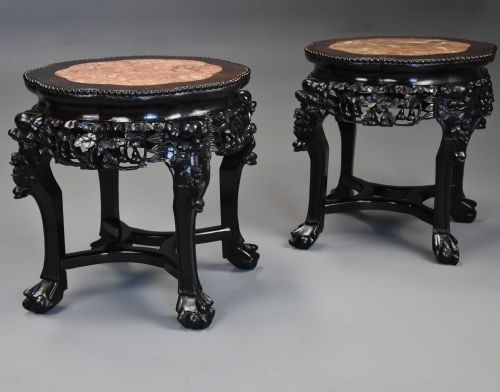
Oriental Marble Top Stand
These oriental marble top stand pieces bring carved hardwood and stone together to anchor a room.
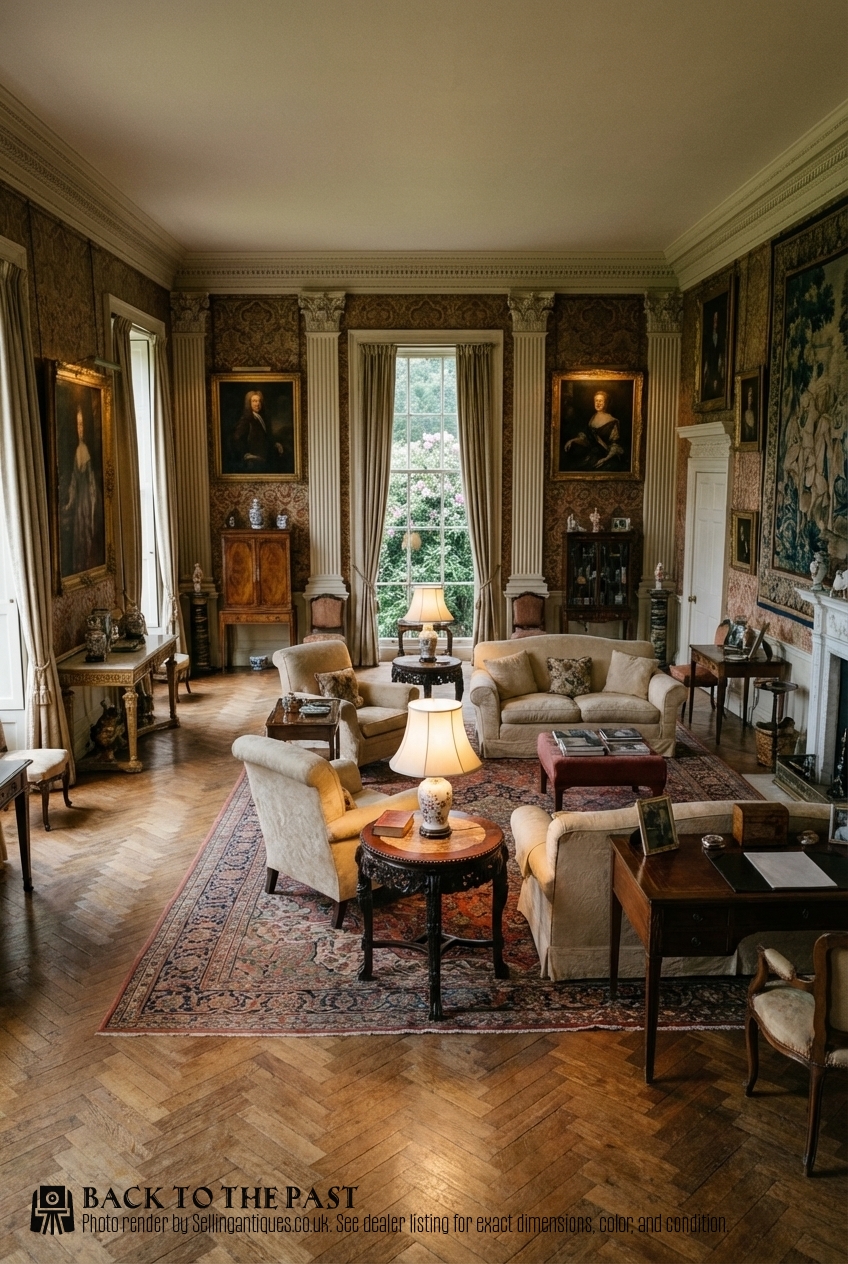
Oriental Marble Top Stand
An oriental marble top stand serves as a decorative base for plants, urns, lamps, and heavy vases within a room. These forms appear as side tables, occasional tables, pot stands, and low tables depending on the height and proportion.
The objects stem from Chinese export production, Qing dynasty workshops, and the later Republic period, spanning the late nineteenth century through to nineteen thirty. Rosewood, hardwood, and rootwood frame the inset stone surfaces.
Visitors to this selection encounter carved plant stands and jardiniere stands designed with specific circular or shaped marble inserts. Each version balances the weight of organic timber frames with smooth stone tops.
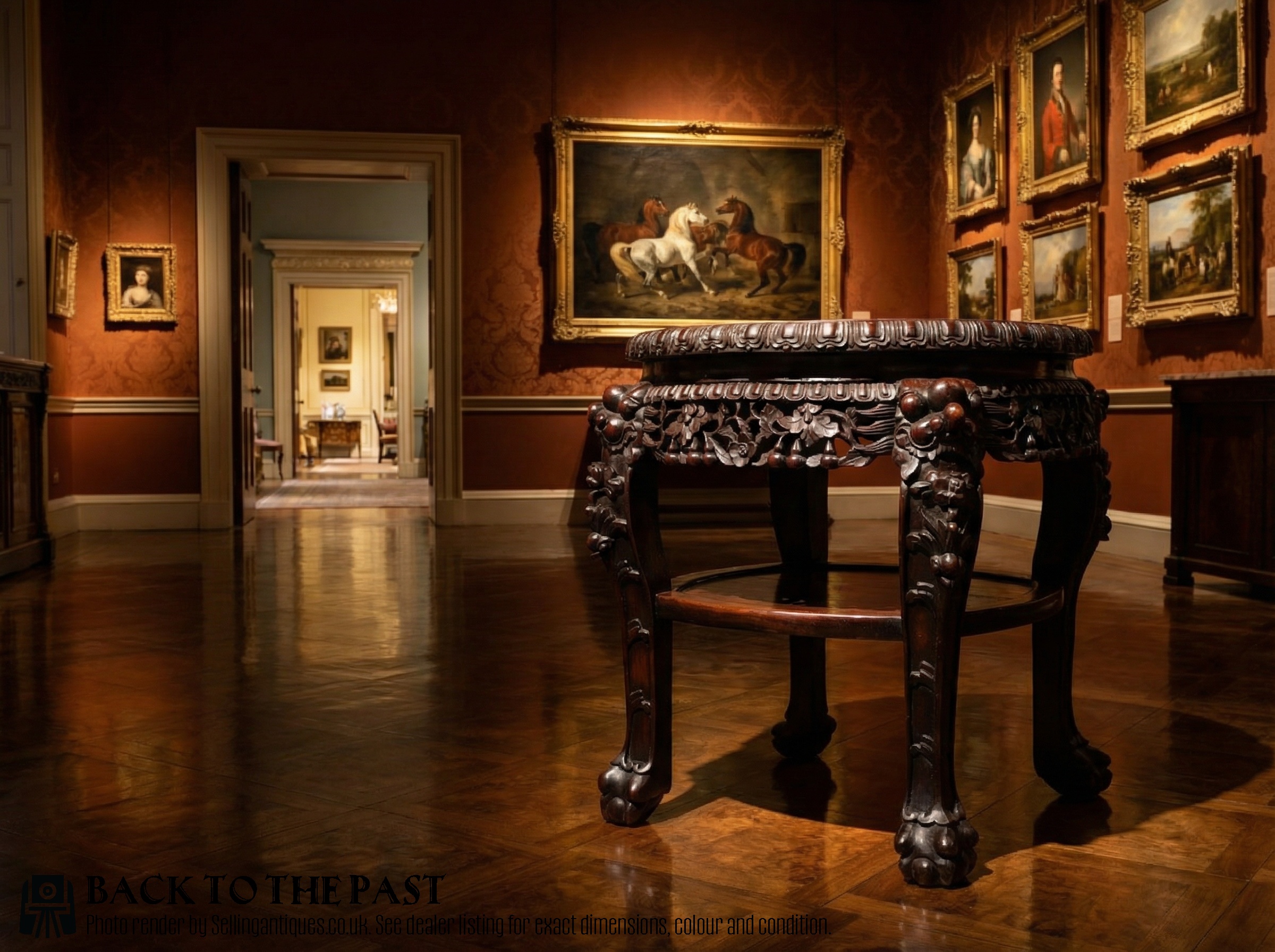
How they were made
Artisans built these frames using dense timber species including rosewood, mahogany, hardwood, and gnarled rootwood. Joinery techniques secure the heavy stone inserts directly into carved wooden channels without modern adhesives.
Carvers shaped the wood using manual chisels to create deep relief motifs around the aprons and legs. Polished marble and deep quartz slabs provide the contrasting flat upper surfaces.
Oriental Marble Top Stand Retail Price Guide 2026
Typical asking prices for oriental marble top stand among the pieces listed under this phrase on Sellingantiques today, from the lower quarter to the upper quarter. They describe what is for sale here now, not the wider market.
Listings feature items from eighteen ninety, nineteen hundred, nineteen thirty, and the nineteenth century broadly.
What varies in quality
The depth and clarity of the wood carving dictate the distinction between standard production and superior work. Crisp undercuts in floral or structural motifs demonstrate greater manual skill.
The selection of the inset stone, whether fine-grained marble or translucent quartz, alters the visual weight of the stand. Dense timbers with stable joints command attention through their material integrity.

The Oriental Marble Top Stand Glossary
- Jardiniere stand
- A tall pedestal table designed specifically to hold indoor plant pots or ceramic bowls. These pieces elevate foliage to allow trailing plants room to hang.
- Rootwood
- Timber harvested from the underground stump or root masses of trees, chosen for eccentric natural shapes. Artisans incorporate these organic contours directly into structural frames.
- Qing Dynasty
- The final imperial dynasty of China, lasting from sixteen forty-four to nineteen twelve. Pieces from this era often feature intricate traditional carving styles.
- Quartz
- A hard mineral crystal sometimes used in place of marble for table inserts. Its crystalline structure offers a different texture and depth than standard limestone.
Oriental Marble Top Stand: Frequently Asked Questions
What is an oriental marble top stand used for?
These pieces function primarily as decorative pedestals for heavy ceramic urns, bronze vessels, and large indoor plants. Their sturdy stone tops resist moisture and weight from potted greenery.
Beyond plant displays, collectors utilise them as compact lamp tables or occasional tables in living spaces. The raised height showcases ornamental objects at eye level.
How do I date an oriental marble top stand?
Dating relies on examining the timber species, joinery construction, and stylistic carving details present in the frame. Pieces from the late nineteenth century often display denser rosewood and heavier hand-carved elements.
Later examples from the early twentieth century shift toward Republic period aesthetics or simpler Qing dynasty revivals. The wear patterns on the wood and the polish of the marble also offer clues to age.
Are all the tops made of marble?
While marble remains the most common stone insert across these tables, alternative materials do appear in the evidence. Certain unusual pieces feature deep quartz tops set into rootwood frames.
Each stone type changes the tactile experience of the surface. Marble provides a smooth, cool counterpoint to the warm timber surrounds.
Where should I place these stands in my home?
These compact tables fit well in corners, beside seating, or beneath windows where plants receive adequate light. Their vertical proportions make them useful in spaces too narrow for standard side tables.
Keep them away from direct heat sources to protect the historic hardwood and rootwood frames from drying out. The stone top itself requires minimal maintenance beyond regular dusting.