


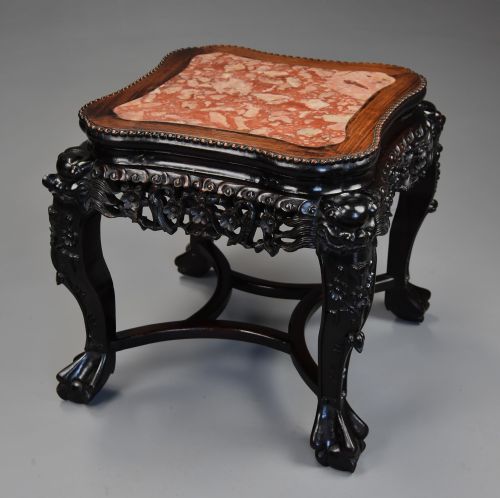
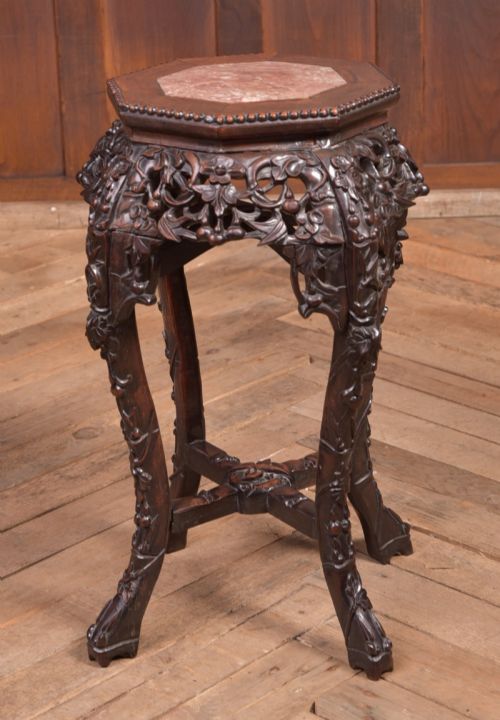
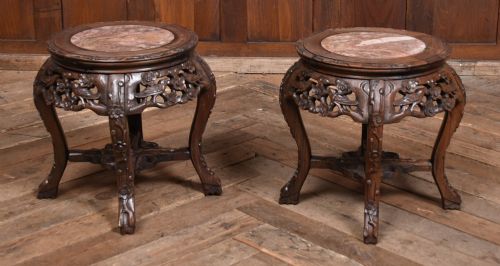
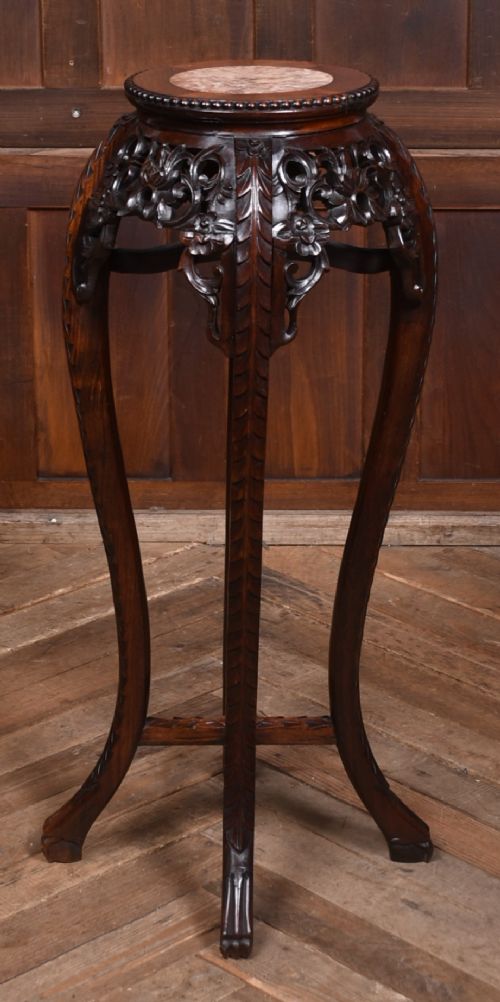


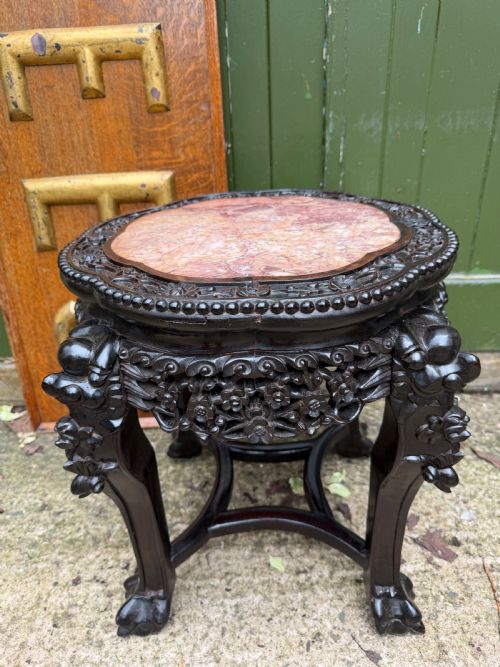


Chinese Jardiniere Stand
A Chinese jardiniere stand provides an elevated stage for heavy ceramic planters, bringing carved woodwork and inset stone into domestic interiors.
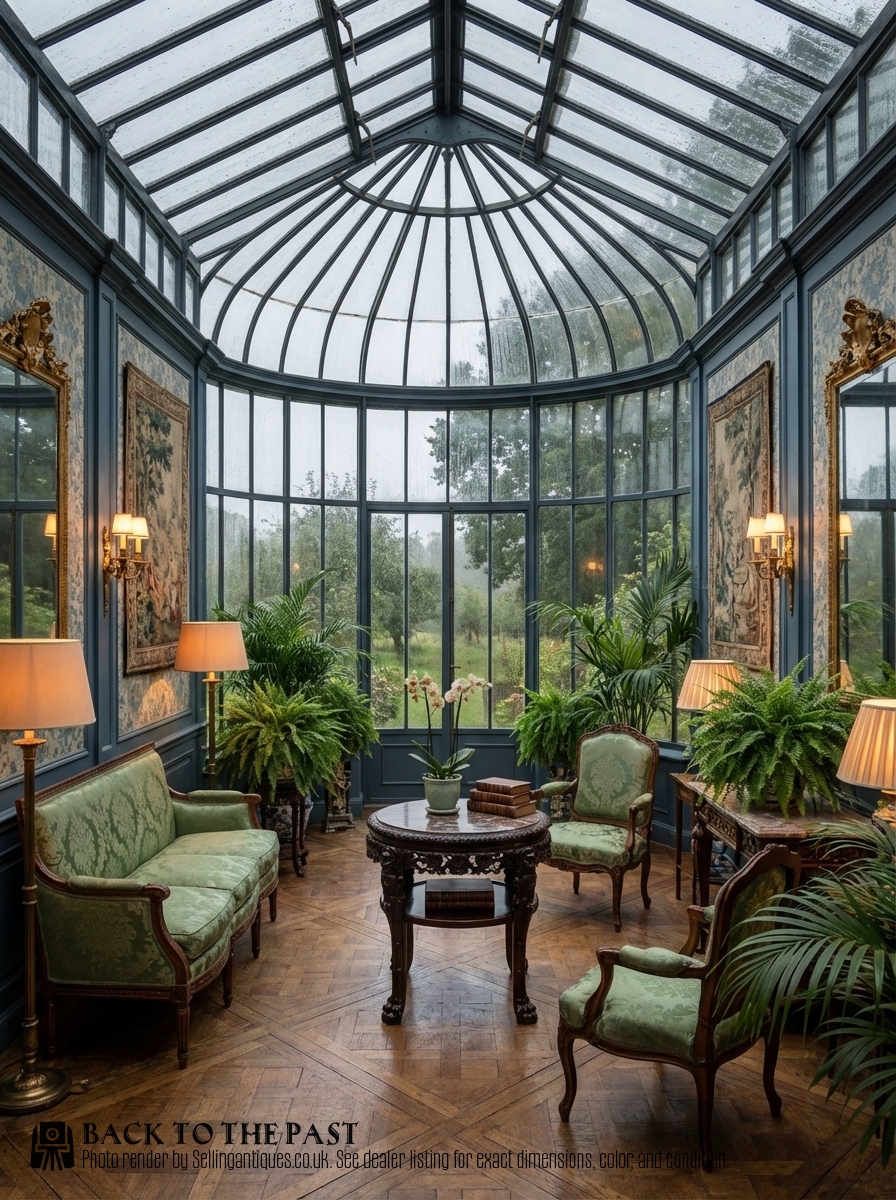
Chinese Jardiniere Stand
A Chinese jardiniere stand is a low or tall support built specifically to display heavy ceramic planters, fish bowls, and vases within a room. These pieces appear frequently in nineteenth-century contexts, often grouped under Victorian import tastes or identified directly with Qing Dynasty production.
Most examples function primarily as plant stands, lamp tables, or occasional side tables depending on their height and top configuration. The forms range from single-tier display columns to lower two-tier structures suited for domestic corners.
Makers designed these items to bear heavy loads, combining functional stability with intricate oriental carving traditions. They serve today both as traditional plant supports and as compact display surfaces for decorative objects.
Materials and Construction
Craftsmen utilised dense timbers such as rosewood, padouk, hongmu, elm, and ebonised hardwood to construct the frames, ensuring the structural strength needed to support heavy stone and ceramic vessels. Many pieces incorporate smooth black lacquer or traditional finishing techniques to enhance the deep grain of the wood.
Carved decoration often covers the aprons, legs, and stretchers with floral motifs, pierced foliage, or geometric patterns. These decorative elements are integrated directly into the structural framework of the stand during assembly.
Chinese Jardiniere Stand Retail Price Guide 2026
Typical asking prices for chinese jardiniere stand among the pieces listed under this phrase on Sellingantiques today, from the lower quarter to the upper quarter. They describe what is for sale here now, not the wider market.
Listings for this phrase feature nineteenth-century and early twentieth-century examples built from dense hardwoods with inset marble tops.
Distinctions in Execution
The density and selection of the timber dictate the fundamental integrity of a chinese jardiniere stand, with heavy tropical hardwoods representing the upper tiers of production. Lighter secondary woods or softer elm indicate more utilitarian domestic output.
The depth and crispness of the hand carving separate standard commercial output from exceptional work. Superior examples display undercut foliage and tight joints that remain rigid despite changes in household humidity.
The quality of the inset marble top, particularly the absence of hairline fractures and the precision of its fit into the wooden rebate, marks the difference between average furniture and finer workshop output.
The Chinese Jardiniere Stand Glossary
- Jardiniere
- A large ornamental pot or bowl for holding plants or flowers. It sits directly upon the stone or wood surface of the stand.
- Rouge marble
- A deep red, variegated limestone used widely for decorative table inserts. Its polished surface resists water marks from potted plants.
- Padouk
- A heavy, durable tropical hardwood with a reddish hue favoured in Chinese cabinetmaking. It holds fine detail under carving tools.
- Hongmu
- A traditional Chinese term for dense red woods used in classical furniture. It translates literally as red wood.
- Ebonised
- Wood treated with a chemical stain or pigment to imitate ebony. This dark finish appears frequently on nineteenth-century pieces made for European export markets.
Chinese Jardiniere Stand: Frequently Asked Questions
What is a Chinese jardiniere stand?
A Chinese jardiniere stand is a specialised wooden table designed to elevate heavy ceramic plant bowls and fish basins.
These pieces combine sturdy timber frames with flat inset surfaces to protect interior floors and furniture from moisture.
How were these stands used originally?
Households placed large porcelain pots filled with flowering plants, trailing greenery, or goldfish bowls upon them.
They stood in reception rooms, halls, and parlours to bring natural elements indoors while displaying decorative ceramic art.
Are all these stands made of the same wood?
No, makers utilised a range of dense timbers including rosewood, padouk, hongmu, and ebonised hardwood.
Some simpler domestic examples employ local woods like elm or feature black lacquer finishes over standard construction timber.
Why do many stands have marble inserts?
Marble provides a cool, non-porous surface that withstands damp soil and water splashes from potted plants.
It also adds contrasting colour and heavy weight to the top section, improving the overall stability of the structure.
How do you date a nineteenth-century stand?
Dating relies on timber choice, construction methods, and stylistic links to the Qing Dynasty or Victorian export periods.
Examine the joinery and the patination of the wood surface to understand the age and handling history of the piece.